
Confessions From the Underground #13: What is ‘Cool?’
**This column originally appeared in our November 2025 issue**
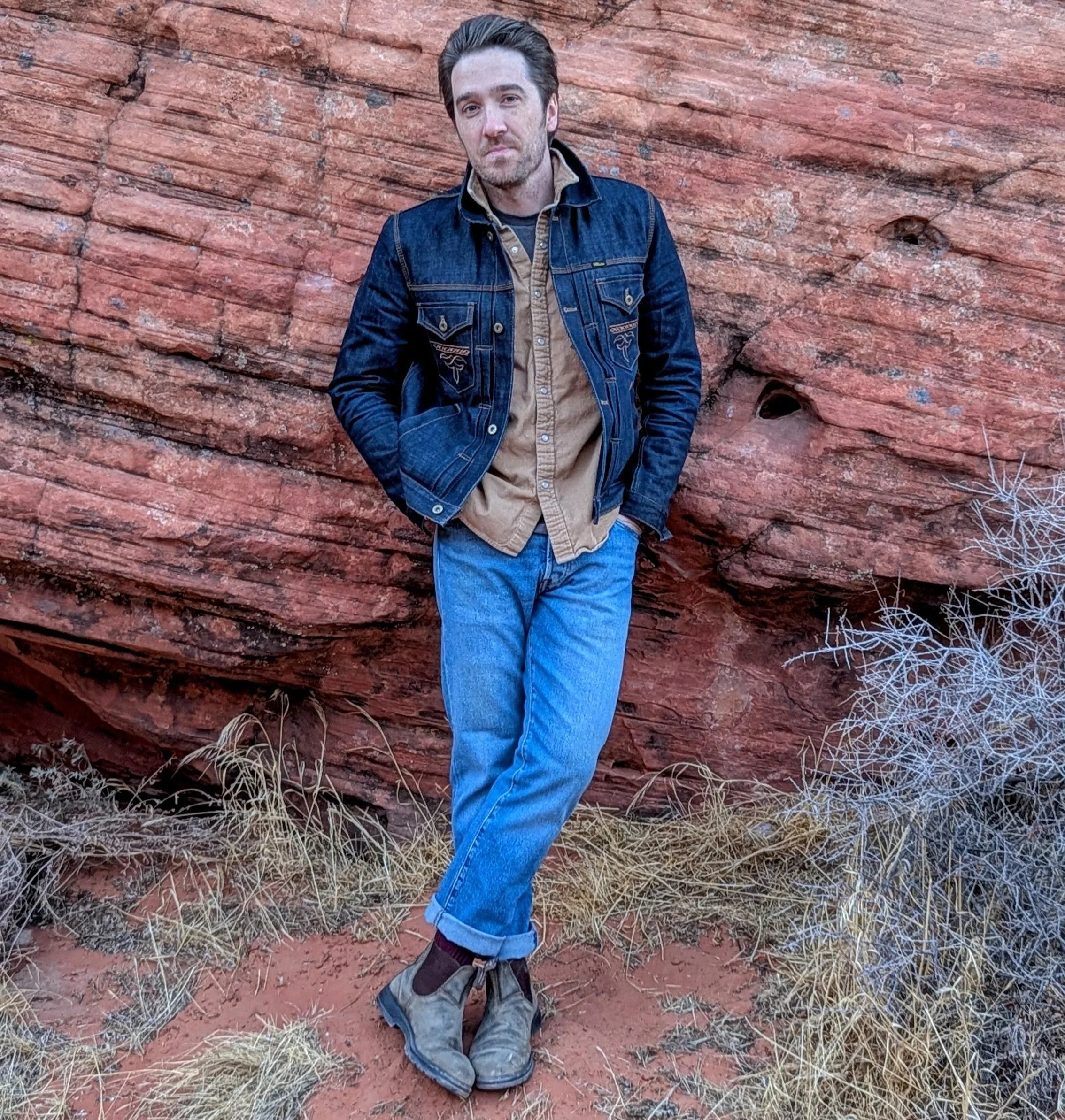
Photo by Wendell Scherer
When I think of the word ‘cool’, I automatically recall that scene from School of Rock, where Lawrence the keyboard player talks about not being “cool enough.” It lives rent-free in my head, as does most of that movie. But, I digress. An extremely talented man and my old friend, Frank McGinnis, posted an Instagram reel a couple weeks ago that was all about the definition of ‘cool,’ and coming to terms with making ‘uncool’ music. I’ll let him sum it up more eloquently, but it conveniently provided the topic for this month’s column. What is ‘cool’? Is it the Fonz smacking a jukebox? Is it Ferris Bueller singing on top of a parade float throughout Chicago? Is it Dolly Parton… being Dolly Parton? Two very uncool people try to figure it out below, but more importantly, grapple with what’s important for smaller musicians to focus on.
TJ Foster: What really influenced this chat was an Instagram reel you posted recently. You were drinking “bad gas station coffee” in your car and musing about what it means to be ‘cool’ and I thought it was really poignant and warranted a deeper conversation. Can you sum that video up for the readers really quick?
Frank McGinnis: I'll try to not be longwinded – I just heard my wife laugh in the background when I said that. For a long time, I would see this concept of songwriters, musicians, performers coming off as a certain kind of ‘cool.’ It's such an amorphous term, and it can be redefined however you want, but there was a certain kind of ‘cool’ I would always see. I think I started to get really concerned with being taken seriously in a certain way which, to say it now seems so silly, but for a long time I lamented the fact that I could never quite make it into this sort of ‘cool kids club’ with the music that I made and the way that I performed. Particularly the way that I sing has always been a very strange barrier for people, which is totally reasonable. But as I've gotten older, I've cared less. I've been trying to just lean into what I do best, and what I do the most naturally. The music I make is earnest. It's very open-hearted, it's very accessible, in a sense. But I am somebody who has prioritized trying to sing as best as I can without making an artistic choice with my singing style. And something about that, I think, brings it out of this realm of what's ‘cool’ to a lot of people. I think the point is that I’m just getting better and better at being like, “This is what I do.” And if you don't think that's cool, then right on, go find the stuff you do! I will take anybody who does!
It’s probably unfair of me, but I feel like some people really like to be able to say they like certain bands because it sounds hip or cool. I even have friends who make music that fits more into that mold, and I was weirdly jealous of it for a while. But I started to observe that I've had the true blessing of having something else – people responding to the openness in the songs that I write, and really deeply connecting. And I would take two people who get that, over 2,000 people who just think it’s cool to be seen at my show or something.
TF: I have so many things to say about this, but first and foremost, it’s crazy how we perceive our own art versus how other people do. Not to make you blush or whatever but my first reaction when I watched that was, “What? Frank is one of the coolest people I've ever met!” And sometimes I think it’s important to remember that the act of making, as you call it, ‘uncool’ music, a lot of people consider that to be a cool thing in itself.
FM: It’s very fortunate that there are people who respond to things in that way. And it can't be denied it's super subjective. There's so much gradation with how you present the music you make. And it's a really tricky balance to be the right amount of aware of how you present what you do — everything from how cryptic or straightforward the lyrics are, your guitar tones, the arrangements of the songs, the recording quality. All of these things are elements of how something is presented.
TF: Now, we're about the same age, right? And we've both been making music the majority of our lives at this point. When did you start really writing songs?
FM: Five or six. I started writing stuff before I had consistent access to any instruments. I think it might be long gone, but there was a notebook that my mom kept that had the words to ‘Frankie songs.’ And the story is that if I had access to a piano or something, I'd play these little single-note things, and then I'd come back six months later, and I'd still remember that thing that I did. But as far as [writing] full songs, probably more like the age of 10.
TF: So if you can put yourself in those 10-year-old shoes for a minute… What are the things that 10-year-old Frankie found ‘cool’ about music? And what role do you think that played in terms of your upbringing and writing?
FM: That's a really great question. 10-year-old me would have thought Michael Jackson was the coolest thing on the planet. The epitome of pop, you know. I also would have been listening to alternative rock in the ’90s. My older sister Jen, who I miss very dearly — she passed in 2023 — she got me into bands like Nirvana and Green Day and eventually Foo Fighters. I thought all of that stuff was really cool. What's so strange about it is, I gravitated toward things that were subversive, which is not very similar to what I ended up doing musically, but I did like the things that challenged my sensibilities as a child. [Things that] almost freaked me out a little bit. Like, I thought the music video for “Smells Like Teen Spirit” was scary, but I really liked it. I even got a little into metal, because it was not for my mom and dad or something. I would listen to the first three Metallica records and early Black Sabbath and learn how to play that stuff on guitar. So it's kind of funny to think that so much of that back then I found really cool, and then here I am singing these ‘dude down the street’ songs about how I feel.
TF: Yeah, and that's kind of where I was going with this because it's definitely funny to think about the things we thought were cool when we were younger. So I want to know: what about now? With whatever weight the word ‘cool’ holds at our age —not to sound old and fartsy — what strikes you as ‘cool’ nowadays?
FM: Hmmm. Without being able to use adjectives or qualities in music, it's like… Bruce Springsteen when he was young. That [holds] my ideals of what I think is really cool. But the stuff I gravitate to…I guess authenticity? I feel like I don't find myself thinking of ‘cool’ as much anymore. I think about what I like to listen to because I enjoy it. The closest thing these days that I think of as far as, “Damn, that's cool…” is maybe somebody's vibe with their look from a certain time. Beyond that, I will listen to, like, the Goo Goo Dolls, and marvel at the arrangement choices. I'll listen to the first Third Eye Blind record and every time be blown away by the choices that band made as instrumentalists. They took seemingly simple chord changes and did these hyper-specific, not flashy, extremely tasteful things, and that's the stuff I think is insanely cool.
TF: That's so interesting that all those references are from either when we were younger or before we were even born. [Laughs] I’d be hard pressed to answer that question differently myself as far as what’s cool today. Like, Billie Eilish is probably the first name that comes to mind? She seems really fucking cool in both her music and her style. But I don’t know. It’s probably an age thing — you get older and feel less and less hip.
FM: It might be. I also definitely feel disconnected from the hyper-current mainstream. I think any music that brings people joy has value, but I just don't really hear any of [the mainstream stuff]. I don't listen to the radio. When somebody shares something online about a top 40 mainstream pop artist, I don't personally feel compelled to go listen to it just so I know what's going on. That might be closed-minded of me, and maybe I'm missing out on some perspective there; I don't want to be the guy who just listens to music from 1975 or something. There are bands that put out stuff these days that I absolutely love. Bands like Telethon who are pretty unknown, in my opinion. They’re a very cohesive hybrid of what people who used to make pop-punk might make when they get a little older.
TF: I know that well, my friend!
FM: Yeah. I like to imagine that that's what I do now, and to an extent, it sort of is. But I have a lot of music that's unreleased that I'm just sitting on, and I don't know what I want to do with it. I have this whole album that I've been sitting on for like, a decade, and in my mind, it's my most Springsteen thing ever. I put together a live band to play those songs as an experiment, to see how they translate in a live setting. When I listen back to it, my stomach kind of drops because I don't think it sounds nearly as Springsteen as I thought it did. I think you take a guy who used to make songs like I did back in the early 2000s, grow him up into this kind of stuff, and it just ends up sounding like Panera music. Very pedestrian, you know. And this was over a year ago, before I started this personal crusade of this next level of self acceptance. Weirdly, that was an interesting piece of the puzzle, because I started by reacting badly to that, and as time went on, I'm just like, “So what? Who cares if it sounds like Jason Mraz or something?” All that matters is if I like it and I'm enjoying myself.
TF: That's something I grapple with a lot, too. I write these songs that I know in my heart are pretty good songs. I think I'm comfortable enough with my skill set at this point to know that they are at least better than my last batch of songs. But I'll be performing them, and I get into this mode where they just sound so much better in my head than they do in reality. And to circle back to your Instagram reel… I don't know that I've given a ton of thought to whether the music that I make is ‘cool.’ It's more that I feel like I’m an uncool vessel for that music to be delivered through.
FM: I think I might relate to that. Like, if they were the same songs, but Scott Hutchison was still alive and Frightened Rabbit was playing them, it's a very different story. It comes back to that presentation.
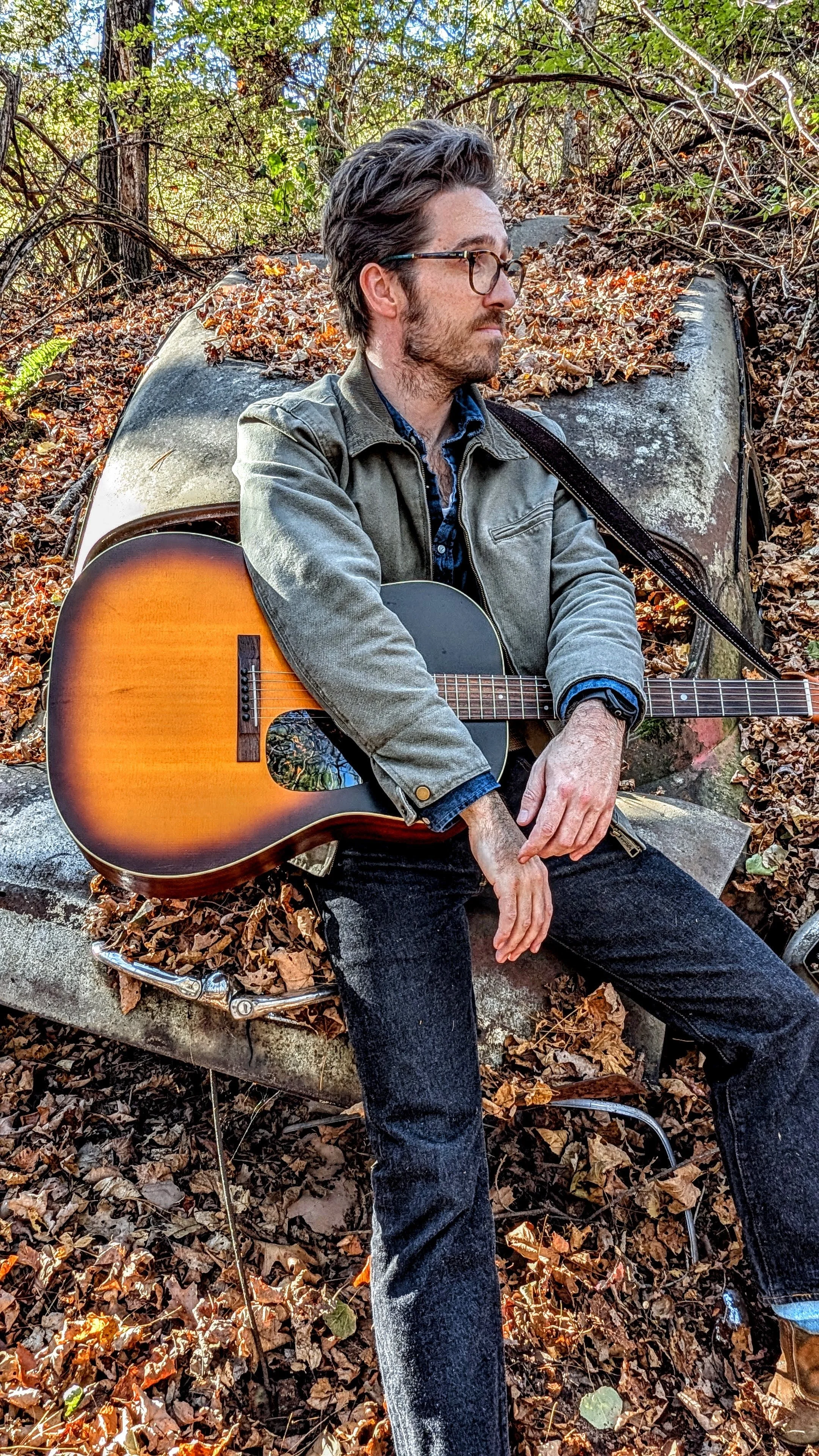
TF: The other thing I wanted to ask is, we're talking about songwriting, obviously, but you're also a playwright and an actor. Is there any sort of overlap with your thinking on this topic between music and theater?
FM: Of course, that's a huge part of it. There's a quality in storytelling and in the presentation of a story that has absolutely dazzled me since a very young age, and I think that translated both to a lot of stuff I would chase after as a songwriter, and the fact that I got interested in things like musical theater. I even referenced this in one of my recent solo songs — by the way, I have a song called “Two For Flinching” up on streaming services [wink] — and the opening lines are, “Came home from the video store, put a tape in the VCR / Stella kissed Finn by the fountain, and I felt my heart soar.” It’s referencing the version of Great Expectations that Ethan Hawke and Gwyneth Paltrow were in. And it goes on to say, “The romance wasn't the appeal, it was the longing I wished to feel / as Ethan Hawke chased Gwyneth Paltrow and didn't even catch her by the end of the last reel.” And I think there's this wistful, longing, twinkly heartstrings thing that I became fucking addicted to in all of the media I was consuming. So it stands to reason that I would want to generate that feeling somehow and musical theater is all about that.
I also, pretty early on, noticed that my singing voice suited that world well, and I started doing stuff like that at a pretty young age and taking voice lessons. What's crazy is I think it had such an influence on me as a singer and just in general, that I will never escape that theatrical quality of my music or my singing voice. And the great part is, I am no longer trying to. For a while, I was weirdly railing against it, and I don't know why. It was like denying a part of my identity, my instincts, and what I really enjoy experiencing from art. No matter what I do, it's gonna sound that way, you know what I mean? It's just who I am. Why am I trying to not be that way?
I think historically, unless you are a person who loves musical theater, it is as close to UN-fucking-cool as you can get. I think there's this weird human embarrassment about being really openly emotional in a grandiose kind of way. We live in this society where people are trying to say, “No, don't stifle your emotions.” People need to realize it's healthy to be emotional. Particularly for men. There are all these people trying to encourage more men to [embrace] being emotional and sensitive. And for whatever reason, in this particular setting, that level of emotional openness becomes uncomfortable for a lot of people. Therefore, any of those qualities that naturally carry through in my songs have historically come across as ‘uncool’ to people, to the point where people have said it to me directly over the years. Because of that, I spent so much time with my head turned in the wrong direction.
TF: I feel that so hard. Like, “Goddamn, if I had only looked over there…”
FM: Exactly. There are people who actually want you exactly how you are as a musician. And the crazy thing is, TJ, I don't know what I'm on the verge of doing. I am the most musically open-ended I've been in my entire life.
TF: I gotta tell you, I'm in the exact same position. Just like you, I have unfinished records on my computer that I don't know what I want to do with. I don't even know why I haven't finished them. There’s just this mental block that almost says, “What's the point?” And it does come back, to some extent, to this ‘coolness’ factor where I don't always feel very ‘cool’ doing this anymore and it ends up preventing you from creating a little bit.
FM: It's so much easier when you're talking to a friend and you hear them say things like I'm about to, but that is obviously a really bummer reason to not do something.
TF: I agree!
FM: But I do that thing, too. For a while, I’d have music I thought was pretty darn good, but I would put it up and people would barely notice it. Or there was this phenomenon that would occur — and I'm working on managing my bitterness about this, because it's not fair to my peers and acquaintances — where I would share on social media platforms, get all kinds of engagement, and then look at how many people listened and it's like, 11. It's been so easy to tell myself that people really love the idea that I'm still making music. That part makes them really happy, but actually going and listening to it seems to be something they're not that interested in. But a) it's not their job. They don't owe me that. And b) they could actually be really interested and so many other variables could be at play.
Also, you have to remember you shouldn't rely on your family, friends, and acquaintances to be your audience because they're not the only ones out there that are going to respond to it.
TF: It also sucks now that that’s part of it. Like, thinking back to 10-year-old Frank again, this whole ecosystem didn't exist where we're always looking at stats and watching the numbers. I can't think of anything that is more uncool.
FM: I've done pretty good at not looking very often. There's this whole other element, too. It's sort of a double-edged sword because I'm so unbelievably grateful that I was once in a band (Frankie and His Fingers) that, by my definition, a lot of people cared about. A lot of people liked that band and cared about it and knew the songs and we were doing really well for a while. A lot of [artists] don't ever get that at all. So I try to have that gratitude that there was ever a time that I could sing some dumb shit I wrote as an 18-year-old and people were singing it back louder than I was.
The last time we played was January of 2023 right here in Kingston. It was packed. We were over the moon about the turnout. And here’s the other edge of the sword, where I'm like, “Guys, you clearly like songs that I have written. I'm still doing it! Why are you not interested in what I'm doing now?” But it's nostalgia. People want to come feel like they're 16 again or whatever it is. The funny thing about that is those are the times when I do feel kind of cool. I have to not underestimate the value of making something that people actually care about on a personal level. That's really valuable, and I'm really lucky.
TF: I’ve got one more question for you, because if the two of us are thinking these things, there's plenty of other people out there who are also thinking them. What sort of advice would you give to others who might be wrestling with this notion of remaining ‘cool’ within their own art?
FM: Something that has been helping me is getting more specific with the qualities. Think of qualities that are more tangible than ill-defined terms like ‘cool’. Let yourself recognize real qualities in what you do. You can say, “This song is emotionally affecting,” or “This song has a really catchy hook that gets stuck in people's heads.” When I sing, people are usually pretty awestruck when I belt out high notes. I'm not even assessing whether or not any of that is cool. Those are specific things that I can name, that I'm really proud of, and that has been helping a lot.
As far as the other side of that coin, I think we can feel a little dismayed by our lack of accomplishments. I've always had this idea that buzz is exponential. It's like trying to get a manual car into first gear — that first section of building a buzz is the hardest. From there, it almost snowballs. So while you're stuck in that mode of “How do I get into first gear?” I think it's really easy to feel like nobody cares. That it's not cool. So what I've been trying to do is really zoom in on the accomplishments and remember how astonishing it is to finish a fucking song, to make a recording you're proud of, to play one gig to five people.
The guy who produced the first Frankie and His Fingers record, Jeremy Backhofen, once told me, in so many words, whenever he was in a period in his life when he was getting a little too obsessed about accomplishments, he would go do something like build a chair. Because if you make a thing that has four legs and you can sit on it, you cannot deny to yourself that you finished making a chair. That accomplishment literally stands for itself. You can't try to tell yourself, I didn't finish making a chair. You can tell yourself, “Not enough people care about my music. I don't have a big enough audience.” You can be mean to yourself about that stuff. You can deny your own accomplishments there, but you cannot deny that you finished building a chair if it has four legs and you can sit on it. The thing is, we're allowed to do that with our own music, too. You can say, “Wow, this song has a first verse, it has two choruses, it has a second verse, it has a bridge, it has an outro… I finished a song.” And we’ve got to give ourselves that a little more.
Keep up with Frank’s musical endeavors by following @frankieandhisfingers on Instagram.
