
Confessions From the Underground #14: Mental Health 2
**This column originally appeared in our December 2025 issue**
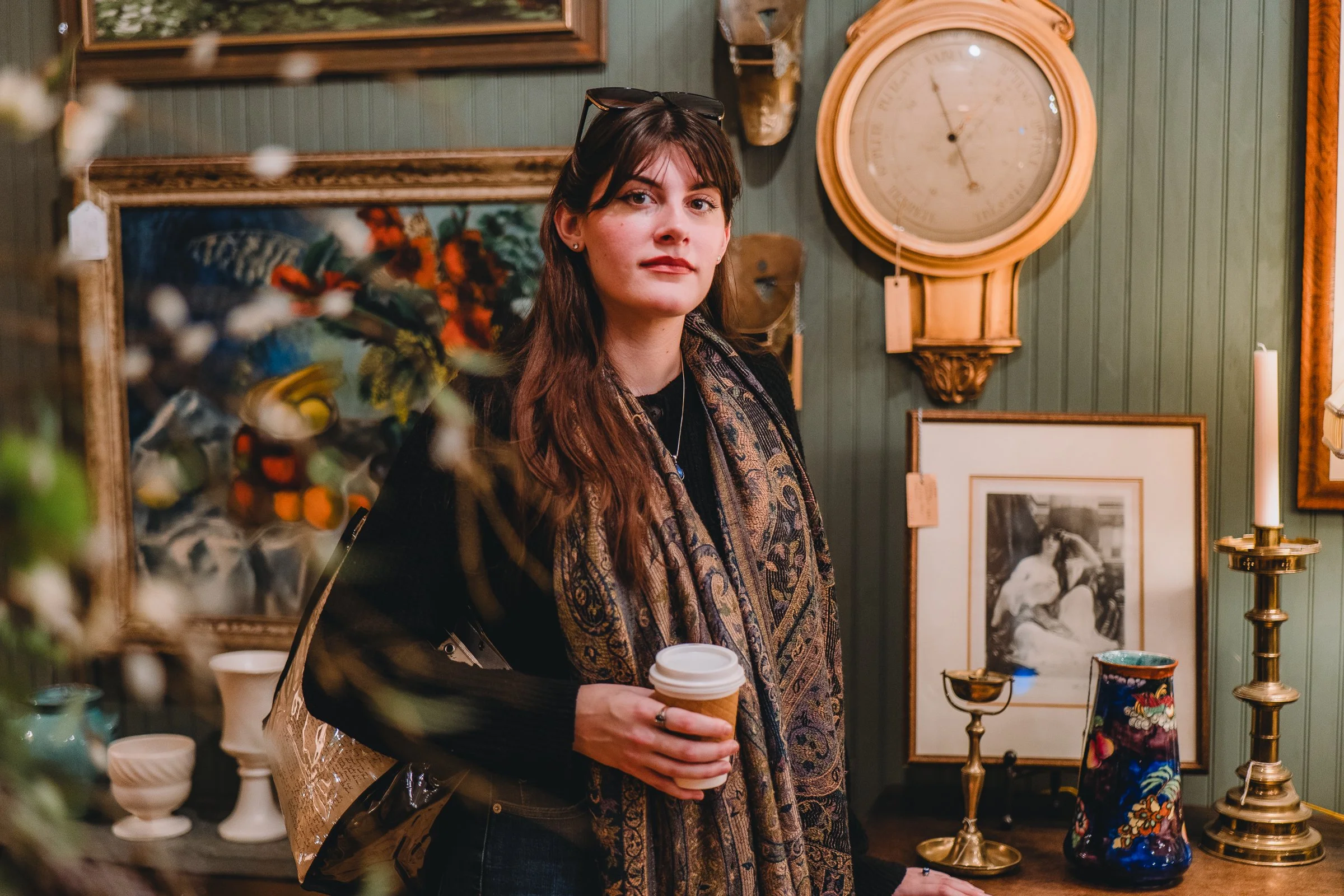
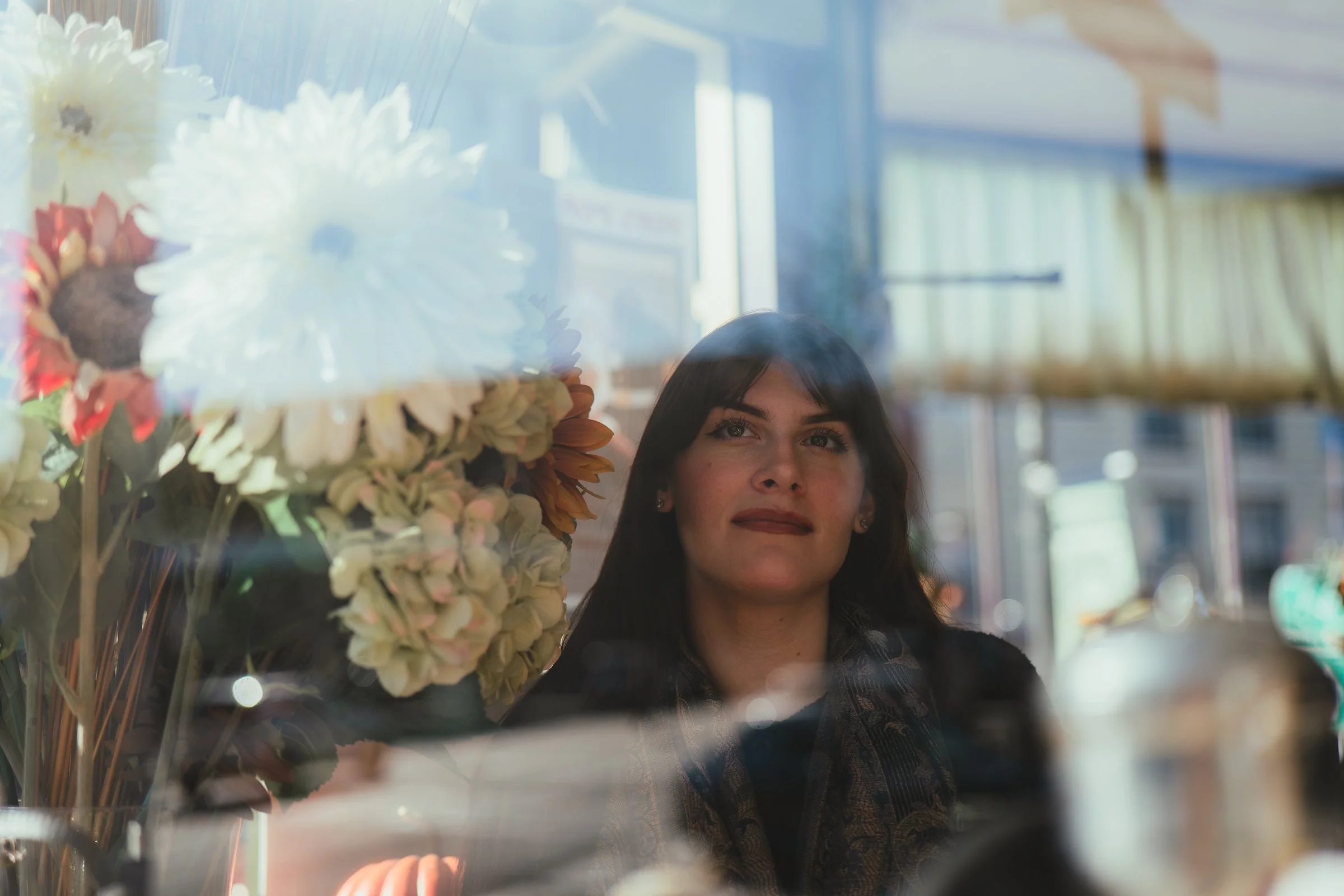
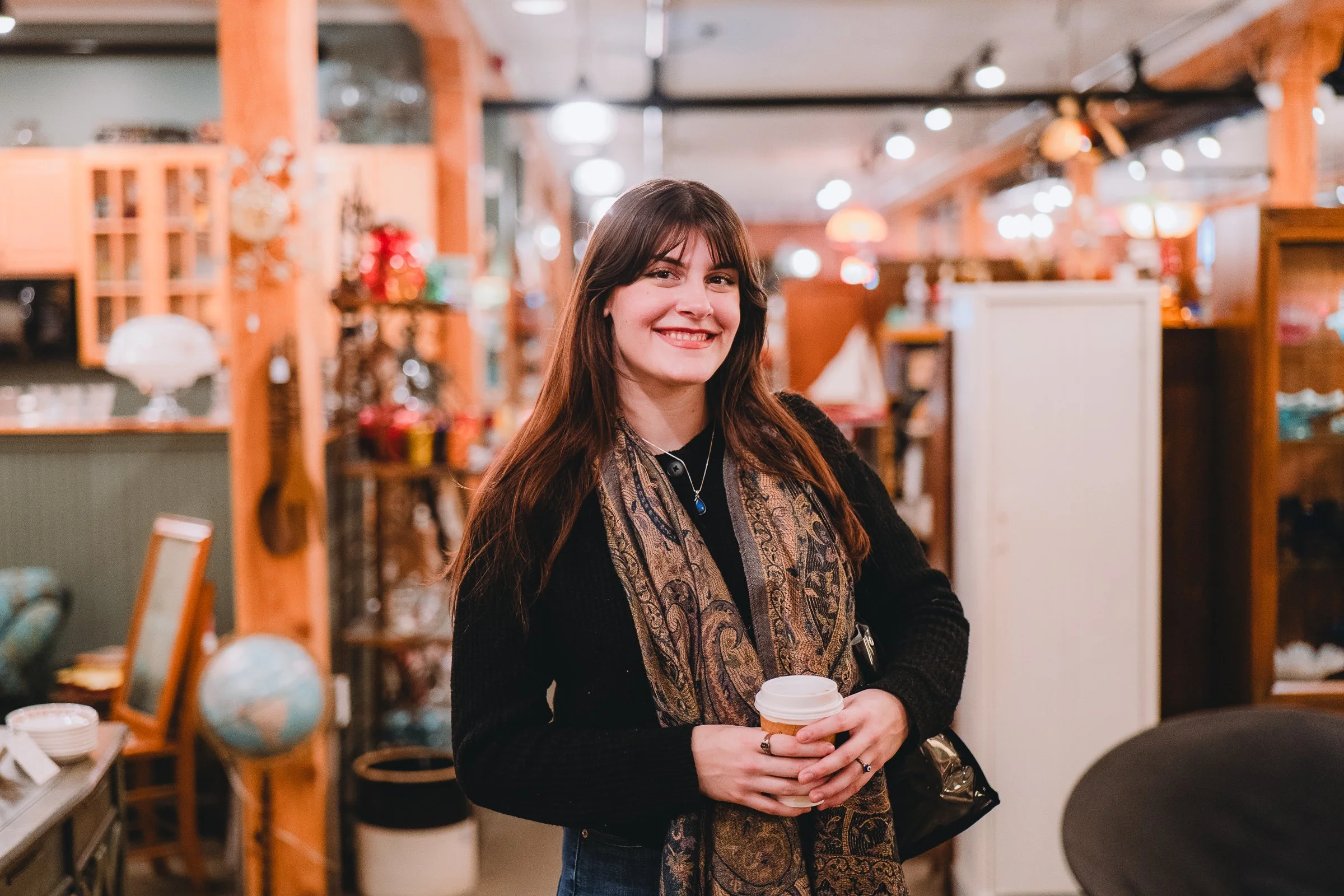
Photos by Debi Gustafson
If you’ve been following this column since the beginning, you might remember I already tackled the subject of mental health with Angelina Valente in one of our first-ever issues. But my column, my rules, and I’m taking the liberty of repeating this topic after learning about Hayley Stafford. Hayley is a remarkable local talent, penning achingly personal songs like the ones found on her latest release, The Grievances of a Psych Patient. The record is a collection of demos that stem from her experiences as, you guessed it, a psych patient as both a child and an adult. Her unique perspective on mental health is one that I felt warranted a deeper dive, so we get into it below. Real into it. I can’t thank Hayley enough for being willing to share her stories, and I hope you take as much away from our conversation as I did.
**Trigger warning for mentions of sexual assault, child abuse and experiences in a treatment center.**
TJ Foster: You've alluded a bit to your experiences in mental health facilities. To set it up for the folks reading this, I’d love to know — to the extent that you're comfortable — the circumstances that led you there.
Hayley Stafford: I have been in and out since I was in middle school — I was abused as a child. So I started off a normal kid being put into these facilities. Then it turned into being an adult and needing to keep going back because of what happened to me there. I think that happens to a lot of children.
TF: Having gone through this as both a child and an adult, how have the experiences been similar to or different from one another?
HS: I think that when children are sent there, especially when they don't need to be, it's very dehumanizing and traumatizing. You are completely stripped of your bodily autonomy and not respected or listened to. Also, a lot of kids are put on medications that they don't need. That happened to me, and now my brain chemistry is kind of off and I need that medication as an adult. But going to a psychiatric hospital as an adult is completely different. It's better, depending on where you go.
TF: That's really interesting. Obviously, the system should be there to help kids, not create instances where they need further help because of the experience. How are you doing now? Do you feel like your time in and out has been helpful?
HS: It's definitely been helpful the last couple of times. The last time I was there was a little over a year ago. I think the most important part about mental health treatment — other than the hospital being well-run, obviously — is the patients that you meet there and the connections that you make with other people. It's very uplifting. Another thing that's good about the psych hospital as an adult… In the world we live in right now, we're constantly on social media and everybody is connected, but also more isolated and afraid to ask for help and reach out. You're not allowed to have phones in the hospital so you are forced to be completely intimate with strangers who are going through the things that you are going through and the professionals who are running groups. I used to shudder at the words ‘coping mechanisms’ because, as a kid, those are kind of just thrown at you and you don’t really know what they are. But as an adult, it's really helpful to learn real coping mechanisms and the science behind your brain. So when you put all that together for a week or two weeks at a time, it does change you, and it does help you if you get treatment at the right place. So I'm doing really well now.
There's always a chance that I'll need to seek help again in a couple years. I see it as like, if you have a chronic physical illness, sometimes there are flare ups that you can't really control and you need to get help. And I don't see anything wrong with that.
TF: That's such a good point. And I think we're slowly getting better at recognizing the fact that mental health and physical health require the same sorts of things. You may have flare ups from time to time, like you said. In terms of the connections that you've made with people there, do you stay in touch with anyone that you've met?
HS: Definitely. A couple of the people I met years ago are my closest friends. I keep in contact with someone who I met there when I was 16. Just like any friendship, people grow apart, but there's such a different dynamic with people who you met at the darkest time in your life. It's like a good type of trauma bonding, if that makes any sense.
I had a roommate there, I think in 2021, and she and I connected through a seven-hour conversation on our first day. She and I still talk and send each other voice memos like, five times a year. You think of them as people who really see you and you don't need to pretend at all. It's really special.
TF: In terms of the treatment centers themselves, what are some things that you would change in order to be more effective?
HS: Oh, God. I think in today's day and age, it's slightly better. But no matter what mental health treatment center you go to for help, unless it's a private practice or a Reiki therapist kind of thing, you are not seen as a human being. Not even close. You are not trusted. You are not listened to in the ways that you should be. I recently had an experience where I needed to switch my therapist at a treatment center because we had problems and didn't see eye-to-eye, and I was told that the whole treatment team thinks that I have some weird TikTok/Buzzfeed thing. It's like an anxious attachment style, which is a real thing, but I don't have that. And I tried to explain that to them and it was the kind of thing where, if they wanted to, they could call a psych hospital and tell them that I needed to be admitted because I don't know what's best for myself.
TF: Wow.
HS: I've had the door in my room closed on me by grown men and screamed at. That actually only happened once, but it happened in an adult unit and nothing was done about it. There are a lot of lawsuits right now towards the only safe hospital I've been to for sexual assault to minors, so even the best places are not good. I don't want to deter anyone from getting help — it's such a fragile topic, but it's also something that should be known, because every time you go to the hospital, there are constantly people in and out. There are more people seeking help than I think we realize.
Psych wards in hospitals, like emergency rooms, are very different. Those are dangerous. I went to seek help at Glens Falls Hospital one time when I was 18 and no one talked to me. I said I wanted to be evaluated for mental health. I had to change my clothes into scrubs. They took my phone, my wallet, my purse, and I waited for about six hours in a locked room to speak to a doctor. I asked for water and asked a nurse, “Do you know when I'm going to be evaluated? Can I have my phone?” And she said, “I'm not equipped to handle crazy people. I'm just a regular nurse.” I've heard elderly people get screamed at and called crazy for having dementia or crying or having anxiety. It's not something that anybody thinks about, but it's very damaging. And I mean, if that's the best case scenario, you can only imagine what happens in children's psych units.
I'm sorry if I'm rambling. It's nice, because I've never talked to someone about this who wasn't a mental health professional or gaslighting me about my experiences.
TF: No, not at all! Please, keep going.
HS: When I was in the adult unit at [redacted], like a year and a half ago, they needed another staff member to come and ‘supervise’ us on the patio. The other staff member was like, 25 and she worked in the children's unit. She circled the grounds like she was a prison guard. I was making a joke and laughing and I looked at her to be like, “Aren't I so funny?” And she looked at me like, “What?” [intimidating motion] You are really not seen as a human being, and especially by people who work with children.
TF: That's terrifying.
HS: It is. It's really, really terrifying and so common. I wrote a song called “Purgatory” about my experiences as a child in the hospital. I don't like performing my super intimate music live, but I decided to be brave and perform it at a Caffè Lena open mic. And it was horrifying. I did not get a response at all from the crowd. It's a very dark song, and I wasn't very confident while I was performing it, so that probably fed into the audience. But it was worth it because when I got off stage, a 16-year-old girl came up to me crying and thanking me, and she asked if she could hug me. We hugged for a while and she told me about the lawsuits happening against [redacted] and how she's experienced bad things there and at other hospitals.
TF: You said something about not wanting to deter people. Obviously it's very important to shine light on the negative aspects of these facilities. But people also should feel comfortable seeking help. So I do want to ask if you can think of any positive experiences or moments that stand out in your mind? Was there anyone who was a guiding light for you?
HS: When it comes to these places, there's no gray area. It's very black and white because I have more than I can count on both hands, wonderful, healing, beautiful experiences with certain staff members, psychiatrists, and groups where it's just very uplifting and safe. So, yeah, I mean, after I was yelled at by one of the male staff members, one of the women who had just started working there came in and hugged me and just held me and we talked for a while. She was very understanding. I just said all of that horrible stuff, but there's also a lot of beautiful things, like the support from a lot of the staff members; even though you're still not necessarily respected because they're there to treat you. There is a lot of love and light, especially in a psych hospital.
TF: So you mentioned this new record. It’s a concept record of demos based on these experiences that you've had. What was it like taking all these experiences, all these stories that you’ve shared, and turning them into songs? You're obviously bearing your soul.
HS: I started writing it when I was 15. One I wrote a month and a half ago, right before I recorded it. I've been writing music since I was 10. I think I do it because I have to and [the songs] are just in my head and I have to get them out. When it comes to sharing them, I do that only because I think that it could help people feel understood. Since I was a teenager, I would look for music like the stuff that I write and I couldn't find it and I felt like no one understood me. There was sad stuff that kind of matched what I was feeling, but it was more depressing and hopeless or just not on par with what you know you go through. So, I want to be able to be the person that I needed for someone who is going through what I went through.
TF: So you want to be that source of comfort for someone else, but how does making music help you with your mental health? Is music your go-to ‘medicine,’ for lack of a better word, when you’re feeling low?
HS: Yeah. People say an emotion is energy in motion, so you have to let it out some way. And I think for me, it's writing music and it does help a lot. It's like scratching an itch.
TF: I’m the same way. When I'm down, I tend to pick up the guitar, even if I don't have the energy. And I often think about the fact that, as artists who are being vulnerable and writing personal songs about tough subjects, later on, we have to go perform those songs and relive it all over and over again. Do you find that's helpful? Or do you think it’s detrimental to ourselves and our health?
HS: I think the more I perform something, the more I detach from the situation and kind of look at things as a third party... I don't want to sound cliché, but when you start performing, the song doesn't belong to you anymore. I think that's something that every single musician has said in an interview, but it's true. Sometimes I'll perform a song that I wrote when I was completely alone in my life. I was homeless for a while and I wrote a couple really sad songs during that time and now when I play [them], I'm like, “Damn, my life doesn't look like that anymore.” And that's really cool.
TF: That's a really good point. There's a line in your song “The Hospital” that I particularly love. “I carry the pain of being too young.” I'm going to ask a cliché interview question here, but what inspired that lyric in the overall context of this story and this record? Because it resonates for me in a very specific way.
HS: Thank you for saying that. Looking back, I don't remember why I wrote that, but when I think about it, it's probably just because I think no one is ever mature or old enough to know how to handle or carry these unbelievably heavy, confusing, horrible feelings that they go through. So even if someone listening to it is on the older side and they just went through trauma…I don't know, I guess for me, it was that no one is equipped to know how to deal with that stuff. I probably wrote it because this stuff all started when I was a confused little kid with nothing wrong with me.
TF: It makes me think about youth in general and how being young now is so different from when I was growing up in the ‘90s, to date myself a little bit. But I think about this next generation of kids and how they have this kind of contradictory experience with mental health. It's becoming less stigmatized, which is great. It's easier to talk about, it's easier to find resources. But there's also so many things that kids have to be worried about and things that contribute negatively to mental health, so it's that tough balance of one perpetuating the other, right? So how can ‘we’ help this next generation navigate all of this?
HS: I really believe, down in my core, that what would have been the key to solving all of my problems would have been being listened to and being offered support and love. If someone would have hugged me and listened to me as a child and a teenager, I don't think I would be like this.
Also, I mean, social media is really, really horrible for kids and it's hard to keep them away from it. I think it's evil. And I worry that [mental health] is talked about so much that kids who wouldn't have thought about it are starting to worry or notice it. I don't like that. I think that social media and people trying to ‘destigmatize’ it hasn't been the best thing, and it’s separated us even more. It's good to be able to identify your feelings, but by guidance in school or your parents, not the Internet and some random person on TikTok.
TF: That's such a good point. Damn. Okay, so one last thing. We've obviously talked a lot about some heavy stuff, but I do want to end on something more positive. I want to know where you are finding light these days? What are some positive things that you're really embracing at the moment and what fills you up?
HS: Honestly, most things! I think that when you turn off your phone and you try to not think about the news — even though it's very hard — if you practice gratitude, you can see magic no matter where you are, especially when you've been through dark things. Because I can look up and I can say I have an apartment and I have a bedroom with a door that closes and there's a sunset right now. Most things that you look at have some sort of beauty or magic to them, like jewelry and candles and music and loved ones. I think this is so cheesy, but I believe that magic can be found in anything.
TF: [laughs] You said that like it was embroidered on a pillow!
HS: Or a Forever 21 T-shirt! [laughs] But yeah, I know I talked about a lot of deep and negative stuff and a lot of my songs are kind of hopeless and sad, but I'm a very happy person and annoyingly positive and energetic.
Keep up with Hayley @hayley.moonbeam on Instagram, and download her latest album at hayleystafford.bandcamp.com
