
Confessions From the Underground #12: Representation, Part Two
**This column originally appeared in our October 2025 issue**
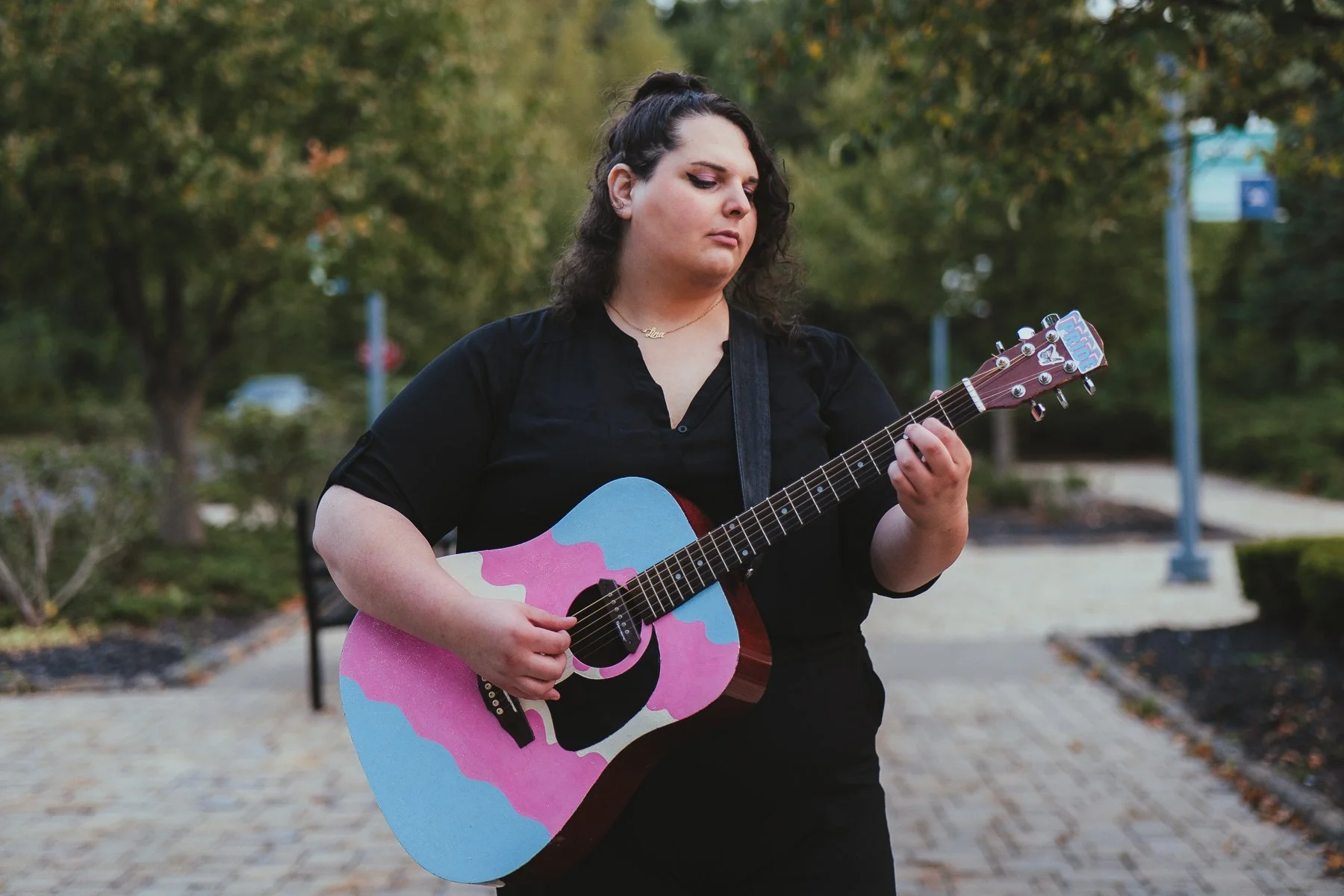
Lina Franzine by Debi Gustafson
Think of Confessions From the Underground like a podcast you can’t listen to. That doesn’t sound very exciting, but the alternative would be hearing my voice for an hour and nobody wants that. Last month, our topic around gender representation was so grandiose, I had no choice but to split it into parts. My guests, Lina Franzine and JJ’s Okay were simply too articulate and insightful. So what you’re about to read is part two of our conversation. That’s not to say you need to read part one to enjoy it or learn something, but it does complete the picture. I also want to reiterate that if you have an idea for a topic you’d like to see a deep dive on, please let us know! That’s how this one came about. Enough intro. Let’s get back into it.
TF: I’d love to focus on our general area here for a moment. Obviously we could talk for days about the issues with the world at large, but what have your experiences been like within this scene and this community? It’s been really encouraging—again, from the outside looking in—to see how many safe spaces and shows there are around here. I’m thinking about the Femme Series that Girl Love puts on, and the LUNA Series at Mount Ida. There seems to be a really strong support system present here.
LF: Yeah, huge shout out to both of those [series]. When I played on Long Island more, I would often have to explain myself. But here in the Capital Region, especially Troy, there are a ton of queer and trans folks, and we’ve found each other. In those spaces, when I play “Belinda”, I don't have to explain what it's like to be trans. I play the song and people hear it and cry. They know that feeling.
I think our community functions as a fantastic safe space and here, the kind of music I’m inclined to write is much more for us, because I know there's ‘us’ here, whereas when I was living on Long Island, a lot of the audiences available to me outside of small pockets of queer musicians and poets, were mostly cis, straight, and above the age of 40. They're not even interested in hearing original music in the first place, let alone my song about being trans. If you're lucky, you may get a couple of liberal wine moms who go, “You're so brave. I could never do what you do.” If you're not lucky, you get shanked outside the bar, right?
JJ: I'm really grateful the experience in Troy and in the Capital Region has been accepting of queerness in general, I think in large part due to the community of queer people, but also thanks to the allies that surround us, the people who are willing to see each other's humanity first, value our unique identities and empathize with the struggles of the queer experience. I don't want to project an idealistic version; there are always things that can be done to make a community better for everyone involved.
My first open mic was at Cafe Euphoria, and my music was received very warmly. That was an important experience as a nervous musician who hadn't played out much. Knowing that I wasn't going to be jeopardizing any of the relationships I valued by coming out as trans made a really big difference. I still am slowly gaining traction in a way that feels safe for me. I am starting to do more gigs now and hopefully record sometime soon, because I haven't released very much.
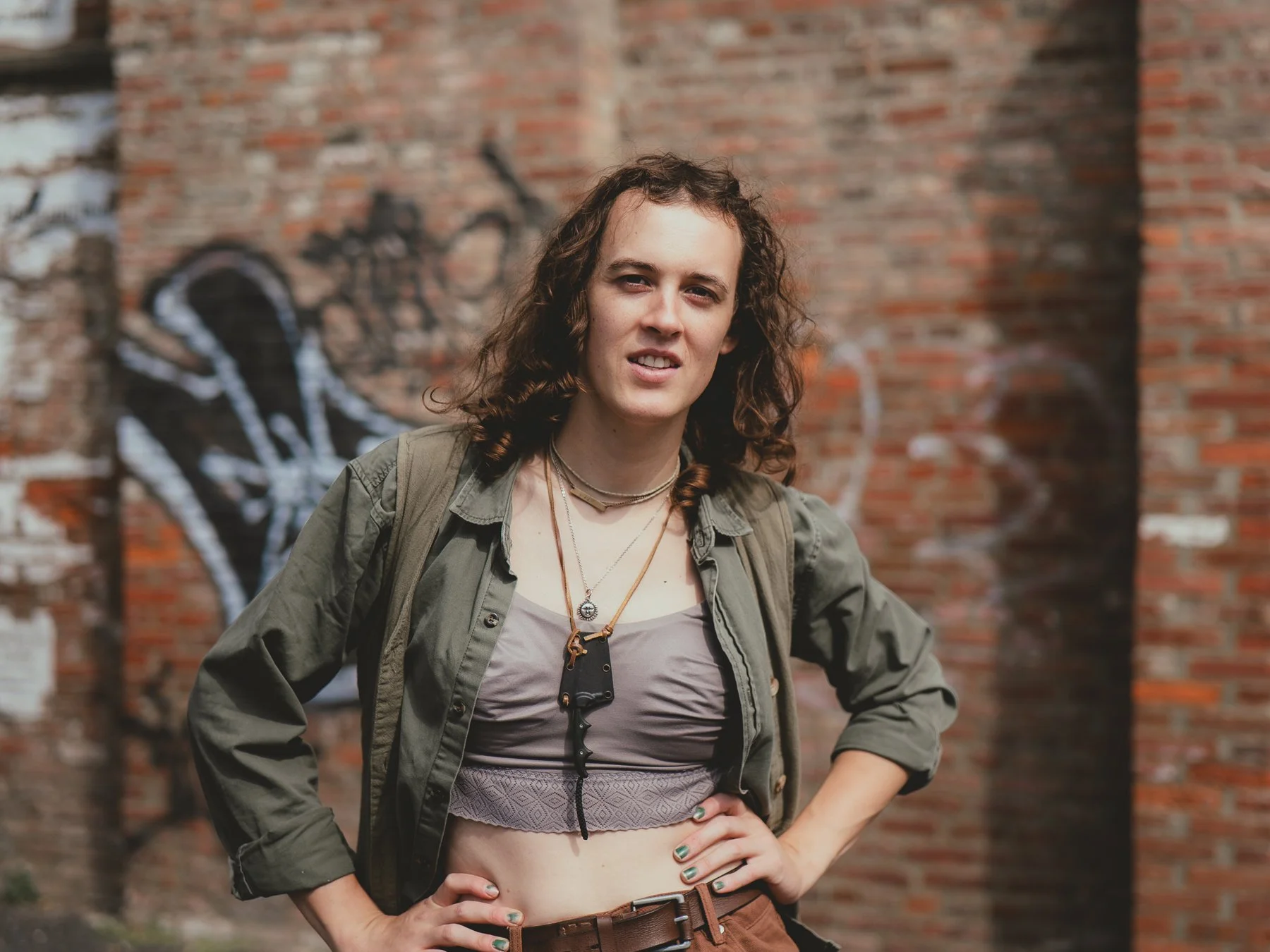
JJ’s Okay by Debi Gustafson
TF: Is there anything you'd like to see more—or less—of in this region?
JJ: That is a tough question. The first thing that comes to mind is just, we're in a moment in time where DEI is being demonized… that has structural effects. It can make it so that moving forward, marginalized groups may be less likely to get into positions of influence in industry. For those who are interested in making their industry more welcoming to queer people, doing what you can to uplift those who have been historically forced to the margins of society is really important. It's not just a matter of, “Oh, we have to hire X number of marginalized identities this year.” We need systems that support those who have been put in difficult [situations] and allow them to actually get the same opportunities through the same experiences.
TF: Absolutely. Now I have a very broad, million dollar question. We touched on this a little bit, how there's a large portion of society that doesn't necessarily understand gender in the proper way, and even the well-meaning people are still, again, commenting like “You're so brave!” What are some ways you wish that we could reshape that conversation around gender to make people discuss and understand it the right way?
LF: There's a few things I always talk about if somebody wants to do this separation of “biological men” and “biological women”. I'm a biological woman in the sense that I have the secondary sex characteristics that we associate with women, right? My body is dominantly an estrogen-powered system. So beyond genitalia—I don't know if you want to print genitalia in your publication—but beyond the things that we call primary sex characteristics, those things we don't experience. I have met thousands of people who I'm sure are men and thousands of people who I'm sure are women, and I could probably count on both hands how many people's genitals I've seen in person.
When I’m in the grocery store, and somebody says to me, “Thank you, ma'am, have a good day,” they aren’t making a judgment about my genitalia. They are making a judgment about how they are making sense of me in the world. They see I have no facial hair, I have makeup on, I'm wearing a dress. Those are very basic things. You don't have to do those things to be a woman, for instance. It's a choice. Everything we do, we're making a choice. So the thing that I would try and get people to understand is, take a look at the choices you make. You might not feel like you're making choices, but you are. Wherever you buy your clothes, and you go to the men's section instinctually, because you're like, “Of course, I'm a man,” you don't realize you're making a choice because it's an implicit choice that we all passively consent to. Because most people are fine with the gender they've been assigned, which is good. I think it's pretty great to have that happen. It's great to be born in a country where you want to live, or be born in a nice house or a nice family, that's great. You don't have to feel guilty about that. But at the same time, some people are assigned things they don't want.
Compare it to the other “demons” right now in the world – immigrants, right? Like, if you were born in a place you didn't want to live, shouldn't you have the right to move somewhere else? I was born in a body that didn't look the way I was going to need it to look when I grew up in order to be the person I was meant to be. I didn't change from one body to another; it's more like taking vitamins. I take my estrogen at the same time as I take my vitamins, because it's the same thing. I'm just taking care of my body to match what I need it to do. I need my body to have vitamin B12 in it, because I'm a vegetarian and I don't get that from food. I take my estrogen because I don't produce that naturally, or not enough anyway. These things that people divide into categories that are sort of naturally ordained, I don't think they understand just how many of them are invisible besides the choices we make to bring them out.
The other view would be the question, “How do I accept people for who they are?” People should be able to do what they want with their bodies. I can convince you all day that trans women are women, but at the end of the day, you don't have to believe that. Just that people should be able to do what they want with their bodies. That's called freedom.
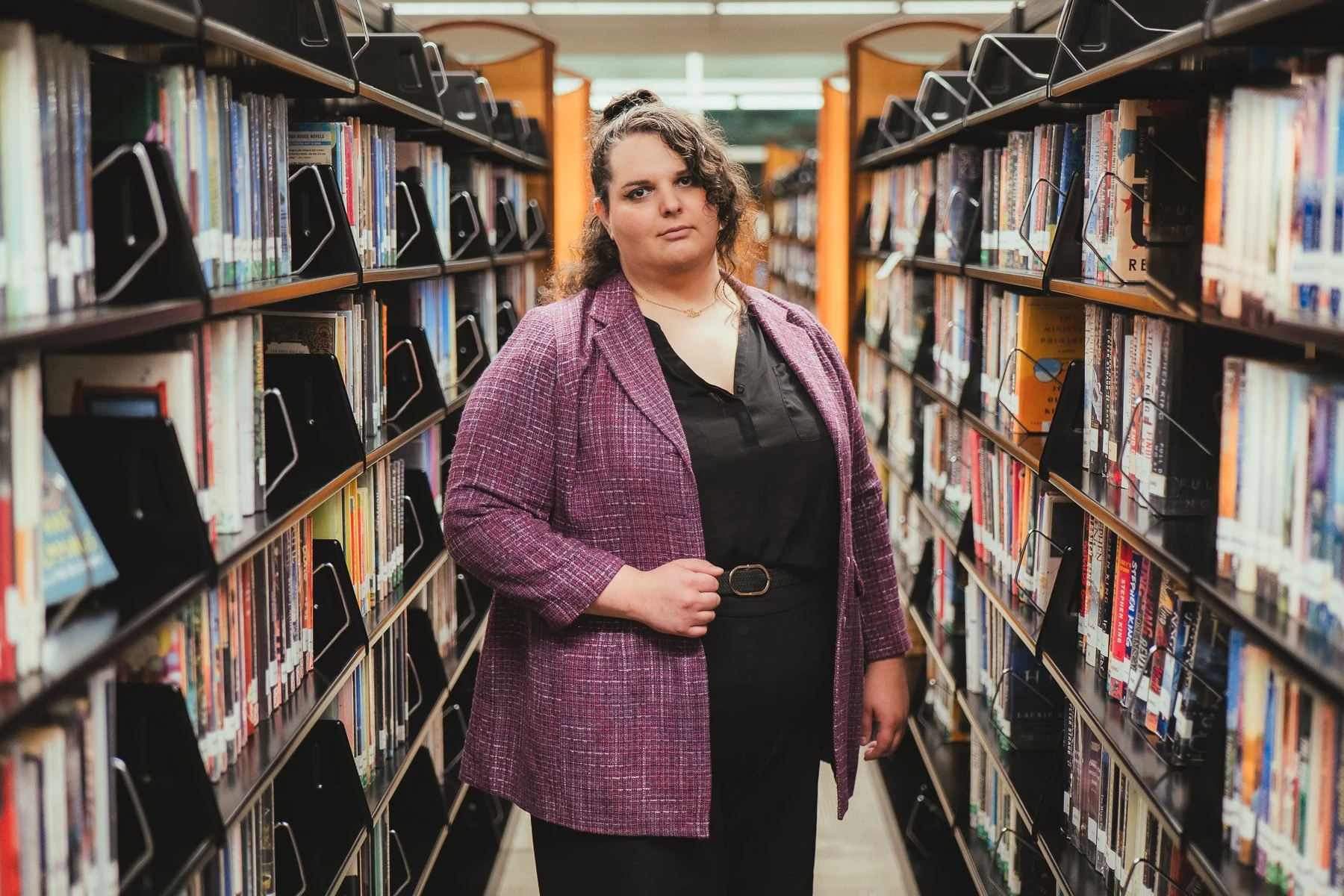
Lina Franzine by Debi Gustafson
TF: Also, maybe just stop talking about other people's genitalia, because it's weird! Go ahead, JJ.
JJ: I'll start with saying it is difficult and generally a waste of energy to try to force someone to grow empathy. It's not impossible. But as a member of the queer community, I think you'll find most people have no interest in fighting with people just to gain some semblance of respect or understanding. I think it's important to try to impress empathetic mindsets onto those who are willing to extend that towards you, and try to get them to extend that towards other people.
We don't need to understand the experience in order to empathize with it. Just as an example, I can now find it easier to empathize with other marginalized identities, but that doesn't mean I understand what it's like to live as a Black person. There are very specific barriers and struggles that need to be overcome, which leads me into the other thing I was going to say. I think if I could mandate something that would help the queer community, it’s that every cis person has the opportunity to speak to at least two trans people, ideally from different backgrounds, different experiences, and perhaps different identities. The worst thing that is happening right now is the weaponization of anti-empathy—the unwillingness to step outside of what you've been told. And I think one of the easiest ways to combat that is to actually be confronted with the humanity in someone else.
TF: Thank you both so much. I’ve taken up way too much of your time, but this was such a pleasure, and this was a really insightful conversation. Before we go, is there anything else we didn’t touch on that we should have?
JJ: Everyone needs to learn the power of being okay with feeling uncomfortable when they are in a state of distress. It is a guiding force and it's necessary to drive you to action. I know a thing or two about the insidious nature of dysphoria. Breaking free from suppressing it led to this awareness: most of us are so, so sad, afraid, angry, and coping poorly. Our collective disengagement all but ensures the rapid expansion of authoritarianism. How can we change our material conditions if we do not have the capacity to engage with the emotional impact of our current reality?
You need to cry, to find places to cry and people to cry with. To scream and fight and feel your anger. To not release these things is to turn them inward and find yourself depressed, confused, and unfocused. And when you can't: don't blame yourself. Notice it and try to understand that this inability to sit with fear, anger, and sadness is a function of a system designed to keep you distracted - and that your involvement with difficult things is the only path for actual freedom.
There is no better time to start, because every moment is all we have. We begin now, we fuck up and learn, and we begin again tomorrow. Find your people - find your capacity - find your resilience. Fight these fucking fascists.
