
Confessions From the Underground #8: Public Broadcasting
**This column originally appeared in our June 2025 issue**
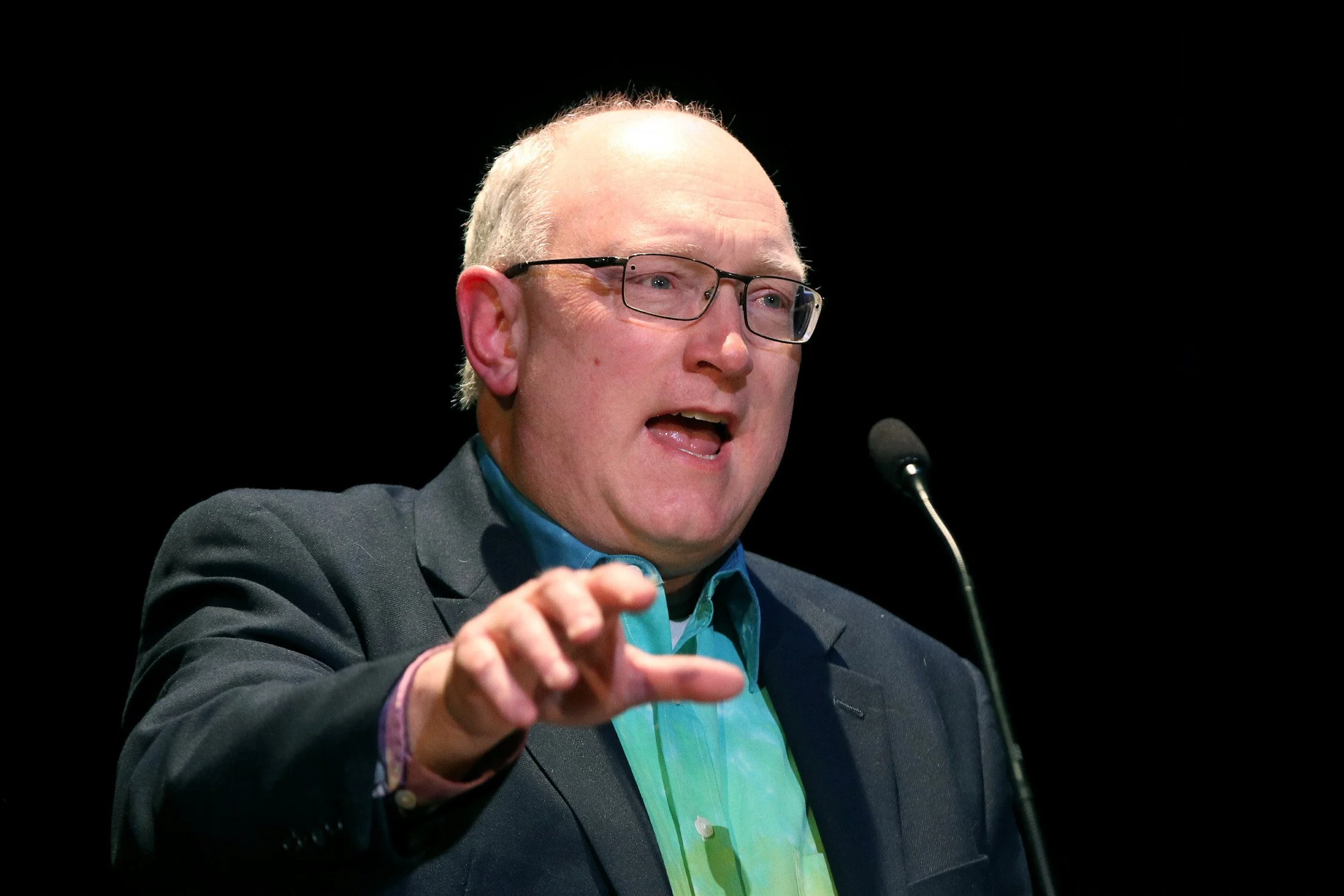
Photo by Joe Putrock
PBS and NPR have been in the news quite a lot lately. If for some strange reason you’re not aware why, I’m not going to be the one to break the news. But with so much at stake, it did seem like the perfect opportunity to cover the topic of Public Broadcasting, in hopes of gaining a better understanding of all it provides. I couldn’t think of a better person to discuss this with than Chris Wienk. With decades of experience in public radio, including as the current Program Director for WEXT FM and Vice President at WMHT FM, Chris’ knowledge on this subject is paralleled only by his passion for local music, which should become quite evident in reading our conversation below.
TJ Foster: Before we dive into what you guys do specifically, I’d like to start with the basics. Could you explain briefly what public broadcasting is and how it differs from commercial broadcasting?
Chris Wienk: Sure. There are definitely fundamental differences, and I think those differences have widened since the Public Broadcasting Act in the late 60s. Technically, the FCC licenses all radio stations in the community interest, so commercial stations and public stations really all have the same rules that we have to follow.
Back in the 60s – the 40s and 50s and even into the 70s – commercial stations worked hard to do something to be of service to their community. It wasn't just about the numbers. It wasn't just about getting as many ears to listen to you so that you could then sell access to that audience to sponsors. Back then, I feel, they actually wanted to give you [something meaningful], not just – for lack of a better term – the sort of clickbait that we see on the internet—the stuff that gets all of the looks and the views and is really salacious. That's sort of where commercial broadcasting started heading, because they found that in order to compete with each other for that ad dollar, they had to one up the other stations with those kinds of goofy and zany things.
For public broadcasting, we have always followed the charter of what the FCC has licensed all stations to, and that's to serve the good of the public and the community. In the case of both WEXT and WMHT FM, we are music-based stations, so for us, the community that we are serving are the people who both create and the people who want to hear what's created. We want as many people listening as possible, right? I mean, everybody wants to be loved, but our reason for wanting to be loved is more because we want people to feel connected to their community. And I don't want to say that's not the goal for commercial stations—they certainly want to be connected with their community, and they do a lot of things that do that very well.
I particularly think a lot of the local TV news folks do a whole lot of that. I got to witness some of that up close with Heather Kovar on Channel Six, and just this past weekend with Christina Arangio and Giuliana Bruno and Matt Mackie over on Channel 10, and all of the people behind the scenes. It's obvious that they really want to create something that people care about; it's not only for the eyeballs or ears or what have you. But the pressure for them to do that isn't the same for us. The pressure for us is to find something that is significant in the community.
TF: You started easing into this a little bit, but I'd love to hear more about your mission. From the radio side obviously, but also anything you can speak to on the television side.
CW: It's really funny but I actually have to look up what our mission is every time because, while it is something that's ingrained in my head, the actual words are not really. My goal is to go beyond this. But if you go to WMHT’s site, you’ll see that it says we’re “the only locally owned nonprofit, multi-channel public communications organization that reaches beyond the traditional broadcasting model to act as a leader by convening arts, culture, learning and civic interests.” And so, what we're looking to do is find the people who are interested in this particular aspect of the community and bring them closer; not necessarily to us, but by getting closer to us, they then get closer to what they're interested in. In the case of WEXT, [that’s] the local music scene, which includes local bands, but also the artists who come to town and play at The Egg or The Palace or UPH or Caffè Lena. They're not from here but they contribute to the well-being and the community life that is important to people who just love music.
TF: Right. It’s the local artists, the local venues, the promoters. It's all the things going on around here.
CW: One of the things I'm in charge of is the classical station. I don't really do as much of it on a daily basis, because there's good people who do the real hard work over there. But one of the things I like to point to is when the London Philharmonic came to America, they played five shows. One of those shows was at Proctors Theater. That's monumental! We like to try and take some credit for that. I'm sure Proctors worked their butts off to get that show but the fact that WMHT, the classical station here, is in the top five in the market and does get listened to by a lot of people, that certainly had to have something to do with why would they choose to come to what is typically known as a mid-level market. They picked us because they found that they would get an audience. So that’s an example of the community pulling together to make something happen that probably shouldn't have happened.
TF: Now, when did you get started in your position? And what inspired you to seek out this particular line of work?
CW: Well, when I was a kid, we didn't have a TV very often in the house, but once in a while we'd have one, and for various big events that would happen, I would hear the booth announcers who were live at the time going, “This is CBS!” I’d run around the house going, “This is CBS!” until my parents said, “Outside with you!” So that was me thinking this is the kind of thing I want to do. And as I was getting into high school, I was really getting into music, as we do, right? My parents played me, you know, Bob Dylan and Judy Collins and Joan Baez and Simon and Garfunkel and stuff like that. But as I was developing my own musical tastes in the ‘70s, I stumbled across a cool radio station out of Ottawa, Canada and I would be up late at night with my headphones on listening to the DJ and thinking, “This is what I want to do.” I'm hearing all this really cool music; I want to be the guy who gets to play the cool music.
I went off to school to see how to do this. I went to Buffalo State College and worked my way through the college radio station, like everybody kind of does, and came out of school with a degree in broadcasting. I worked for commercial stations for about 10 or 12 years, and probably half the time, one of my friends who had moved from commercial into public broadcasting kept telling me I was on the wrong side and I needed to be in non-commercial. This was in the mid to late ‘80s when I finally moved and he was right. Even then, the pop stations, the rock stations, they were really just reading liner cards. They weren't really personalities. The common thinking back then was, “Don't say anything. Don't talk. Just play the music.” Don't inject anything of yourself, just make the station sound this way all the time.
I started working at WXXI in Rochester, a classical station. Got hired by Vermont Public Radio, then got hired to run a station down in Baltimore which we changed to be an NPR news station. I missed the music, so I got back up to Connecticut where there was music on the radio, and then I came here because they needed some help with the classical station.
TF: That's amazing. Just knowing what you want to do from the jump and running with it.
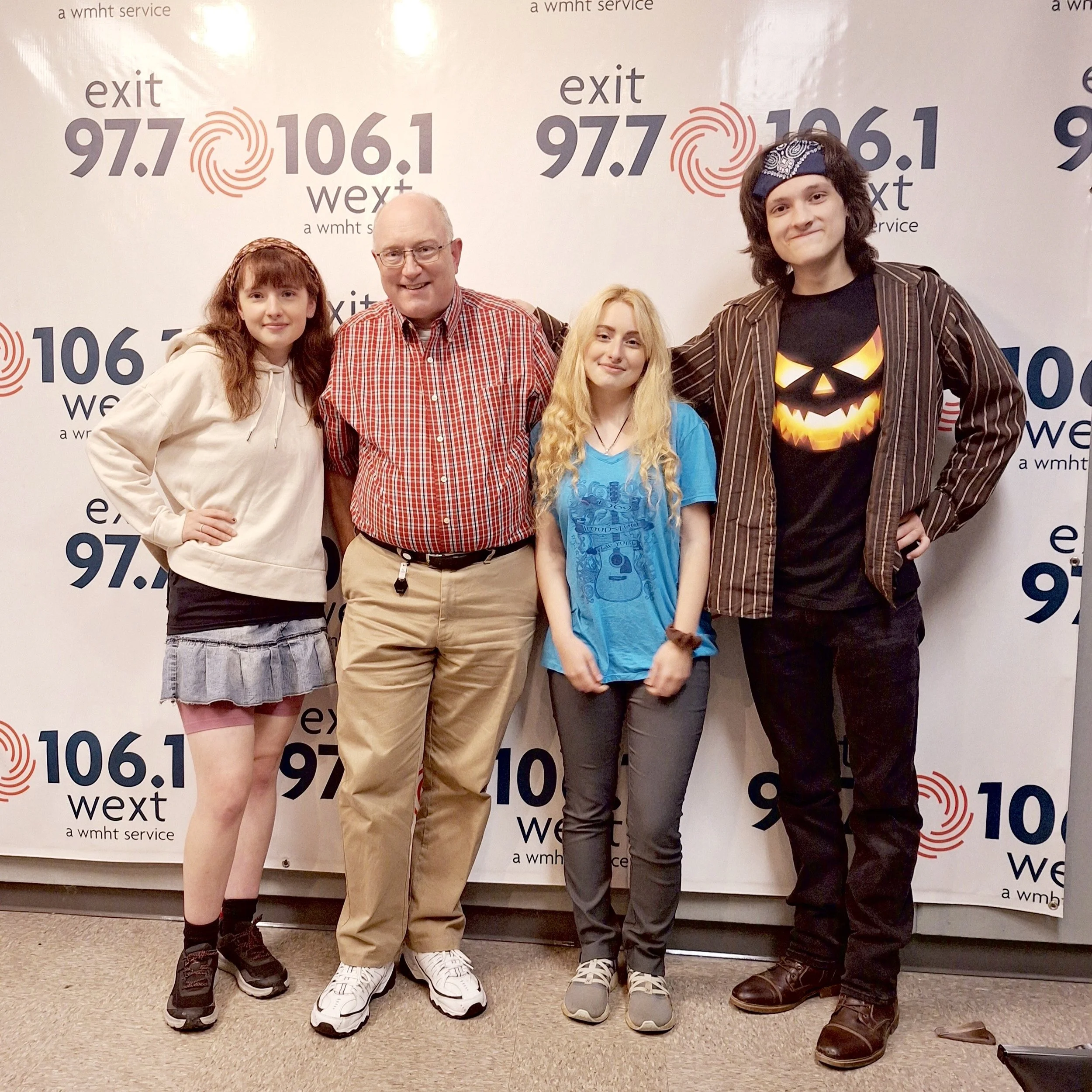
CW: I have to say, I feel extraordinarily fortunate. I mean, I know that lots of people know what they want to do and have a real hard time getting there. I've been afforded a lot of opportunity and a lot of rope to hang myself with, and so far, I've kept my neck out of the hangman's noose. I mean, we're 18 years in this summer with WEXT and honestly, the first couple of years, I worried we weren’t going to make it. This was a totally new venture. [Others] had done this progressive radio thing and went under within a few years. I feel very fortunate that they've given me so much opportunity here, and that listeners have responded to this in such a positive way. It's really heartening.
TF: It’s probably a tough thing to sum up, but in your own words, why is public broadcasting so important for both artists and the community at large?
CW: I think there's a couple things there. The biggest thing is, like I talked about at the outset, the whole thing with social media, where the clicks win. TMZ is popular for a reason. The goofiest, craziest, nuttiest things are all over social media. It's like, if you can do something stupid, make sure you get it on film because that's what everybody wants to see. But what does that really do for us? It's funny, sure. But the difference in what we do is we're really wanting to create something that is meaningful, something that has a connection and hopefully allows people to witness themselves, even if they're not the creators, and witness humanity. I think that's the beauty of public broadcasting in general, whether it's Singing for Justice, the story of Faith Petric that was on PBS, or something else that you see on Frontline, or my goodness, even Antiques Roadshow—there are so many stories in these shows. And on the music side of things, there are so many stories behind the compositions of some of the greatest works of classical music that show us who we are as human beings that would totally get lost if there wasn't public radio or if there wasn't public television. Some of these stories would never come to light because they don't have that huge mass appeal.
The stations with the big numbers – PYX 106 and FLY 92 – I mean, you're talking 100-150,000 people a week listening to them. You're talking 30,000 a week listening to WEXT and maybe 60 or 70,000 listening to WMHT. So it's different, yeah, but it's no less significant. It's just as significant, just to a smaller number of people. Those people are so connected to what we're doing that they're actually willing to give us money. I mean, directly give us money!
TF: And that brings up a good point too. I know we can't get into the nitty gritty details of the federal funding stuff, but you guys are a listener supported station, which is a unique thing, and it's incredible how many people chip in. Tell me a little bit more about how that works and how people contribute.
CW: The way public broadcasting works is, the people who use it, we ask them directly on the air: “If you like this, would you give?” The reason that they'll give is because not only do they like it, but they love it and would really miss it if it were to go away. And we could suffer that fate if not enough people give. I mean, it costs what it costs to run a radio station. You can do what you can to keep the cost down, but it's still going to cost a few $100,000 a year to run it. I mean, you guys are embarking on running Metroland, and you're figuring out, no matter what you do, even going nonprofit, it still costs a boat ton of money whether it's facilities or printing or paying people to write and go out and take pictures of things. So if you don't have people who are really into you and willing to support you, you’ve got to find another way to make the money.
We're licensed as a nonprofit public radio station, so we can't actually sell advertising. We can ask businesses to sponsor us, but we can't sell advertising, and even the businesses who sponsor us, they can't say words that they can say on a commercial station. So in an announcement, you're allowed to say who you are, where you are, how to get a hold of you, and what you offer, services or products. That's about all you can do. You cannot say you're the best. You cannot say you're award-winning, even if you've won every award there is. That's the rule of underwriting on a public radio station. It can't have that kind of language. So that's something we pay very close attention to.
TF: Aside from the financial aspect, what would you say are some other challenges that public media companies such as yourselves are finding themselves navigating today?
CW: Oh, that's a hard one. I mean, pretty much like every nonprofit organization, the struggle is there every day when you're only able to make money in limited ways. You know, the commercial stations, there's only a couple of restrictions. They can't do things like lotteries. But they can even ask for your member dollar, for you to be a listener supporter. There's an example of that down in Woodstock. WDST is a commercial station that sells commercials and asks for listener support. We can't sell commercials. We can ask for business support but not the same kind.
Just like a museum or a library or any other nonprofit agency, WMHT and WEXT have the struggle of trying to make ends meet with the resources that we have. And like every nonprofit organization, we are generally under-resourced. We've got six people running two radio stations.
TF: And how you guys do it with such limited staff is so incredible. Not to mention, you can do all that and still be at all the big events, like Tulip Fest, for example. It’s honestly really inspiring. Now, before we run out of time, I wanted to end with this. I've gotten to know you a bit over the years, being in the scene and all that. And there are very few people I know that get as excited as you do when talking about local music, as you've proven throughout this conversation already. It's really heartwarming and appreciated, and so I'd like to kind of end this whole conversation by just letting you rave about that for a minute, just so our readers can get a sense of that passion and excitement as well. So, the floor is yours!
CW: Alright, well… I'm a geek when it comes to music, plain and simple. I love what music does. It sets off every crazy bell and whistle in my head when a song comes on the radio wherever I happen to be, and if it's got just something in it I want to hear, I want to crank it up. When we first were starting WEXT, I remember having a conversation with Dave [Michaels], and I said, “I really think we need to see what the local music scene has to offer, because I think we can find some pretty cool superstars right here in our midst.” I said we're going to play one an hour, and Dave was like, “Do you think there's enough to play?” I had no idea. But every year since we've done this, I'm telling you, TJ, there's something new. I just ran into somebody at Tulip Fest—I am so excited to hear what she's going to have to offer. When we first bumped into Aila Chiar who played on Saturday, I just about fell over.
TF: Yeah. She’s incredible.
CW: Incredible, yeah. The energy and the enthusiasm and the talent... how can you not get so excited about it? It's overwhelming how incredible the music scene is here. And there's just so much everywhere you turn. And I think 18 years in, I feel like new people come along all the time, but it seems like there's even more. Every year I try to have a certain amount that we play so that we can play them enough so that people hear them. I’ve found that I've had to expand that number. Every year we're playing hundreds of songs a week from the local scene. I worry that we're not playing them enough for people to really hear them because I know how people listen to radio. I know that they need to hear it enough to have it sink into their head so that they can feel what I feel. Because I think they will. I mean, I think if they hear you or they hear Sydney [Worthley] or they hear Aila or Amanda Case… those are such great songs, and they just keep making them. You keep making stuff. Sydney keeps making stuff. It is so cool. And that's the way I feel; it's very exciting to me and I never get enough of it.
To support the missions outlined above, visit www.wextradio.org and www.wmht.org.
