
Confessions From the Underground #9: Artist/Parent Balance
**This column originally appeared in our July 2025 issue**
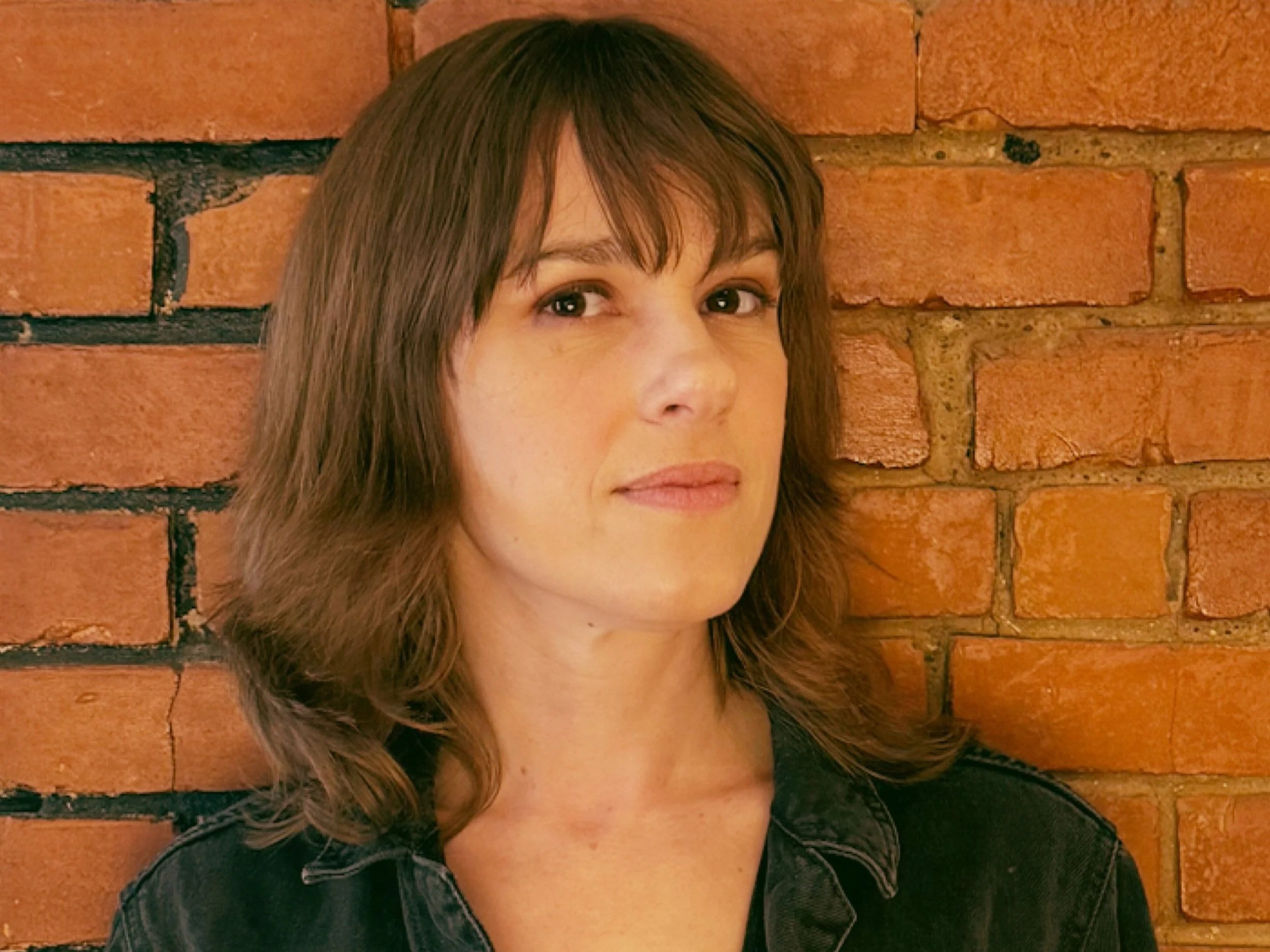
I saw this cartoon on social media recently that said, “I feel like a failure if I don't achieve a milestone of human creativity in the 15 minutes that I have to myself each day.” As a musician-who’s-also-a-parent, I felt seen. Recently, I had the pleasure of performing with fellow parent-musician Jes Hudak at Caffè Lena. I’ve been a fan of her music for some time, but this was the first time we’d met. We instantly bonded over the toils of trying to balance parenthood and creative endeavors and I knew immediately it was going to be my next topic for this epic novella of a column that I recently heard “could probably be one page lighter.” Even if you’re not a parent, you’re likely to find something relatable in our chat below.
TJ Foster: I'm so happy you're here, because I've been wanting to talk about this weird double life that we live as musicians and parents. Before we dive in, I want to ask quickly about your latest record [Photographic Memory] which you wrote and recorded, presumably, while also caring for young kids. How was that?
Jes Hudak: Honestly, this album is so long in the making. Some of these songs I wrote, like, a decade ago, and I've just been collecting them and never putting myself first, always helping other people with projects or coaching. It took leaving LA and coming back to Saratoga in 2020 because having small kids and a pandemic in LA was not financially doable.
Once both kids were in school, I was like, ‘three hours a day, I'm gonna make a record.’ I had started some ideas that were collected through the years, and every day that they were at school and didn't have the flu or something, I was working on this record. I picked all the songs that I could produce myself; I can't produce every song I write. But some I had a vision. I knew what I wanted to do with them, and I just got to work and had to push myself. On some, there is a scratch track that made it into the final vocal, because sometimes I like that tired quality of my voice where I’m trying to whisper-sing so as not to wake the kids up.
TF: Oh yeah, I know that well!
JH: (laughs) There’s some cool ‘don't wake the kids up’ kind of vibes. But that's really it. I'm lucky that I have a close music friend, Emmett O’Malley, who helps me out with guitars and bass and mixing and stuff. I met him originally in New York, and now he lives in LA, but we still get to work together remotely. It was a nice, easy dynamic of “when we have the time.”
TF: Do you ever feel like—because I run into this all the time—working on stuff when your kids are at school, for example, is restrictive creatively? “Okay, I only have these three hours to do something productive.”
JH: Well, I'm not always productive. Sometimes I just sit in stunned silence for a while. There's just some days you need to reset. But part of me learning how to be a good parent and also do the things I love to do is allowing myself time. I can't be creative today; I can't even fold a sock today! I need to just clear my mind. So there are days like that, but then there's some days where I just feel it and I go for it and I lose track of time.
I’ve realized that even trying to make an instrumental track for fun works that ‘forget about my problems’ part of my brain. I've learned to just go make something instead of sitting here being dumb. It could be terrible, but who cares if it's good or not? I have so much fun coming up with parts; it makes me giddy.
TF: That “work-life balance” does look different for musician-parents because our work is creative and you can’t necessarily force creativity. What are some hurdles that you run into when you’re trying to balance musician mode and mom mode? How do you make the two coexist?
JH: There's definitely compartmentalization, and I am sometimes pretty good at that. I'm 43 now, and I started writing and performing regularly when I was 12. So this is 30 years of figuring out how to work my brain. Having my kids really threw me for a loop in terms of even allowing myself to spend time doing something I want that doesn't involve them at all. I have that mom thing where, if I'm not staring at my child, I'm neglecting them or I’m not a good mom. And it's taken a really long time to move past that and be able to allow myself to create again. Of course, I'm going to do me. Of course, I'm going to write my songs and do my music. That’s my passion in life. But having children… it is really hard. And it requires open communication with your partner. And then also, I don't just create for my own expression. I do songwriting sessions, I do vocal work. So I can't be like, “I'm not in the mood to write today.” If you have a session booked, you slap on your big girl pants and you drink your coffee and you go do it. And I know when I get there I'm going to have the best time ever.
It's been a challenge to focus on stuff that isn't lucrative—like paid session work—and to do something for myself and for fun. I used to be able to do it at night, and now I can't because my oldest is a very creative, energetic child who likes to stay up late. So it's not like, “I got the kids to bed, I can go do work.” It's like, “When is she gonna go to sleep?!” And by that time, I need to go to sleep. So I've learned to be a daytime creative.
TF: It’s funny how we have to adapt like that—when you're in college or in your teens, late nights are just prime creating time. As you get older and have kids, you just get really tired. My youngest is two, and I'm remembering how valuable nap time is. Very soon that's gonna go away, and right now it’s two hours where I can do some shit.
JH: You don't realize how much you need that time for yourself. Friends without kids, they're like, “I watched an entire series, and then I was like, ‘do I feel like recording?’” How long was that series? They could have made an album! You really value that free time a lot more when you have kids. You cherish it, and you try to maximize it as much as you can.
TF: The biggest thing for me is that parental guilt. Like, when I have a show. Even though it’s my passion, while I’m there, I just feel immensely guilty that I’m not home with my kids. But then, if I choose to stay home instead of attending an event or something, I feel guilty for not being there. No matter how much I do for my kids or my passion, I never feel like I’m doing enough for either.
JH: Yes, it's very challenging. The parental guilt is crazy. Luckily, my kids now are six and seven, almost eight. They're pretty awesome, and they're not super challenging. Violet, my youngest, she's disabled. She still wears a diaper, and she's nonverbal, but she is so delightful and fun. And she just wants to listen to records. She loves listening to vinyl. She likes to watch it spin. She’s started making me replay certain songs, so I'm getting real good at that needle drop. (laughs) As they've gotten older and into their own things, they're not super difficult, and I feel better because I know they're fine.
I am getting divorced, and so I'm also learning that, on days with their dad, I'm not going to do everything for everybody and it's okay. I'm allowed to have a life. I'm getting into my groove a lot more in terms of getting out into the world, because that fuels my inspiration and my creativity. I need to look at something other than these four walls every day—I need to go and see life. That's why I always liked living in big cities. I loved being able to walk out my door and see everybody working. I love seeing people of all kinds just trying to do their life. Here, I have to drive a little bit and walk around a little bit, but I'm finding those spaces where I can go and interact with other humans. I go out at least once a week, and I don't care if I have a friend with me or if I'm by myself. I will sit in a corner and write songs, have my voice notes, work on lyrics and be a crazy lady who sometimes talks to herself.
TF: You said your oldest is a very creative person already. Is that something you think she's picking up from you? What’s your relationship with your kids in terms of talking about your art and creativity in general?
JH: I’m very supportive of Ruby with her creativity and anything that she wants to do that's creative. She loves musical theater. She goes to [theater camp] every summer. She loves to draw. I'm really open with her, and I kind of let her drive and guide it.
Growing up, I dealt with some issues of people who you think care about you, but they're kind of, in a way, jealous that you're pursuing a dream and they try to stamp down on your dream. I don't ever want to do that to her. I don't ever want her to feel guilty about wanting to do something creative. I'm not really worried about [her] intelligence when she just wrote a song in Japanese, then figured out GarageBand and how to use the AutoTune to make it sound like her favorite Japanese vocaloid singer, and figured out the session drummer. All I did was go, “Hey, do you know you have GarageBand on your tablet?” and that was it.
TF: She just figured it out. That’s incredible. I’ve always tried to reconcile how to introduce my kids to my passion, if at all. Because as much as I’d love them to pick up an instrument, you can’t force it on them. Then they’ll probably not want to do it anyway.
JH: Yeah, you have to just present it, and then they go to what draws them in. And if they have an aptitude for it, or even if they're terrible at it but love it, you still want them to feel free to create—that's always been important to me. And I can tell [Ruby’s] an artist, so I'll support all of that, but I do need her to go to bed a little earlier on school nights. I don't want to stifle her creativity, but I'm so sleep deprived at this point, I'm gonna lose my mind if I don't sleep. (laughs)
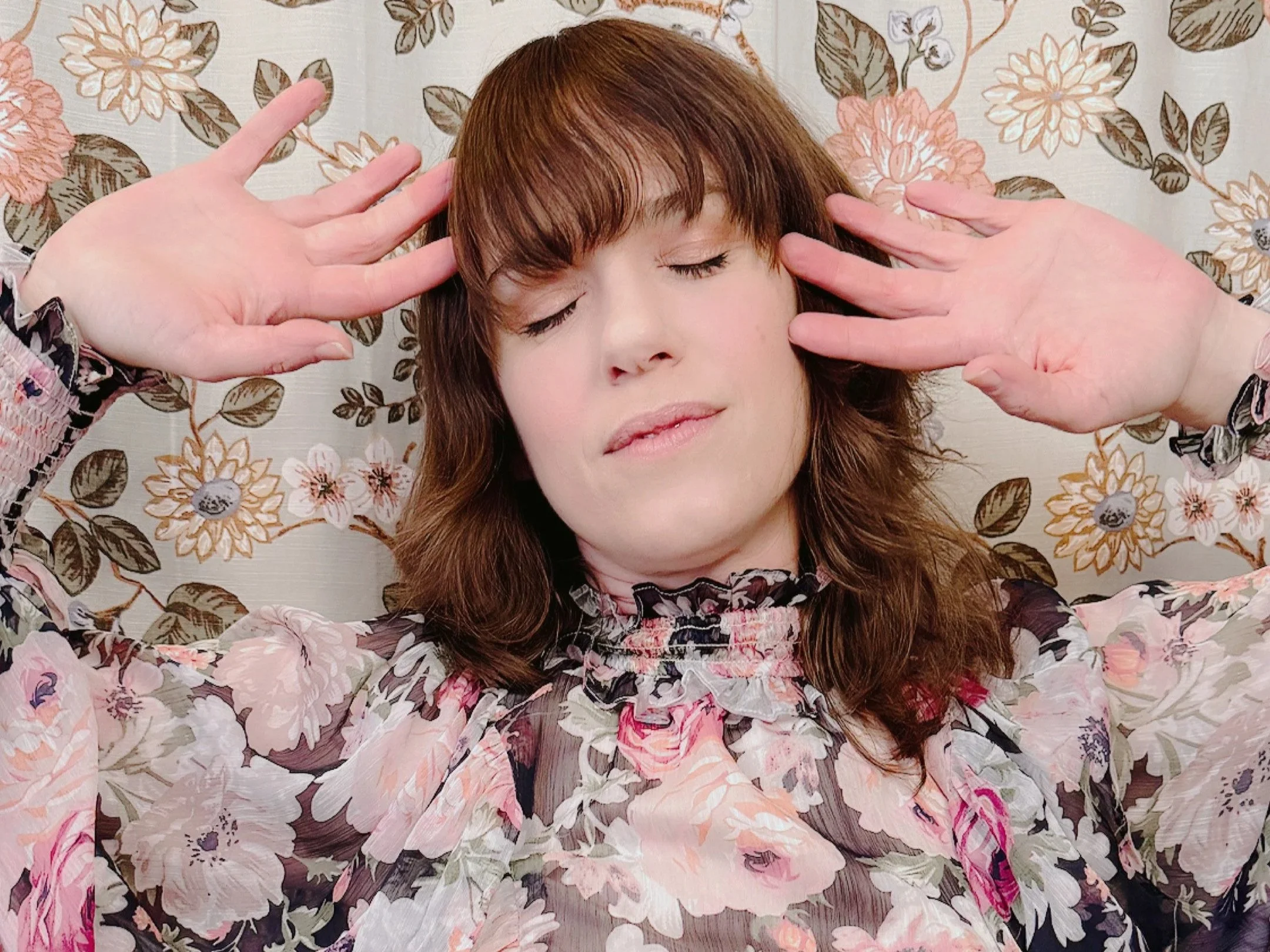
TF: That’s so real. (laughs) In terms of your creativity, would you say that changed at all when you had kids? Did you feel any less or more creative as a result?
JH: I mean, it's hard to be creative when you're sleep deprived. It's hard to think in complete sentences when you're sleep deprived! It's so intense and hard; you feel like you're filled with lead, and it takes all your strength just to get through the routines. Somebody spills chocolate milk, and [cleaning it up] is the hardest thing I've ever had to do.
I had really bad postpartum depression and went through so many traumatizing things. Violet’s whole diagnosis—we didn't even know she was disabled at first, and as she developed, she just wasn't developing normally. That took forever. We didn't have a diagnosis ‘til she was three and there's no way I could be creative or focus on anything during that time. So it's been nice to know that it can come back. And it takes some time, but I've always known that this is what I have to do, and this is what makes me feel good. I think you have to trust in yourself and believe in yourself that it's still there, even if you haven't had time to do it.
TF: It’s so tough to go out and do these things when you have kids at home that you want to be present for. I try to remember that it’s important for your kids to see you doing this stuff, even if they're upset in the moment that Mom's gone or Dad's gone. It’s healthy modeling for the kids to prioritize your interests. And if we’re lucky, sometimes we’ll get a reminder that there’s no reason to feel bad about that. The other day, my eight-year-old came up to me and said, “It's so cool what you do. You’re in the paper and you play music and you're not just like a firefighter or something.” (laughs) It was so heartwarming and hilarious that, in her mind, what I do is on a pedestal above someone who’s literally saving lives.
JH: When Ruby has friends over, I think she realizes that not everybody's mom can just break into song. If they like a Disney song, I'll just sing it like a Disney princess at the top of my lungs. She started having friends be like, “Why does your mom sing like that?” And then they treat me like a jukebox. They're like, “Learn this song!” (laughs) But I like her to see that I do stuff and go out and play my shows. And I'm always real casual about it. Mommy has a talent and a passion, and this is what I like to do. So I'm going to go do it. And when you get older, you can do whatever you want.
TF: How do your kids react to what you do? Do they ever give you unsolicited feedback?
JH: Ruby goes, “Why do you have to sing everything?” Because I'm a singer! Obviously. She goes, “Cringe.” I told her my goal every day is to be cringe, because that means I don't care what anybody thinks. I'm gonna do what I want, make myself laugh, and have a good time. And Violet, she's nonverbal, but you can tell when my songs come on, she loves it. She can tell that it's me, and that's nice. It would suck if she just started crying every time.
TF: When I saw you at Caffè Lena, you played this incredible song that you wrote for your kids, “So Pretty It Hurts.” I just adored that. I loved thinking about you getting this amazing inspiration from your kids. Do you find it easy to write songs about your kids?
JH: Oh, absolutely. I've written another song about Violet and her diagnosis that is honestly too hard for me to play because it just makes me cry. But I am finding lately, the floodgates have opened in terms of writing, and I'm getting a lot out and finding inspiration in all the places—children, life, memes, all that stuff.
TF: Every time I try to write a song about my kids, in some way it always ends up more about being a parent than the kid itself, if that makes sense. Or it ends up feeling cheesy. So when I heard that song, I was like, “God, she fucking nailed it.”
JH: Well, you played a beautiful song about your children. “May Your Heart Always Be Young.”
TF: That’s true, though even that is as much about them as it is directed to my inner child, my younger self.
JH: I want to come up with a songwriting prompt for you to write a song for your kids.
TF: Oh, that would be amazing.
JH: I love helping people with that. It's one of my favorite things.
TF: So I know a lot of other parents in the area who are also playing music and, on some level, feeling these same pushes and pulls. What advice would you give others in terms of just getting through the day while trying to juggle both those sides of yourself?
JH: You have to be on your own team. You have to help yourself out. If I know I'm not going to have time to write, the time that I do have I can get chords and a melody mapped out. I've finished writing songs in my head while putting Violet to bed.
TF: I totally do that too.
JH: I've written some great songs while giving my kids baths. But I really have learned to not put pressure on myself for stuff to be good, and to maximize the time that I do have. I have to be like, “I have until 12:45 to finish the structure of this, bounce it and upload it and then I can write [the rest] in the car.” You just have to be creative about finding the times to be creative.
That's what I do. I take care of my girls, and I do my music, and that's about it. I have found a nice balance of not having too much guilt and still being able to focus on myself and remembering it's not just for me. It's important for Ruby to see that I value myself and that I believe in myself. The guilt is very much stripping away, and I'm feeling like a powerful mom and a powerful musician.
Jes Hudak’s latest record is available now on all streaming services and at jeshudak.bandcamp.com
