
Confessions From the Underground #3: Content
**This column originally appeared in our January 2025 issue**
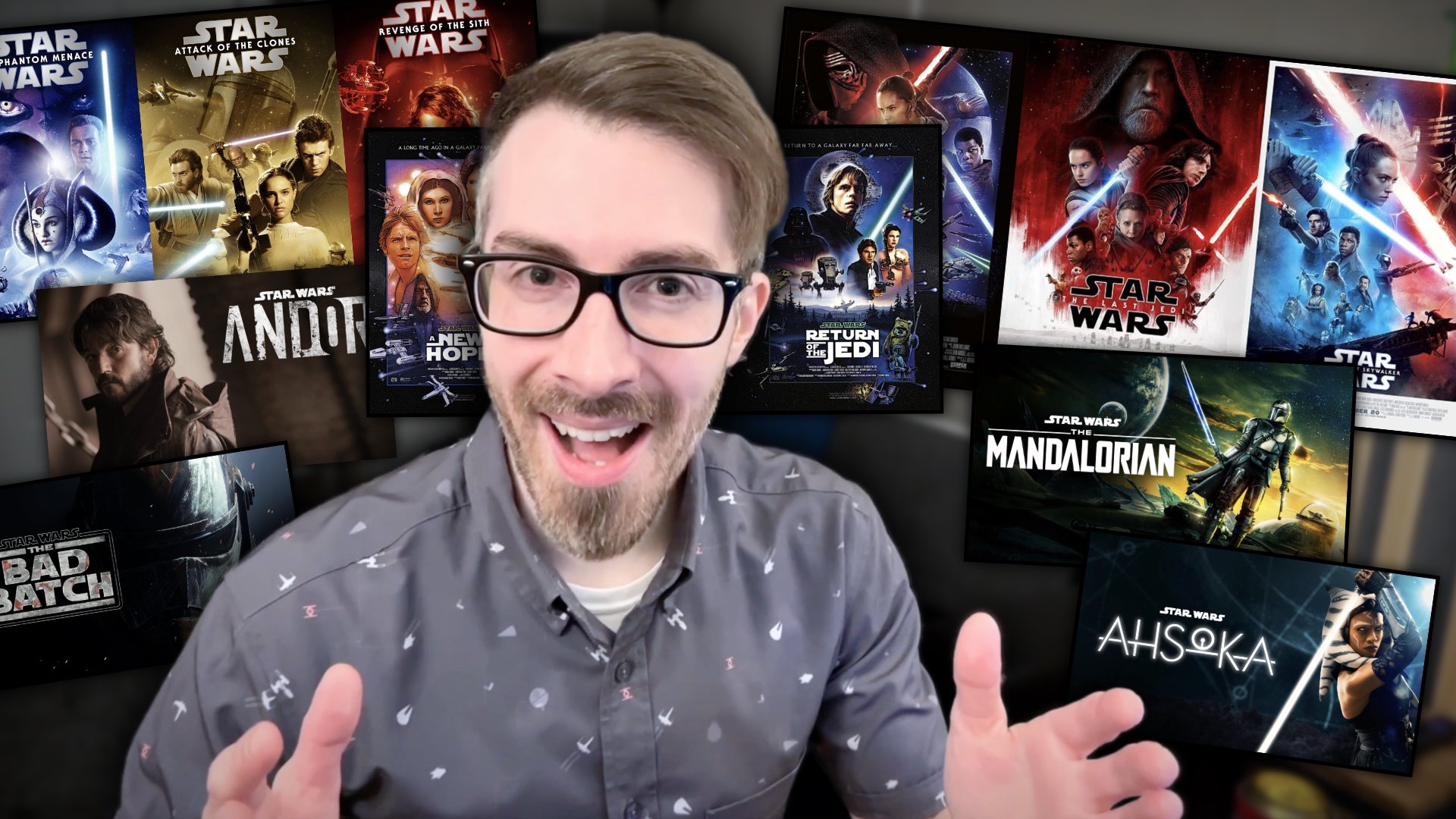
If you’re just joining us, Confessions From the Underground is a long-form interview series where I do a deep dive into a particular topic via conversations with underground artists. Think of it like Last Week Tonight for music, except with far less politics, research and budget. This month’s guest is Roy Thompson. A SUNY New Paltz recording technology professor by day, he also releases music and videos under the moniker RoyishGoodLooks, garnering over 175,000 YouTube subscribers hungry for his songs that pay homage to, and sometimes parody, the massive universe of Star Wars. If that sounds niche to you, keep in mind that his biggest video has attracted over 23 million views to date. This is not just nerd culture at its finest, but a master class in content creation and songwriting as well. So, what better person to chat with about this content-heavy culture of ours? If you like what you see, consider subscribing to Roy at www.youtube.com/royishgoodlooks
TJ Foster: Before we dive in, could you tell our readers a little bit about what you do, because it's a lot, and I certainly don't want to be reductive. You've done parodies but also all sorts of different things, so just kind of explain that a bit.
Roy Thompson: I appreciate that you put the immediate asterisk of like, ‘I don't want to call you a parody artist.’ This is probably, for me, the biggest sticking point. I've been reflecting on this a lot more as time goes on, but at the end of the day, it's just simply being an artist. I'm engineering, I’m writing, I’m recording, I’m mixing, I’m editing a video, I’m posting it online, I’m marketing. When you're wearing 100 different hats, you're really just an artist at the end of the day. I don't know if that's pretentious to say, but for me, that's the healthiest way to describe it. It's a lot harder to describe turning Star Wars into pop punk songs on YouTube at Thanksgiving to a distant relative. (laughs)
TF: No, I think you touched on it really well. It's probably really nice too, that you're able to have those distinct segments in what you do. How long would you say each of these videos takes you from the point of inception to hitting “publish”?
RT: It always varies, but I do keep track, dude. The Star Wars songs on the Royish Good Looks channel, right now I think the average is 50 days between one release to the next. Day one you get the most work done. You’ve got the shitty demo version of the song, and then you tweak lyrics or the arrangement. I have a hefty revision process; I'll redo the whole damn thing over the course of those 50 days, but within like, a week or two, you find what it's roughly going to be, and then the perfectionism kicks in. Once I get into the video stuff, I really take time to sync up the perfect frame with the beat of the song. There's a lot there. And I guess maybe that's why it takes over a month for just one damn song. But also, I do procrastinate. I'm lazy, just like everybody else.
TF: And your biggest video by far is obviously your Adele/Star Wars mashup [“Hello (From the Dark Side)”], which is almost, what, 10 years old at this point?
RT: Nine years old this year, yeah.
TF: Incredible. And it has 23 million views and rising. What was it about that one that you think made it so successful, and when you made it, did you think “this is the thing”?
RT: When I made it, I was nervous to do anything with it. I mean, this is my origin story. I’ve got over 70 singles now about Star Wars but [“Hello (From the Dark Side)”] was the first one, and what made it so successful wasn't me being a genius. It was just the circumstance of Star Wars coming back after like ten years with the new franchise, and Adele’s “Hello” was just huge. There were a million Adele parodies, I was just lucky enough to be the only person that came up with that and put it out before somebody else had the opportunity to. I think that's really what that comes down to.
TF: Right place, right time.
RT: After I'd made it, I showed it to my brother, Russ, and I asked him, “What should I do with this? Should we put this out under our band's name?” We determined we're not really that kind of group. The Star Wars thing is me. Russ isn't into Star Wars, or at least not to the level that I am. But he actually sold me on it. I have a vivid memory of playing it for him and he's got this shit-eating grin on his face. He kind of gave me permission to just let it be my own thing. So that's why it made it out there, with like zero confidence. The next week it blew up. I could go down 100 other rabbit holes there. But I'll pause for audience reaction. (laughs)
TF: It did blow up! And I saw it kind of happening in real time. How did that feel? I mean, that’s kind of a stupid question but, that must have been wild.
RT: I have always loved YouTube, and I always wanted a video to hit a million views. Now, that's not really a big deal. Everybody gets a million views. That video might have been a viral hit but it was not my first foray into silly YouTube videos, so it felt very validating. I did it! But I had no fucking clue what to do next. And this is the curse of an overnight success. I don't really think it was truly overnight, but it was a huge success, and I wasn't already in a routine of making parodies or even making my own music. I wound up doing nothing for the next nine months. It was just paralyzing. It took another year or two to figure out what the heck Royish Good Looks was.
TF: That’s actually a really good segue into talking about the kind of paralyzing nature of these “viral” successes. On the music side, there are people who will get big, find success, land big tours, whatever, from one single or a clip that might have gone viral on TikTok or something. Do you feel like music–or even just art in general–has been sort of diminished in any way by this constant pressure to just pump out content?
RT: Yeah, that's a big question. I think it's only diminished in the way that maybe jaded old fogies like us might want to title our article around, you know? Art's gonna be art. It's constantly changing. So it's kind of BS to judge it based on “oh, it's only a 15 second TikTok – that's what music's been reduced to.” Well, you've gone from the Gregorian chant to the symphony to the pop song to the TikTok video. What do you expect, there not to be progress, especially when there's so many technological innovations? Yeah, the algorithm is scary, because then it does kind of become a self-fulfilling feedback loop. But I almost would never have made “Hello (From the Dark Side)” if there weren't already Adele parodies on YouTube.
TF: You do wonder why it's feeding you the things it is and why it’s boosting the things it is, right? I've talked to so many up and coming artists who have told me they got started after getting noticed on TikTok. I do feel like it is this blessing for younger artists to have this platform where anyone can hear their stuff, regardless of if they're touring or doing X, Y and Z. So I do love that for them. But then again, it comes back to what happens to them in a year or two? To your point, you were paralyzed right? It can hinder the creative process, I imagine.
RT: The pressure hinders the process. But dude, trying to play to the algorithm is no different than if you’re in a band, playing all the local clubs and hoping you’re gonna get a record deal. If you want to tie this into more of our generation, you’re looking for someone to just pluck you out of your scene and into the zeitgeist. That’s no different than people posting on Instagram, YouTube, TikTok, whatever. They’re just throwing out their lures, trying to catch a fish and get that lottery ticket of some sort to get to the next level.
For the people that are doing it every day, and they’re building up a fanbase – that’s the way to do it. If you know how to show up every day, you’re going to get better at your craft and increase your odds at getting lucky. If you strip “Hello (From the Dark Side)” from my catalog, there might be a different number of subscribers and views, but I’d still have 69 other songs and all the other skills gained from that. We celebrate those huge wins but it doesn’t really mean anything in the end. It’s easy for our generation to be disconnected with TikTok; it’s 15 second clips, it’s weird. But it’s the same artistry at the end of the day.
TF: You used the adjective “silly” at one point a couple minutes ago to describe some of the things you do. And sure, there is a sense of silliness to it, however, I was going through your catalog and I saw the latest video you posted and noticed this comment…. “I’m Korean. The situations of the last few days in my country reminded me of Emperor Palpatine and the Galactic Empire… Songs about Rebellions give me strength. Thanks for making a good song.” Did you ever think something you worked on would have that kind of meaningful impact on the other side of the world?
RT: It’s pretty crazy that you put the thing on the internet and it can reach anybody. There’s a lot of people I’ve seen from Ukraine or Russia write comments and it’s insane. You never know what kind of impact you’re having on people. I always try to respond to those comments that feel like a real person on the other end.
I do love those comments when people say, “this sounds like a real song!” Could you imagine walking up to anybody else… Ed Sheeran, this sounds like a real song! (laughs) This is not just a silly “digital Dorito”, which is a term Cal Newport [uses]. I like that you can be entertained by it, but at the end of the day, there could be something more to return to. It's not just the spectacle.
TF: What is the balance between the comments like the Korea one and the comments that you just referenced?
RT: I think that one [I just referenced] is one of the top comments. That's what you want to hear, it's just the way the person delivers that comment. I do think they mean well and that still feels good. I've read probably over 100,000 YouTube comments in my career, so I've seen the gamut of like, awful to very generous, and anytime you just laugh at it, regardless of what spectrum it’s on, it is the healthier way to go about it.
TF: That’s good you’re able to just laugh it off.
RT: No, I'll turn to my spouse, and I'll be like, “Can you believe what this person said?” I'll still fume about it. But once that initial gut reaction dissipates, then you can laugh. Because YouTube comments are generally fired off. Not a lot of people write it, delete it, think about what they actually want to say and then come back and revise. They're just gut reactions, and there's always truth to them, but it doesn't always come out constructively.
TF: I think that's a very interesting side of this whole system of putting out content, right? Obviously, you're putting things out there for the masses to ingest, but you're also opening it up for comment and critique and discussion, and to your point, very few people are sitting there thinking about what they're writing. You spend an average of 50 days working on a song, they're going to listen to it for 90 seconds and then immediately fire off that gut reaction.
RT: How much time do you have, TJ? (laughs)
The funny thing about that is people don't realize how much effort went into making something the way that it is. I’ll get comments like, “You should have rhymed this with this.” Okay, thanks, but you could also write your own song if you've got a better idea. There’s the people that say, “Taylor Swift, I could do what she does!” But you didn't! It’s really easy to see what somebody else has done and critique it, especially as a kind of keyboard warrior.
The people that are commenting on YouTube or wherever, they just want to be heard and feel important, and that's easy to forget when you're reading that comment. I've even gotten comments not related to [the music]: people that say, “Get a haircut. What's up with your hair today?” This is what you get opened up to when you try to do something generous for the rest of the world: useless comments like this. It just comes with the territory. So yeah, I've seen a little bit of it all, but you do have to remember that it's just somebody else that wants to be heard, and it's no different than me wanting people to hear my song.
TF: Is there any other part of this “content machine” that you find particularly difficult or struggle with, whether it be any of the technical things, or even literally just getting over that hump of saying, “Okay, this is ready”?
RT: I think deeply about every part of the process. How can I screen capture the video so that the pixels are a little bit sharper? How can I warm up my voice so they don't sound too nasally on the recording? The most difficult part is just simply feeling comfortable with what you've created at the end of the day. Like, okay, maybe it's a little nasally, but that's the best I could do today. Getting comfortable with that is difficult, but when you do, then you're able to actually put the thing out and make progress in your own craft. It's no good if it's just living on your hard drive.
TF: I've struggled with that forever, and I've become more cognizant of it as I've gotten older and been doing this longer. Just trying to find a way to be comfortable with exactly what you just said. Okay, my voice never sounds the way I want it to, but that is human right? We're not all gonna be, you know, Taylor Swift or Mariah Carey at fucking 10am on a Tuesday, but it's a big mental speed bump, for sure. You seem to have this very healthy balance for yourself: coming up with an idea, executing the idea, and then putting it out there to organically do its thing. How do you maintain that in a healthy way mentally?
RT: Well, I never work until 2am anymore. There'd be days in the studio where I'd be there all night. I know you have kids and a wife. There's responsibilities now, whether that's like, showing up to an event, or you just got to do the dishes or whatever. There's something to asking, “What are your normal human obligations?” that can actually maybe help keep your artistry on track.
When you make 70 Star Wars songs, you figure out a formula, and you can constantly deviate at any point in the formula and refine it over time. But that's just it. I could tell you exactly, step by step, how I like to do it. I teach recording courses. I work with beginning students that have not yet developed those muscles of how they like their workflow from start to finish. They haven't done enough projects to have any clue. That's something you learn over time: knowing what the process is, and reflecting on where you're getting tripped up the most. Guess what, dude? “Hello (From the Dark Side)”? It's mix number one. There was no revision.
TF: Interesting! Looking back at that song, putting it out there with no revisions and it being so successful, do you think that had some sort of impact on your process today with your revising mixes more and more?
RT: I mean, yeah, I couldn't say otherwise, because there's so much expectation after that song, and I still carry that expectation with me, which is why I try to be a Zen Buddhist and not worry about the outcome. (laughs) And that's what a lot of people do when they're posting things. They're hoping this will get enough clicks, enough likes, enough subscribes, enough views, and that sucks all the fun out of the process. “Hello (From the Dark Side)” was all fun. It was also like a 24 hour turnaround. It's a trope [with songwriters] that a song that was fired off on the last day of their studio time became the hit. It's painful how true a cliche that is.
TF: Do you think you'll ever, just for exercise purposes, try and do that again? Take 24 hours, see what happens and then put it out there?
RT: I mean, that's what demo one is right? That's the most fun version of the project where there's no editing. But then the craftsperson will say, “This part's a little sharp, that's a little round,” and then reconfigure it. You ask could I do that? I actually do on so many other things. Teaching my class? I gotta prepare for it, but I can only teach it one time that semester, and I have to wait until the next semester to revise it. I do a podcast with my buddy Joey where we review the Star Wars shows and that's off the cuff, just like this. You're just talking, and half an hour later, you've got the podcast. We edit out points of it, but it's done that day basically. So there's other creative endeavors where I'm able to apply this advice, but not to the place where it probably matters the most.
TF: I feel like it is two very different parts of your brain, or maybe it's the same part of the brain, but two different factions of it. I've got stuff on my hard drive I've been sitting on for years, because there's no end goal. But when it's something like, I've got an article to write that needs to be done by tomorrow at midnight, I'm in the zone, man. I'm just going and going. Now, obviously we're coming at this from the artist's side of things so far, but flipping it on its head for a minute… what are some things that you appreciate when you're consuming content, and what are some things that drive you crazy?
RT: I love when things are formatted really well, whether that's a pop song, or a movie, or a YouTube video. Where it seems like somebody thought about how to present this particular thing in the most satisfying way. I love books that just get to the fucking point. I don't need an introduction; just get to the goods. You can apply that, obviously, to pop songs too. I hate when people ignore [formatting]. When you make a podcast, you have to edit out the empty space. You have to edit out the “umms” and the cracking of beer and think about the end user. And maybe that's why I belabor over some of my content, because partially it's for me. I'll listen to demo one 100 times. I don't need to actually finish it. I'm happy with that first version, but to put it out, it's got to be better than that. It has to be worthy of a million views, particularly with podcasts, because I personally believe podcasts are the 21st century garage band. Everyone's got one. But not everybody knows how to play their scales. Not everybody knows how to write a good song structure or market their live performance. People are gonna tune out if it's not well formatted.
TF: That’s so true. On that note, I always like to end these conversations with a little nugget of wisdom. I've said this a few times now, so I'm sorry for belaboring the point, but you definitely excel at all these different things, from songwriting to performing to recording to video editing and even, I would argue, marketing. I wanted to end by addressing the folks–no matter what level they're at in their careers, what age they are or what they're doing–that may only excel at one of these things, but they still want to generate content rapidly and most importantly, effectively. What advice would you give these people to be successful?
RT: It's a cliche, but you only get to quality through quantity. It’s difficult because you're going to second guess the process. You mentioned earlier that there's stuff on the hard drive and no plan. So what is the plan? You're not going to have all of the skills that you wish you'll ever have right away. You're gonna have to build up to that. You gotta have faith that you'll figure it out along the way. And if you do want to be an artist, we're always wrestling with that uncertainty. That's what makes it fun!
