
Confessions From the Underground #4: Connection
**This column originally appeared in our February 2025 issue**
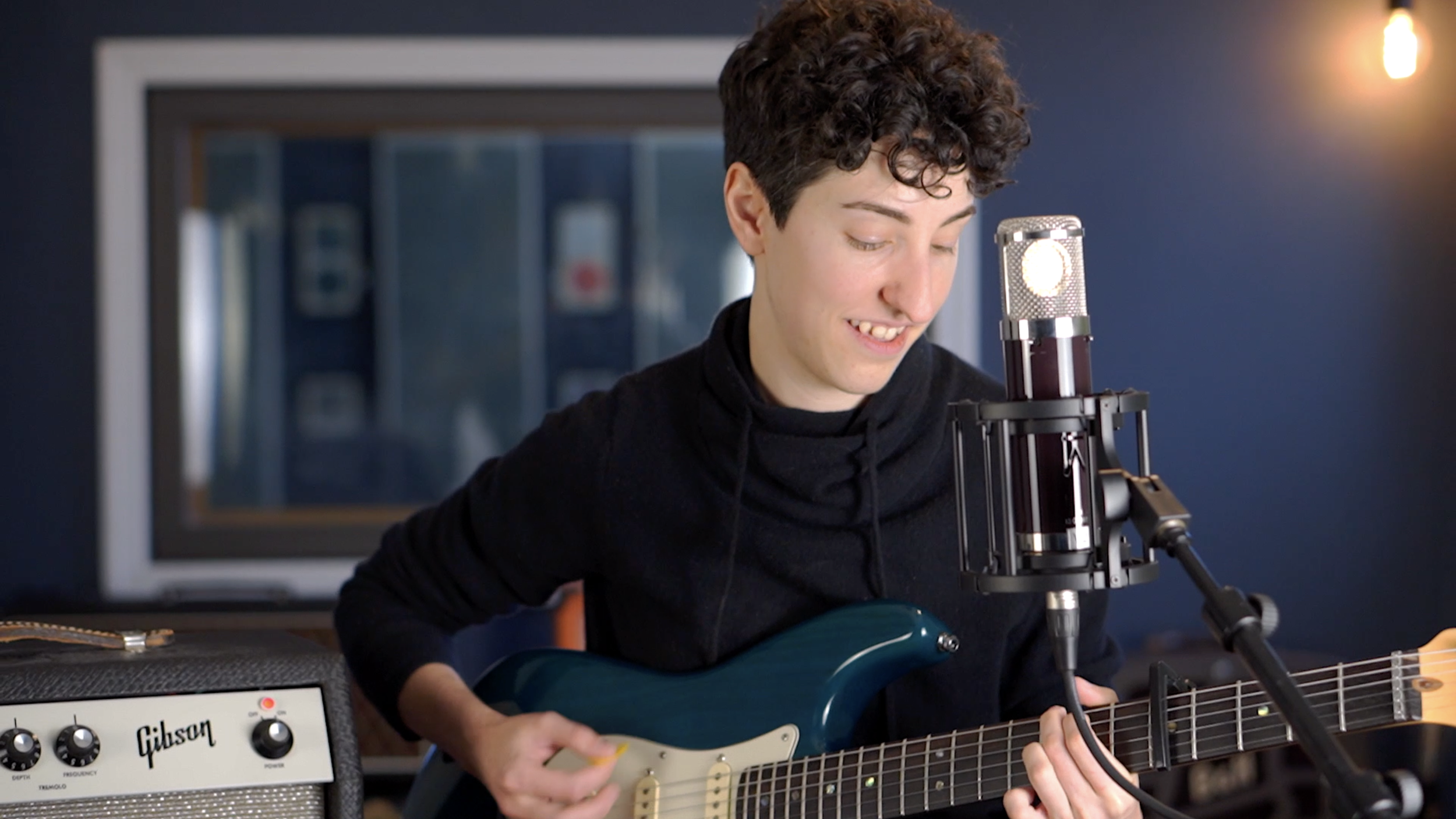
Photo by Mike Dwyer
I’ve been thinking a lot lately about connections. Not the New York Times game (though that consumes a nice chunk of my mornings as well) but the dying art of connecting with another human being. As artists, I think it’s safe to say that our main goal is connecting with people on a deeper level. But there’s also connection as a sheer act of necessity – staying in touch with people in order to maintain relevance, or even just simply to let them know that you’re working on something new and exciting. I immediately thought of my friend Julia Alsarraf, who not only connects with people through her own stunning, original music that’s brought me to the verge of tears on more than one occasion, but she’s also someone who connects with fans in a unique way for 2025: without social media. I caught up with Julia for a spontaneous chat on this topic mere hours before she was going in for a scheduled root canal. (“If I die, I'll be really happy that this is the last conversation I had with someone!”) Spoiler alert: she survived.
TJ Foster: I wanted to chat about “connection” today, specifically with fans and listeners. Obviously, there's a couple different aspects to this – the emotional connection, which we'll get into – but first and foremost, I wanted to touch on the literal ‘informational’ connection. How we let fans know when we have something going on. Obviously, the big elephant is social media. And you're famously not on social media, correct?
Julia Alsarraf: Yeah, and I did anticipate that this might be related to the topic that you were gonna talk to me about!
TF: One of these days, I’m going to surprise someone with one of these. (laughs) I'd love to talk a little bit about your relationship with social media though – were you ever on it? Or was it that, from the get go, you had zero interest in being a part of one of those platforms?
JA: I've been on it. I remember when Facebook was a platform where you had to have a .edu email address and all of that. And some of the cool kids at my high school had gotten invited by their friends, and you had to know somebody to get onto that platform. I also had MySpace – multiple MySpaces for multiple band projects and all of that. I got off and on a few times with Facebook in particular, just because that was the one that was around for most of the time that I was on social media. My sister and I made Twitter accounts, which I used for like, a day. One of us made a post about opening a box of crackers, just the most mundane thing as sort of this self-awareness of what these platforms could become, which largely has happened.
I think in retrospect, having been off for a very long time, and now where I am in other areas, I realized that part of it was a self-protection mechanism, because I do have some obsessive tendencies, and I think I was using it for all of the wrong reasons. I think people have different levels of awareness of that. But it would be like, if I would reach out to a friend and they wouldn't respond, but then I would see they posted something… that stuff fuels self-doubt like no other. And I just didn't want that pain. So it was pain avoidance probably that got me off in the first place. But then, I saw many people around me on it every day, and I could start to see the ways that it can impact people. It made it much easier for me to not get back on.
TF: I feel like it's hard to drop it cold turkey because it’s almost an addiction. But also, as a musician or an artist – or I guess it doesn't really matter if you're a musician, actually, it's any industry you're in – it's the thing to promote what you're doing and it's not even great for that. I don't think we need to belabor that point; I guess my question is what are some of the ways that you effectively keep in touch with people about what you have going on?
JA: I keep an email list and I send out emails whenever I have a thing that's happening that I want people to know about. Sometimes I do that with a little more advanced notice than others. But it is a pretty effective way I've found to let people know about what's happening. Also, then you get to choose, right? It's not an algorithm. It's a specific choice by the audience member of who they want to know about and keep track of versus who is doing the algorithmically correct things to show up in your feed.
I’ll also just reach out to people if I know that they have expressed interest. I'll send them a text and say, “Hey, I've got a thing coming up!” The lack of social media doesn't seem to have hurt me. The last show that I played, which was at Mojo's [Cafe and Gallery] on the solstice, I don't think you could have fit a single other person into that room, which was great. It was the best feeling to have an environment that was that cozy, especially on a cold winter night. And to have done that without social media, I hope, is the kind of thing that can show others that this is not a necessary evil. This is not a thing that you have to do. If you like it, if you want to do it, great. But this mentality that I think people have sometimes like, “I hate it, but I have to do it…” – I challenge that, and I will do it as often as I can.
TF: I love that. And actually, I remember you said to me at a gig once that your hope is that you get famous one day so that you can prove it can be done without social media.
JA: Right. I don’t want any of the other things that would come with that. (laughs) Of course, I'm humble enough not to expect that that's going to happen any day. But yeah, if it can be the thing that proves that point, great.
TF: I mean, it sounds like you do have an inherent belief that it can be done at least?
JA: Yeah. And I guess what I would say is, it depends more on what your goals are versus your strategy, which is just to say, if somebody wants to be famous, the notion that social media is the only way to get there – it’s not. But that’s almost irrelevant, because I have some problems with that as a goal inherently, right?
TF: Yeah, I guess fame wasn't necessarily the best word. Maybe ‘success’ is better.
JA: Yes, success. I don't think you have to have social media to be successful. And everybody gets to define their own definition of it. But certainly for me, social media is not a thing that I feel like I need, and I will love looking back at this ten years from now if I've become a social media machine, just the hypocrisy. (laughs)
TF: I loved that point you made though, about an email list not being defined by an algorithm. I’ve never really thought about it before. In that realm… and I think this is interesting too, because you're not only a musician, but a web developer, right?
JA: Yes. And ironically, I used to work for a marketing agency.
TF: So, I'm curious. Can you think of any other – email list aside – type of platform or method that would really solve some of these pitfalls in keeping artists and their listeners (fans) connected? You referenced MySpace earlier which, at the time, was kind of this cringy sort of thing, but looking back on it now? What an awesome tool we had! Is there anything that we can take from both that experience and what we have now to look ahead and think, “What could a better solution be for artists?”
JA: One method that I love and haven't employed much for myself is a good old poster on a window, because you're then tapping into the kinds of communities that you're interested in having at your shows. So if there are coffee shops and places like that and those are your people, then great. As a web developer, I always love a good website. Mine is not, of course, an example of the latest innovations in web technology, but I do think that it represents me pretty well, and I think that's one of the things that artists can do for somebody who has not yet heard your music, or has not yet come to a show of yours. And then there's always word of mouth. I think that can never be overrated.
But I think too, as far as staying connected with audiences goes, maybe part of the other reason I resist stuff like social media is that, for me, I feel like a lot of the emphasis is that the show is the connection, right? Coming out to a show and being in that environment and having that experience is the unique thing that can't be replicated anywhere else, and from show to show that varies. And there are moments that only happen when you've got a room full of people who are engaged in that moment.
TF: And they only happen once.
JA: Exactly. And that's the thing: I just love reality. I have an affinity toward real experiences that can be felt and for me, social media just isn't that.
TF: It's almost the antithesis of reality. You're trying to make everything look as good and shiny and beautiful as possible.
That was a fantastic segue, by the way. Because the other thing that I want to touch on is that emotional connection you just referenced. Because yes, it is important that we stay in touch with people, we let them know what's going on, and we get them to hear or see the thing that we're doing, right? But once you're there, there's also that emotional connection we’re seeking. So what are some ways that you find you're maintaining that sort of emotional connection with an audience?
JA: For me, I think the first step is in that songwriting process. I only write songs for myself, right? I love to play them for other people, but if the song didn't do something for me, then it's much less likely, I think, to do anything for anyone else. Especially in a live experience. We are, most of us, human as far as I know, and we may have vastly varied experiences, but those experiences all share some core elements that we all feel. So there is something in that that I think allows folks to have an entry point, and on a good night, if I'm in that state of flow, then I'm able to not hyper focus on every single note and every single technical element of the performance, and really able to look out and respond to whatever vague sense of energy there might be. I love riffing, and I love that sort of in-between banter and developing inside jokes throughout the course of a show. So that's one thing, and I think also the comedic element of some of my shows probably serves as a necessary in-between dosage of like, “Okay, now we're gonna go deep into your darkest fears and insecurities, but then we'll lighten it up for a moment.”
And then there’s talking to people afterward. I know there are some artists who really don't like to talk to folks after shows and that's fine, but for me, maybe because my music is so personal, I often find that if people resonate with my music, then we will also get along well as people. I've made a lot of friends from shows.
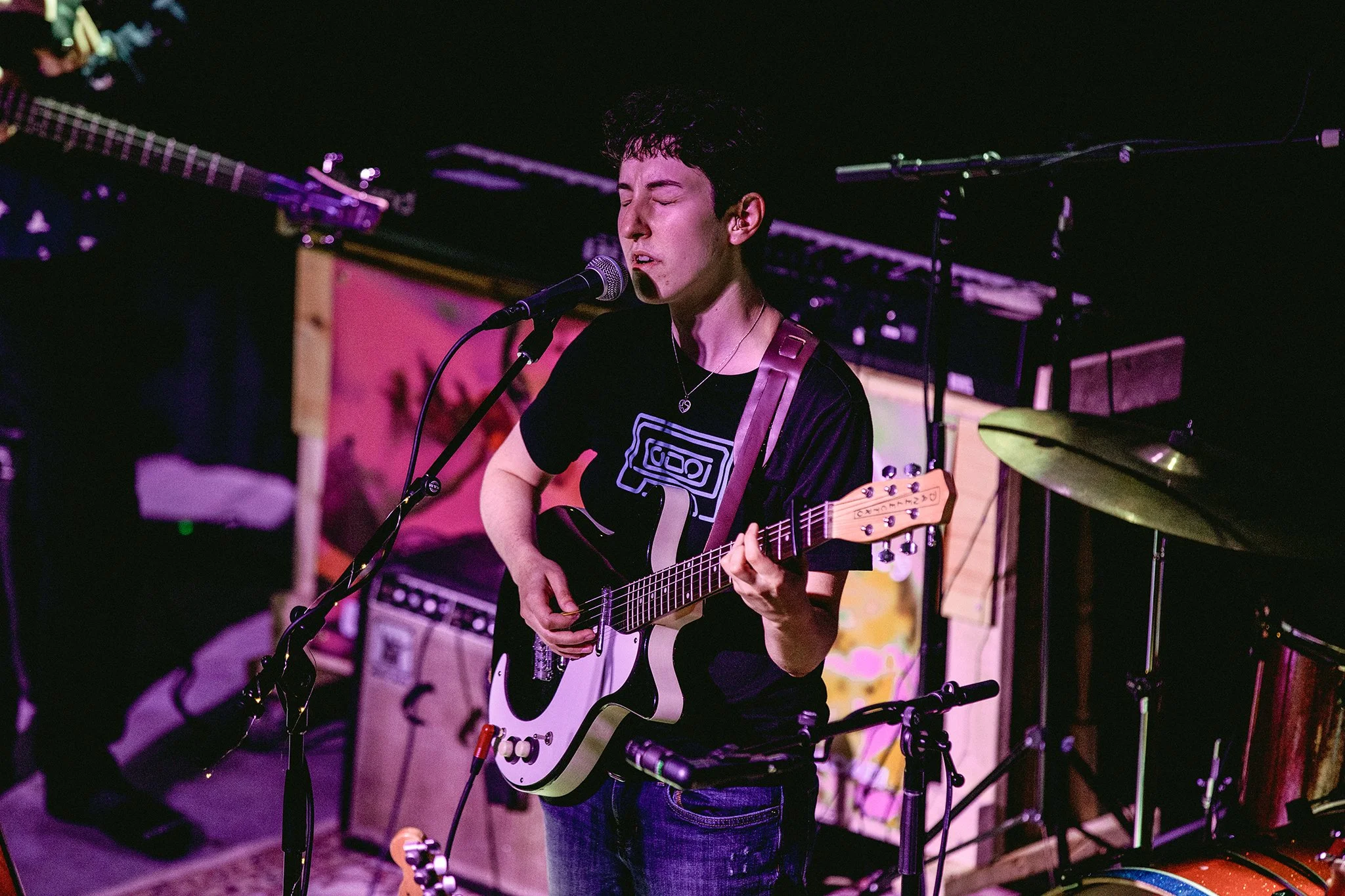
Photo by Ann Kielbasa
TF: Since maybe COVID, I've gotten a little bit more outgoing [at shows], but I always used to cringe a little if someone tried to talk to me after a set. I'm so awkward and uncomfortable; I don't know what to say. But, in the last few years especially, I've really found value in what you just said.
JA: It becomes a shared experience for [the audience members]. The community element and the connection element of it just kind of gradually expands, because now you all have this shared repository of things that you've done together, and moments that you've experienced together, and I think that that ultimately is what community is: to have a cohesive connection with the people in your area.
TF: Yeah, and you’re not only witnessing a performance together, but you’re bonding over things that are potentially very specific to an artist’s life. And you almost have this shared nostalgia for something you didn’t even experience directly.
JA: Yeah, exactly. And to go back and answer one part of your question about other ways to let people know about things… Of course, there is Metroland, which I don't just say because I'm talking to you. But it is great. I am really happy that it ended up being in print, because I love to flip through it, and it's a great way to find out about stuff. It’s that specificity of it too: “I want to know about live music in the Capital Region so I'm going to pick up a Metroland.”
But going back to what we were just saying, there was a guy who came to a show of mine at the Madison Theater in Albany that was reopening, and the Times Union had put out a piece about it. And I think that was the first time someone has ever requested for me to play one of my songs. I’d expect somebody to request a cover or something upbeat. But no, he wanted “Beautiful Disaster,” my slowest, saddest song. And there is something really sweet about that. Which is to say, it's not bad to have content online, right? He saw the article, looked me up, found my videos on YouTube and decided that he wanted to come and check this out. He had listened to a few songs and connected with, I guess, that one in particular.
TF: It's such a beautiful thing when that happens. Especially when someone requests something that you've written versus, like, a cover they just want to hear for the novelty of it. Sure, it is kind of ironic what that person asked you to play, but that's also awesome! You've connected with someone in yet another way.
What are some things that you find you connect to as a listener, or an audience member?
JA: I went to a show in Montreal not too long ago. That was the first time that I had been to a produced show with choreographed lights and everything seemed really polished technically. On top of that, whether it was staged or not, it felt honest and genuine. The band just seemed like they were having a really good time. And for me, as a listener, and especially as a listener who is a musician, I want to know that you're not in pain up there, right? If you're suffering through the set, I won't be able to enjoy it. Which isn't to say that we don't all struggle with anxiety and fears and all of those things. But, I think if it is causing you pain, it's going to be that much harder for me to engage and relax. And that's not just a music thing. That's a psychological phenomenon of like, if somebody walks in in a state of high stress, literally, physiologically, every other person in the room’s stress level would go up.
Beyond that, I don't have any specifications for what the actual content of the show is. Some people like to talk, and I love to hear some of that, sometimes. There is that element of connection, just the same way that you may not necessarily feel that best friend energy toward literally every person you see. People are going to gravitate toward different artists and different performance styles and stuff like that. But I think it is just that layer of authenticity and doing the thing that feels good for you as a performer.
TF: It definitely comes across when someone's doing something authentic; you can really feel it in the room. And for me, as a musician, if I go see a show and I leave that show so motivated to go write a song because that experience left me super inspired, that's when I know that something has truly connected me to that experience. I mean, live music in general is such a visceral thing that you can connect to no matter what, but at the end of the day, it all comes back to authenticity. And I assume that’s what you want to bring to the table as a musician too.
JA: Totally. And, this isn't a directly related thought, but just talking about live and local music in particular, that's why I also think it's great when cities and organizations put on these outdoor festivals and things like that. Because I remember more than one occasion where I may not have even known that something was happening. There was a time that I drove by when Rockin on the River was happening [in Troy], and it was Girl Blue playing. I had not heard her live before, but I literally pulled over and had to go hear what that was. Authenticity, particularly authenticity that resonates with who you are as a person, just like calls out to you now and then. And so there's something really special about those kinds of events where you can just get a sampling of everything that's happening, find your people, sign up for an email list and keep going.
TF: Before we run out of time here, I do like to try and end these chats with some sort of nugget of advice. This would be advice directed to, I guess, really anyone in any industry. We’re obviously focused on music and the arts here, but I'm thinking this applies to literally anyone trying to do a thing, but struggling with clever or impactful ways to reach their fans or their customers. What would you say to those folks?
JA: So, with the caveat that, of course, even if I give good advice, it doesn't mean that I always follow it for myself – and this may be horrible advice – but one thing that strikes me is I've been reading The Artist's Way by Julia Cameron. Are you familiar with that book?
TF: No, but it sounds like I should be!
JA: It's a 12 week course, and I think the subtitle is something like “recovering your creative self” or whatever. It has been really interesting. I've really enjoyed reading it, and I think there's a lot of good advice in that book. So, my advice would just be to check out that book! But one thing in particular, or a few things in particular that strike me from that book is to not get fooled by working on your art and working at your art. There are some nuances between like, wanting to make this thing and wanting it to be good or get good reviews or positive feedback. A lot of the encouragement in the book is to really sort of step away from that and turn inward and I think it goes back to what we were talking about with authenticity. That's the way to be able to make the work that is going to be good and well-received and is going to connect with others.
And then I think it feeds into some of the discussion about social media, because it's so easy to satisfy the craving of art-making with all the things around it, and then all the comparisons too. The comparisons will fuel the destruction of your inner artist and that's just totally useless I find. Not to mention, the entertainment of scrolling and the dopamine itself is time that you're taking away from centering into your own practice. So it's kind of both sides of that.
Stay in touch with Julia by signing up for her mailing list at www.juliaalsarraf.com.
