
Confessions From the Underground #6: Artificial Intelligence
**This column originally appeared in our April 2025 issue**
Admittedly, I’m one of those people who is inherently unsettled by the vast onslaught of AI. As an artist and writer, I understandably have concerns. Here at Metroland, I’m very passionate about not allowing ChatGPT and the like in our writing. It’s actually in our official Contributor Guide. I know firsthand the industry is leaning heavily on AI for articles and it’s getting to the point where embracing your humanity means setting yourself apart. Not to mention, we’ve built a team of some of the most talented, dedicated writers I’ve ever worked with. It would be a disservice to both our readers and writers to reduce what they’re so good at to a prompt and an algorithm. At least that’s how I feel, though I’m sure there are plenty of people out there who would make a good case against that.
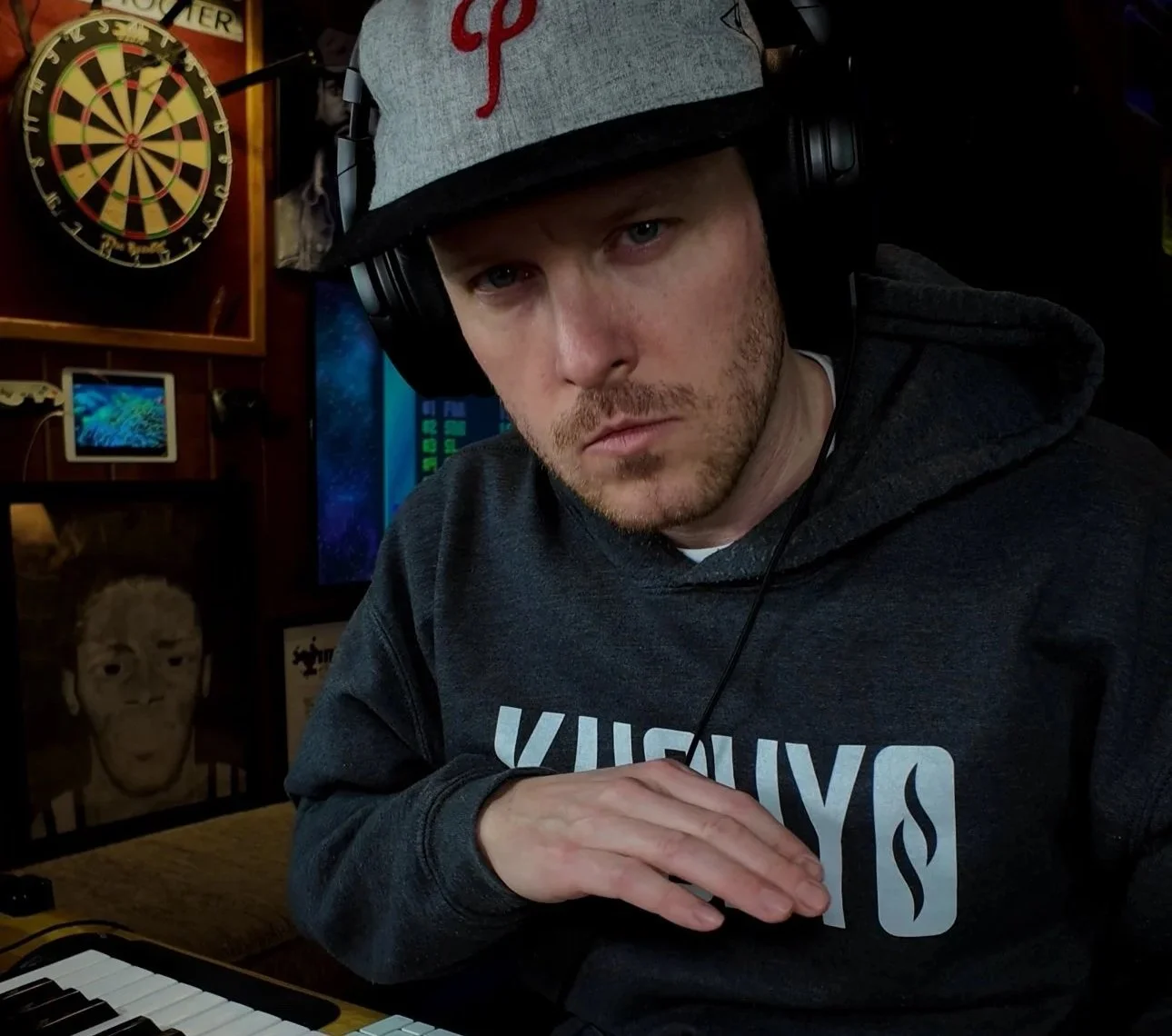
I know that fearing something new is partly due to a lack of understanding. As such, my goal here was to get/offer a crash course in AI. Local Eddies-nominated hip-hop producer Brendan Paulsen—Ab the Audicrat, in our music scene—graciously offered his expertise and talked me through the capabilities, the benefits and risks, and what the future might hold. I’ll be honest—I left our conversation with mixed feelings. On the one hand, I’m a bit more encouraged to acquaint myself with some AI platforms in specific-use cases. On the other, I’m probably more unsettled about what’s in store than I was beforehand.
[TJ Foster]: Thanks for agreeing to do this on such short notice! This is a topic I’ve wanted to discuss for quite some time.
[Brendan Paulsen]: Of course. Hopefully I can provide some insight.
[TF]: Growing up, I like to think I was pretty tech savvy but in recent years, all these advancements with artificial intelligence have seemingly eclipsed me. So my first question is relatively simple: can you explain AI to me like I’m a first grader?
[BP]: AI has really been here for a long time. I mean, when you search something in Google, that's AI. It’s more of a rebranding of things that have existed for a while now; it's really just advanced so quickly in a short amount of time that it is taking on a new face. And it's also adopting other [faces], don't get me wrong, but in a nutshell that's really what it is.
By no means am I an expert on this, but in music, for example, I have a lot of plugins that I use for mixing audio. It mixes stuff for you, to a degree, and bases it on inputs that the company might have put there as to what it thinks the best hip-hop vocal sounds like. And then it kind of does the work for you. It's been more of a tool that gives me a very good baseline.
[TF]: I was actually about to ask how you’ve utilized AI in your own work. How does it make things easier or more efficient for you?
[BP]: I'm really big on ChatGPT. I use it to write bios. And I know that's unfortunate for writers. But for someone like me, as a content creator, it's very handy to put in an old bio somebody wrote me and ask to update it.
Another big thing that I've just started using is the voice feature. You talk to it and legitimately have a conversation. It cuts off if you start talking, so it can reprocess if you have a question on what it's telling you. And it's unbelievably realistic. It can get all this information from the internet in a matter of a second but it's conversational. So that can help with asking things like, “I'm looking to make a video on how to make a boom bap beat in Reason. Give me searchable SEO-optimized titles with bullet points,” and it will spit you out everything you need in a matter of seconds. Of course, you still have to go ahead and execute. You still have to get on camera.
[TF]: What about on the audio production side? What sort of tools have you been using that really help your workflow? I find when I'm mixing or recording stuff, I can get bogged down in the little details and always look for tools that could remove some of those hurdles for me.
[BP]: There's a company called iZotope that makes amazing AI software and they seem to be a little bit more out in front of it. They have all types of intelligent plugins. There's one that's called Ozone and it's meant for mastering. It's based on tens of thousands of songs that they inputted. If your song sounds like a hip-hop song, it gives it the polish that it thinks it should have for hip-hop. Seven or eight times out of ten, it's amazing right off the rip.
They also have a separate software called RX. It's like a repair assistant. It does things like taking away clicks out of tracks. Or excessive hissing if there's some sort of noise from analog gear. It can drop out vocals from a track, like a stereo track, which to me is still alien that there's software that does that.
[TF]: That's wild.
[BP]: It's not perfect. But I’ve found them to be the best with AI thus far. I use it almost all the time on my mixes. The way I look at it, I'm really a producer first. I've always mixed, and I've gotten far better in the past four or five years. I think some people almost see it as cheating, but I don't even care. I just want my music to sound amazing. I don't care how it gets that way. As long as I'm behind the wheel, if I can get there faster by using these things, that's how I look at it. It’s a tool.
A good podcast I watched goes very deep into how AI is going to shape our lives. What they're basically forecasting is for the people that are going to “win”—especially in the content world—it's not so much about specializing in anything anymore. It's about how you can utilize AI better than the next person. Even lawyers, paralegals…they say these things will not go away, but If you have a chatbot that you can go to any minute you need to scrub libraries of books and legal law, you don't need that person anymore. Knowing how to utilize AI better than the next person and stay with the trends – that's where my mind is focused moving forward because I do not want to get left behind.
It's going to happen so quickly that, if you don't keep up, it's just going to get harder and harder, even though the tools are more and more powerful. So I’m trying my best to stay ahead of that.
[TF]: Obviously this is a huge buzz topic in many different industries. We just talked about the benefits, of which there are plenty, but there's also many concerns and pitfalls. I was just reading earlier, actually, there was this letter penned to the government asking to disallow Open AI and Google and some of these other companies from using copyrighted material in training their artificial intelligence systems. Do you see any ramifications there? If these companies are in fact allowed to do this.
[BP]: I mean, it's a good question. We’re in uncharted waters. It really is as simple as that; there's a lot of unknowns. I think there's a lot of people that don't know what to do or when it's going to happen. Like anything else, people are going to want to use these things and so they're going to kind of brush some stuff aside. There's going to be endless disruption in so many different areas of life. I mean, they talk about how almost every car will be self-driving in like a decade. And think of that—there won't be a need for Uber. I mean, I guess there would be… maybe in the reverse, there would only be companies like Uber. You know what I mean? But you wouldn't need to pay anybody to drive the cars.
This is what Andrew Yang was big on when he was running for president. It’s why I loved him so much. He was really big on universal basic income. Not for charity, but he's like, “Look, these people are going to lose jobs. Truckers are going to lose jobs with Amazon getting self-driving trucks.” And a lot of these people, statistically, don't have higher education. They don't have a way to bounce back. I think he was proposing we give people like $1,000 a month. (Editor’s fact check: this is correct!) That isn't livable income, but it's something to pad the inevitable displacement of jobs that is going to happen. And it's going to happen so unbelievably fast. Not in a day, but in a year or five years, which is still very fast for all these people to be out of a job. And I keep going back to people like artists and writers. And yeah, how do you police it? I don't know if there's really been solid answers on that. I'm sure there's very smart people out there trying to figure that out.
[TF]: I certainly hope so!
[BP]: I'm on my phone all the time so I’m not one to speak, but I think phones and technology have already destroyed us in many terrible ways. We're not meant to be behind screens [and] apart from people the way we are. We should be with people in the tribe. That's how we evolved. And we just don't do that anymore. But you think it's bad now?
One last point on this. I read more and more about how we're going to get to the point where—some of this is speculation, but it's already kind of there with Siri and all these chatbots—everybody will have their own personal AI assistant at some point. Not only are you going to have one, but you're going to have multiple, for different purposes, and there's going to be settings that you can set for each one. So if you need a friend that's going to be hard on you because you need to make a decision and you're being too timid, you're going to have that one [chatbot] to go to. If you need somebody to cheer you up when you're down, there'll be another chatbot you can go to that will do that. Companionship – that's already a thing. Like, there's people who have these digital relationships – we’re already there. We're just not fully there yet. That's where it's going to get real interesting because not only are we going to displace jobs, we're completely replacing relationships.
[TF]: That’s pretty scary, man. It's wild hearing you put it like that. It sounds so dystopian.
[BP]: Oh, it is. I remember somebody was on Bill Maher about a year ago talking about kids in schools with phones. Now, I don't have kids so I don't want to talk too much on this, but it's very clear that having phones is destroying kids. Humans aren't meant to have those things ever, let alone at a young age when their minds are developing.
Apparently there's been somewhat of a push to take phones out of schools. I think the guy was talking about how they’ve done experiments in certain schools and it's comical how he talks about, “When we took the phones away, they became less anxious and talked to each other more.” Go figure! We're so backwards that we think it's surprising when we hear these devices—the most powerful things we've ever made, that control everything in our lives—are ruining us. Of course they are! And I think that goes past kids, too. We just think because we're adults that it doesn't affect us in the same way.
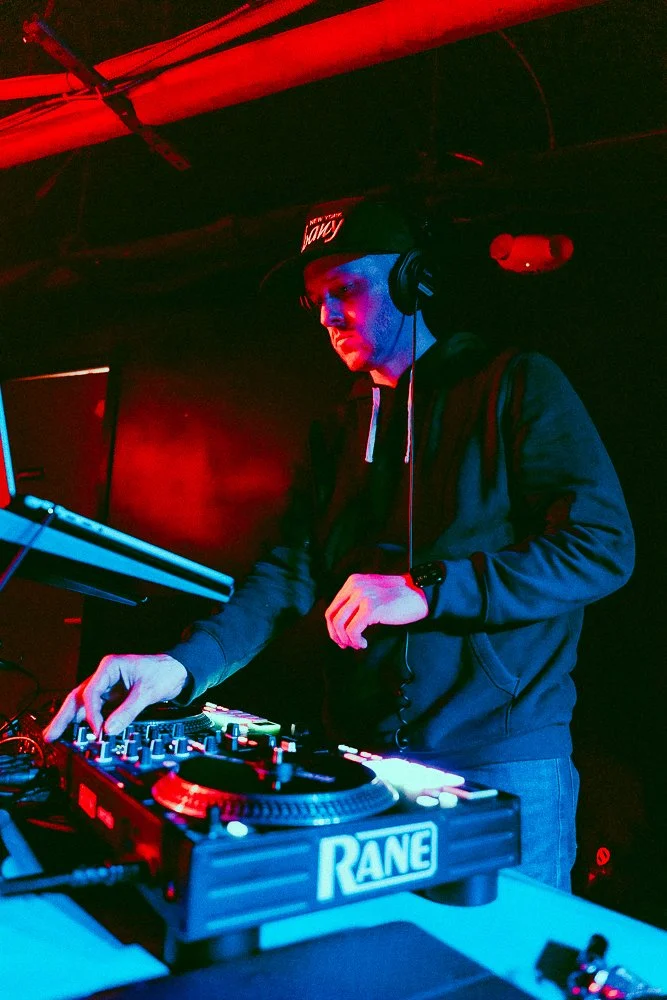
Photo by Kiki Vassilakis
[TF]: Going back to the music side with this, I look at what Spotify is doing with creating AI-generated albums and obviously pushing them to their own platform. Then of course they own the biggest and most important playlists, so they'll push those tracks to playlists and it's taking royalties from artists. It’s frustrating. Is there a silver lining here? Because I feel like it's completely disregarding that whole human element of making music.
[BP]: No, of course. I think ultimately what it comes down to is we are humans and we will always have that instinctual need to connect with other humans. So although it might take up a very big part of, in this case, the entertainment/music industry, I still think there's always something to be said about human musicians, live music, things like that. It's a matter of them coexisting; I don't think it's a matter of one taking over. We’re humans and we crave connection. So I don't know. That's a really good question.
But here's another interesting thing that I've been seeing in the entertainment world. I mean, I don't know these things for sure, but it does make sense to me when I watch people talk about them.
[TF]: I'd be amazed if you did know all this for sure, haha.
[BP]: (laughs) So, with the things you can do with AI and video, we're going to get to the point where anybody can make a movie themselves. And they can input their family into the movie. “Make me a Spiderman movie where my kid is Miles Morales, and I'm Uncle Ben.” You can just customize everything you want to watch. Everybody's gonna be able to make a movie the same way that anybody can go onto an AI music site and say, “Make me an uptempo jazz record that sounds like it's from the ‘50s.”
The whole entertainment industry is going to be completely turned upside down because at some point, video is going to be close to indistinguishable from real life. I mean, we're already pretty much there with audio. You talk to ChatGPT, it sounds like you're talking to a person—the way they breathe, the way they pause. It's unbelievable.
Even content creators, it's going to be people controlling avatars. You can make your own avatar, make it look the way you want, and you just input that in a video and add these bullet points to how it speaks. And that's going to be the next phase of content creation. It's not even going to be you on a camera.
[TF]: Wow.
[BP]: I don't think it's going to completely replace people. But if you're somebody who has any lick of creativity at all, and you could prompt your own movie and watch it the way you want to watch something – how does Hollywood exist? To your point, how does music exist? It’s really strange to think about.
I think the people that do end up specializing in things though, especially in the art world, will be more and more revered. The people that have these skills, I think they're gonna have an advantage because they can demonstrate them, whereas other people are going to heavily rely on AI; there's going to be these two worlds.
[TF]: So one of the other questions I want to ask is that any sort of technological advancements tend to be a net gain for society, as long as they are in the right hands. History has proven this. And I’m sure it’s a mix of both right now, where you’ve got people using it for the right reasons, and those using it for the wrong ones. So what are the risks here?
[BP]: I mean… I guess you can go so far as to say nuclear war. Honestly, we can 3D print guns now, you know? So if AI is going to get good enough… I don't know so much about that, but I mean it could be that bad. You can have an advanced algorithm hack systems in a way that's never been done before. I mean, you can argue that on the reverse side, there's going to be advanced algorithms to defend those systems. Right? But if all cars are self-driving, and somehow somebody can get into their systems and hit a button and then all cars swerve off the road? That's a valid concern.
I saw an interview with Sam Harris, big Sam Harris fan. He talks about AI a lot, and that was one of the points he made. He's pretty concerned about AI—some other people aren't as much, they don't see it as, like, a Terminator situation—but to your point, there's valid concerns, because all it takes is a handful of bad actors, and if everything is relying on technology and AI and cameras on cars… snap your fingers, and that goes wrong. I don't know how you curb that. It's almost an evil that comes with this godlike power.
[TF]: Have you ever driven a self-driving car?
[BP]: No, but I sold cars for a short amount of time and some of the cars have lane assists where it'll know if you're cruising out of a lane, and guide you back. So I've been in a car that does that.
[TF]: I was visiting my brother last year and he rented me a car so we could get around. He had some connection to hook us up with this, like, 2025 Jaguar SUV. And I’m driving, and all of a sudden I realize the car is doing its own thing. I let go for a bit and it was steering. Keeping momentum. It kept a car length between me and the next person. Scared the shit out of me at first, honestly.
[BP]: I would feel the same way. The thing is though, the best self-driving car is better than any human that's ever lived. We can't see or hear at a faster rate. It can, like you said, keep distances, keep speeds. And it's not gonna get distracted by a phone call.
[TF]: Yeah. By the end of that trip, I came around to it and even started feeling pretty safe. It was very, very cool.
Okay so, one last question. This is solely for the purpose of some silly irony. I asked ChatGPT what the first question an AI robot would ask upon meeting a human being for the first time. And its response was: “What does it mean to be human?” So I pose this question to you.
[BP]: Oh man. I mean, I think the easy answer is emotion. That's probably the big divide between machines and people. There's people that argue that [machines] could learn emotion though; they could take on our cues. But that's probably the biggest difference, really, other than flesh and blood. We do share logic to some degree. They're a different level of logic than we are, but they're essentially unemotional.
