
INTERVIEW: The Past We Bury in Taken to the Grave
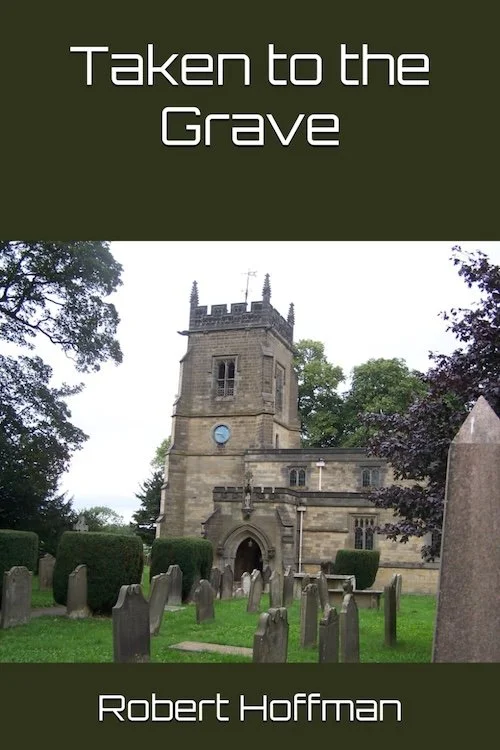
“Taken to the Grave is an exploration of others, but most of all, it is an exploration of self— how our self-image is molded by those around us and the things we believe about ourselves to be true.”
Author Robert Hoffman remembers exactly where he was when his wife told him that her father was not her biological parent. It may not be the most thrilling way to start a book, sitting on the couch and watching television— the mysterious medium in Taken to the Grave is his intriguing way to begin— but it doesn’t make what happened any less true.
“She said, ‘My father’s not my father.’ And I said, ‘What are you talking about?’” recalls Hoffman as if it was yesterday. That moment was when the Taken to the Grave truly started.
The story is dominated by this powerful blend of fiction and reality. Readers are thrust into the perspective of fictitious Professor Maria Abrams; she has a talent for finding answers, but her curiosity toward her family’s history reveals a complicated past that her mother silently carried with her to the grave.
The family would rather keep the past buried, and Maria is split between the cost of revealing what was meant to be hidden and finding answers to decades-long secrets. But will her relentless quest for the truth be her undoing?
In real life, it was an ancestry test as a gift that changed Hoffman and his wife’s lives. The result contained everything about her mother’s side, but nothing about her father. As Hoffman watched his wife begin her journey to uncover answers as to what happened, she kept saying, “This would make a good book.”
Despite her blessing, he wasn’t sure. However, writing about the past has always appealed to him as a history teacher, and his wife’s hometown of Jamestown became a nebulous starting point in his mind. The origins of it interested him, representing the rise and struggles of many industrialized communities.
The initial draft of the book became a study of that history. Cutting down 600 pages to around 200, it began to take the shape of something far more personal. As Maria anxiously pieces together the past in Ballston Spa, it pays homage to Hoffman and his wife’s decision to relocate to upstate New York after growing up at the furthest ends of the state, Long Island and Jamestown.
“People write what they know,” says Hoffman. “Wherever you are, you feel like you want to write about that place. Most of our life has been spent up here, and it was the best decision we ever made, so why not write about it?”
‘Why not write about it?’ is an integral question that propels Taken to the Grave. What is personal versus autobiographical is a thin line in the story, but one that Hoffman readily explores by asking even more questions about human character, secrets, and truth, just like his intrepid main character does.
“In the story, Maria’s mother went through many traumatic events; one was based on a true story, the other I made up,” he acknowledges. “But in most of the book, Maria is furious at her mother for not being honest with her. A couple times, she says, ‘I want my mother back so I can shake her and find out what was going on.’”
”The fact is, she didn’t have a clue about what her mother really went through. And she was judging her mother until the very end, when she finally does get the truth and realizes she has been unfair to her mother,” he continues. “But she didn’t know, because we don’t always know about people.”
When Hoffman’s wife discovered who her biological father was, it only led to more questions. While never truly knowing the full situation that transpired between her mother and the biological father, who was her mother’s employer, her determination to get those answers inspired Hoffman.
It also provoked the questions that plague Maria on her page-turning search in the fictional world. Whether her endless search, which Hoffman compares to Oedipus’s quest for answers that ultimately led to his undoing, is justified or not is largely up to the reader’s interpretation and own relationship with uncomfortable truths.
“We think we know our spouses, children, parents, and friends. But what do we really know?” questions Hoffman. “We only know what people are willing to show us. What went on in their lives that we weren’t privy to?”
Taken to the Grave is an exploration of others, but most of all, it is an exploration of self— how our self-image is molded by those around us and the things we believe about ourselves to be true. After peeling back those layers, Maria must face not only the past, but also the future, and herself.
“We don’t really know ourselves all that well sometimes,” muses Hoffman. “Hopefully, that’s something readers will take away.”
Readers are invited to delve even deeper into the world of Taken to the Grave by meeting Hoffman and asking him your own questions at Golden Leaf Books on Apr. 18 from 12 to 4 P.M. and at Mocha Lisa Coffeehouse on Apr. 25 from 9:30 to 10:50 A.M.
Find Taken to the Grave on Amazon https://www.amazon.com/dp/B0GH7L42WM (but please check your local bookstores first!)