INTERVIEW: A Q&A with Gloversville native and Pulitzer Prize-winning author, Richard Russo
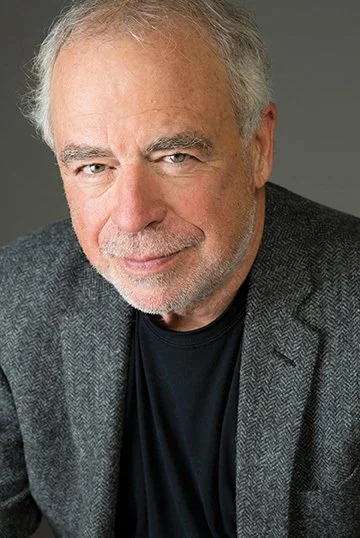
“On bad days I sometimes feel like storytelling is ‘fiddling while Rome burns.’ If the democracy is under threat, shouldn't I be doing something? On good days I try to remember that art matters even more in bad times than it does in good ones; also, face it, it's the only thing I'm good at.”
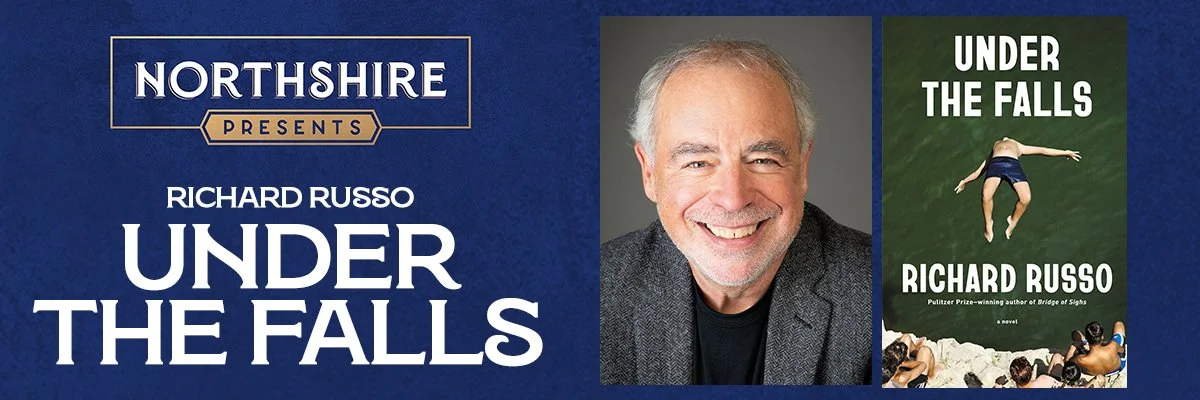
It’s not every day that you can boast about a Pulitzer Prize-winning author growing up 45 minutes away from your house, knowing that you share regional history, traditions, and colloquialisms with one another. Nor is it every day that the very same author comes back to the region, promoting a new book that, like many of his others, features more than just a whisper or shadow of the town familiar to you both. And yet, it was announced that Richard Russo, a Gloversville native, would be coming to Universal Preservation Hall on August 16 in partnership with Northshire Bookstore to promote his new novel Under The Falls.
Thus, I was determined to find a way to pick his brain about some of the connections between his Mohawk Valley upbringing and the pictures of small town, industrial America he paints in his work, as well as how his own practice has changed since winning that renowned prize for his 2001 novel “Empire Falls.”
We began with that curious place where the personal meets the professional; a place where any writer worth their salt spends more of their time than they’d probably care to admit. For Russo, not only does his work have a clear semi-autobiographical quality, but his own approach to writing stems from a lesson learned in adolescence.
Rory Graham: I'd love to first talk about the idea that you learned many of your own lessons in writing from working on the road construction crew with your father, who had his own version of storytelling. Do you still rely on some of those unconventional lessons at this point in your career?
Richard Russo: Yeah, my old man was [a] wonderful bullshitter. When we worked road construction together in Albany, we'd stop in any number of roadhouses on the way home. If something funny or interesting had happened at work that day, he'd tell the story at the bar. When we moved on to the next bar, he [would] tell the story again, but it was always a little different, because he would've noted which part of the story got laughs and when his audience's attentions would drift. By the time we got home, he'd have the story honed and made it his own, even if the story wasn't about him. The next day he might tell the story again, to me, on the way to work. "Dad," I'd say. "I was there, remember? What you're describing happened to me." What he was doing, of course, is revising, a crucial element of story writing, and it's worth pointing out that Mark Twain did the same thing. He often told stories on tour, over and over, testing them on live audiences, before committing them to paper. What never occurred to my father, of course, was that such a behavior could be monetized, that you could make a living at it. If he was still alive today, he'd want a cut of my earnings, and he'd deserve it, too.
Russo’s first work, the 1986 novel “Mohawk,” is a complicated tale about the intertwining lives between families set in a declining industrial town, one that previously thrived off of the leather tanning industry. Russo was in his late 30s at the time of publication, a long way away from the boy he was in Gloversville, which he left for the University of Arizona at 18. Now at 77, he’s done his due diligence in the writing community following 10 more novels, short stories, non-fiction, and screenwriting.
RG: You've watched the literary world change over the course of your career, both in the United States and internationally. Do you feel that it has become more or less challenging to find your way as a writer in a world that is so globally connected, yet so fast-paced with tastes and trends changing in a matter of hours?
RR: I think it's much harder to be a writer today. What art (any art, not just writing) has always required is silence. You need to drown out the world's noise in order to hear its signal. The noise used to be the responsibility of publicists. Today, publicists encourage young writers not just to enter the noise but to dwell there (think social media, which I'm not on). The more skilled they become in navigating the fast-paced, noisy world, the more they crave the quiet, calm that art requires.
While both the digital and physical landscapes of the literary world have changed over the last several decades, the social, economical, and physical landscapes of Gloversville have as well. According to the City of Gloversville’s own analysis of population trends, the city’s population steadily declined throughout the last 50 years: 21,741 in 1960, then 17,836 in 1980, soon 15,413 in 2000, and 15,338 in 2010. Much of the same is still occurring, with an estimated total of 15,131 inhabitants in 2020 according to the U.S. Census Bureau.
Now, this isn’t to say that Gloversville is a dying town and, if you want to find success, you need to be like Russo and flee. It’s important to remember that he left, and was encouraged by his mother to leave, during the perilous years when it became clear that the industries that made the area so profitable would soon be offshored to places with less regulations and inexpensive labor costs. Not to mention, there were growing health concerns as connections were made between cancer diagnoses and the workers’ exposure to chemicals like DMF. (If you’re interested in learning more about how Gloversville is a prominent example of the decline of many American industrial cities in the 1980s and 1990s, as well as how folks in these towns found creative ways to survive and thrive, I urge you to check out this 2017 article from Undark, “In Upstate New York, Leather’s Long Shadow.”) Thus, both his experience and writing are deeply shaped by those fears and anxieties.
RG: So much of your work focuses on small-town America, much of it inspired by your coming of age in Gloversville as the tanning industry began to wither away. You've spoken about the idea that there are "Two Gloversvilles" for you - the one in which you look back fondly after leaving, and the one in which you're still there somewhere, sitting on a barstool after working the road crew (NPR, 2007; Newvine Growing, 2012). How has that inner dichotomy shifted as you've watched places like your old street fall into the past as the physical city itself changes?
RR: So much of my life strikes me as utterly implausible. I suspect that if I had nine more lives for a total of ten, the other nine would all have poorer outcomes. The Gloversville I grew up [in] and that I remember so fondly, was already a "left-behind" place, though we didn't know that. The families I remember from my street believed that a better future was before them. My mother shared that belief, but only if we left Gloversville. Her dream was for me to become educated, to learn a different language, so that when I spoke, people wouldn't hear the dying mill town I was from. At her insistence I applied for every grant and low-interest student loan available, and I took four degrees at the University of Arizona (BA, MA, PhD, and MFA). During those years, when I toggled between the university and summers in Gloversville working road construction, my language toggled as well. It would take a week or so of being made fun of by the construction workers for me to drop my new language, and when I returned to the university I'd have to adjust again to fit in there. As I've grown older, my affection for my hometown has only grown, and why not? Its fictional avatars (Mohawk, Thomaston, North Bath and now, Stone Mountain) have been richly rewarding. That said, when I return, I'm always reminded of how lucky I was to escape, that my mother's plan for my education worked (it didn't for everybody and there were times it didn't for me). When I reflect on how lucky I've been, sometimes I sense that ghost, another Rick Russo, sitting on that barstool at the kind of working man's bar my father used to frequent. I can feel his anger, his rage, at being left behind, at being forgotten.

And now, after years of grappling with his childhood and adolescence in Gloversville, it appears that he’s dealing with coming back to one’s home as an adult. “Under The Falls’” protagonist, Tyler Sinclair, is returning home to his rural community of Stone Mountain after leaving for 18 years for his life as the lead singer of a rock band. While Tyler has to deal with his own emotions upon returning home, he quickly learns that many members of his hometown have complicated feelings about him as well.
RG: “Under The Falls” seems to be a thrilling mix of small town intimacy, crime, and endeavors of the human heart, a marriage of the three themes you're so well known for. How does writing a thriller allow you to find new perspectives on some of the themes you've been investigating for years?
RR: I'm glad you find UTF thrilling. It was a thrill to write. That said, I have trouble thinking of it as a thriller because, unlike most thrillers, it's not plot driven. Like my other books, this one looks at the world through the lens of place, class, and character. Sure, the book has a plot, but that's not what drives the action. Interestingly, when I turned in my first draft, the book began with Tyler and the Stone Mountain band heading to the mountain. My editor at Knopf encouraged me to rewrite the beginning the way I began my Fool novels, by introducing readers to the setting before turning the characters loose in it. "Don't bend your knee to the thriller," she advised. "Make the thriller bend its knee to you." That advice altered the entire trajectory of the novel, arriving at a place readers almost never go with a plot driven thriller. The final scene between Tyler and his old friend Curt is more heartbreaking than thrilling.
Here, Russo mentions his trilogy of novels, “Nobody’s Fool” (1993), “Everybody’s Fool” (2016), and “Somebody’s Fool” (2023). It’s a lengthy period of time between each one, with multiple books in between each. But, as many artists understand, sometimes a thread keeps tugging at you even after you thought you’d unraveled it from end to end. I was curious to see if this was the case for Russo.
RG: When writing a series like “Nobody's Fool,” where characters keep returning to readers at different points in their lives, do you find that the characters drive you or vice versa? I have to believe they were calling to you somehow since you wrote a sequel two decades later!
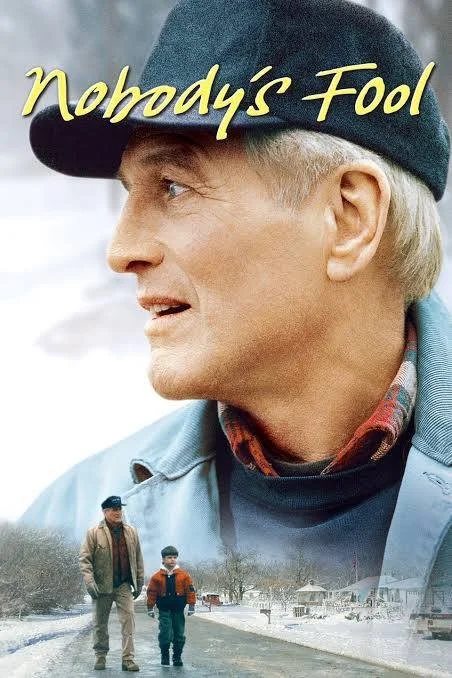
RR: I never intended to write a sequel to “Nobody's Fool.” As you say, there was a long time between it and Everybody's. But then Somebody's came quickly. And you're also right, the characters did call to me. They still had a lot to tell me, and giving them free reign was so much fun, like meeting old friends in real life that you haven't seen for a while. But it wasn't just the characters calling to me. When I wrote the first novel, the character of Sully belonged to me. He was based on my own father. By the time Everybody's rolled around, however, the character belonged in part to Paul Newman, who brought him so vividly to life in Robert Benton's film. Which meant I got to spend more time with both Sully and Paul. In the first novel (and the movie) Officer Raymer (Phillip Seymour Hoffman) had a small, minor-character role. By the second and third novel Raymer occupies the center of the story, and I channeled Phillip's voice throughout.
Yes, you read that correctly. Russo’s work has been adapted for actors like Paul Newman (“Nobody’s Fool,” 1994 and the television series “Empire Falls” 2005), Philip Seymour Hoffman (“Nobody’s Fool” and “Empire Falls”), Helen Hunt (“Empire Falls”), and Bruce Willis (“Nobody’s Fool”). Rather than relying on the tools that helped him construct these early works though, Russo has developed his relationship with writing year after year, always re-thinking and revising his connection to the medium. At a certain point, it became intertwined with his own identity.
RG: At this point in your career and your life, you've observed that writing isn't what you think about anymore, it's how you think. This revelation really stuck with me. Can you tell me a little more about that idea?
RR: I'll try. In real, everyday life I'm as full of opinions on a great variety of subjects as the next person. Some of these might bear close scrutiny, others not. Until I have a pen in my hand or I'm seated at my keyboard, such notions remain untested. Something about committing them to paper or my computer screen forces me to decide whether I really believe something or not. If I skip a day or two of writing, I feel like I haven't really thought during that period of time, which is why I seldom go that long without committing words to paper. Some writers, after careers as long as mine, conclude that maybe it's time to stop. (Philip Roth did, if memory serves.) I kind of understand that. After all, how many more books did he need to write after that illustrious career? How many more books do I need to write, for that matter? In truth, I don't need more books. What I do need is to continue the process that results in books - testing my thoughts to see if they have merit, by committing them to the page.
It’s an artist’s answer, no doubt. To be a creative is to feel like going without your medium, without your chosen way of releasing emotion, thought, or feeling, is to be missing a part of your body and soul. Perhaps the honesty with which Russo puts pen to paper is why his voice has become one of the more respected narratives in contemporary American writing.
RG: Your voice encapsulates such a unique tone of reverence and honesty, mixed with a little lightheartedness. How have you balanced maintaining the voice that readers may expect of you, while still finding ways to innovate and keep yourself excited about your own work?
RR: Ah, voice. I used to have long conversations with my friend Robert Benton about this. Не believed, and I think I agree, that not all talented artists actually have voices. The filmmakers that he most appreciated were those who did. When you watch a Hitchcock film, it's that unmistakable voice that you encounter, and it's there every time. Benton had that, and he told me - God bless him - that I do, too. Some extra-ordinarily talented artists (writers, filmmakers, visual artists, etc.) don't really seem to have strong voices. Often what they do have and what seems to motivate them, is intense curiosity about all manner of different things. The kind of writer who might want to try writing in a dozen different genres, just to try them out, to see what they might have to offer. Artists who have voices, by contrast, seem to have very narrow bandwidths. They may be interested in only two or three things, but that interest is intense and there seems to be no bottom to it. It's all they want or need as artists.
For any fan of Russo’s, it’s clear that he has his interests: family, small towns, and the mysterious paths life leads you down, no matter how much you may try to predict them (or avoid those same predictions). As he’s long been a husband and father himself, he’s able to look at his own stories through multiple lenses, giving them the complexity and thoughtfulness that his readers so deeply appreciate.
RG: Finally, I want to talk about this idea that, in essays like "Marriage Story," you grapple with your parents' opposing views of America. As you've often mentioned, there is no solution to that conversation. Yet, it feels like it has renewed importance in the social and political tensions of today. While the unknowable question is great material for a writer, does focusing on this topic ever cause you stress or anxiety as a citizen, or even as a parent?
RR: Hah! This question is not unrelated to your previous one about voice. If you're lucky enough to have a voice, what obligations would that entail over, say, four decades? For the reasons you note, I've always considered myself a very American writer. Not American in the flag-waving sense, but rather because it continues to be my subject, even more so in these polarizing times. On bad days I sometimes feel like storytelling is "fiddling while Rome burns." If the democracy is under threat, shouldn't I be doing something? On good days I try to remember that art matters even more in bad times than it does in good ones; also, face it, it's the only thing I'm good at. I'm also blessed to be married to a woman who does some of the things I think I should be doing more of when I'm having one of my bad days. She volunteers for a wonderful organization here in Portland called Maine Needs, which provides all sorts of necessities to people in need throughout the state. Nobody asks about their politics. Many are from the same kind of left-behind places that I'm from. Barbara and all the other volunteers at Maine Needs simply match what the organization has with what struggling people need. Do unto others. That's doing. Art? That's doing, too. We need both kinds.
A comforting sentiment, especially from a man who has observed Americans with a considerate, attentive eye over the course of many works.
See Richard Russo in conversation with Joe Donahue of WAMC/Northeast Public Radio this Sunday 08/16 at Universal Preservation Hall. Buy tickets here.
Check out Russo’s new book, “Under The Falls,” out now, at Northshire Bookstore and other local bookstores.