
INTERVIEW: Absolute Silence on touring, their new album, and what it means to be a young band in today’s music scene

Photos provided by artist
“If you live vibrantly, you're going to make vibrant songs…Whatever happens is just the consequences of all that. We're not forced.”
Absolute Silence can’t find a piece of their equipment. Rummaging through their bags, it’s one of those finicky but important things — a plug, wire, pedal, a seismic shift to the band that no one else would notice. Drums, a bass guitar, a keyboard, and other musical necessities have been traveling in the back of a small trailer, hitched to a car. This is touring life for an adolescent band — it’s not a tour bus, but not everyone has a trailer, either.
The band are back from their tour dates in South Africa and a few other dates scattered around the country — Boston, New York City, and, tomorrow, where they have to drive to a festival in Pennsylvania. For now, lead singer Steven Okoniewski, bassist Robert Darmstadt, and drummer Harrison Nemarich have rolled to a stop at their old stomping grounds: the Northeast, specifically Okoniewski’s hometown of Bethlehem, New York.
A fluffy scrap of a dog runs by, excited to see so many people congregating in the living room of Okoniewski’s childhood home. His mother offers water to everyone, totally immune to the chaotic sound of instruments tuning up, her hair upswept against the mid-summer heat. At least 10 different instruments are underfoot, none collecting dust, each one being prepared for the song they’re working on.
The band apologizes for the delay, Okoniewski promising that I can write about whatever I want — even this — and they give up on the equipment inventory and forge ahead with their purpose today: a 30-minute power writing session.
“It’s important to note that a lot of times we’ll come across the jam together,” explains Okoniewski. “I'm just like quickly getting them up to speed, so then we can jam on that, and then the song may form, or may not. Otherwise, we’re all part of the conception.”
Today, their writing session is unusual. Okoniewski is sharing what he’s worked on over the band’s few days apart, everyone splitting to spend a few valuable days with their families upstate.
Okoniewski has brainstormed a new song designed to fill a lull in their setlist— a Foo Fighters moment, with an anthemic beat and unexpected piano interlude. Okoniewski takes the lead, calling out chords like drills, suggesting, “Let’s riff on this.”
Darmstadt lies on the sofa with his bass guitar resting across his chest; he has a keen ear for following along with a song he’s never even heard before, trained from his college-level background as a music producer. The band work out the song for 30 minutes, trying chord progressions and lyrics, before concluding by each turning to look at each other.
“Do we like this?” asks Okoniewski.
Actual silence fills the living room for the first time. From behind his drum set, Nemarich has a pensive look in his dark eyes. He makes it clear that he does not like the song. Darmstadt is ambivalent. Some dissension begins: Too “American Idol”? Too Noah Kahan?
“We don’t say Noah Kahan like it’s a bad thing; it’s just not the most Absolute Silence,” clarifies Okoniewski quickly. “If it starts to sound not like us, we probably won’t continue to entertain it.”
Where other bands may see this songwriting session as a failure, they enjoy the parts of the creative process that usually set teeth on edge.
“The greatest blessing of being in this band is the natural brotherly checks and balances, where it’s always constructive because we always prioritize the whole over any one of us,” reflects Okoniewski.

All of the struggle has led to the distillation of Absolute Silence as a band and the creation of their new album, with over 60 songs written for this nine-song record.
“The more expectation that you go into the writing or creative process with, it usually lets you down,” says Darmstadt. “In that sensitive moment, being let down is a lot harder. So you go into it without expectation. Then if it sounds like Absolute Silence in the end, you know it, without checking boxes. It feels good.”
There is no doubt that Absolute Silence knows who they are, evidenced by their reluctance to emulate. “I notice a lot of writers or artists that have to fit a certain label are forced to funnel those ideas and will choke or chop off the ones that won’t work, but then you get this really weak reduction,” says Okoniewski. “You can’t really force that.”
Influence without imitation is a thin line, and names of the musicians that have shaped them fly around the room when asked. “We were listening to the entire Beatles catalogue on the drive home from New York City. Even the songs I don’t like,” says Nemarich, “there is always an element where I want to hear it again. With the songs that we've been writing… all the songs have an element where, for me, both playing it and also listening, I can't wait to get to that part.”
A skipless album is a tall order for any band, but with one EP under their belt and several singles, this new record has shaken off the initial nerves. The album, produced by Leah Haywood, does not have a name officially announced yet for its fall release — as they inch towards the undisclosed date, the band are quietly pulling back on some of their rigorous touring schedule to focus on the finishing touches.
Ironically, it was the aggressive amount of touring that inspired a significant portion of this album. It is a reduction of the flavors and experiences they’ve had over the past few years on the road. A track they sample, “Edinburgh,” is pure Scottish rock, while other songs incorporate South African, Spanish, and SWANA folk music.
“In every culture there is folk music, or people's music,” says Okoniewski. “There's this beautiful golden thread that it's just like the voice of those people. We want to celebrate that.”

All the members of Absolute Silence are from the Northeast, meeting at Belmont University and bonding over their hometowns: Darmstadt from Horseheads, New York, and Nemarich from Avon, Connecticut. Considering their background, they don’t regard themselves as musicians drawing from strong Northern, American, or even Nashville influences.
“We're from here, but we're not pulling any home sound, and we're based in Nashville,” says Okoniewski. “We're definitely not a country band. We're just really a traveler's sound.”
Good music is like good food and good travel — it teaches you about the culture, the people, and possibly even yourself. Absolute Silence aren’t looking to genetically copy-and-paste the pre-made sounds of the world around them like uncanny AI, nor are they sitting down with the intention of writing a song that just parrots the punk underground of London. If they are moved by the feeling of the rhythm and culture, they will follow it where it leads.
“If you live vibrantly, you're going to make vibrant songs,” believes Okoniewski. “Whatever happens is just the consequences of all that. We're not forced.”
Not feeling ‘forced’ is one of the many strong opinions that the members of Absolute Silence have about the state of the music industry. Being contorted to fit a more marketable genre or engaging with the industry’s insidious use of AI to increase productivity does not interest them, but compromise does amply exist when you are an adolescent band.
“When something good lands, we get excited, or we walk into a place and say, ‘Wow, this is far from ideal,’” notes Nemarich. “Financially, we’re in a position where we’re gaining traction to the point where we can do shows that showcase us, but it's worse for income because we're working directly with ticket sales.”
Absolute Silence is taking their opportunities where they can get them, even if it entails performing at a seedy restaurant in the middle of nowhere to fund larger festival experiences.
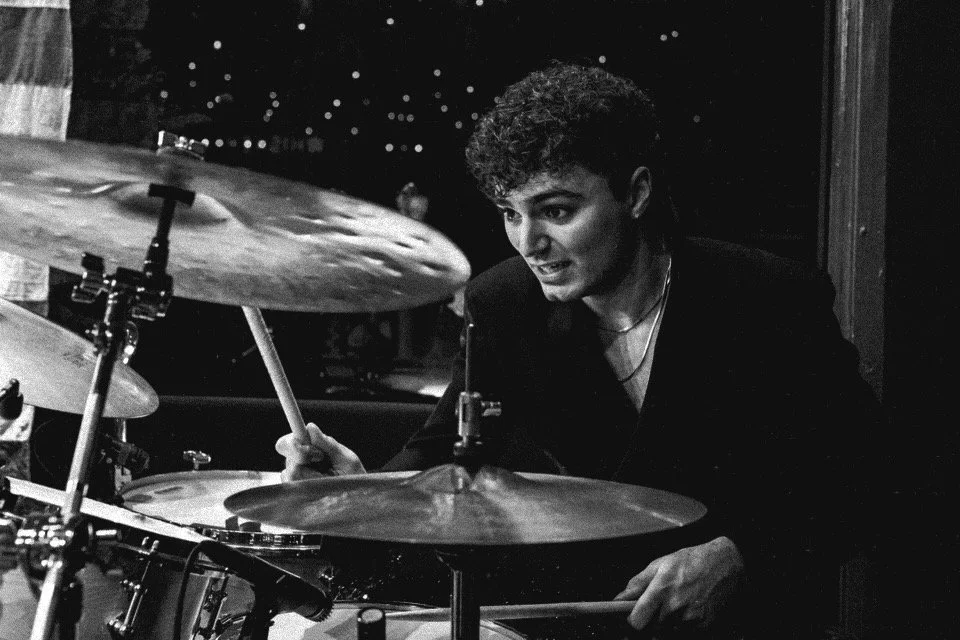
“Situations where it's a shared bill with other bands are great, and we completely showcase what we want our hour-long set to look like,” continues Nemarich. “It's fantastic, but they take the first $300 at the door, and you’re splitting what you get three ways. It’s not sustainable, but that’s what we want to do and what we are doing. Bigger opportunities actually pay less, but we’re not playing in bar corners anymore. Trying to figure out how to tour like that now is tough.”
The band confirms that it is the fans who make the process at any venue, large or small, worth it. Darmstadt’s favorite part? “Seeing our fans in our shirts doubling each time we go back to a spot,” he affirms.
They say that they have “sacrificed a lot” just to make it this far; a daily grind of showing up whenever and wherever that kills a personal life, separates families and often leaves the three of them in a small car on the open road, mileage ticking upward as equipment rattles in the back.
There is something both garage band and aspiring rockstar about crashing in your childhood bedroom at the same time as the famed songwriter Billy Falcon is calling you “the best band in Nashville.” Growing pains. Adolescence. Do they enjoy the two-sided dichotomy of this process, this unsettled phase in their lives?
Nemarich grins at the question. “I love it.”