
NONPROFIT SPOTLIGHT: Capital Roots
Photos by Elissa Ebersold
“People need some assistance, but what oftentimes they don’t want is the hand-out. What they want is the hand-up.”
Capital Roots has stood as one of the Capital Region’s most consistent champions of fresh food access, ecological care, and community-building for quite some time. 50 years to be exact. What began in Troy as a simple effort to give neighbors space to grow their own vegetables has expanded into a regional movement linking thousands of people with nutritious produce and a sense of self-improvement. As the holiday season approaches and food insecurity rises amidst recent delays in federal SNAP benefits, the organization’s Squash Hunger program carries heavy importance, reminding the region that nourishment is not only a basic right, but a collective responsibility.
Now going on its 50th year, Capital Roots was founded by Dean Leith, the then-CEO of Garden Way, who believed deeply in the value of gardening and self-sufficiency. Amy Klein, the organization’s current CEO, explains that the mission was humbly rooted by accessibility from the start. “He was a passionate gardener and wanted to give everyone the opportunity to grow their own food.”
For two decades, Capital Roots focused solely on creating and managing community gardens across Troy and neighboring communities. These gardens offered residents the tools, soil, and space to grow up to $1,500 worth of fresh produce annually, helping families stretch limited budgets while strengthening their connection to the land.
Over the years, the gardens grew from one neighborhood effort to a network of 55 sites serving nearly 4,000 gardeners. These green spaces became more than places to plant tomatoes or pull weeds. They became small anchors of stability as they beautified streets, reduced heat sources, and encouraged neighbors to work together. Yet as the gardens thrived, the organization began to confront a larger regional challenge: even with so much enthusiasm for growing food, many residents still lacked reliable access to fresh produce in their everyday lives.
“Access to fresh food was very challenging for people in low income neighborhoods,” Klein explains. “It was not available in food pantries nor distributed by emergency food programs.” That gap sparked the creation of the Squash Hunger program, a produce rescue and distribution initiative designed to bring fruits and vegetables directly into the emergency food system.
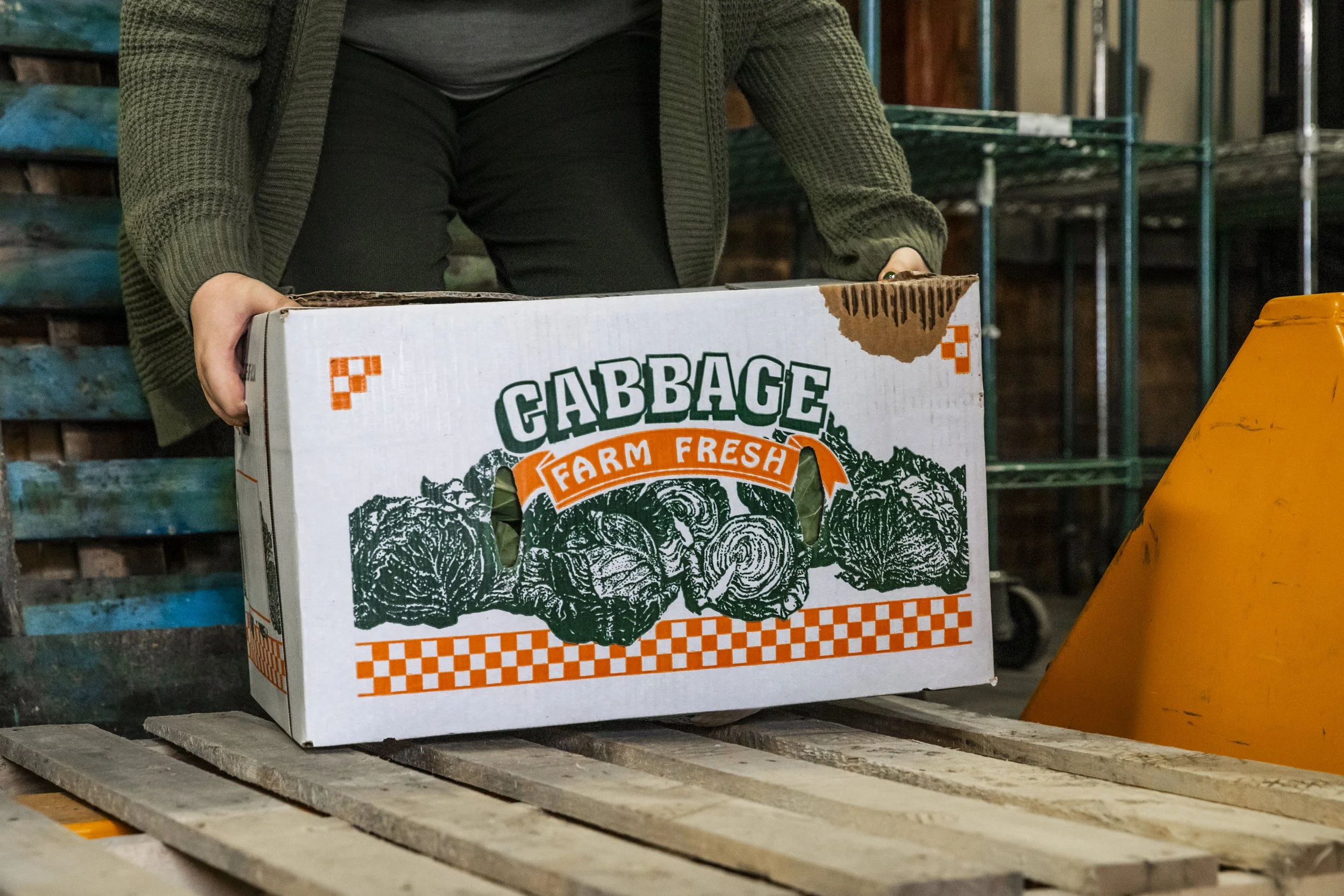
Launched in the early 2000s, Squash Hunger challenged long-held assumptions about what emergency food could look like. Instead of offering only shelf and canned items, the program prioritized fresh, local produce and demonstrated that healthy food is not a luxury, but a necessity. The program succeeded because it honored treating produce not as an afterthought, but as a cornerstone of community health and mental well being.
“Everybody wants to eat good food. Fresh, healthy food is critically important and desirable for everyone.”
Not long after Squash Hunger took root, Capital Roots launched one of its most impactful innovations, the Veggie Mobile. When the truck first rolled onto the streets in 2007, it was one of the first mobile produce markets in the country. Its purpose was simple and transformative: it brought top quality, locally grown fruits and vegetables directly to neighborhoods that lacked supermarkets, offering them at about half the price of grocery stores. Residents could use cash or benefit programs, and they could choose the foods that mattered to their families and cultures. Klein makes clear how powerful that choice can be, particularly for seniors.
“Seniors especially appreciate the Veggie Mobile, not just as a source of food but as a source of community building,” she says. “We become friends of theirs, and it’s an important routine they have on a weekly basis.”
That sense of dignity runs through every Capital Roots program, and it has taken on even greater urgency this year. With the recent federal delays in SNAP benefits and the uncertainty surrounding government support systems, many households are confronting difficult tradeoffs. Klein speaks candidly about the emotional toll.
“There is a stigma associated with people who use SNAP benefits. People need some assistance, but often what they don’t want is the hand-out. What they want is the hand-up.” When families are given the ability to choose fresh, culturally relevant foods and purchase them in a respectful environment, the experience shifts from one of hardship to one of empowerment. “The dignity that they deserve, the quality of food, the choice of food, that makes all the difference to people and to their lives.”
This commitment feels especially meaningful during the holidays. December is one of the busiest seasons for Capital Roots, as staff and volunteers work to increase fresh produce distributions throughout the region. The organization has also been expanding its distribution of eggs, dairy, and locally raised meat, recognizing how essential protein is for families trying to assemble nourishing, celebratory meals. “Eggs are a great source of protein and something that can really make a difference to the nourishment of a family’s everyday life,” Klein warmly notes.
At the same time, Capital Roots is planning for the future. The organization continues to support local food entrepreneurs through its commercial kitchen and is developing new lines of minimally processed produce to help schools integrate more local food into their meals. Many schools lack the equipment or staffing to prepare vegetables like sweet potatoes or squash from scratch. By offering prepped, ready-to-cook ingredients, Capital Roots is helping schools serve healthier meals while strengthening the region’s agricultural economy. “There’s an abundance of wonderful local food,” Klein explains. “Providing it in a form schools can easily use is an exciting new area for us.”
Amid the festive lights and seasonal celebrations, Capital Roots serves as a steady reminder of what community really means. For half a century, the organization has shown that food access is intertwined with dignity, culture, and community. Its mission continues to rise to the needs of the moment, whether that means planting trees, launching mobile markets, harvesting produce, or ensuring that a family can prepare the holiday meal that gives them comfort and joy. As the Capital Region navigates another winter of uncertainty, Capital Roots stands ready with a hand-up, offering not just food, but hope.
For more information on the organization, visit www.capitalroots.org.