
Confessions From the Underground #17: Finding Joy
**This column originally appeared in our April 2026 issue**
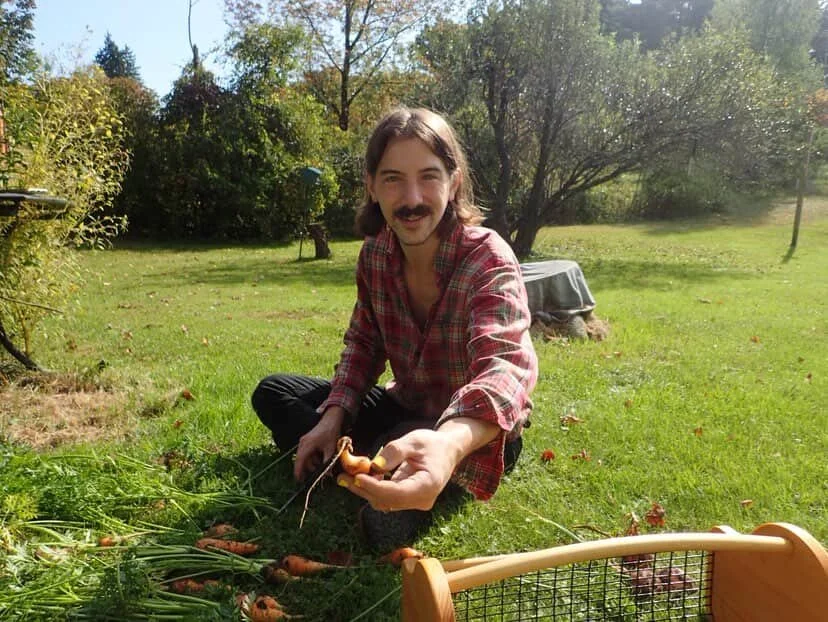
Photo provided
Chock it up to this endless winter we’re having, or being worn down from months of various illnesses, or just — *gestures around* — everything else, but I’ve been having quite a difficult time fighting the lows lately. Of course, I know I’m not alone in that. I also know there are plenty of wonderful people out there who make it a little easier for the rest of us by putting positive energy out into the world. I wanted to talk to one of those people, and that’s where Joseph Biss came in. We’d never spoken before, but it was clear within just a few minutes that his gentle nature and kind smile were just what I was looking for. Below, we talk about finding joy, and he sure gave me a lot to think about.
TJ Foster: My topic for this month is simply “finding joy,” and I knew I wanted to speak with an overly-positive person for this. I asked Andy [Scullin] for recommendations and your name was the first that came out of his mouth. So, first and foremost, thanks for doing this today!
Joseph Biss: I'm so happy to hear that!
TF: As I’m sure you know, plenty of people are feeling a bit frustrated, uncertain, and angry each day with everything going on in the world. I just want to kickstart this by asking you a very broad question: how do you find joy in your daily life?
JB: For me, and where I live, it’s just getting outside. Even if it's cold as heck, I still like going out and seeing what birds are still having fun and singing songs out there, even though it's -15 degrees or something like that. You see a squirrel run by and go, ‘Okay, if he's still rocking and rolling, I guess that I can too.’
Otherwise, it is hard. I find that to be more the case once I have been stuck inside for several days, or have a cold or something like that, and I can't get out. Then it's easy to get frustrated, upset or down in the doldrums. Nature is my quickest, easiest sense of joy, save for picking up an instrument — that'll make you smile pretty quick.
TF: It's a very specific time of year right now, too. The amount of cold weather and snow and illnesses that have been going on the last couple of months, especially — it’s awful. Even just getting outside these last couple of days has been refreshing, for sure. How do you balance paying attention to everything going on in the world, but also ensure that you're taking time away from it for your own sanity?
JB: Right behind where I'm sitting — this is what else I do — I cut stones for jewelry and stuff. It's easy at certain steps during that [process] to pick up my phone, meander through and get bummed about the stuff I see. So I have simple ways to keep me from doing that, like setting something on top of my phone — a roll of paper towels, for example. That way, I have to go and make one extra step to grab that phone, and ask, ‘Do I really need to be doing this right now?’ But it’s hard not getting stuck in the loop of clickbait, ragebait stuff you see nowadays.
What I found that has been working for me is taking only two days a week to do any [promotional] stuff. I’ll do reels and shorts and posts ahead of time. That way, if I'm going to spend one day on the computer and the internet to do that, I’m limiting it, or trying to at least. It's far easier said than done. I still find myself needing to stack one or two more things on top of the phone so I can't grab it as easily. [laughs]
TF: That makes a lot of sense. I find lately it's been the worst the moment I wake up because my phone is my alarm, basically. So the second I pick it up to shut the alarm off, suddenly 20 minutes have gone by and I’ve been scrolling mindlessly. I’m still in bed — why am I starting my day like this? It just sets a really terrible tone.
JB: Yeah, it does. I was finding a lot of it was muscle memory. I'd pick up my phone, do two clicks and Instagram is open. So now I put those apps in a hidden folder so it's got to either check my face or require a password before I can get to it. And then there's one more step.
TF: You mentioned getting outside, but obviously playing music is a big source of catharsis for you. When did you first pick up an instrument and start getting interested in music?
JB: That was probably when I was 11 or 12. So like 23 years ago, something like that. I got my first acoustic guitar, just a cheap thing off eBay or something, and began noodling around on that. And then probably around 11th or 12th grade, I started writing stuff. I've been doing it since.
I took a little time off to go to school because my other big interest was geology. I've got a degree in geology and hydrogeology. That’s how I got into the jewelry aspect and cutting gemstones. When I wasn't doing one, I'd be picking up the other.
TF: A lot of people tell me they pick up their instruments and begin to write songs because it's cathartic for them, almost like a replacement for keeping a diary. And then there's others that pick it up perhaps just out of pure joy. Do you think music interested you because of that joy factor? Or more so because it was a way of processing emotions?
JB: That's a good question. I feel like in the beginning it was not necessarily catharsis or getting out negative feelings — there was just a lot of love. Like when I was kid, having a crush on a girl or other sappy things. I didn't get too complicated. I just wanted to have a way I could show other people how I felt about either them or someone else.
TF: What about your household growing up? Were your parents or anyone else musical or was this kind of your own path?
JB: My Granny was. She's still 98 years young. She's kicking ass. She's amazing. She played piano and sang and all that. I have her piano and she was the one who got me into creating stuff — music, all of that.
TF: That's amazing. That's got to be so, so joyful.
JB: Yeah. She has songs written about her now and they are some of my listeners' favorite songs. ‘Can you play the good granny song?’ [laughs] She knows she's got songs written about her too — it's great.
TF: That's incredible. This might be a good segue into the next question I have for you. When you're writing songs, where do your inspirations come from? Some place more personal and familial or somewhere more character-driven?
JB: A lot of it recently has been more autobiographical. Me dealing with mental health issues and trying to be as helpful as I can with that. I feel like it's pretty familial — myself, my loved ones, my wife. And then that sets the story I'm trying to tell.
I like playing with words. I think that words are fun, messing around with spellings and not necessarily full rhymes and stuff like that. A lot of the time, they'll come before I ever even get to a song being started. I'll have a sentence that just makes me smile, the way the words work. I call that ‘song fodder,’ and I keep them stacked in my notes — maybe Granny says something funny when I've taken her to a dentist appointment or something. Then, there's a song.
TF: I've always found it more difficult to write songs when I'm in a positive headspace. For whatever reason, it's always easier to write songs when you're down — that emotion is right there on the surface and it’s easier to let out. So I always admire people who can write songs from a positive place and really tell such a story where it doesn't sound corny. Do you find you have [similar troubles] or does it just all come naturally to you?
JB: I don't feel it comes extremely natural, but also, a lot of my songs — even the depression songs, the dead dad songs, all that kind of stuff — they still sound like one of my happy songs. And I feel like that's the goal — [the song] is still going to be in a major key and I'm going to be smiling, even if I'm talking about my dad rotting or something like that. Having the juxtaposition of those two things is so powerful that I feel like when I get to a happy song and someone's listening to it, they're like, ‘Wait, this is just about a bunch of flowers!’
My goal, and I've had it happen a bunch — though it seems messed up — is having people cry at shows and come up to me afterwards. That's another point on the board, like [my song] got through to someone.
TF: I've personally always loved songs that can thread that needle, where it's very upbeat and happy sounding, but the lyrics and themes may be a bit heavier and pessimistic. That juxtaposition, like you just said, is so perfect. As a listener, you get that release of having a good time, but also relating to what's being said.
JB: Yeah, it's beautiful.
TF: Now, you just mentioned some mental health challenges — to the extent that you’re comfortable, can you talk about your experiences with mental health? What things do you find help you to be able to work through it in a way that's healthy for you?
JB: I always want to lightly skirt [it] — not just putting on a front to make sure I am smiling all the time, especially if I'm playing a show. I don't want to always hide what I'm talking about in my songs behind three layers of cryptic blah, blah, blah. I'll be like, ‘I have Bipolar I disorder, here's what I'm taking right now,’ and then go into the songs.
I love banter in between songs, that's half the fun for me — getting people to laugh out there. And I feel like mental health is so important, so why hide it? If you're trying to talk about it, be as effective as you can with it. That's what I find works for me.
TF: Speaking of interacting with people, you mentioned ahead of time that you have a Patreon that you keep up with every week. What's that community like for you?
JB: I do a show every Sunday on YouTube. So if I'm not away doing shows, I record one somewhere on my property, whether it's in the house or out on the mountain side, something like that. It had grown to a certain extent that I wanted there to be more for folks. So on Wednesdays, I started doing another show, on Patreon. It is nice; there are people in it from California, places in the Midwest — I have people tune into YouTube that are in Iceland and all over the place. It's really refreshing.
I record the sets ahead of time. So those are the days I'm online — Mondays and Fridays. I do all the shorts for YouTube, reels for Instagram, all that stuff. And I schedule it, which helps me.
Sometimes I feel like I can get stuck in a loop doing shows semi-locally. You always want to get in front of as many people as you possibly can, so this is something I wanted to do in the meantime, until I get scooped up by some agent or management team!
TF: I was talking to a friend of mine not that long ago, about a similar subject matter, and she was talking about how important it is as a musician to have other hobbies outside of music to find joy in. And that's something I definitely struggle with a lot. You mentioned cutting gems, of course, but besides that, are there other things that you supplement music with for your mental positivity?
JB: Yeah, 100%. That's something I’ve literally been chatting with my therapist about. She was saying to find something that's not the music or the work. She was talking about practicing mindfulness and being aware of what you're doing when you're doing it. So I've been working on doing that with my reading. I read a ton; I love books. And then also with my cooking. Just being right there, making sure I'm not just zoning off while I'm cutting something — really taking it for its full worth. And it works. I’ve found it helps me stay engaged.
TF: Do you find that after you've been reading, cooking, whatever, when you come back to your guitar or sit down at the piano, that you’re a bit more refreshed and receptive to whatever creativity is going to come your way because you've taken a few hours away?
JB: Definitely. Normally, I'll practice at the end of the night, after dinner. I’ve just cooked, chilled out, got my tummy full, and then I’m ready to sing. And then before I go to bed, I'll read for a while.
TF: Tell me a little bit about this gem cutting station behind you. How long have you been doing that?
JB: I got into it when I moved back down from school in Plattsburgh. That was around 2016. I got my first machine and started cutting other people's designs. Then I slowly started coming up with my own.
The easiest way to explain it is pretty much anytime light goes into any see-through material — glass, minerals, gems, plastics, stuff like that — when it leaves again, it bends at a different angle. So you are constantly using math to get the light to go into the stone and then pop back out again. It's a whole bunch of math, some physics, a little bit of calculus, but it's super rewarding. I do this more to pay bills. I try to completely separate the two — music funds I put right back into making sure the equipment's good to go, making sure I can go places, buy more merch and just keep on building. With this, I go buy groceries or firewood, all that kind of stuff. So it is something I'm getting better at, allocating time to each.
TF: That's great. We kind of touched on this in the beginning but it is super hard to remain present in a lot of areas of our life. It sounds like this is something — not unlike music — that you’re actively involved in and you have to really focus on what you're doing?
JB: Yeah. If you hold the stone down for even a second longer than you're supposed to, you can overcut it. Then you have to redo the entire thing again. If you mess something up and it falls off the perfect alignment that you started two days ago, you've lost two days of work. It's very meticulous, but very satisfying if you like that kind of stuff.
TF: On the topic of being present, do you have any words of wisdom for remaining present in life? You seem to have a very nice balance with that.
JB: It’s something I'm working on right now. I think it’s really just actively trying to not go into autopilot, which may sound like an obvious answer. But, say I'm cutting a carrot — once I get a few down, I'm looking at where my hand is going to be, thinking of what's the next step? What do I do next? And that's fine to live certain parts of your life like that, but not necessarily the way you want to be, say, reading a book. You start thinking, ‘How many pages are left of this chapter?’ but you're still trying to read it.
With a book I'm reading now, I'll get to a word I maybe don’t know. So I decide I’m going to look it up rather than figure it out by context. I have half a sheet of paper, I write out the word, look up the definition, write it down, and then I continue. It keeps me super present in the situation. This is just literally in the last few weeks so I don’t want to carve it in stone. But that's what I found has been working for me so far.
TF: That's really interesting. Now, this is kind of related, but as the empathetic human beings that we all hopefully strive to be, what do you think is the healthiest thing we can do to find joy in the midst of so many uncertainties and atrocities? The healthiest thing for both ourselves and the people around us?
JB: This is something I say so much to people that I know and they're probably sick of it. But I just tell people how much I appreciate them every time I see them. And I know that may seem silly, but it means so much to people. They may not realize for a handful of minutes or even an hour later, but it does. Even online if they say something nice, they're going to know they're appreciated for it.
I feel happy and it gives me joy to let someone know that they're noticed. When someone tells me they appreciate me, that feels good.
TF: Hey, I appreciate you, man. I appreciate this conversation!
JB: Likewise! I wasn't fishing for it. [laughs] But I appreciate you too.
TF: Alright, one last thing on the subject of joy. What is one really positive thing that has either happened to you lately or that you have coming up that you're just really excited about?
JB: Oh, man. I mean, I've got a show tomorrow. It’s a little place, but they have never not agreed to book me when I do a run of shows. They're very kind. They're loving people. And I'm looking forward to that very much because it's up in Plattsburgh. I like to go back to where I lived for four years and go to a local antique store, knowing I may be able to score some old shirts or something. There's a bookstore nearby, which is always a pleasure. And I'm looking forward to eating some food tomorrow. It's the little things. It doesn't need to be something crazy. I get to have a little muck about town in Plattsburgh tomorrow and I'm really looking forward to that.
For more information on Joseph, visit www.josephbiss.com
