
Confessions From the Underground #18: Burn Out
**This column originally appeared in our May 2026 issue**
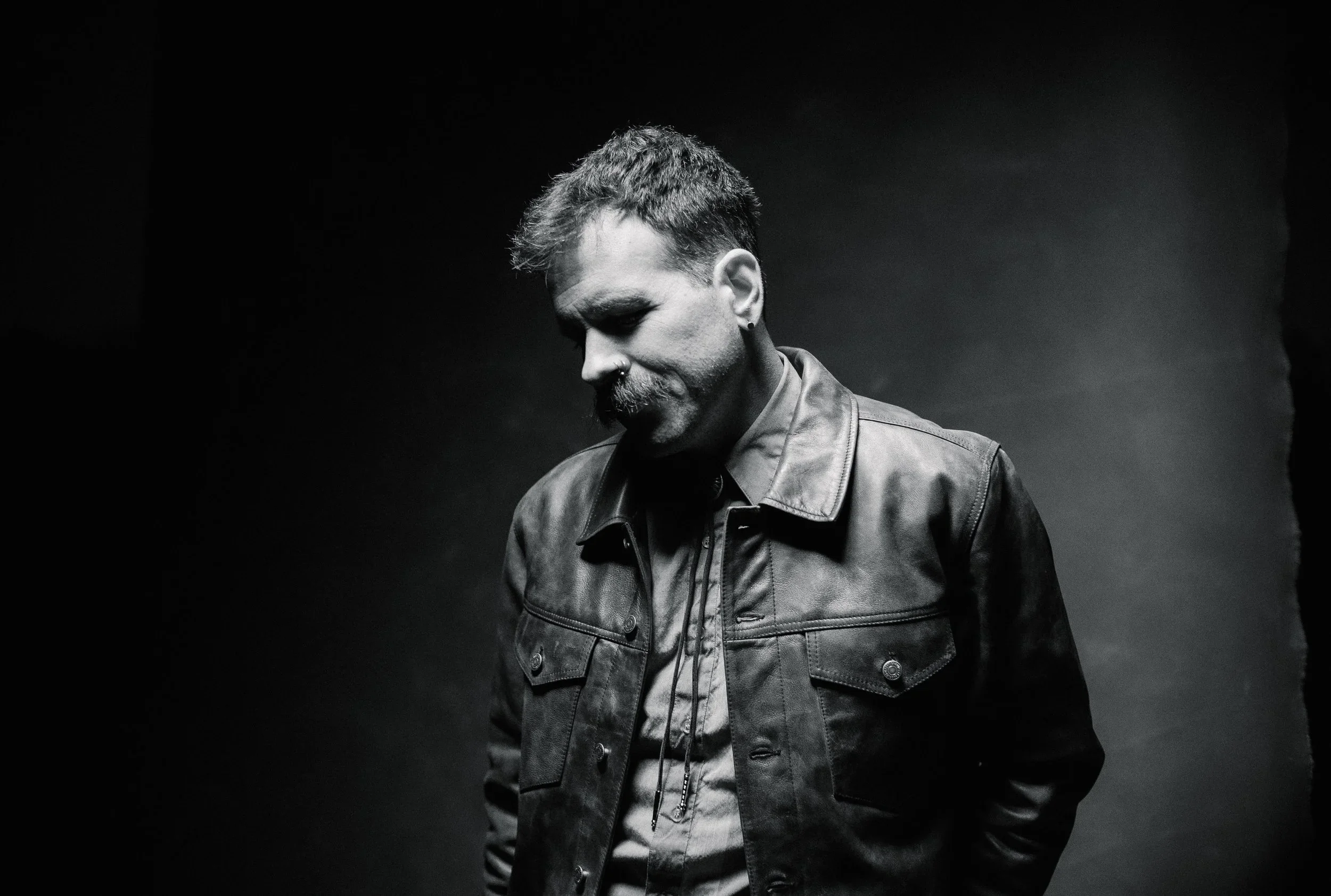
Photos provided
In the spirit of this column, I have two confessions to make right off the rip: first, the excellent conversation you’re about to read was never meant to be printed in this format. But in previewing David Wimbish & The Collection’s upcoming show at O+ Exchange in Kingston, we ended up going deeper than anticipated and I just couldn’t deprive you of all the insight. Secondly, I’ve been ebbing and flowing through intense musical burn out lately, for a variety of reasons that would require more space than I have here to explain. I also know a lot of musicians who have been feeling similarly. So when David — one of the most underrated songwriters around! — quickly brought this up himself, the floodgates were opened. While reading our chat below, I urge you to bring up his music on your streaming service of choice to set the mood. There’s a lot to love there, and getting the chance to converse so casually with the man behind so many songs that I adore was truly an honor.
TJ Foster: You've been touring solo for a little bit, which I know was a big change — getting away from The Collection moniker, the band environment, and going it on your own again. How has that transition been for you?
David Wimbish: At first, it was a lot of grief. I really loved having a band and I loved the community of it, but my band just really couldn't survive financially anymore. We barely could pre-Covid. And after, everything got so much more expensive and we were sort of hanging on by a thread. It was just hard. A lot of them started figuring out like, “I don't know if I can do this anymore.” And, yeah, that's fair. I couldn't ask [them] to do this.
I took a few years off from doing much with music. There was still stuff coming out because it had already been recorded. But as far as my own experience, I was just at home, and planned to give up music forever. I was 100% done with it. I was very burnt out.
I feel like having a band only represented 50% of the material that my project put out. The band's show was very rock and high energy. And that was really fun. But then I would go look at our records and most of the top songs on streaming were very quiet songs. Ballads. So we were kind of presenting only half of what is actually here. It's been cool to get to do it solo and create a show that I think represents a huge portion of the music that I've put out that never really had much space before. I'm really loving it. The two shows are almost opposite ends of the spectrum. Emotionally, they might be the same, but energetically, they're very different.
TF: What brought you back after that period of burnout? Because that's something that I've talked about a lot with other musicians, just how quickly it seems we musicians are getting burnt out these days, for lots of reasons.
DW: The not-so-glamorous answer is that I remembered that I still had a recording contract and I had to make an album. This answer gets better the further away from that it goes, but starting out, it truly was just, “I legally have to make a record and my label renewed my contract.” But I'm burnt out. I don't have much patience for the industry. And honestly, I was like, “I don't think my career is going anywhere.” But if that's the case, what kind of album would I make? If I'm not thinking about a manager because I don't have a manager anymore, and I'm not thinking about my band because I don't have a band anymore. I started to realize how many voices I'd taken in when I made records and how many people I was filtering things through.
So I was like, “I guess I'll just make an album not thinking about what anybody wants and just make it for myself.” I don't think I'd done that since a record called Entropy that we put out eight years ago. My band had sort of fallen apart and I made that album by myself thinking it would be a solo record. And then the band came back together and we ended up adding a few people on a few tracks. But generally, that record in some ways was like, “Here's my solo album that nobody cares about.” So this felt like that in a way. It was just back to the basics.
I ended up in a room by myself for two or three months, just making an album. And it was so healing. I think it healed my burnout because it was being done from a place of not trying to be successful. I'm not trying to figure out how to write the catchiest songs that are going to hook people in. In my head, it was like, I don't have a career. I'm just going to make whatever feels the most true to me. And I realized I hadn't been in touch with my inner creative voice that way in a very long time.
TF: That all sounds so familiar to me — not to turn it on me for a second — but I was going through similar things and I ended up feeling like, “I don’t know if I want to write anymore. I don’t know if I want to make another record. What’s the point?” And then it clicked: what if I just make a record about that? And it was really freeing.
You did touch on something that I wanted to ask about, because I’ve seen you post a lot about this — your “frustrations” with the music industry at large. Can you speak about that a little bit?
DW: Yeah. I don't know. Maybe my publicist at the label hates me for it. She's probably out there trying to get press and they're looking at my page like, “We're not going to work with this guy.” It's hard because the processing that got me here was very self-indulgent. A feeling of like, I think I'm pretty good at this stuff. And people around me are telling me I'm pretty good at this stuff. So why is it not working?
I felt that the most when we put out our last record as a band and there's a song on it called “Medication” that went a tiny bit viral on social media. It got us a lot of new fans. It was kind of what I'd always wished would happen with the song. And at the time, all the people around me started telling me like, this is where it happens. You're about to be asked to go on all these tours. You're going to get a bunch of press — all the stuff that's “supposed” to happen. And none of it did. That’s sort of what burnt me out because I was like, “This is the best thing I could write.” I've worked so hard for this and we do the music video, I'm posting about it all the time and it goes viral.
I had some very major artists — big, stadium-level artists — writing me during that period saying they love the song. We want to take you on some tour dates. Do you want to open for me? And I’d be like, “Oh my God. Yes, of course I do.” And then as the popularity of that song started to taper, those people just stopped answering me back. So, it was really hitting me just how much this is all smoke and mirrors and a popularity game that feels very protected by money.
Here's the kicker: this song was hitting a lot of people. I was getting hundreds and hundreds of messages from people about how they were about to take their own life and then they discovered the song and it made them decide to stay. Or how they'd resisted life-changing medication for their entire life, and then they heard the song and decided to get on it. Or they sent it to their dad who would never get on meds and he heard it and broke down crying and decided to do it. All these messages that I don't even know if I can bring myself to believe that my music could have the power to do, right? It feels huge, but at the time, I was so embarrassingly obsessed with, ‘Why is this other stuff not happening? Why are the tours not happening?’ I really didn't emotionally experience the weight of these messages I was receiving. So when all of this happened and I decided to give up on music, that was the big realization for me. I was just handed the experience of everything I could have dreamed of as a younger me writing songs and playing music. And I 100% missed it. So now I'm trying to come at it like, I'm not going to miss that experience again. I refuse to sit here and obsess over numbers and whether people are asking me on tour or whatever. I just want to focus on the people that are listening because that's what this whole thing is about.
TF: That's such a hard realization to come to terms with; so many of us spend time with this specific vision in our head, chasing these dreams or whatever. It's hard to let go of and refocus, but it really does come down to those interactions with people who get a lot out of your music as I do with your stuff. Are you finding those interactions to be a little more special now that it’s just you up there, and you’re performing more intimately?
DW: With the band, the experiences talking with people after a show have always been very special. And that's something I've been really lucky [with]. What feels like a difference to me is that often, again because it was such a rock show, the experience of talking with people afterwards tended to be conversations around things that had happened in people's personal lives at other times. What's happening more often now is that people are talking to me about experiences they had during the show. It's not going to be every night, obviously, but there's this more chilled out setting now, which allows for an emotional space or a healing connection.
TF: You do sing, and even speak, a lot about mental health; how are you doing right now? And also, is there anything in particular that grounds you in these very anxious times we’re living in?
DW: Yes, a great question. In those two years of being disconnected from music, regardless of the music stuff, there was a lot going on that was truly so insanely difficult that I didn't know if I would survive. It was really some of the worst [mental] spaces I've ever been in. It’s strange because coming out of it now, I'm like, “Life isn't perfect. There's so much that's difficult and wrong.” But weirdly, I do feel like I'm doing well and I don't know that I understand all the reasons for that. I think that making this album healed a lot in me that I needed to heal.
I lost a lot of things that felt foundational to me — friendships and relationships and work — there was just a lot that was very dear to me that I lost over the course of a few years. It was extremely painful, but I also think that once you sort of accept loss, then you can allow yourself to rebuild. Sometimes holding on to things tightly is where the pain comes from, you know? So yeah, I feel like it's been a season of letting go.
TF: You recently had a kid too, right?
DW: Yeah, she just turned one.
TF: Oh, congrats, man!
DW: Thank you. It's crazy — we were living in Asheville, North Carolina when Hurricane Helene hit. Crazy stuff happened like two blocks from our house. It was pretty traumatic; it felt like living in a war zone, having no power, clean water and stuff for a very long time. We were camping in our house while trying to work and then about to have a baby.
As far as staying grounded, I do think I've realized that physical movement is just so essential. I've gotten really into running again this year, which has been awesome and then I read this little book of Rumi poetry pretty often and it's funny because I don't know that I would consider myself to have much of a spiritual belief at this point, but when I read that stuff, it hits me in a weirdly holy way. It’s been very helpful.
TF: How has it been on the parenthood side? My friends and I joke a lot about this weird double life that we lead. Changing diapers by day and then hanging out at a venue or a bar or something at night.
DW: It's been awesome. I remember the first few months of just not sleeping at all and I was talking to somebody who was like, “Dude, you're a touring musician; you've practiced for this! You know what it's like to survive this!” It’s magical though. It's hard to describe to anybody who doesn't have a kid because it's so life-altering, which I really didn't realize before I had a kid. To me, it's been such an awareness of what real unconditional love looks like, which is a thing that we so often talk about in so many contexts that deep down, in the recesses of our minds, we know is not true. Like, we know this person we're saying we unconditionally love could actually do something that breaks our love for them, but we would never say it. But having a kid, I'm like, “You could break my heart a million times. You could do all sorts of things that are horrifying and I actually know that I would be programmed to still love you,” which is a wild feeling. So yeah, on the one hand, I'm more tired all the time than I've ever been and it's hard to find any time to do anything, but on the other side, my heart just opened in a way that I never would have experienced otherwise.
TF: If you don't mind, I want to ask you to look back at your progression as an artist. I've kind of witnessed it from the outside; I became a big fan of you guys back with your first record and I’ve followed you ever since. Your songwriting has progressed so much — every time I think you can’t write a better song, here it comes. Do you take the time to reflect on that and think about your journey as an artist over the last… how many years?
DW: Long enough to be embarrassing. [laughs] Thanks for liking the music for so long! You know, when I first started, I really loved these giant bands like Arcade Fire and my favorite was this band called Anathallo. But at the same time, I was always into these singer-songwriters. Honestly, my progression from the beginning has been a long journey of feeling like I was really sure that I had a terrible voice, and I had surrounded myself with some really good singer-songwriters that were not very encouraging toward me and my songs. It's honestly just been a lot of years and records of like, “Maybe I could do this” or “Maybe I can pour more time into learning about songs and how to write them better.”
I feel lucky to have the right kind of producers who, as I layered more and more instruments, they’d tell me the stuff I was doing was taking away from [a particular] vocal part, and I'd be sitting there thinking that nobody really wants to hear that anyway.
I think with songwriting, it’s accepting that I'm never gonna be like, Adele. You just start learning about your own voice and your own songwriting tendencies and being like, “I'm never gonna be this person… but also, I don't need to be!” Some of my favorite singer-songwriters that have ever existed were also not Adele, you know? [laughs]
TF: That’s wild. I’m not just blowing smoke here, but you’re such a talented songwriter, man. I’ve loved watching your journey.
DW: Thank you. That’s very kind of you. It feels really nice to be at that place and just do what feels good with the song and not out of any sort of pride or embarrassment. Not to say that it's a perfect record or something, but it feels like me. Isn't that a Miles Davis quote: “It takes a very long time to sound like yourself.” I feel like I’m starting to understand what I sound like.
