
Confessions From the Underground #19: DIY Touring
**This column originally appeared in our June 2026 issue**
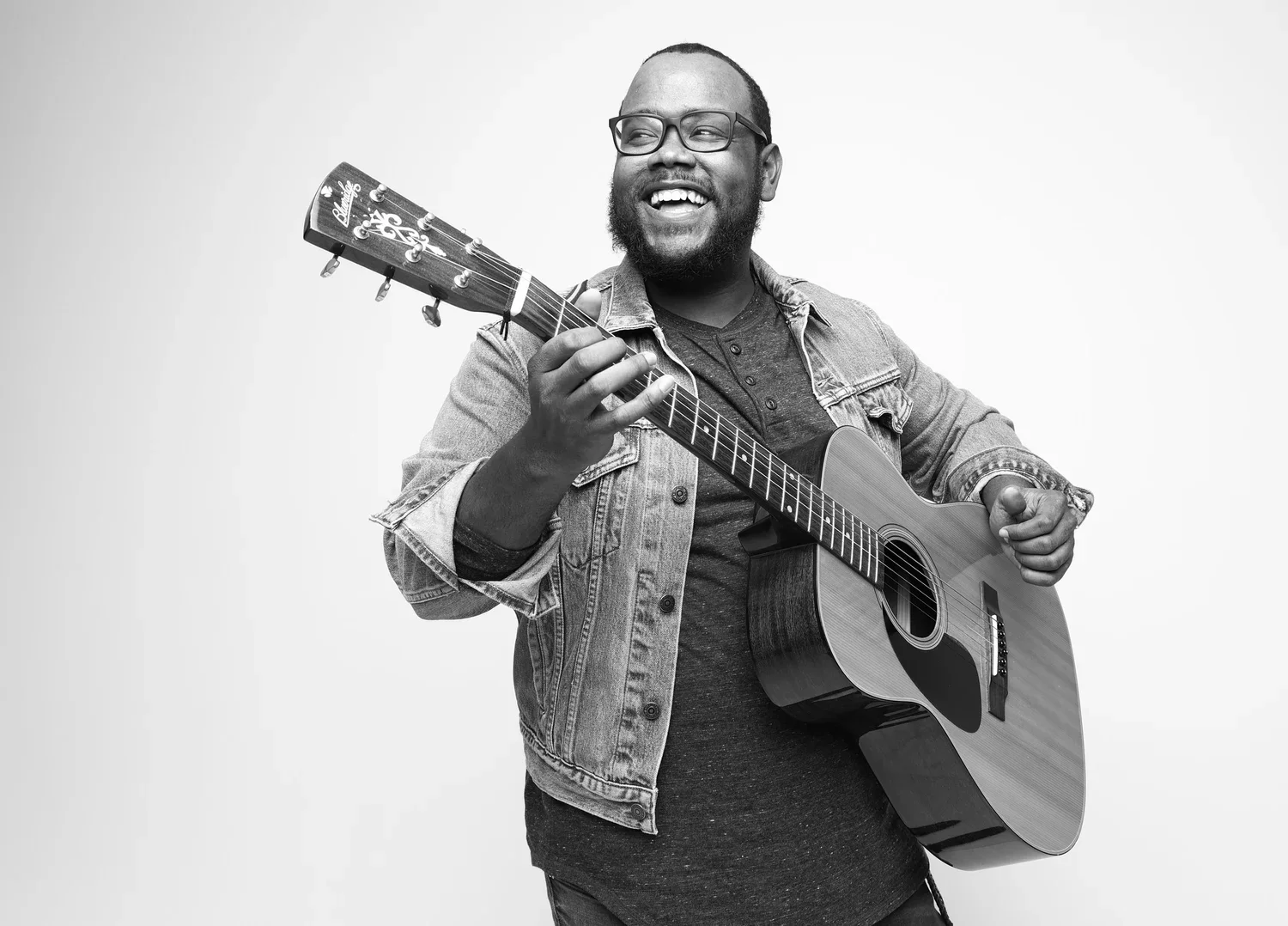
Photo by Bill Streicher
One of the hardest things about being an independent musician aspiring to tour is booking. It’s my not-so-bold assumption that most people outside this industry probably don’t know what it takes to plan a series of tour dates — including outreach to venues and promoters, 75% of whom probably won’t even give you the time of day as an out-of-town artist. In 2026, there is thankfully no shortage of helpful resources out there to tap into that didn’t exist when I was touring back in [redacted]. But one of the most obvious resources — as Brian Walker (A Day Without Love) is about to explain — is the people you meet along the way. Brian currently resides in the Boston area and has been booking his own tours successfully for roughly a decade now. If I had to sum him up in three words, it would be “DIY or Die” (to borrow from the title of one of his songs) — naturally, I had to chat with him about all of this.
TJ Foster: You famously do all of your own booking, and have for quite a while. How long exactly have you been doing this for?
Brian Walker: I've been gigging as A Day Without Love since 2013. Officially 13 years as of this month. I've been touring for the past nine years and it’s just expanded year to year.
TF: How are you finding some of the differences between when you first started doing this, finding your footing, versus now where you’ve got more knowledge but there’s also more external challenges like gas prices, et al?
BW: I feel like then I was just so green; every day was a good day. I still have fun. I'm not jaded and I'm not over it at all, but I am thinking more wisely now. Like, I try to read the news before I tour. I can't believe I'm going into this so early, but there's this thing called, ‘the stripper index’ in finance and accounting. The stripper index is how the amount a stripper gets tipped is correlated to how well the market's doing.
As a result of being a musician, I know quite a few people who are in the burlesque or stripping industry. So other than just reading the news, I sometimes text them, “How's business?” And if they're like, “It's great!” — time to book a tour. Because if it's great today, it's going to be great for the next three to four months, which is exactly the lead time you need to do a tour.
I also do this with my comedian friends — if someone's going to come see them, they're definitely going to come to see a show. But back then, I wasn't thinking like that. Because while I still stick to the DIY roots of booking your friends or friends-of-friends, and sleeping on couches or beds in a co-op and stuff like that, I also think about, can I survive? I'm fortunate enough to say that I've never been stranded on the road. I've needed help and I've gotten the help I've needed. I can still count on exactly one hand how many times my sleeping arrangements have been so bad that I had to do something crazy to find a roof over my head. I’ve had it pretty well.
A lot of that comes down to, before I was just throwing spaghetti and seeing what sticks. And now I'm like, “How can I still help people when I'm not touring?” I feel like I have to be of service to the people that helped me. That's how I try to live my life, while also being strategic.
TF: You post this phrase a lot, and I think it's also the title of an EP you have: “Tour is Not a Road Trip.” Which is a really nice mantra for this whole conversation. What does that mean to you? And why do you think it’s so important for people outside of music to understand?
BW: To put it in perspective, I've worked mostly in the tech industry. Until I turned 33, I was always flexing my PTO to tour. And whenever I would tour, people would be like, “Have a great trip!” And it's like, technically, this isn't really a vacation because I'm still working. It got kind of annoying the harder these tours got because I realized I was burning the candle at both ends. It just speaks to the reality that, as much as we all do this for the love, no matter who you are as a musician or an artist, big or small, you're still investing in yourself. That investment is not always a direct ROI, to use business terminology — it's this abstract reality of what I've worked really hard on doing paying off through relationships. It's paying off by being able to say, “Hey, I made people laugh. I made people smile. I made people dance through something I created in my hometown.” And now I'm going to other towns, cities, and countries and things like that and they're feeling the same.
I wrote [“Tour is Not a Road Trip”] as an introduction to the record A Stranger That You Met Before, as my way to reclaim and signal to everyone like, “Hey, this isn't just being a degenerate. This is serious.” The older you get, the more you realize, wow, I know a lot of places and towns and restaurants and coffee shops and baristas and business owners because music took me here. Most road trips are like, “We're going to this town, we're going to this brewery and we're going to this lake and that's it.” Whereas with tours, you're getting experiences that you couldn't even put on a schedule, which also lead to other opportunities, experiences, friendships, and things like that.
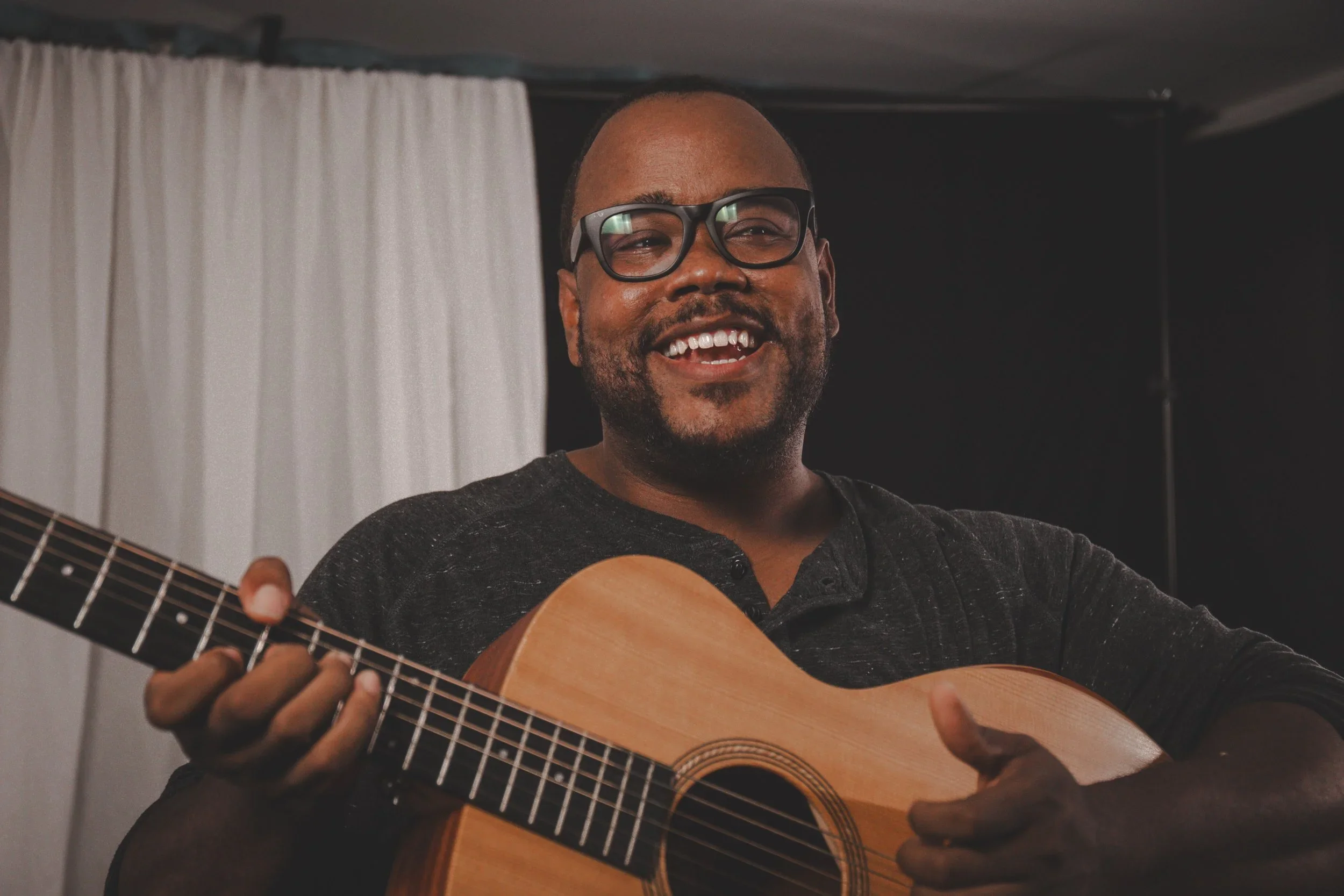
Photo provided
TF: One of the things that's so incredible about what you've done over the last eight to ten years is you made it a goal to perform in all 50 states. And if I'm not mistaken, you've accomplished that goal at this point.
BW: Correct.
TF: Congrats. That's amazing. Why was that such an important goal to you? And how did you connect with some of the ones that a lot of people don't think about going to when they're on a tour like that?
BW: It started sentimental; when my grandfather was dying — literally a week before he died — I was talking to him, trying to have my last words with him and everything. He gave me some wishes and one of the wishes was to travel the whole country. [I had asked him], “What was one of your regrets?” He said, “I didn't see all 50 states.”
He was like, “Brian, we're native. We should see our land.” And he told me to do it with something [I] love. At the time when he died, I didn't have any full lengths. I only had EPs. I was like, “How am I ever going to do that?”
From his death up until like 2017, 2018, I met all of these touring acts that were giving me nuggets of wisdom. Then my weekenders started turning to four days, to five days, to six days, to two weeks, to three weeks… and then I'm getting invited to play festivals in places I've never heard of. When I came back to the road around ’21, ’22, I did my first coast-to-coast tour. That covered about 39 states and I had this whole epiphany. I'm about to tour my next record and I gave myself both stretch goals and realistic goals. I wanted to do 50 states before I went overseas, which was in my stretch goals. After I wrote those goals, I'm not even kidding you, this band from England hit me up. We made a deal where they would cover half my rent and all my Airbnbs. So for two weeks, I did a UK and Ireland tour.
I cracked some numbers, I looked at what I was getting paid in my day job and all that, and [decided to] take a sabbatical. It took me about seven months to wrap the whole [US]. I relied on places I'd been to and then asked other musicians I knew from various areas. I tapped into my TikTok network, my Instagram network, my podcast network, and friends of friends from those small places or towns that people don't think of.
TF: What a wonderful tribute to your grandfather. That's an amazing thing that you were able to do. Obviously routing something like that is a big undertaking. You’ve clearly developed quite an insane network over the years, but besides that, are there any go-to resources that have been helpful to you that you would encourage others to check out?
BW: I think [doDIY.org] is the greatest one. It's this very intentionally underdeveloped, database website with resources from all around the world. Another one is building your social media following around the type of touring you want to do and then you'll realize other bands that you “should” be playing with.
What most people don't realize until they start leaving town is that your town is one iota of many other iterations of the same thing. People always say, “I hate my town.” Everyone's doing this, that, and the third, but those problems are everywhere. You know what I mean? But on the brighter side, those people that are moving and shaking — there's other movers and shakers doing the same thing. It just looks a little different.
I’m still using Facebook groups in 2026, believe it or not. Because what a lot of people miss about Facebook is that it's still the biggest social media network. There's still people talking and looking for things. On Instagram, you could always search #xmusicscene, and you'll find a bunch of locals to hit up and ask, where should I play? So like, Oklahoma is a notoriously hard state [to book]. But honestly, it's not hard. It's just a small place. There's only so much they can do, you know what I mean? There's Tulsa and Oklahoma City, and everything in between is either a small town or reservation. But there are hardcore scenes, and why do I know that? I know that from going to rest stops. I'm not even a hardcore musician. But if you are a hardcore musician and you're trying to go to Oklahoma, forget the city — find one of those reservations, because that's what they're looking to do. Or San Antonio, Texas has a lot of super anarchist anti-ICE bands of all genres. So I would just say, study your scenes, use the hashtags, and it's going to be a mixture of people coming to you and you coming to people.
TF: It’s interesting to hear you talk about small towns like that because here in the Albany area, we often talk about how we tend to get overlooked by tours of certain levels because we've got both Boston and New York City equidistant from us. But when artists do hit mid-level markets like ours, I often find they have a special time, kind of like what you were just mentioning. On a similar note, what about nontraditional venues? What hits differently at a house show or a backyard show versus a bar show or a club show?
BW: Things are a lot more unhinged in a positive way at house shows or alternate spaces. People at venues are like, “I have to dress a certain way. I have to have a certain ratio of IPAs to live performances.” It’s more like an organized hang, whereas at house shows, there's just so much chaos.
My first and only show in Seattle, I played my song “Show Friends” and people were singing along and started marching and mid-song, someone punched me in the face and I just was like, “This is about friendship, everyone!” and everyone started laughing. The person who punched me was like 5’1” and I'm 6 foot and they're like, “You could punch me. It's the punk thing to do!” And I was like, ‘No, that's going to be a bad TikTok, you know what I mean?’ [laughs] We've seen each other in real life — what do I look like punching someone that's 5’1”? That would be so bad. So I was like, don't worry about it. We're keeping the show going and we sang along. And I think there's something fun about that — not getting punched in the face, but the fact that if that happened in a venue, there’s a liability. We need to kick that person out. That doesn't happen at a house. It’s more get up, hug [it] out, take a selfie.
TF: I love hearing you talk about all this stuff because you have such an encyclopedic memory. Recalling dates and people from very specific things is so important as a DIY musician, because you're staying in touch with all these people. You're forming these relationships. How do you find that you form these meaningful connections and more importantly, maintain that social battery required to do it?
BW: It all varies. Some of [these relationships] are more of a friendship and some of them are more of like a hit me up when you're in town type of thing. It's really just about learning different things about different people and then attaching them to locations.
I've toured in Ohio so many times and I crashed in Columbus not that long ago. The person who hosted me was a friend of a friend and their roommate goes, “You look like you work out.” And I was like, “I do.” They told me I could stay there if we lift the next day. So we went on a lift and like, I'll never forget that person. So, it's really about thinking about developing your connections in different ways.
TF: Anyone who's ever toured will definitely know that you have your really awesome experiences mixed in with really shitty ones, right? Maybe you find yourself stranded or no one shows up to the show. Is there any one experience like that that was especially challenging for you, and how did you shake it off?
BW: All my bad stories, except for one, they were all very fleeting. A crazy story more than [being] damaged for life. I said I never got stranded. But what I really meant is that I never got stranded and had no help.
In Hawaii, my rental was not built for Hawaii. You're supposed to have an all wheel drive with big wheels because Hawaii roads are not like mainland roads. For starters, most of it doesn't have a true median. And then to the right of you is whatever's happening with nature. Sometimes it's a jungle. Sometimes it's a desert. Sometimes you're seeing lava dirt! [laughs] What happened to me is, I took a K-turn and the wheels fell back and the car was stuck. This dude came up to me and goes, “You look like you're from the mainland. You definitely need help, don't you?” I was like, “What gave it away?” He gives me his phone charger and I charge my phone in the rental.
My host, who happened to be my friend’s dad, calls me and goes, “You’re not at the venue, where are you?” I tell him and show him my location and he picks me up. He literally looks like Mr. Miyagi and goes, “Mahalo, my friend! Welcome to Hawaii!” and just starts clapping. He helps me find a tow guy and they don’t charge me. Again, it all worked out.
But how I move on with all these things is that I remind myself, this too shall pass. All your losses get figured out. Even legal stuff — when I got pulled over in Alabama over something very dumb and racially charged, I still thought I was safe. The way they went about it was foolish but I just moved on. I can count on my hands, in my 12-13 years of experience, the bad stuff that has happened.
My first show in Philly, a dude was doing cocaine on the bar and he pulled a gun out and goes, “You better play Jimi Hendrix!” and I did. Then he passed out and I packed up my guitar and just left. [laughs] I’ve had bad things happen like that but I’ve always found the light at the end of the tunnel.
TF: You must have stories for days. That’s wild. Okay, before we run out of time, I have two more questions. In terms of frequency of playing out, are you more of a “play as much as possible, doesn’t matter the location” or do you ascribe to not wanting to overplay your homebase?
BW: I’m a little bit of both. Play as many places that aren’t your hometown (within reason), but don’t play your hometown that often. That’s my belief.
TF: Final question. You’re a big foodie, if I’m not mistaken. Always posting about your favorite wings, ramen… How does prioritizing eating on tour help with mental positivity while on the road?
BW: Totally. I’m not as unhealthy about it as I used to be, but I’m still very much a foodie. It’s twofold: the food of the people that I’m playing for allows me to understand who I’m speaking to a little better. And secondly, it allows me to remember the town a bit more. I can say all these years later, I know where the best and the worst pizza is. I know where really good BBQ is. I know what areas have really good seafood and so many other food groups. And I do it as a way to de-stress and to reward myself for driving however many miles.
