REVIEW: What It Means To Listen Deeply with Somi
09/27/26 @ Arthur Zankel Center at Skidmore, Saratoga Springs
Photos provided by the venue
“With my eyes closed and the piano gliding along the lower register, it was easy to fall into a trance, coaxed further and further in with each note.”
Walking up the stairs of the Arthur Zankel Center at Skidmore College, a tightly wound ball of nerves inside of my chest began to unknot. Most of my days leading up to the show had felt like hours of moments I needed to check off: go to Back To School Night, obtain last minute supplies for an event on Saturday, complete training for work due in three days, workout, find time to grocery shop and feed myself, maybe see my actual family for five minutes. All on repeat in my head, all day long, every day. In all honesty, Somi: A Well-Being Concert was on that list, too. “Go to Skidmore, review a show, keep checking items off of this never-ending list,” rang inside my thoughts.
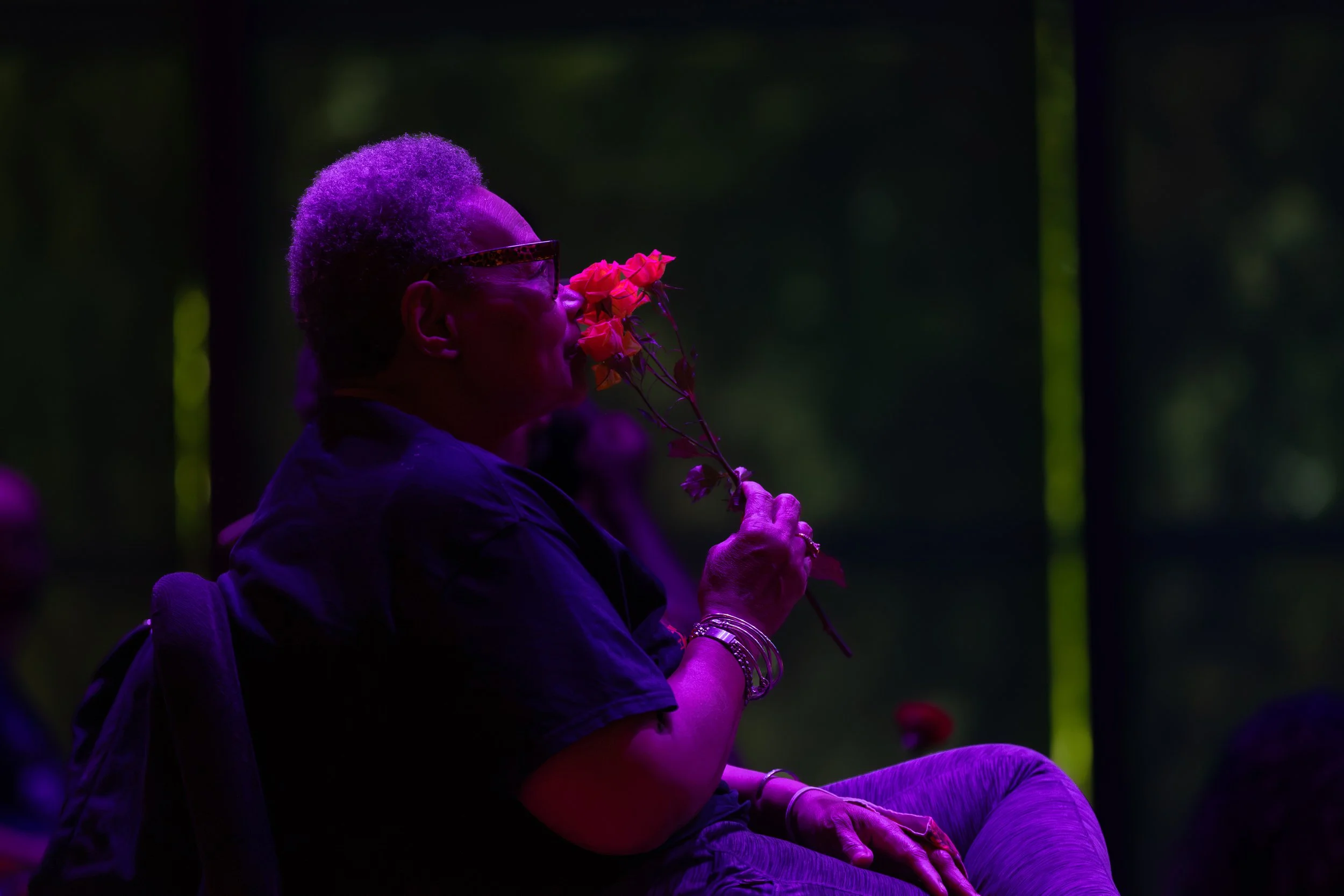
So, when I was greeted inside by friendly faces, fresh flowers for the taking, and cards with positive affirmations, I was slightly thrown off. This was different from my usual show experience; I clearly wasn’t here for a mere transaction of sounds between artist and audience. I was already being required to slow down my thinking and be mindful of the space I was walking into. Now with a seasonal flower and a card of encouragement in hand, I walked down the hall towards the auditorium, pausing to admire the table from Skidmore’s Peer Health Mentors filled with handmade zines that were born of collaboration with Skidmore’s Zine Club. Another positive sign — amidst the onslaught of AI advertising, the kids are still alright.
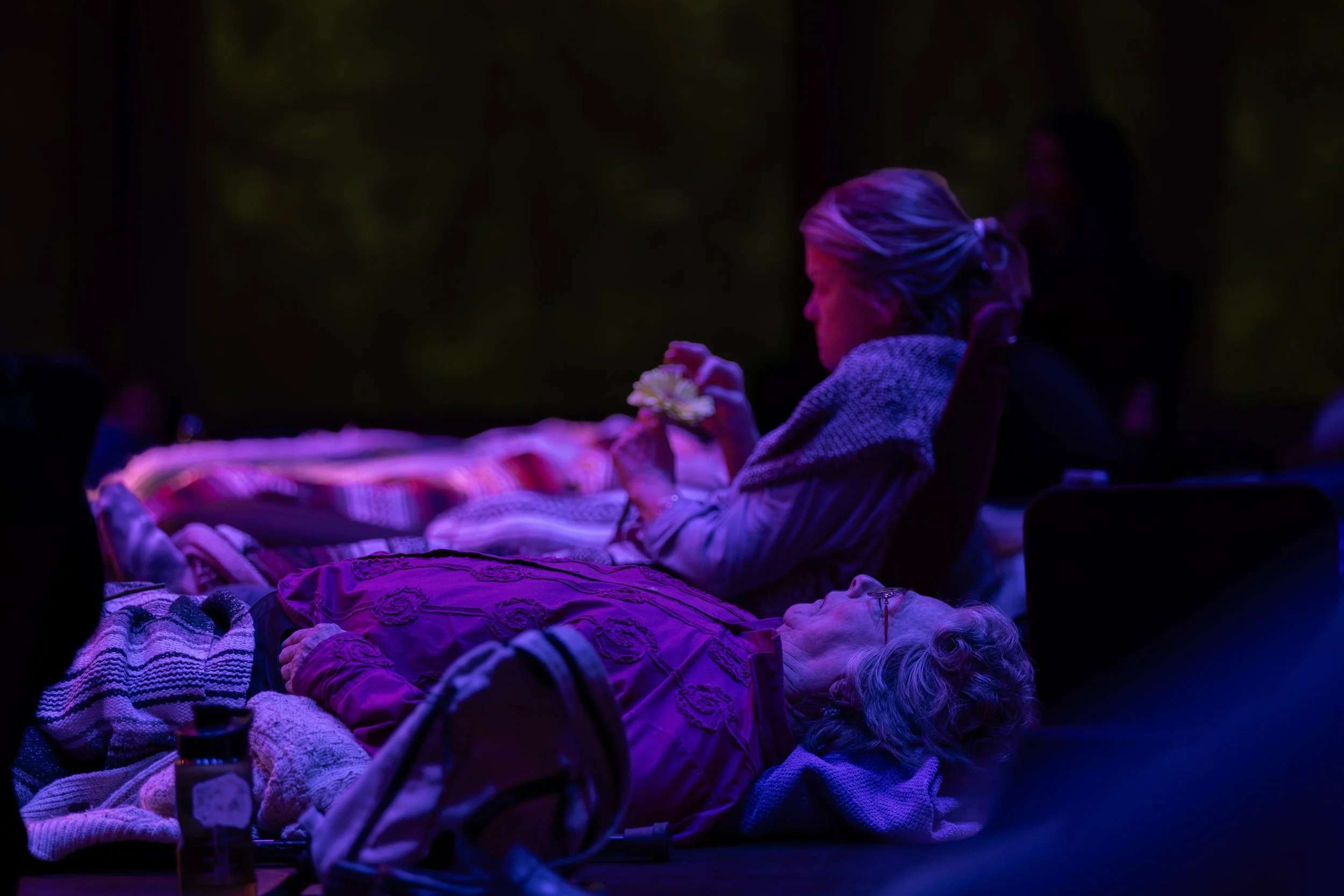
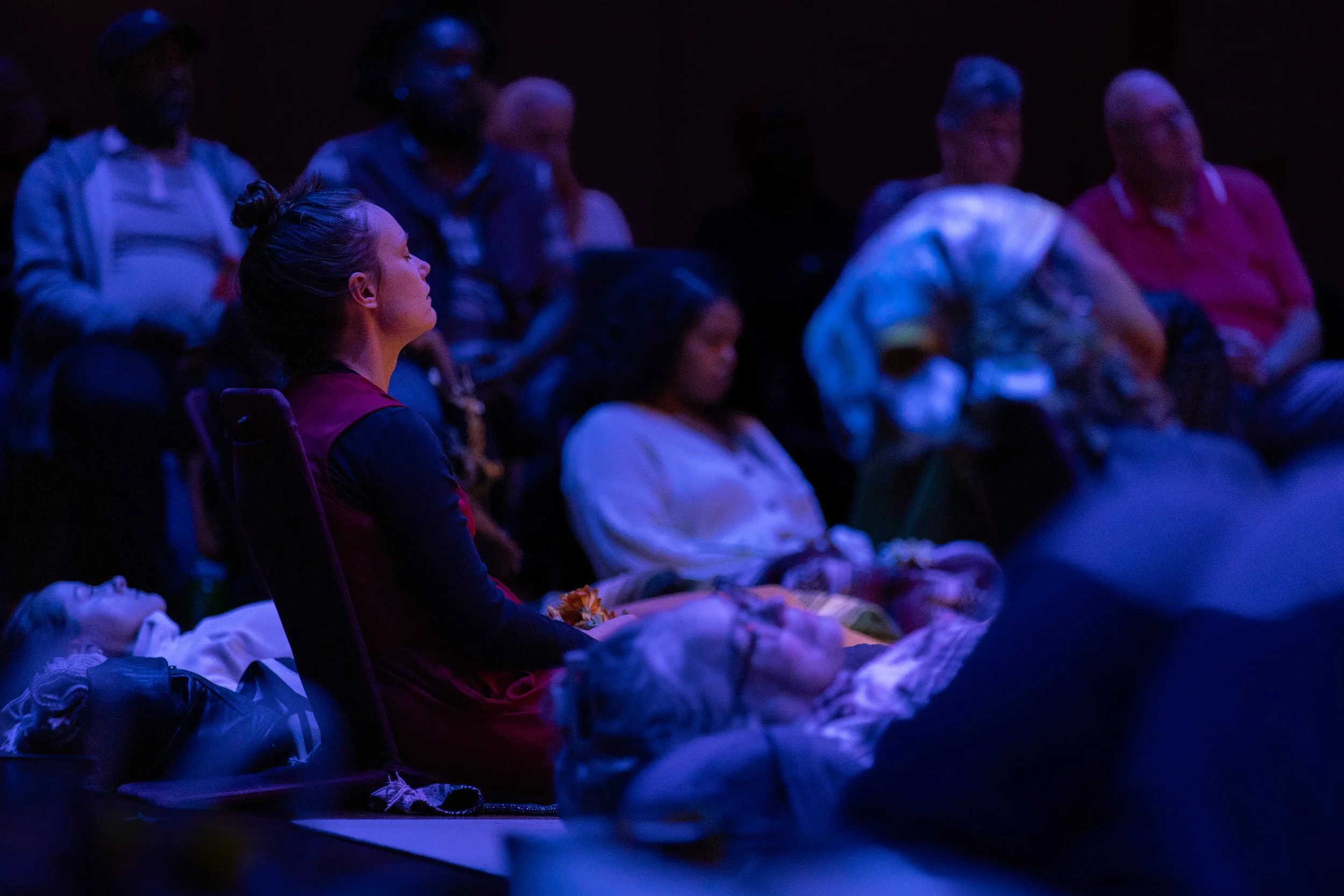
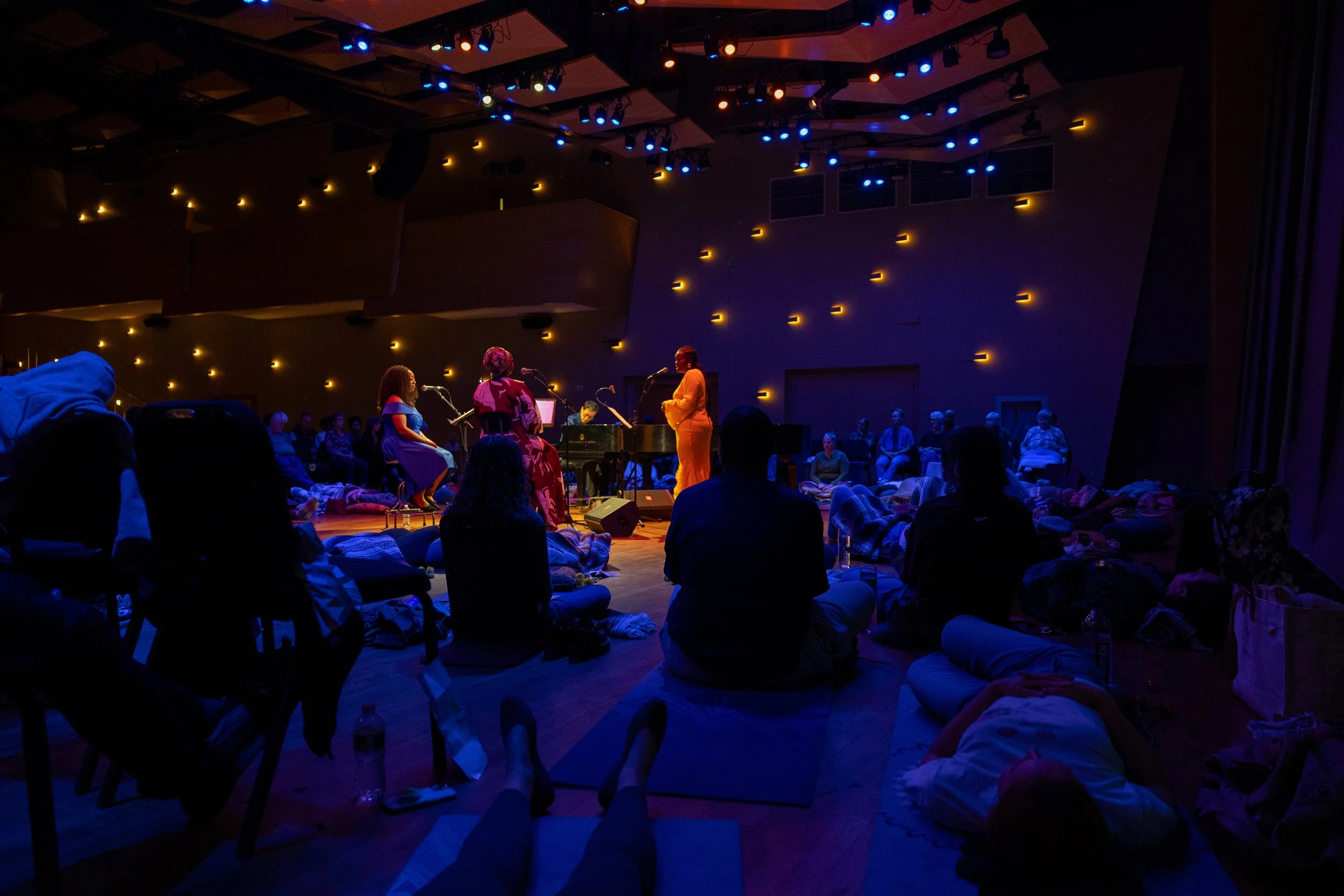
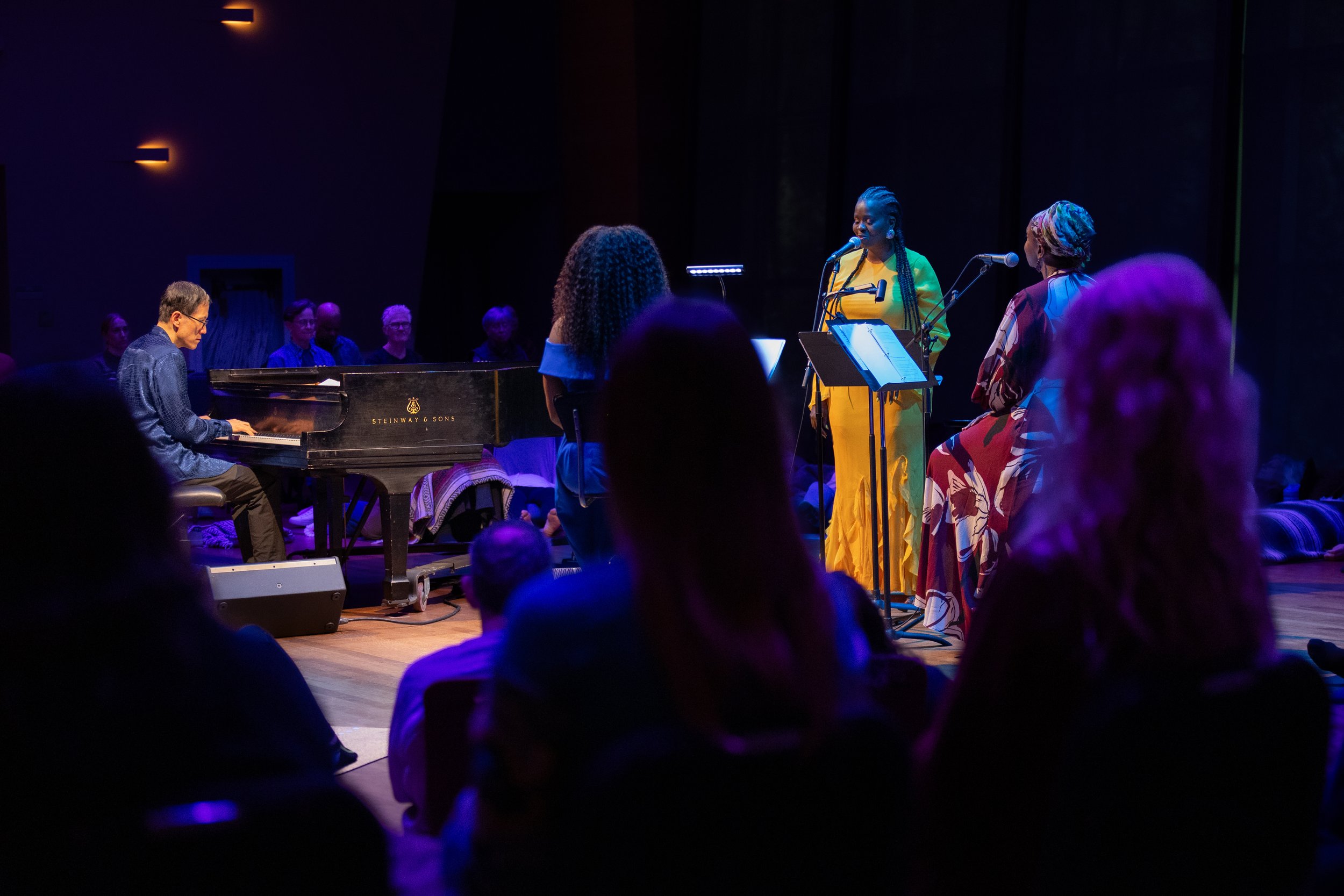
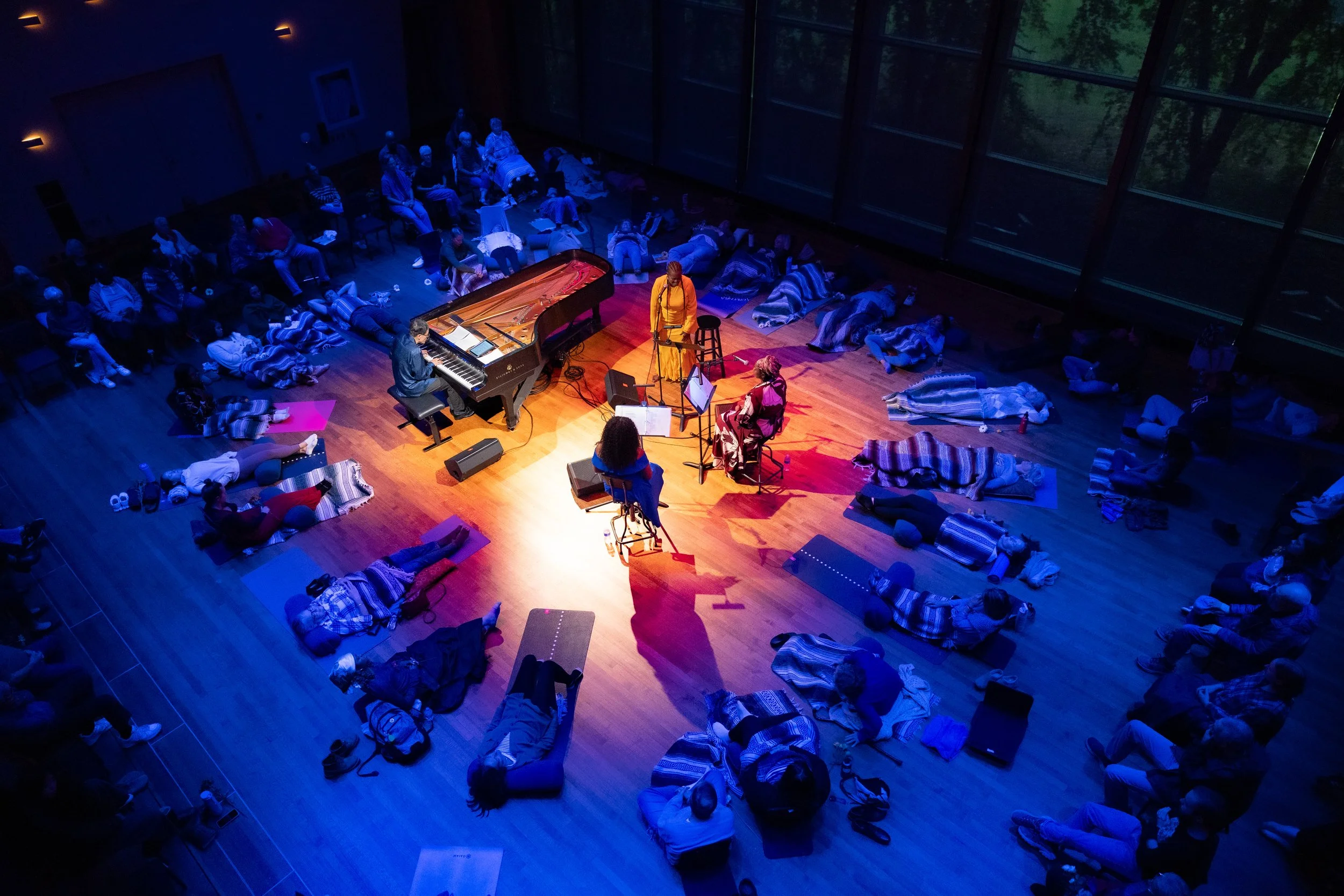
Within seconds, though, my brain quickly went back to my to-do list. “Go in, find a seat, find the bathroom, then start my notes. Go in, find a seat…” Therefore, when I walked in to find all the seats located on the stage, I was forced to pause my mental list and slow down again. As I took in the scene, I saw a U-shape of typical chairs surrounding a circle of yoga mats, pillows and blankets, all of which encircled the piano and mic stands. Still a bit too anxious to sit myself in the center with the yoga mats, I chose a seat on the side of the stage and watched the conversations unfold around me.
Teisha Duncan, an artist in residence at Skidmore, floated around the stage greeting audience members, enveloping them in warm conversation and hugs. Sprawled on the floor with shoes off or clustered among the chairs were duos and small groups of all ages chatting easily, adding to the comfortable atmosphere. As Duncan took her seat at the mic stand and closed her eyes thoughtfully, I heard the women in front of me decide that they should set an intention for the experience we were about to embark on. Feeling inspired by the sentiment, I quietly did the same in my head.
Those two women clearly anticipated the tone of the set because, moments later, as Somi, her pianist and vocal accompanist took the stage, the entire audience was encouraged to set an intention for resetting and restoring throughout the next hour. Furthermore, we were asked to do something that audience members have been asked to do many times before: listen deeply. This instruction is one that often trips me up. What does it mean to listen deeply? Listen to the lyrics? Delineate the instruments, then the chords, then the notes? Try to hear it separately, then together? As listeners, we’re asked to listen deeply rather frequently, but I worry that I’m doing it “wrong.”

As Somi began to sing, I fought this battle inside my head again. “Take notes, pay attention, but also take a step back, but don’t remove yourself so much that you’re not picking up on small details, then…” Glancing around, trying to gauge audience reactions, I realized that many folks had their eyes closed, paused to take in the sounds. Slightly afraid of missing a look, snap, or other action, I decided to do the same. I would end up staying like this to fully absorb Somi’s universe for the next 30 minutes of the set.
The music washed over me, first with her percussion. She would use breath as an instrument, short, staccato bursts into the microphone, a soft cymbal-like sound creating pace and tension, often at the start of a piece. Her hands clapped out syncopated rhythms, further dismantling the structured, static parts of my thinking, re-wiring my listening brain. Then, beyond the percussion was her voice. I searched for a word to describe it, feeling each one fall short. It wasn’t honey sweet, but it was smooth. It wasn’t a low hum, but a rich tone. It was sleek, sliding through verses like a figure skater on ice. With my eyes closed and the piano gliding along the lower register, it was easy to fall into a trance, coaxed further and further in with each note.
It wasn’t until I left that I understood the importance of the moment. That was listening deeply. Not trying to pick apart each tiny section to figure out what it means or how it fits together, but allowing yourself to absorb the music in whatever way it hits your ears, mind, and soul. There was no checklist for listening deeply, no step-by-step process you needed to follow. It’s all in falling into the audible.
Throughout the set, Somi graced the audience with songs from her August 2026 album, What Does It Take To Bloom? The harmonies created on “We’re All Falling” were full-bodied, yet soft. Part of Somi’s elegance onstage is her capacity for control, wielding her voice in a way that welcomes listeners into her vocal prominence, rather than belting it out and forcing it on them. The same was felt on “Ngayaya,” sung in Runyoro-Rutooro, a Bantu language with roots in Western Uganda. When I did open my eyes to peek at the audience, each member sat enchanted by her flowing melodies.
When she closed out her final song, I checked in with myself physically once more. My chest looser, I felt relaxed, rested, and empty, but in a positive way. I wasn’t feeling empty with loneliness or sadness; I was empty because I truly had been reset and restored, ready to be filled back up once more. Looking around me, I gathered that the rest of the crowd felt similarly, each person moving out slower than they came in, almost in a daze. It seems we had all listened deeply, allowing Somi to help us re-center our minds, ears, and hearts.