INTERVIEW: Author Paul Grondahl Uncovers Andy Rooney’s Lucky Life in New Biography
10/13 @ Page Hall on the UAlbany Downtown Campus
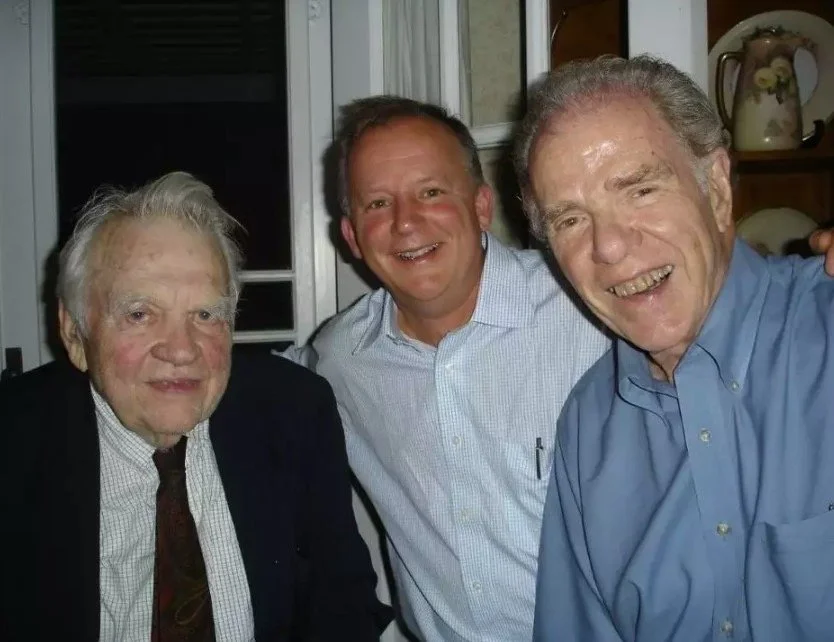
Photos provided
“He definitely had a dark side to him. I think I brought that out, but I also wasn't afraid to let his light shine when it was a more positive light.”
CBS was in shambles. The top brass were breathing down the necks of the news staff, the president had lost his grip on reality, an unpopular war raged overseas, and the American people were splitting at the seams with division.
It’s 1970, and the year was already off to a chaotic start. Writer and TV journalist Andy Rooney was refusing to back down on his position on Vietnam, looking to air ‘An Essay on War’. The essay took a stark look at the reality of the Vietnam War, including the statistics of casualties, but the network executives were uneasy — it was too political and heavy.
This was not the first time that Rooney had tackled the top of the CBS administration, Don Hewitt. Not easily rattled, he had refused to cross CBS strike picket lines, and this was not even the first war he’d reported on. World War II gave him strong opinions on war as a war correspondent who was one of only eight journalists accompanying the 8th Air Force flying bombing missions over Germany. He covered the Normandy campaign and witnessed the Nazi concentration camps firsthand.
Now soldiers once again strapped on their weapons for battle, this time in the lush terrain of Vietnam — with Vietnamese civilian casualties skyrocketing and the American people questioning the purpose of sending their children to a pointless fight, Rooney put into words what the people were thinking, but the executives and presidency worked hard to suppress: war fatigue.
With mounting pressure from the station, would Rooney maintain his journalistic integrity or soften the blow? Save his career or speak the truth?
This situation and many more anecdotes from his life are packed into Andy Rooney: A Lucky Life, the first full-length biography about the journalist most famous for his segment ‘A Few Minutes with Andy Rooney’ as a part of the CBS News program 60 Minutes. The biography, which will be published on October 1 by SUNY Press, is penned by Paul Grondahl, Opalka endowed director of the New York State Writers Institute at the University at Albany.
“He stood by his convictions, and sometimes he paid a price, and I think it’s very analogous to what's going on with CBS News in 60 Minutes right now,” points out Grondahl. “They have a whole new lineup coming in, because most people wouldn't tolerate the kind of pressure and outside intimidation that was coming at them.”
He draws a line between broadcast journalist Scott Pelley, who was a friend of Rooney’s, and fellow CBS television host Stephen Colbert, who has also been fired from the station. In the face of history repeating itself, Rooney’s adamant defiance remains a reflection of a larger issue. Grondahl puts it neatly, “Journalists are supposed to tell the truth.”
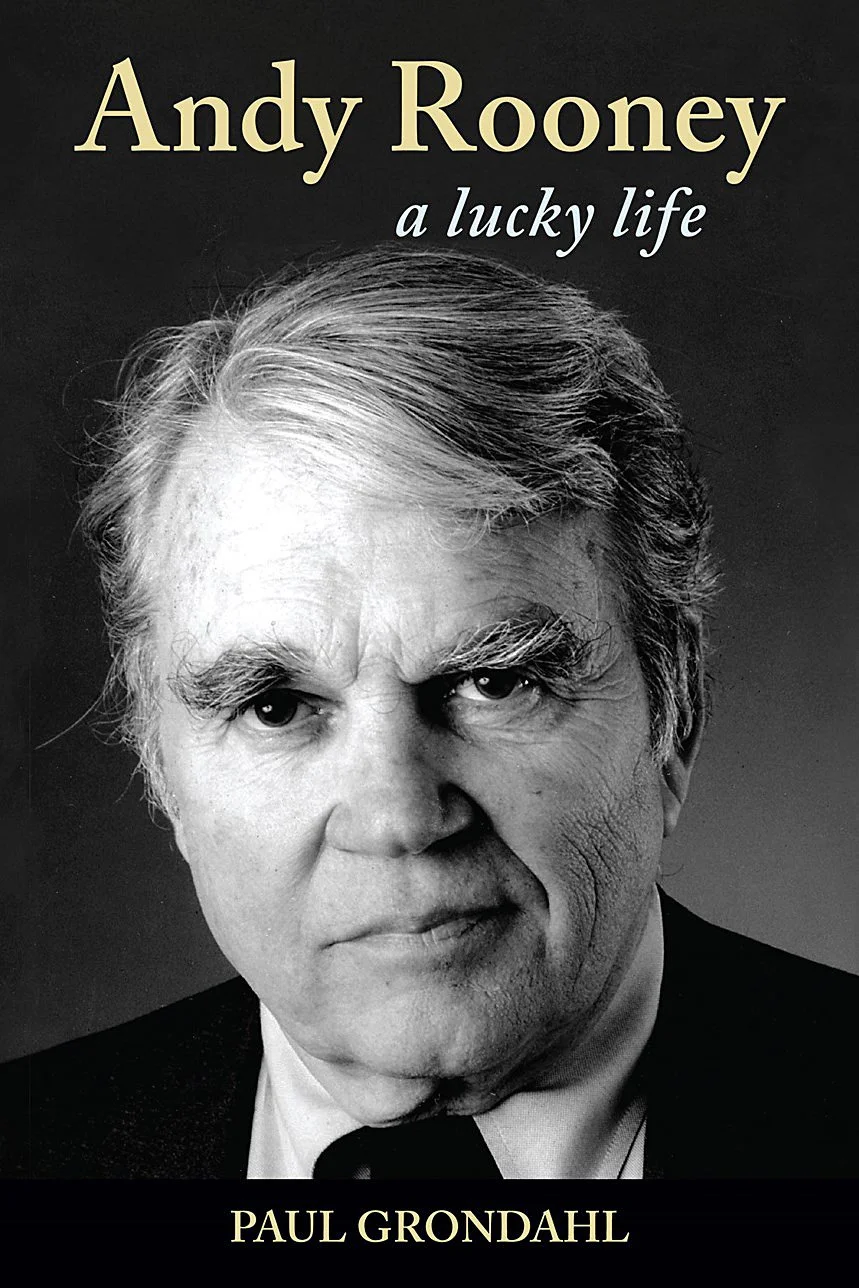
Grondahl describes how, in a strange way, it was as if he got to know Rooney twice. Once was as an acquaintance, a comrade of journalism, interviewing him over the years for various events across Rooney’s hometown of Albany. The second time was as an objective purveyor of the man’s life and legacy through his endless output of content. Rooney’s four deadlines a week meant that everywhere he went, every minute of his life, there were words.
“I spent a lot of time with his papers at the University of Texas in Austin, with extensive letters and correspondence, and interviewed a lot of his contemporaries and family members,” says Grondahl. “I had a general knowledge of him, but as with every biography, you learn a lot of things as you go. You uncover and ask more questions, different questions, and add to the store of knowledge. I got to know him very well through my research.”
There were also his own childhood memories that infused the writing process. Rooney’s outspoken sensibilities impressed a young Grondahl, who watched his show every Saturday night. What did the ‘cranky guy with the big eyebrows’ have to say this week? “It was always interesting, sometimes really cutting, and often really funny,” he recalls.
This is not Grondahl’s first time dabbling in writing about a figure with a layered personality. His book Mayor Corning: Albany Icon, Albany Enigma walks a similar path, meticulously researched to present a complex man with a cool, unaffected presentation. Interviews with family, friends, colleagues, and more create a tapestry of narratives, each uncovering a different perspective from every era.
“Rooney was a complicated person, so you’re not going to know the full person after a few encounters or a few hours spent with him,” says Grondahl. Reading through all of Rooney’s work to compile his over 300-page book, he saw how the larger picture of the man fit into the context of history. “I got to see a lot of layers of his personality.”
He was struck by the earliest accounts of Rooney, dating to his time at the Albany Academy. In his campus newsletter, The Cue, Rooney’s sarcastic writing was already on full display, openly calling himself an atheist and a pacifist — an unpopular stance for a young man in military school in the 1930s.
Rooney’s acerbic wit sharpened over time, through his years as a wartime journalist and mainstay on broadcast television. “Today, you would call him an influencer,” says Grondahl of Rooney’s decades-long command over his audience of 20 million people. “He would have a Substack or YouTube.”
He had a light, ‘everyman’ style, usually debating superficial topics primed for his ‘complaining’ style of humor. However, his biting tongue often ran him into controversy. Grondahl believes that it happened no more than any other influential commentator — yet Rooney’s instances stuck to his legacy, which worried him. A sharp knife cuts both ways.
“Name anyone who has a big following today and see how often they say ugly and horrible things,” Grondahl says, matter-of-factly.
One of Rooney’s most publicly infamous incidents was following the news of Kurt Cobain’s death by suicide. On his segment, Rooney admitted openly that he had not previously heard of grunge music, Cobain, or Nirvana, yet this did not prevent him from expressing the worst of the mockery and stigma that surrounded mental illness.
Chiding Cobain, his tirade included statements such as, “What’s all this nonsense about how terrible life is?” and “If Kurt Cobain applied the same brain to his music that he applied to his drug-infested life, it’s reasonable to think that his music may not have made much sense either.”
To the grieving American public, this was far more than Rooney’s typical complaints about what is appropriate airport attire or the inconvenient shape of milk cartons. Widespread criticism was swift, with complaints from the audience, mental health advocates, and other media outlets. Rooney delivered a follow-up statement on the air the following Sunday, issuing an apology and reading the audience’s feedback without his own interjected commentary.
As a biographer recounting these difficult moments of history, Grondahl had to walk a careful line between glorification, obfuscation, and reality. “I put the facts out as they were,” says Grondahl. “I didn't apologize for it. I didn't make excuses for him. And I showed the reactions.”

Reactions poured in once again when Rooney claimed, on a list of other items such as alcohol and drugs, that “homosexual unions… lead quite often to premature death,” and again, when he argued in a 1992 column that it was "silly" for Indigenous Americans to complain about team names like the ‘Redskins’.
But it was not until the Advocate reporter Chris Bill quoted him as saying that, “Blacks have watered down their genes because the less intelligent ones are the ones that have the most children. They drop out of school early, do drugs, and get pregnant,” that the backlash was finally too fierce for CBS to ignore.
Rooney vehemently denied the statements in the Advocate interview. The interview was never voice recorded. He argued for his previous record of defending the rights of Black Americans, from his writing of an ABC special for Harry Belafonte and Lena Horne to his investigation of the murder of civil rights leader Medgar Evers and his involvement in the documentary Of Black America.
CBS placed Rooney on suspension. Even though he served just one month of the three-month suspension before the audience called for his return, it gave him time to think about legacy. All writers selfishly like to believe they’re doing good in the world, he openly acknowledged. Now he lamented that, after his decades of work, he’d only be remembered as a ‘racist bigot’ who only made ‘life a little more difficult for homosexuals’. According to Rooney, he ‘felt terrible about that’ and ‘learned a lot’.
“He was suspended; he was reprimanded,” says Grondahl. “He apologized, and I think he kind of learned from some of those experiences that words matter, words can hurt, and you have to use them carefully.”
On a stage as large as 60 Minutes, words have exceptional weight. During the writing process, Grondahl had to examine how some of Rooney’s attitudes and words evolved over the course of time and how some did not.
“He certainly was capable of great kindness, and also great nastiness, both on a personal and professional level,” says Grondahl evenly. “I try to put all that in. I don't think any person is all sweetness and light. He definitely had a dark side to him. I think I brought that out, but I also wasn't afraid to let his light shine when it was a more positive light.”
When Grondahl introduces Rooney in Andy Rooney: A Lucky Life, he is coming to terms with an older, still rough-around-the-edges character. Grondahl writes about a different side than colleagues, executives, and even friends typically account — Rooney as a quiet family man padding around the house in his New Balance hiking boots; a passionate woodworker; a dog lover; and someone who openly admitted that he’d die first before he’d retire.
An Albany and Rensselaerville denizen, Grondahl suffuses Rooney’s life with the legacy of the city. Calling Rooney “an Albany guy through and through,” he notes Rooney’s numerous ties to the area, from a dusty cup awarded from his days at the Albany Academy to his surprisingly emotional ties with Albany writer William Kennedy.
From the war years to the present day, Andy Rooney: A Lucky Life is a lengthy overview of a life. Yet there is still more unsaid, difficult to explain, or contextualize. “You’ve got to square those circles somehow,” says Grondahl.
That is the impossible task for all biographers and the strenuous truth about Rooney — it’s uncomfortable, complex, and difficult to understand at first glance. It’s doubtful that he would have wanted the story told any other way.
Learn more by connecting with Grondahl at Page Hall on the UAlbany Downtown Campus, where he will be discussing Andy Rooney: A Lucky Life at 7:30 p.m. on Tuesday, October 13.