REVIEW: Ineffable. Transcendental. Pat Metheny’s Side Eye III+.
09/23 @ The Egg, Albany
Photos by Alison Bachorik
“For two and a half hours, we were taken by the shoulders and led down a sonic path, winding and disorienting, but safe with Metheny and his musical consociates pushing us from behind.”
When people speak of having a transcendent experience, what are they transcending? Time? Their position in this life? The ego and self? Well. 20-time Grammy Award-winning guitarist and his Side-Eye III+ band transcended all of that and more with their performance at The Egg’s Kitty Carlisle Hart Theatre.
I’m not being hyperbolic. Throughout the concert, I found myself thinking more about limits of human capabilities and experience than about metric modulation, modal frameworks, or the sound engineer’s mix. (Okay, I thought about those things too; I had to write a review after all, I couldn’t just have the musical equivalent of an ayahuasca journey, although if you were going to do that, this concert would have been an incredible soundtrack to such an experience.)
Let me explain.
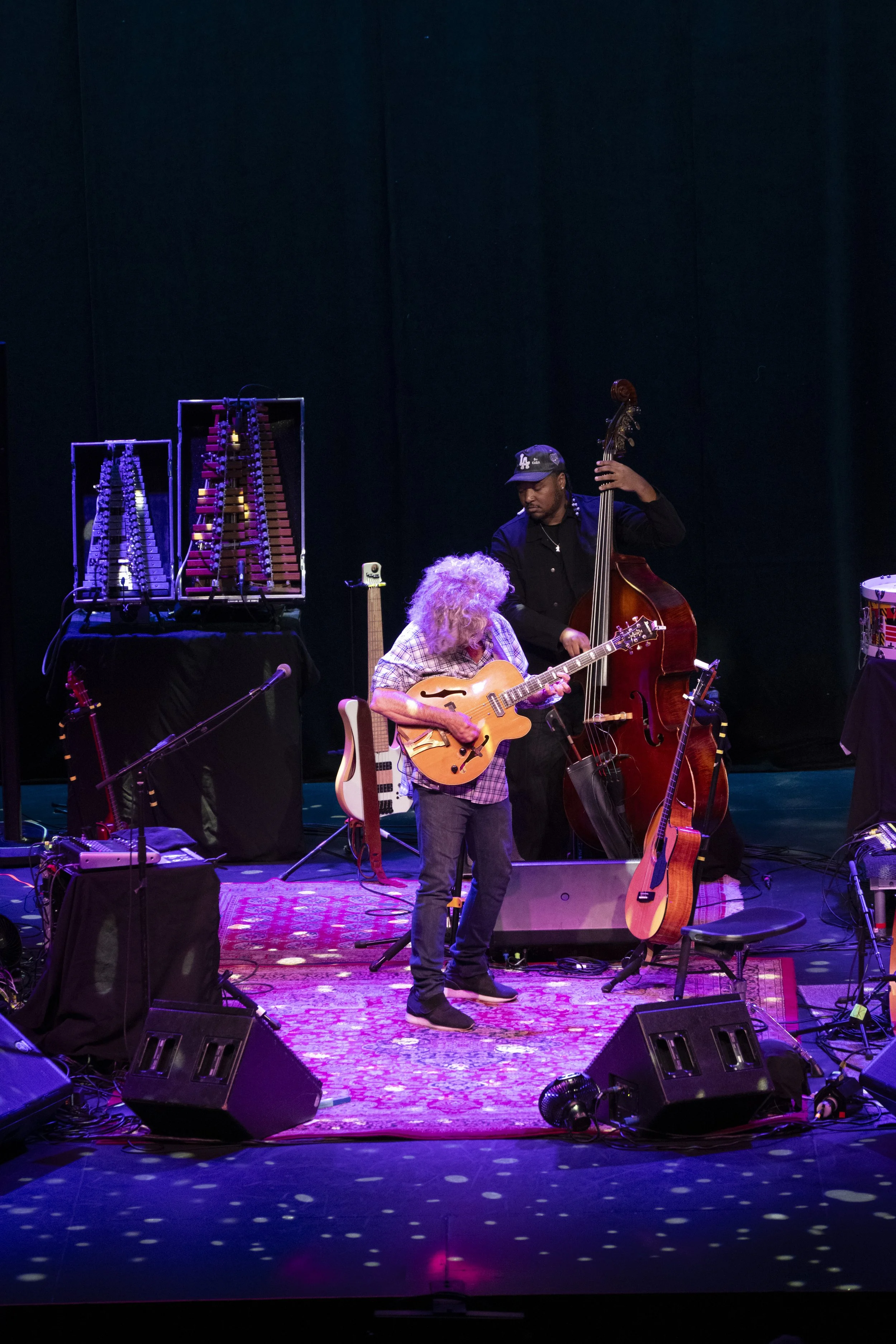
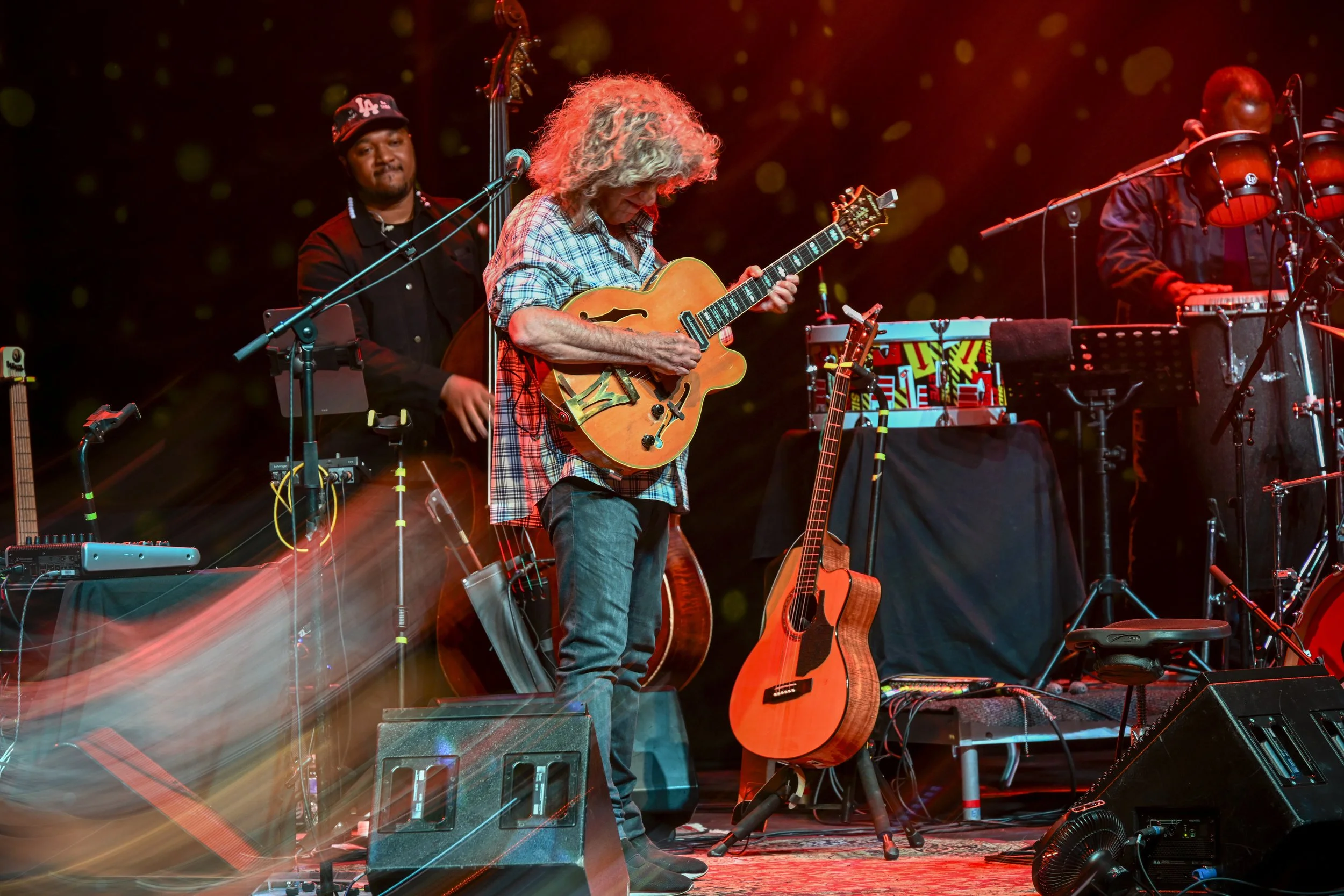
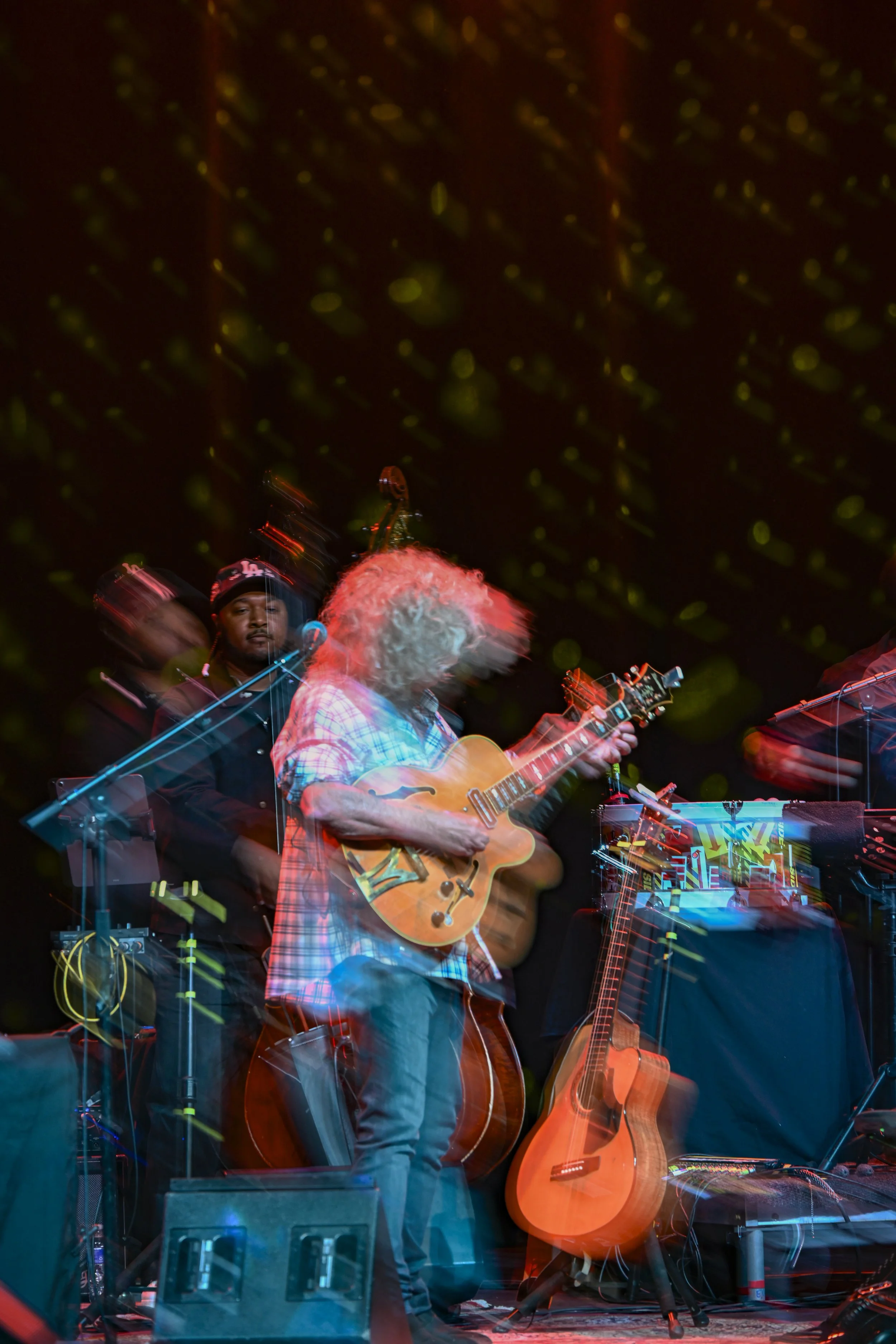
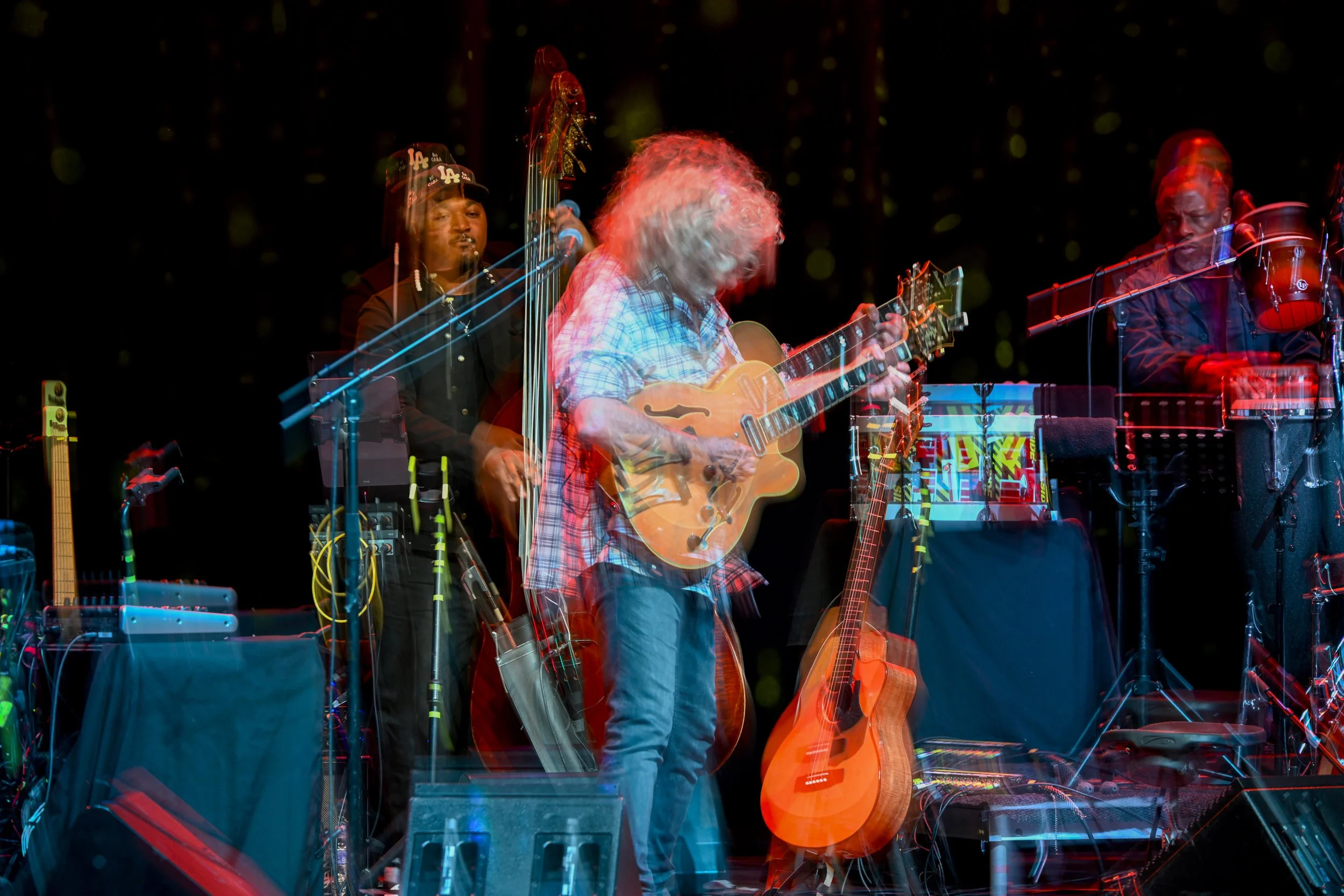
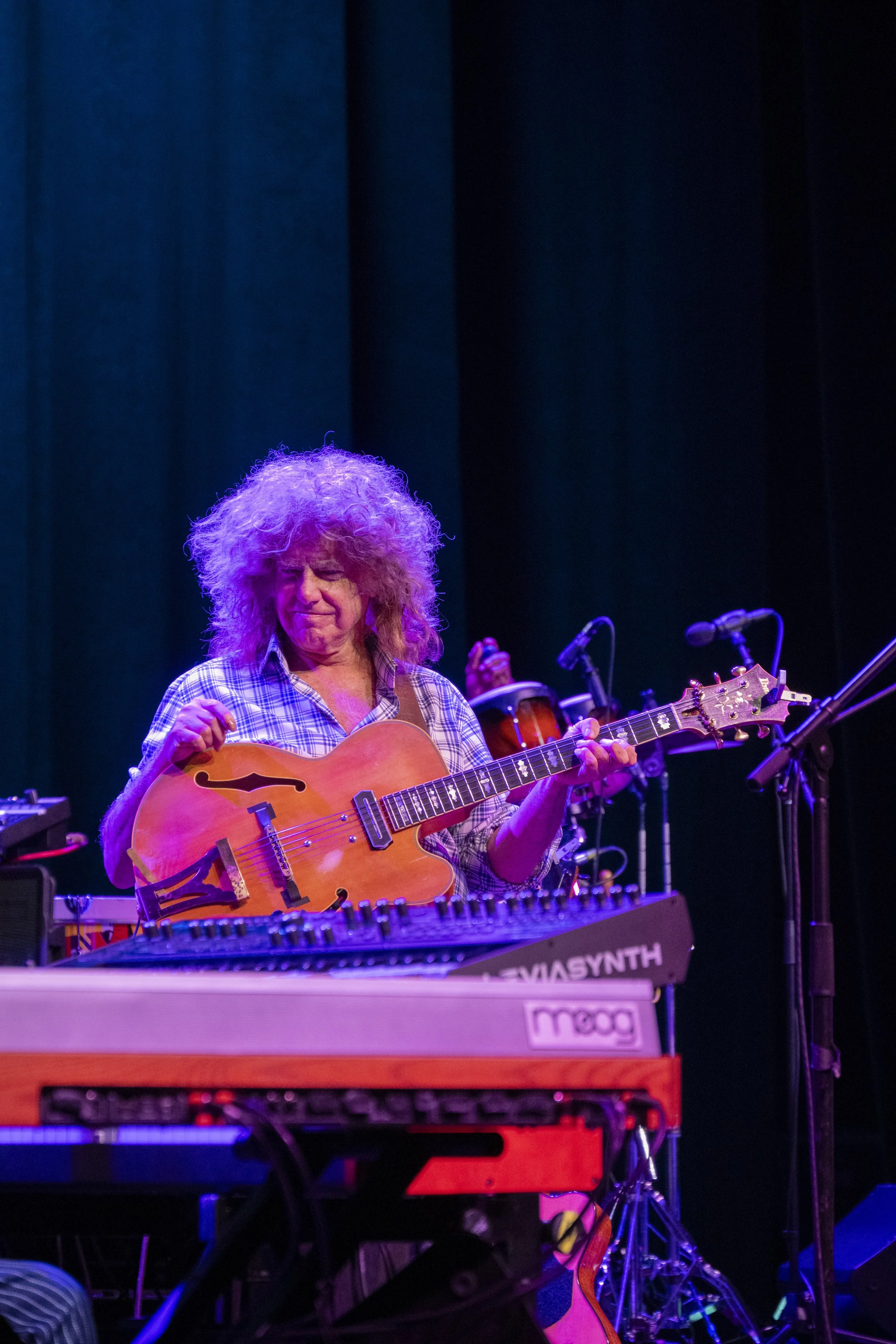
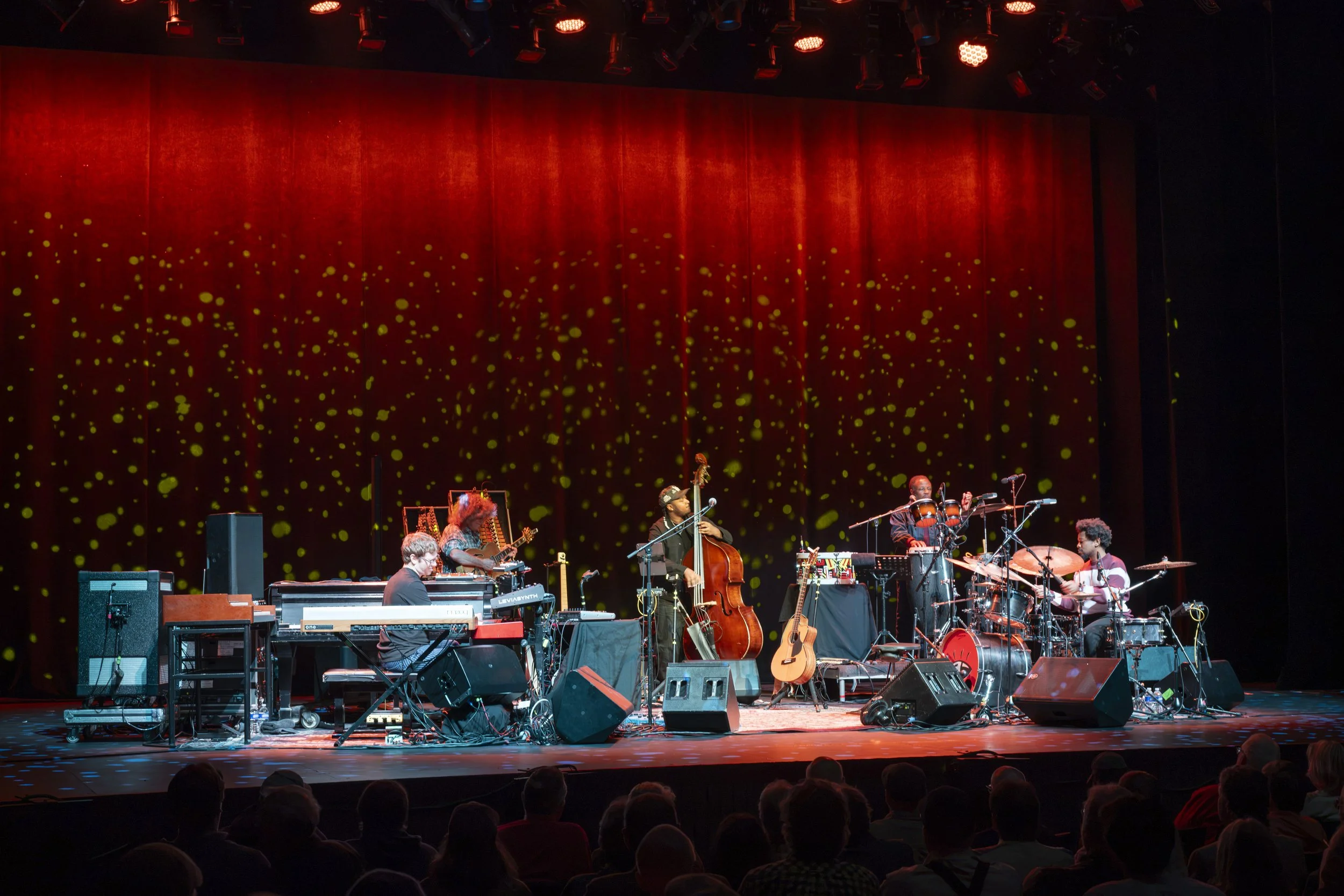
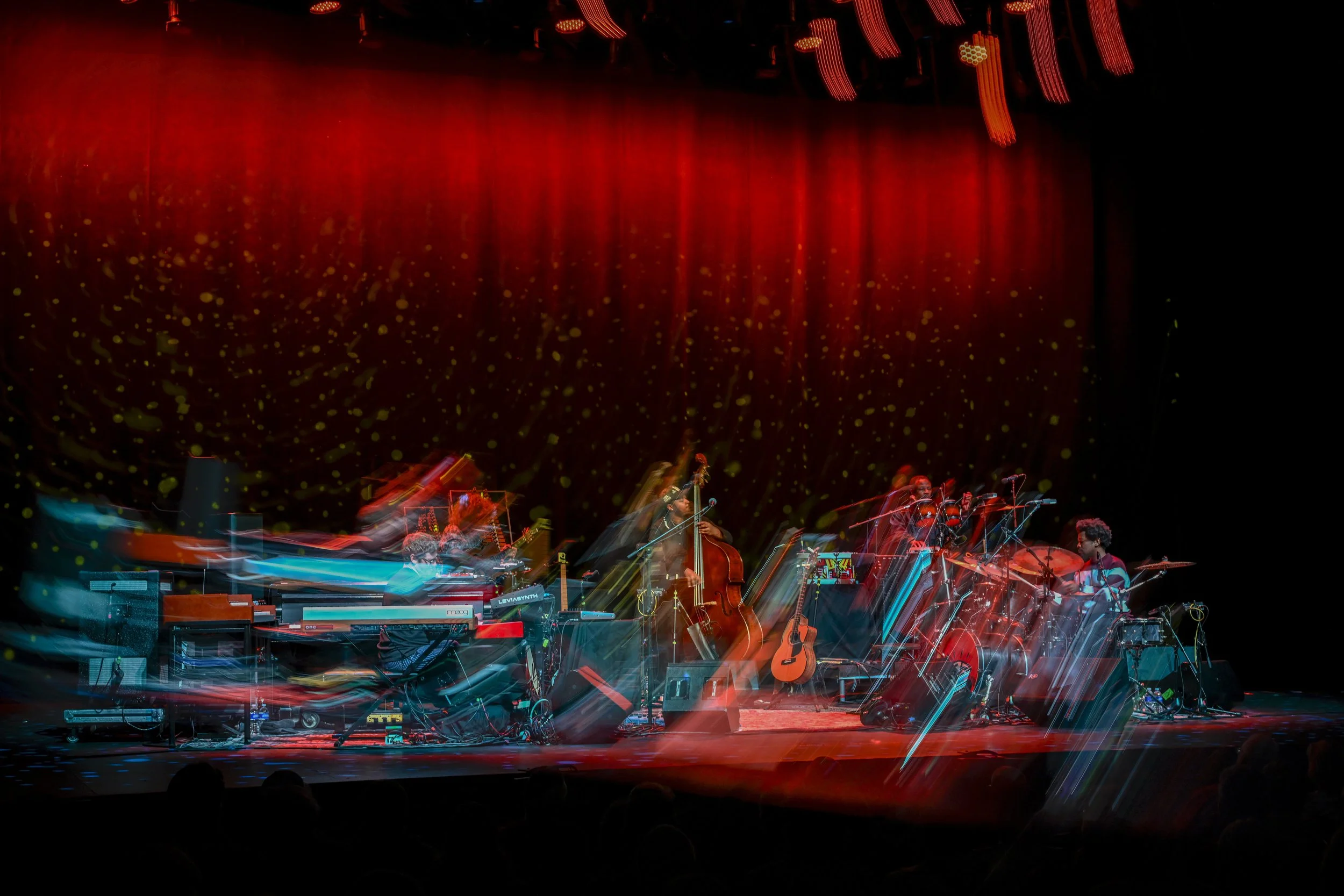
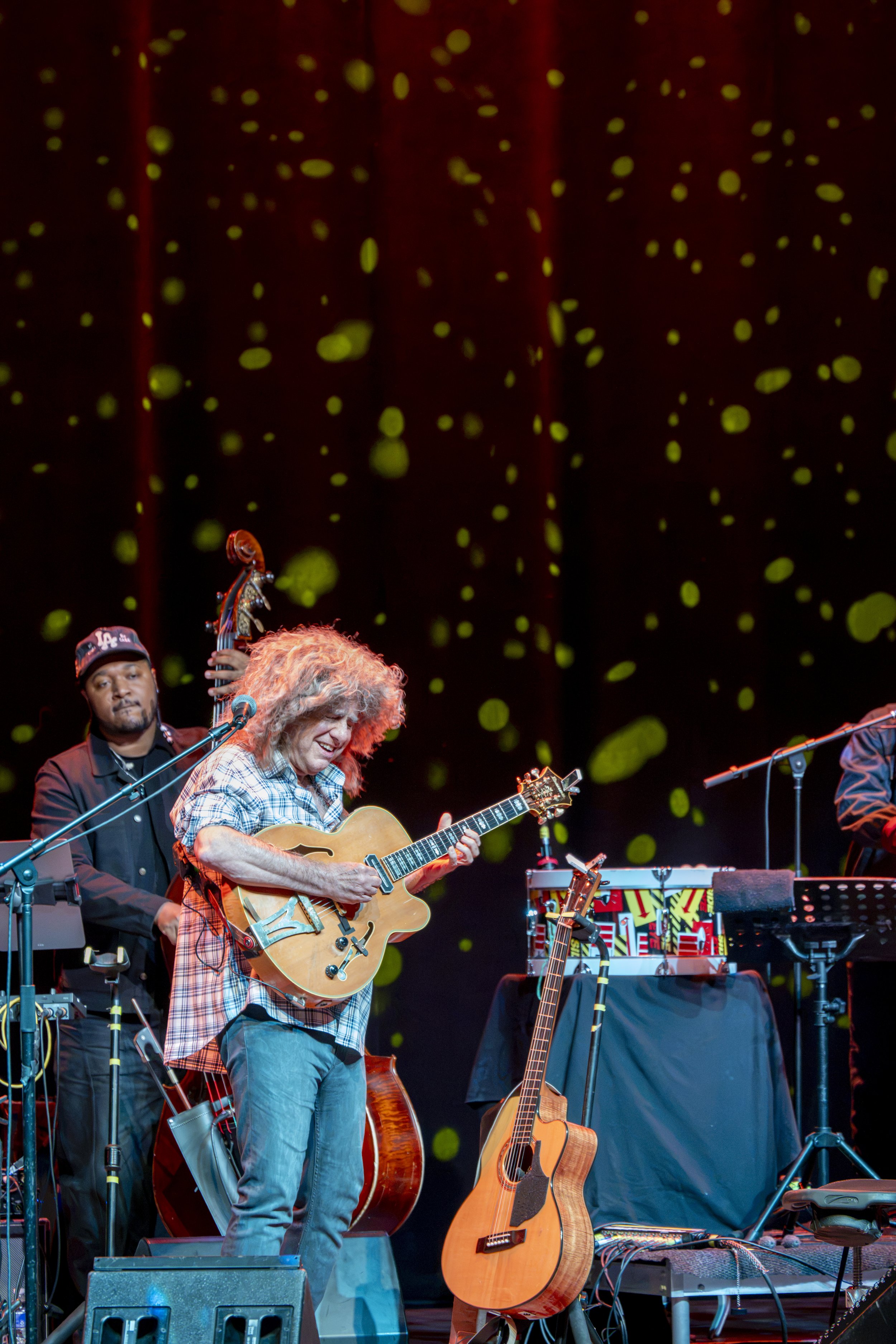
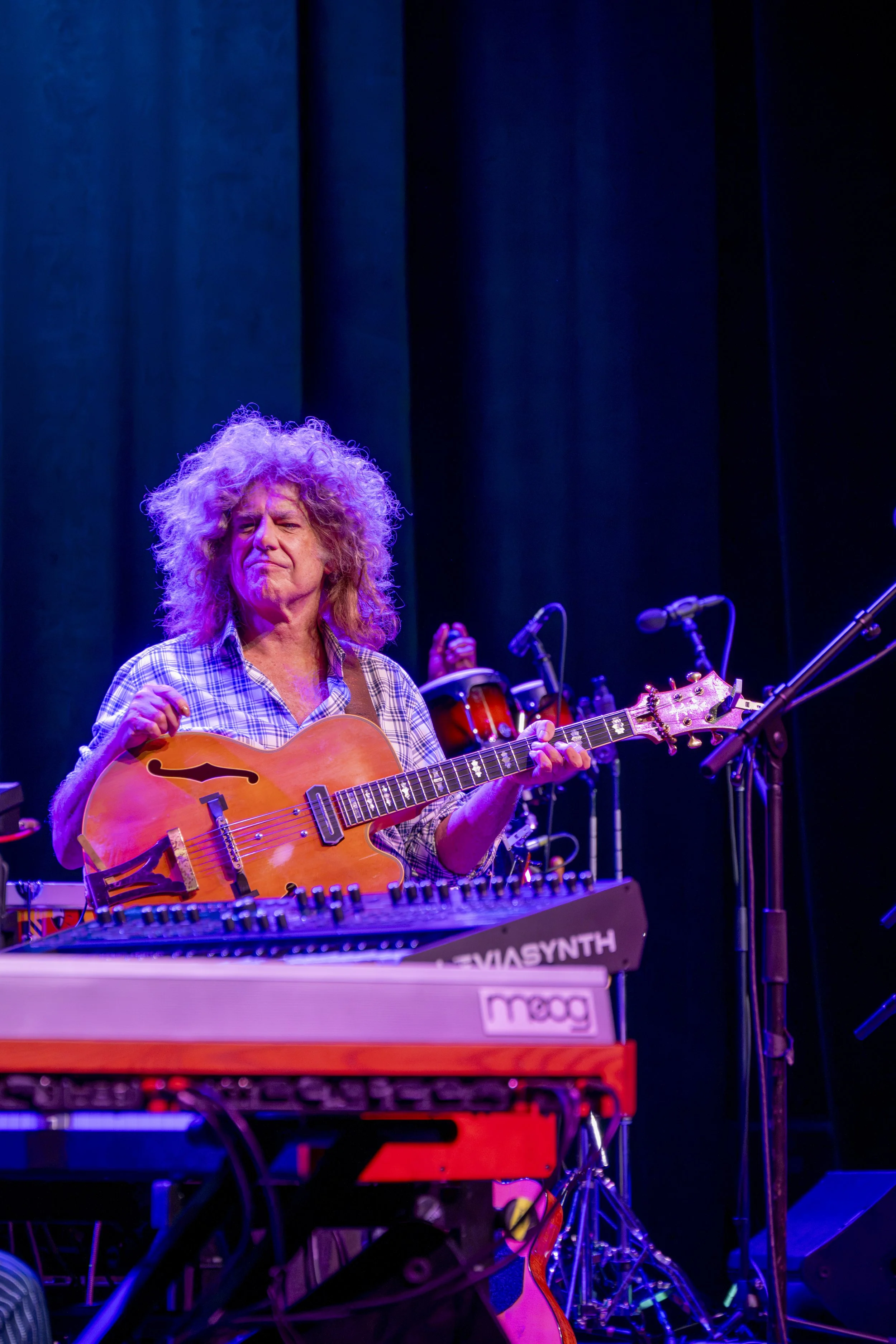
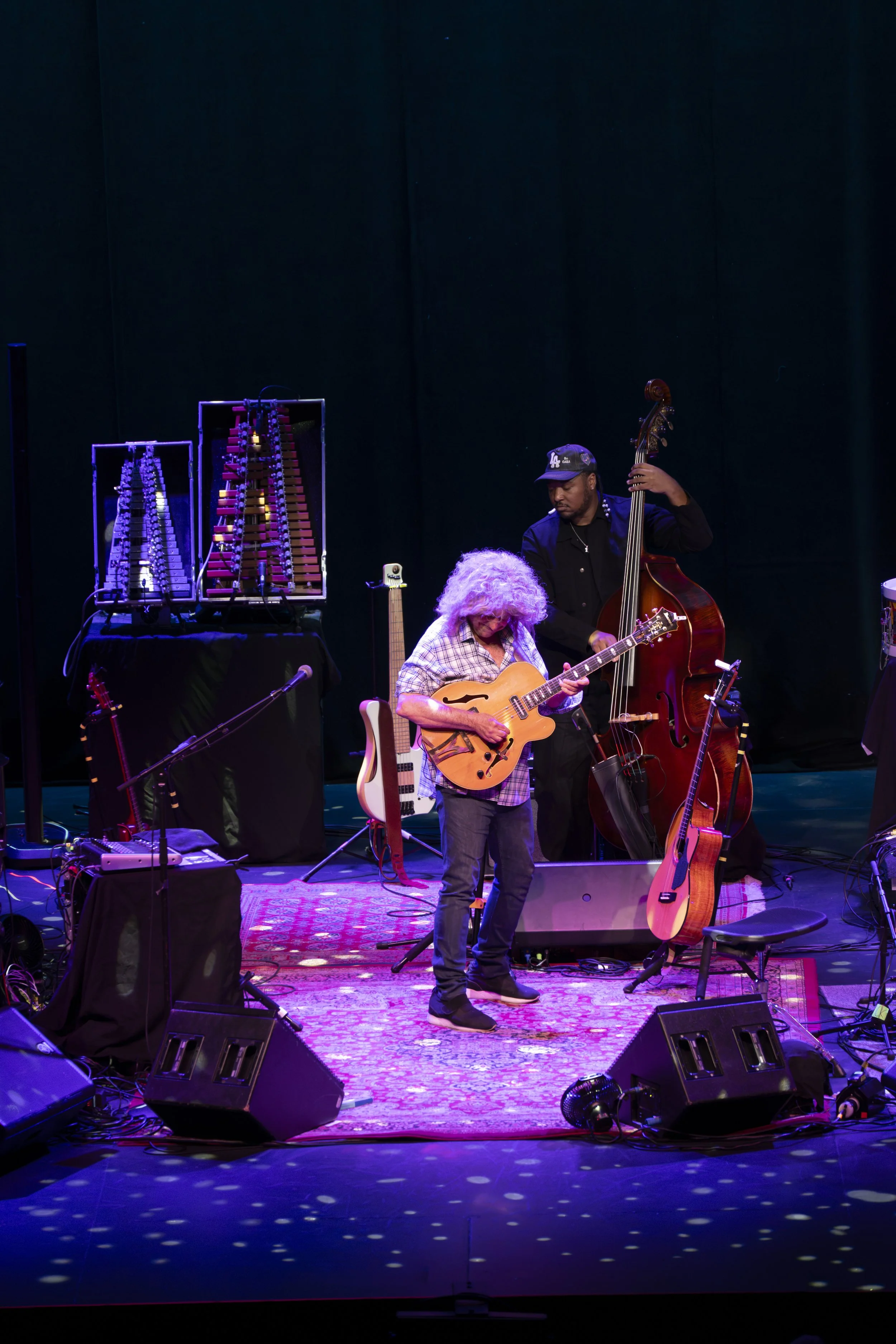
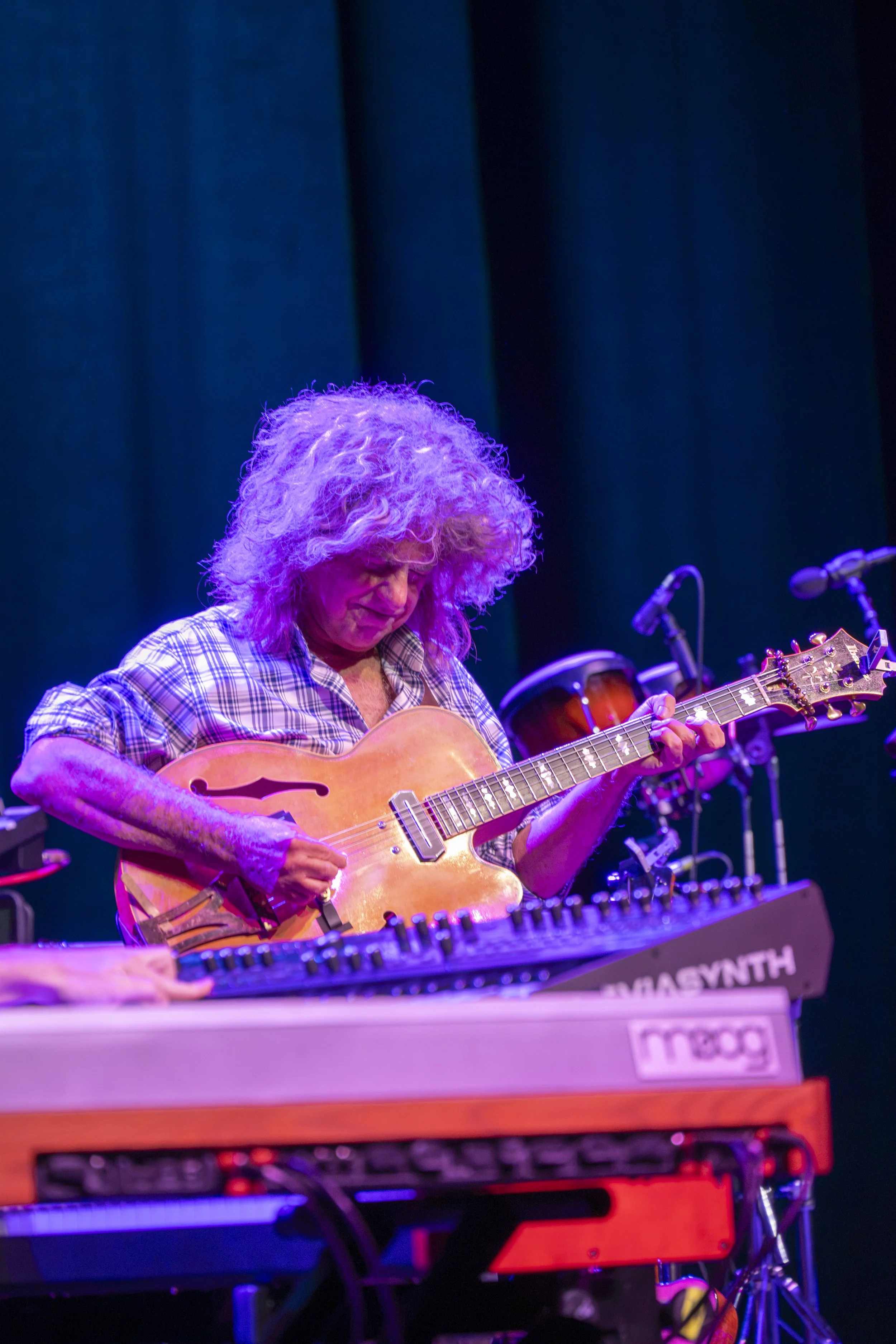
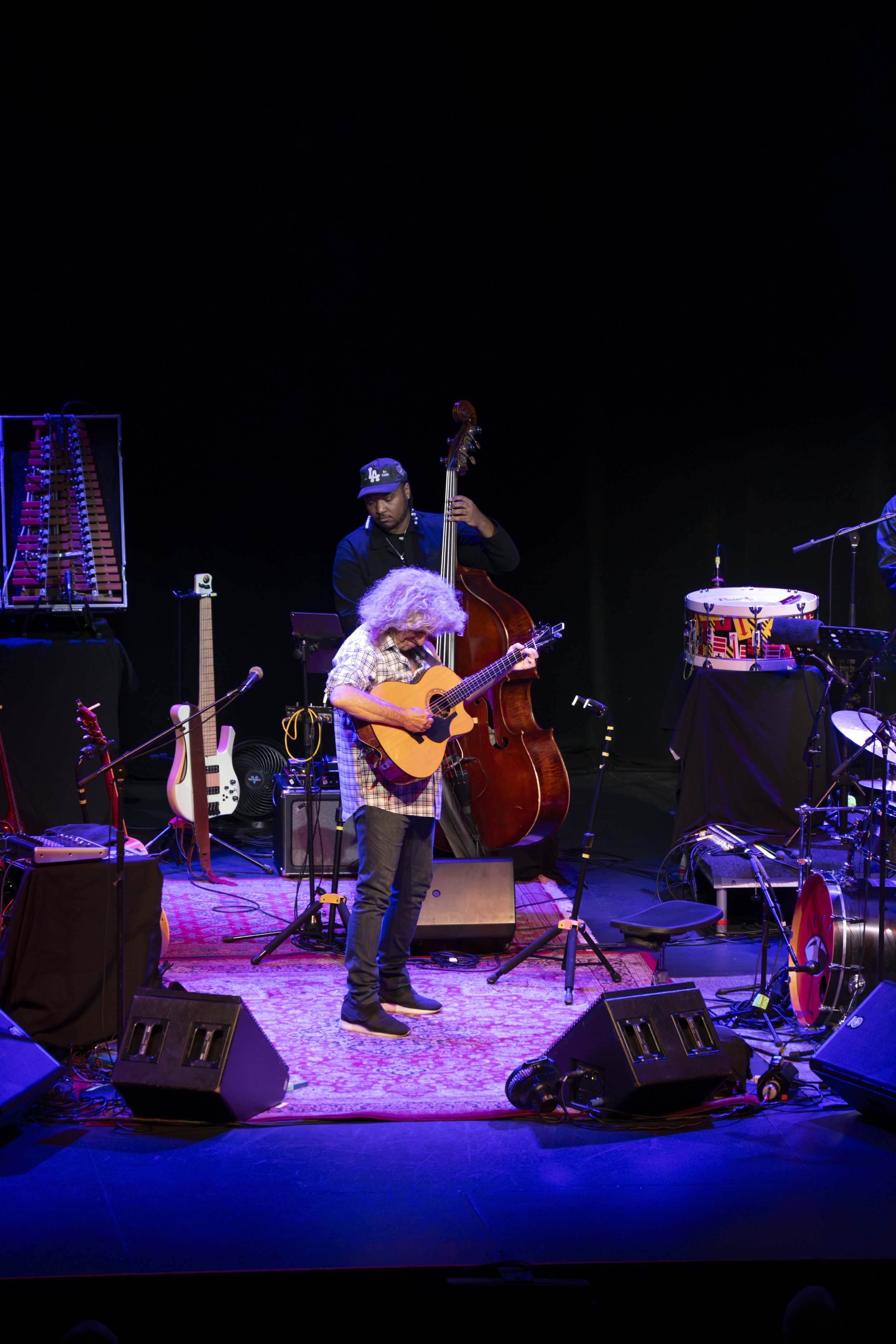
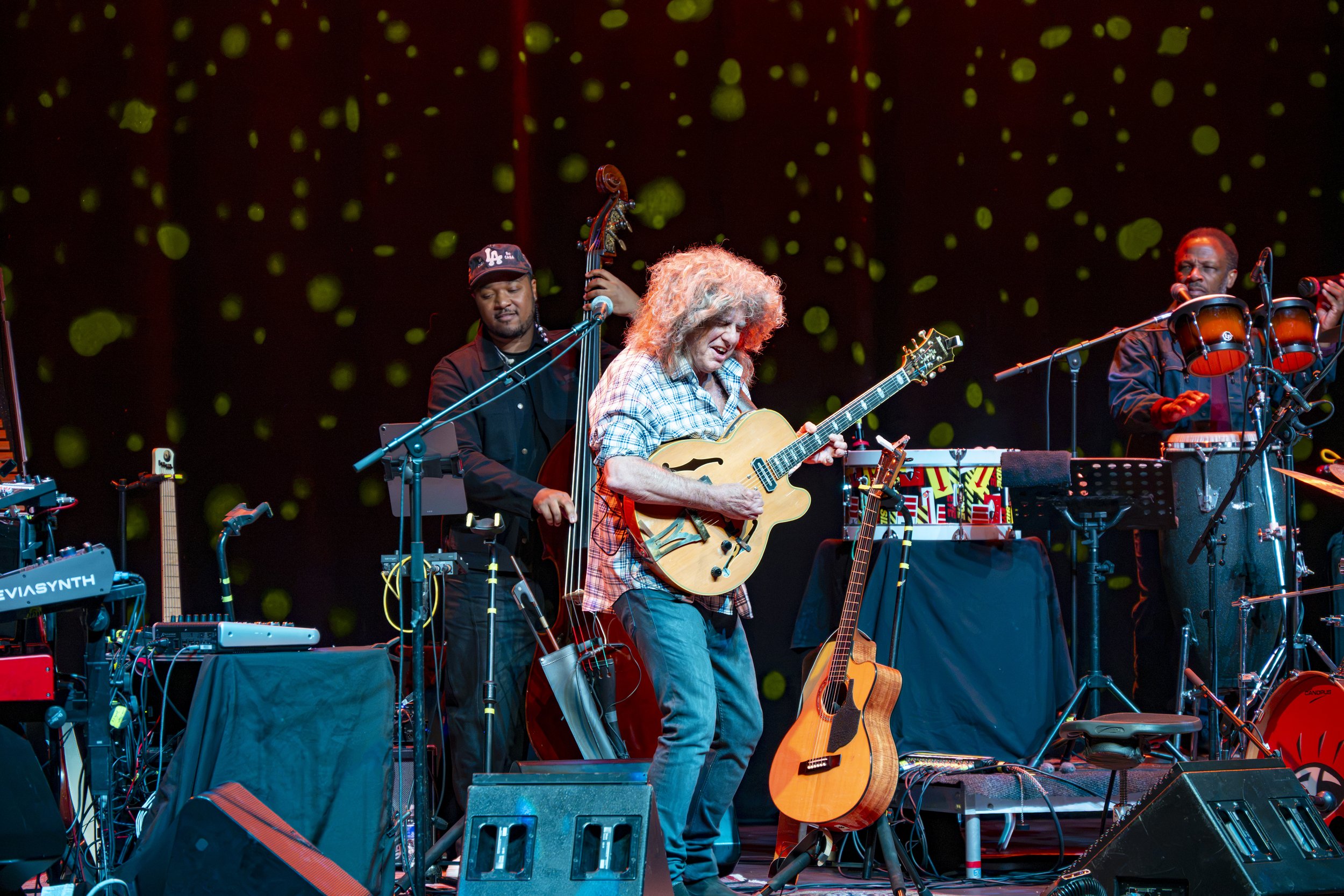
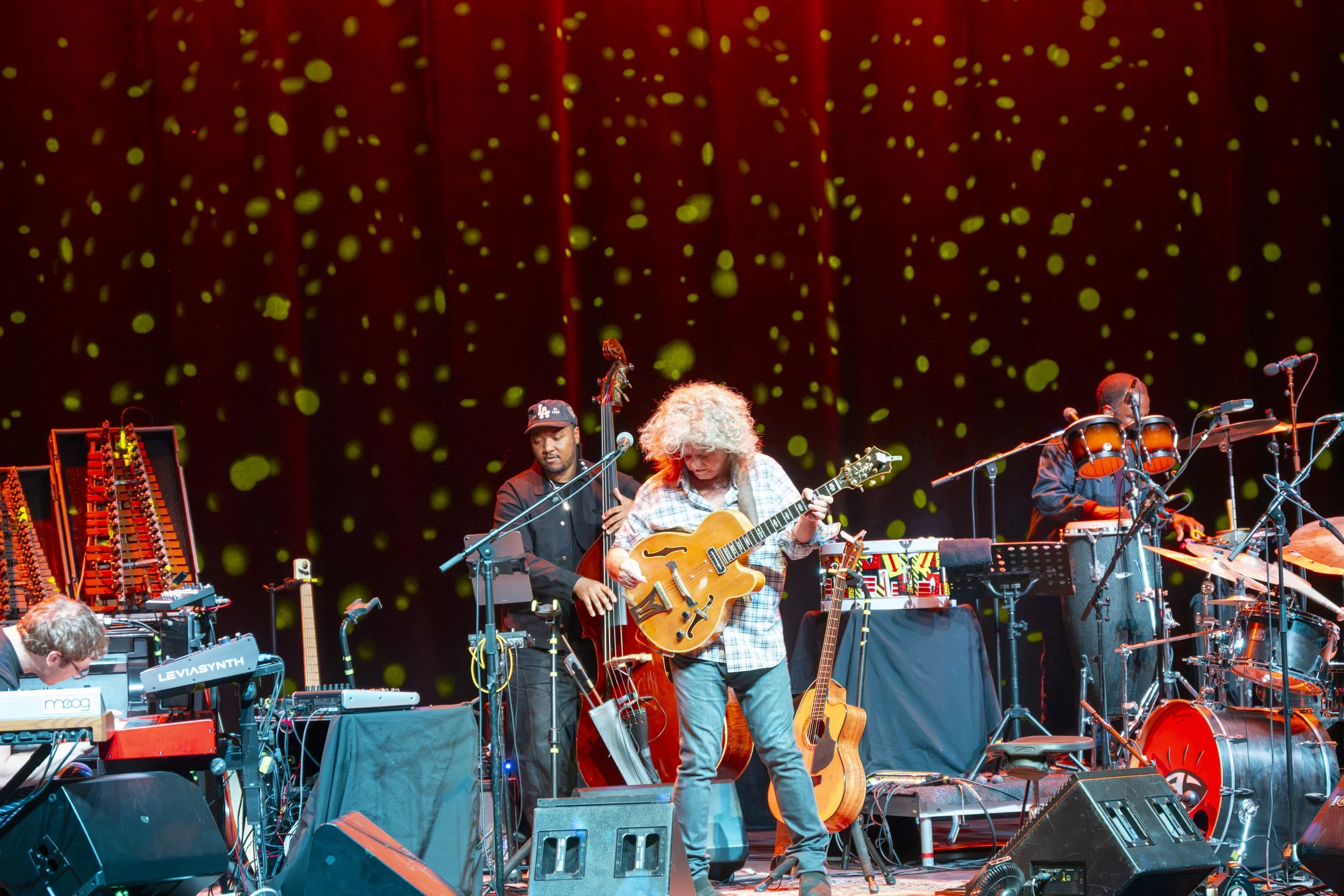
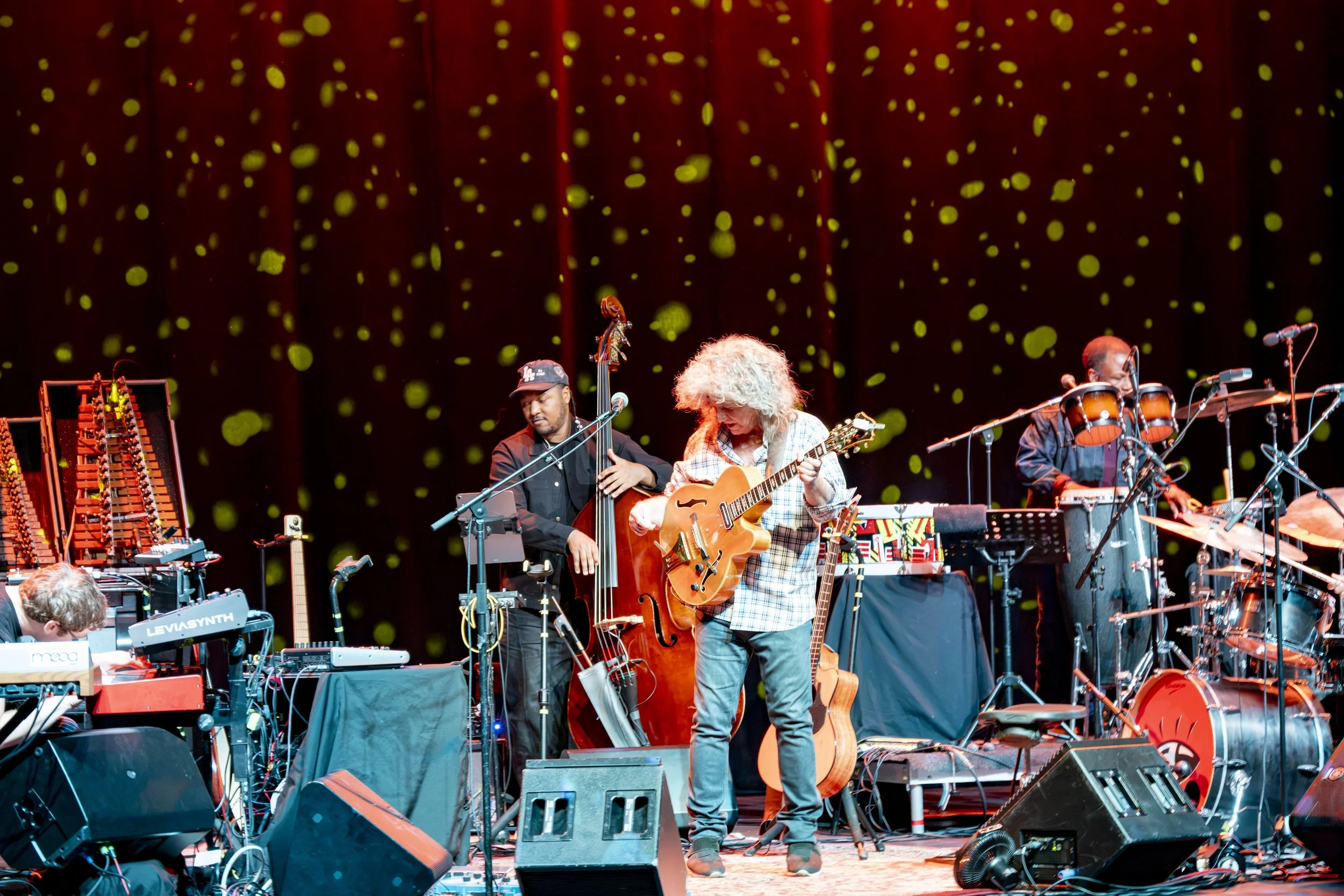
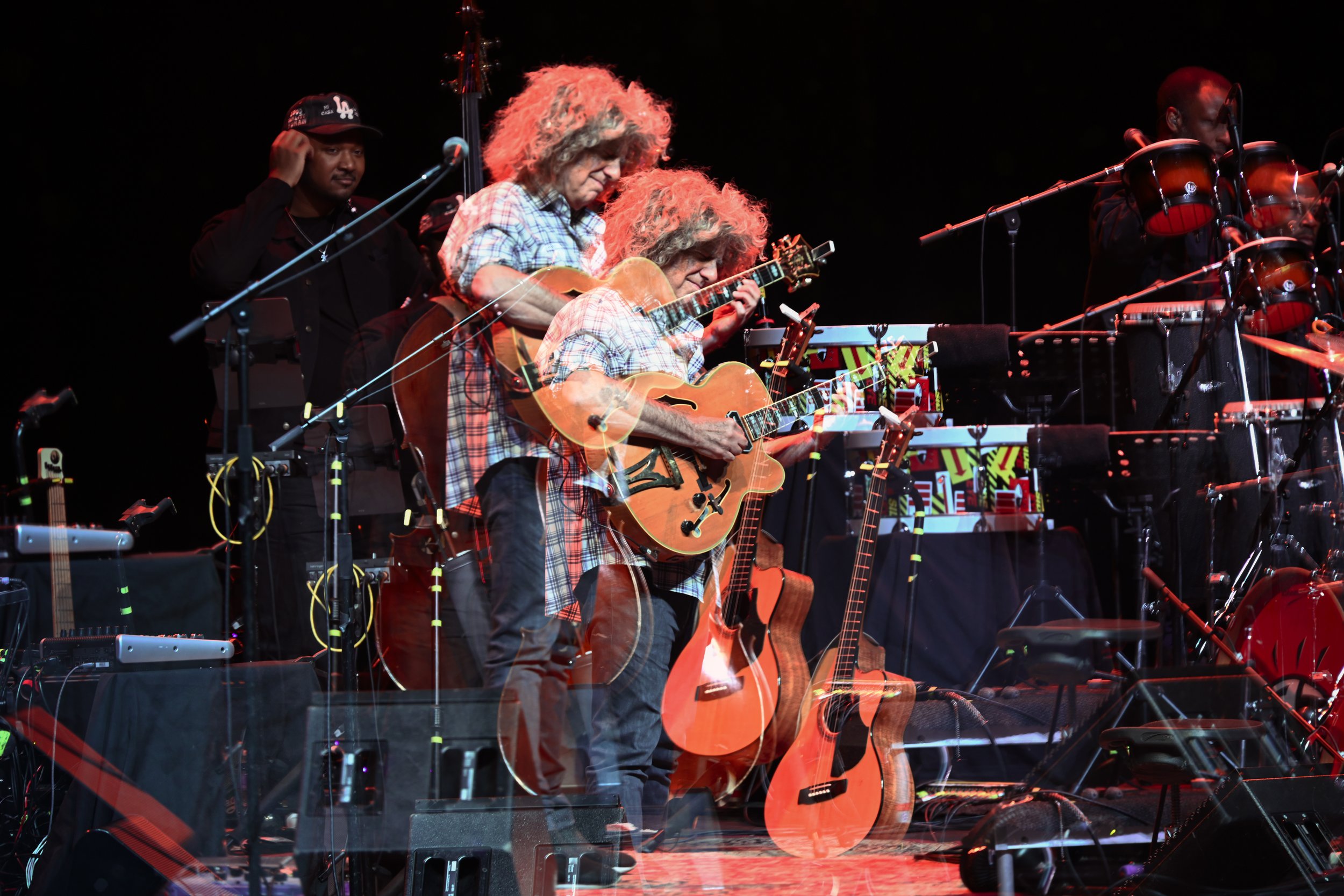
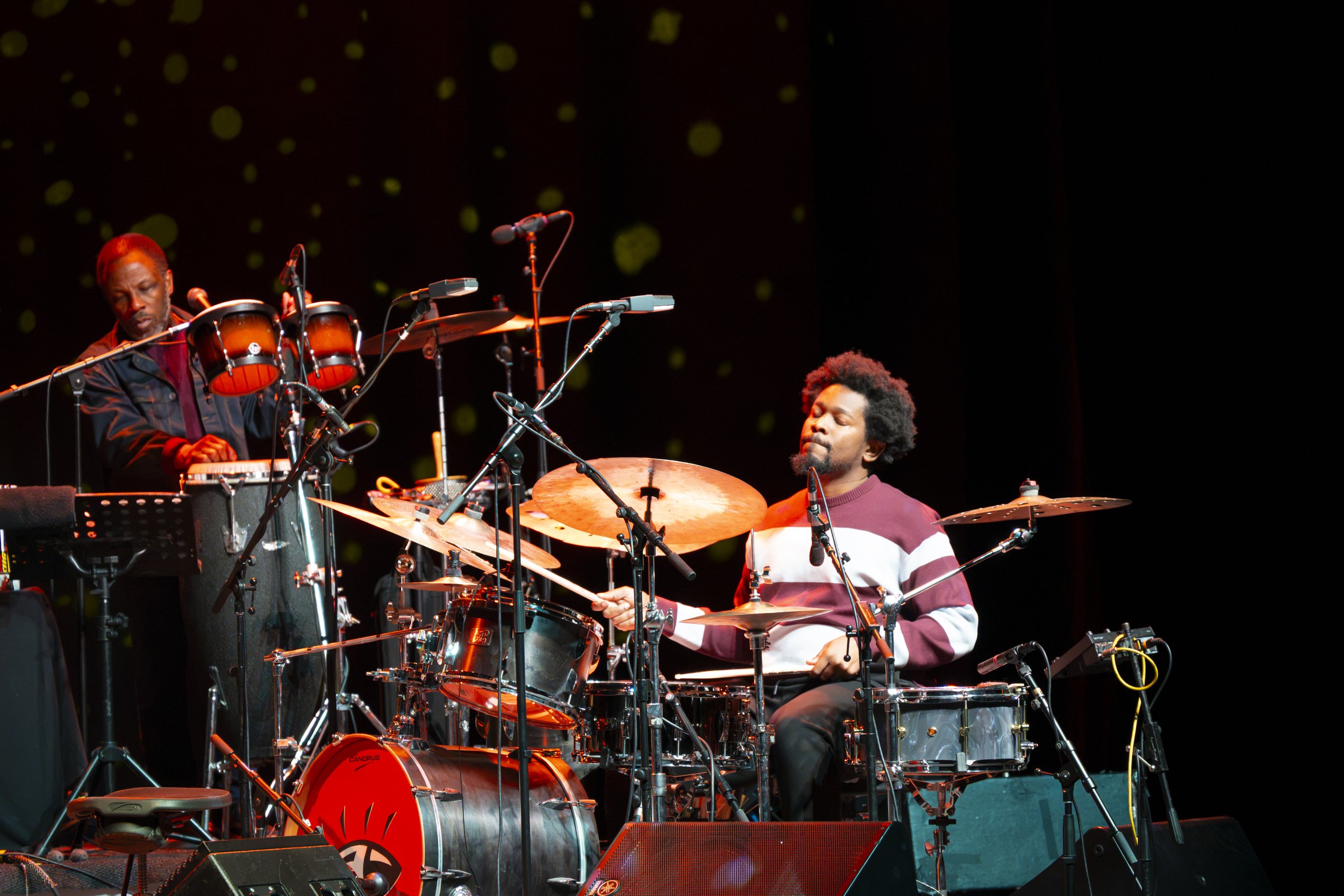
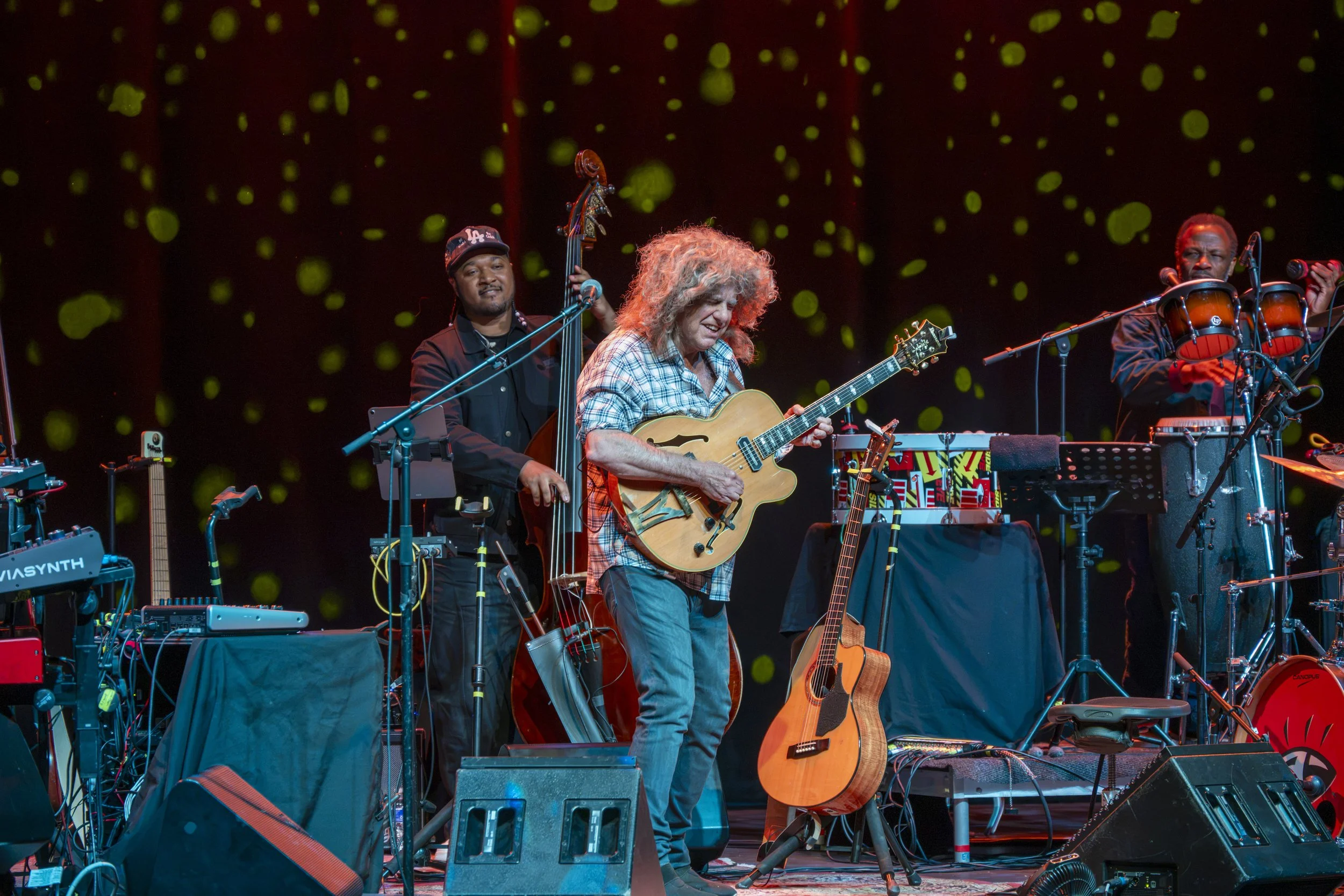
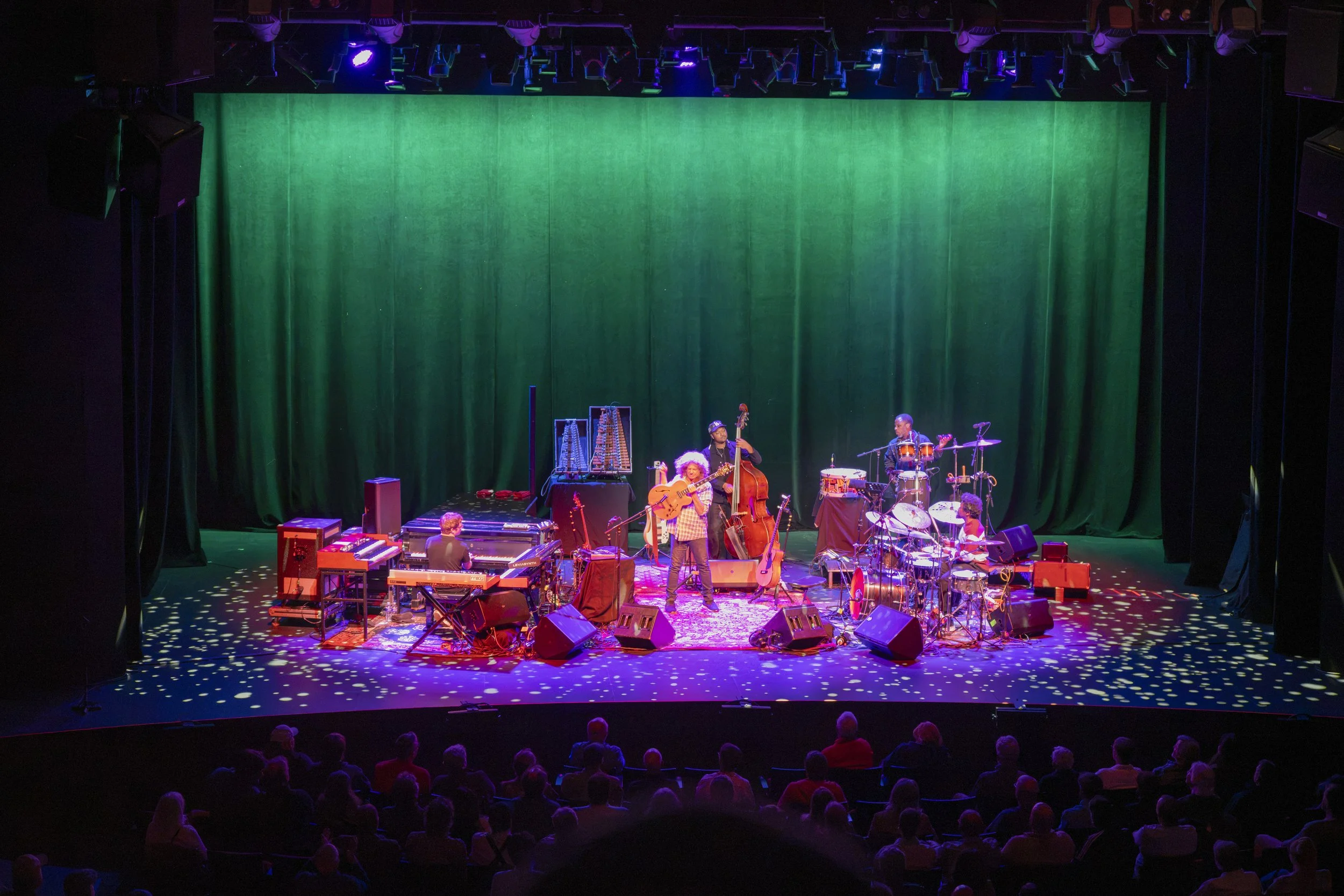
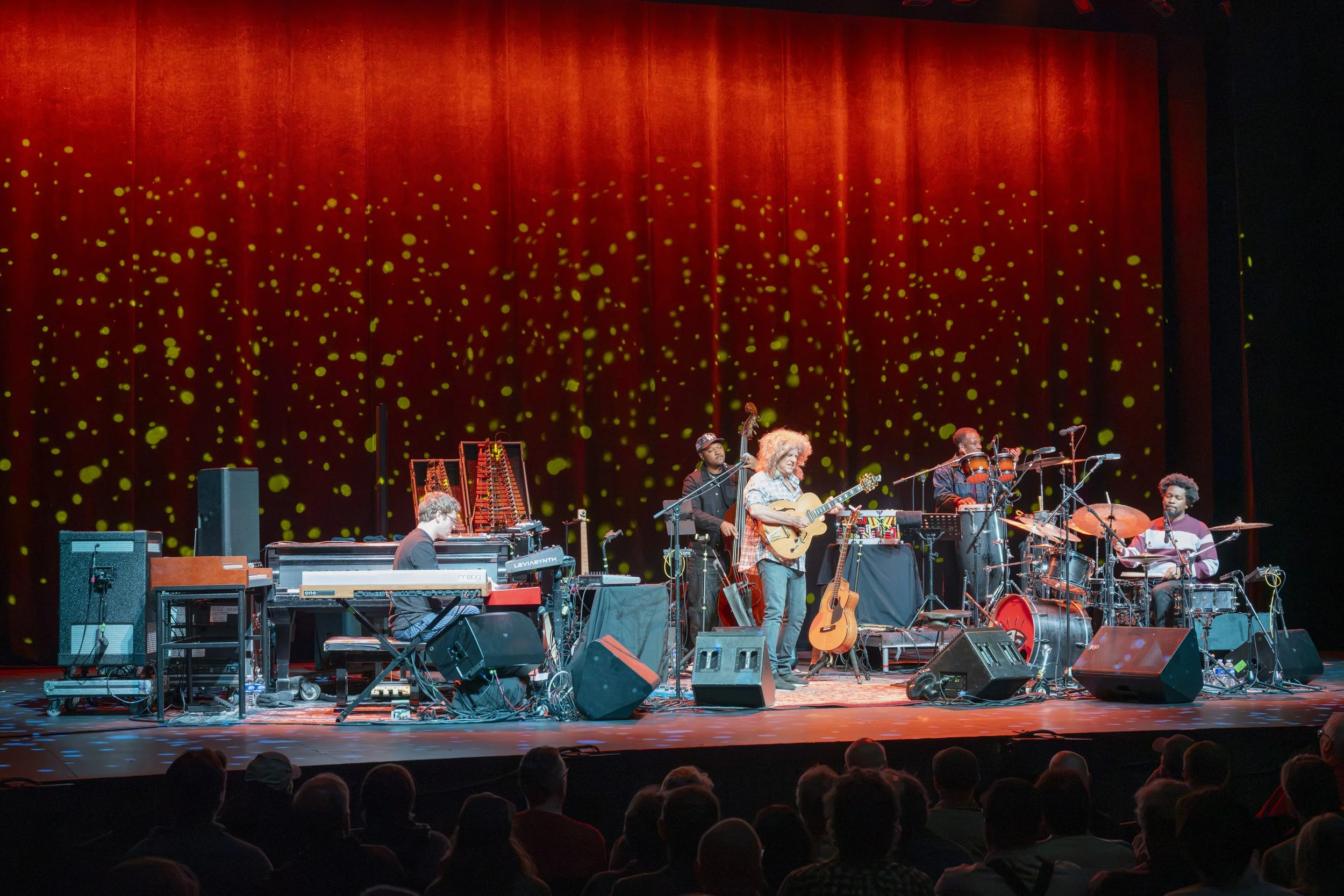
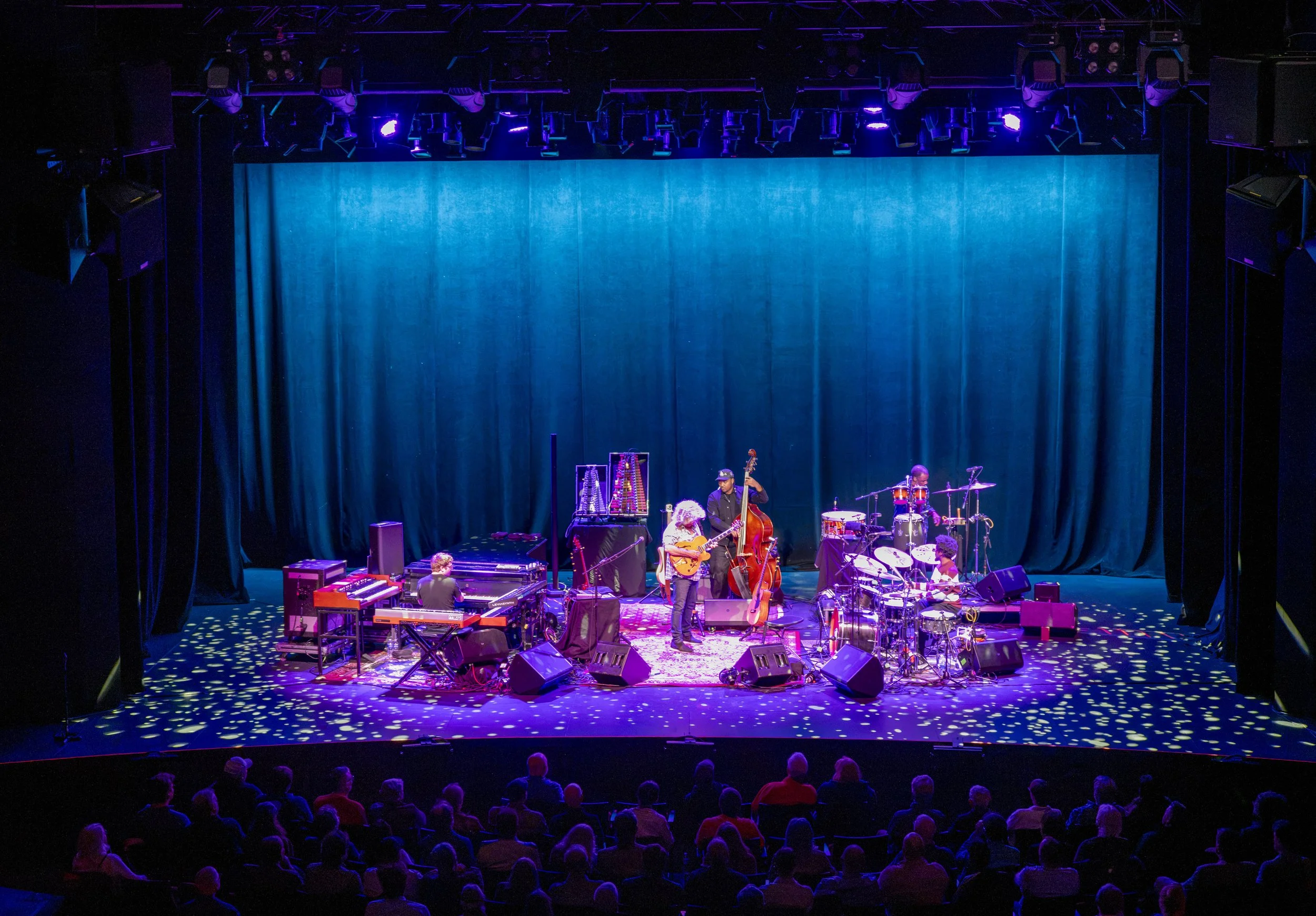
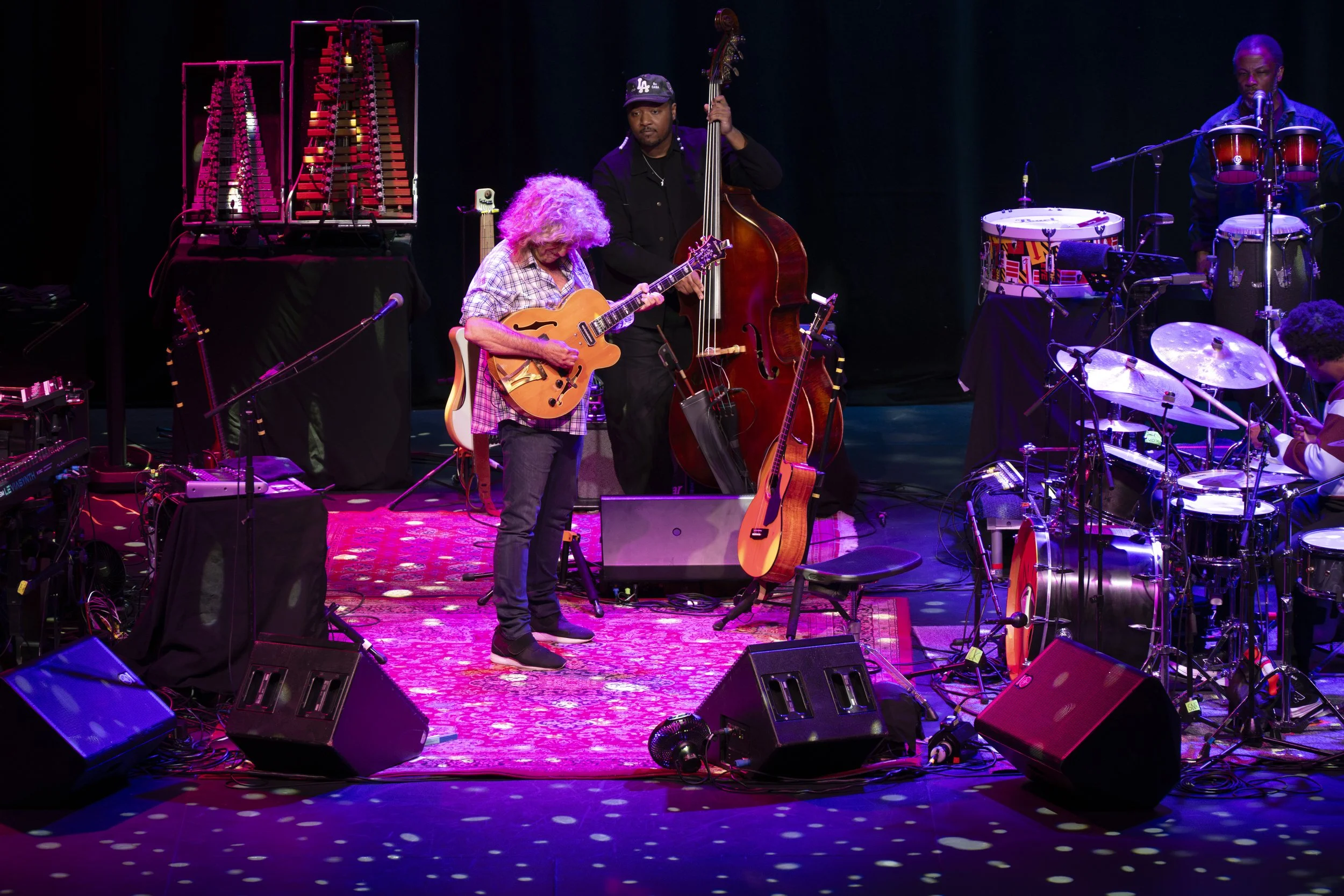
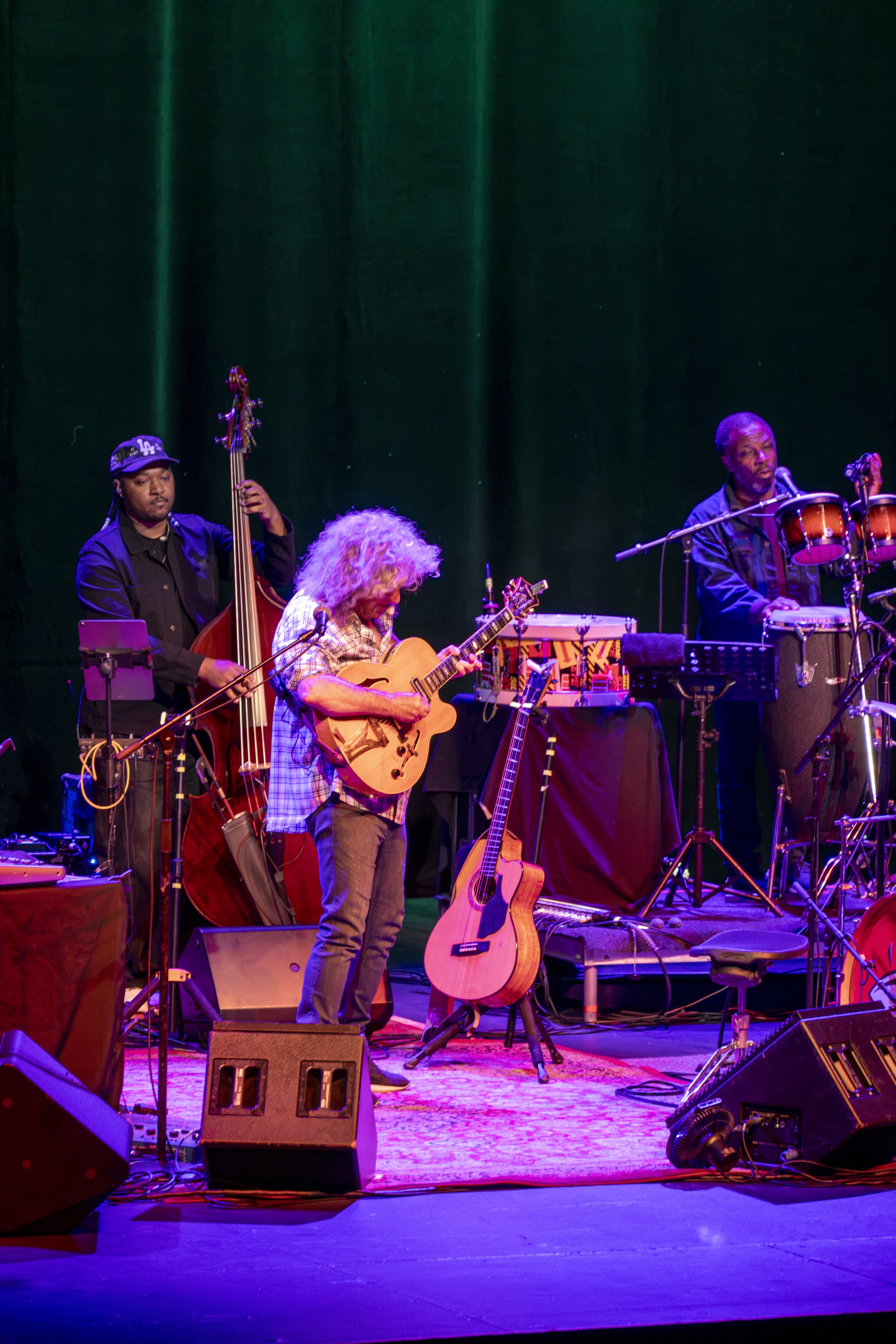
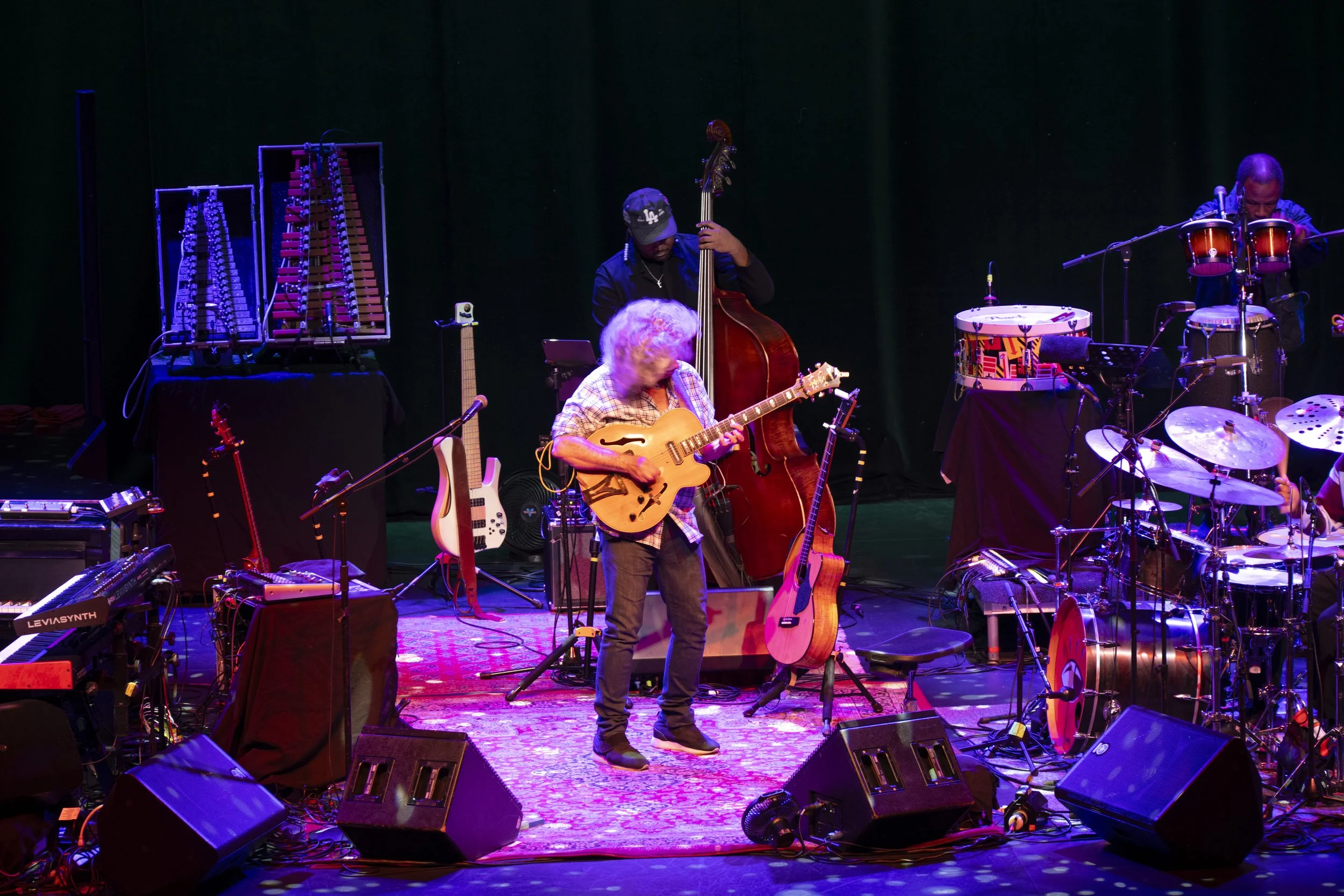
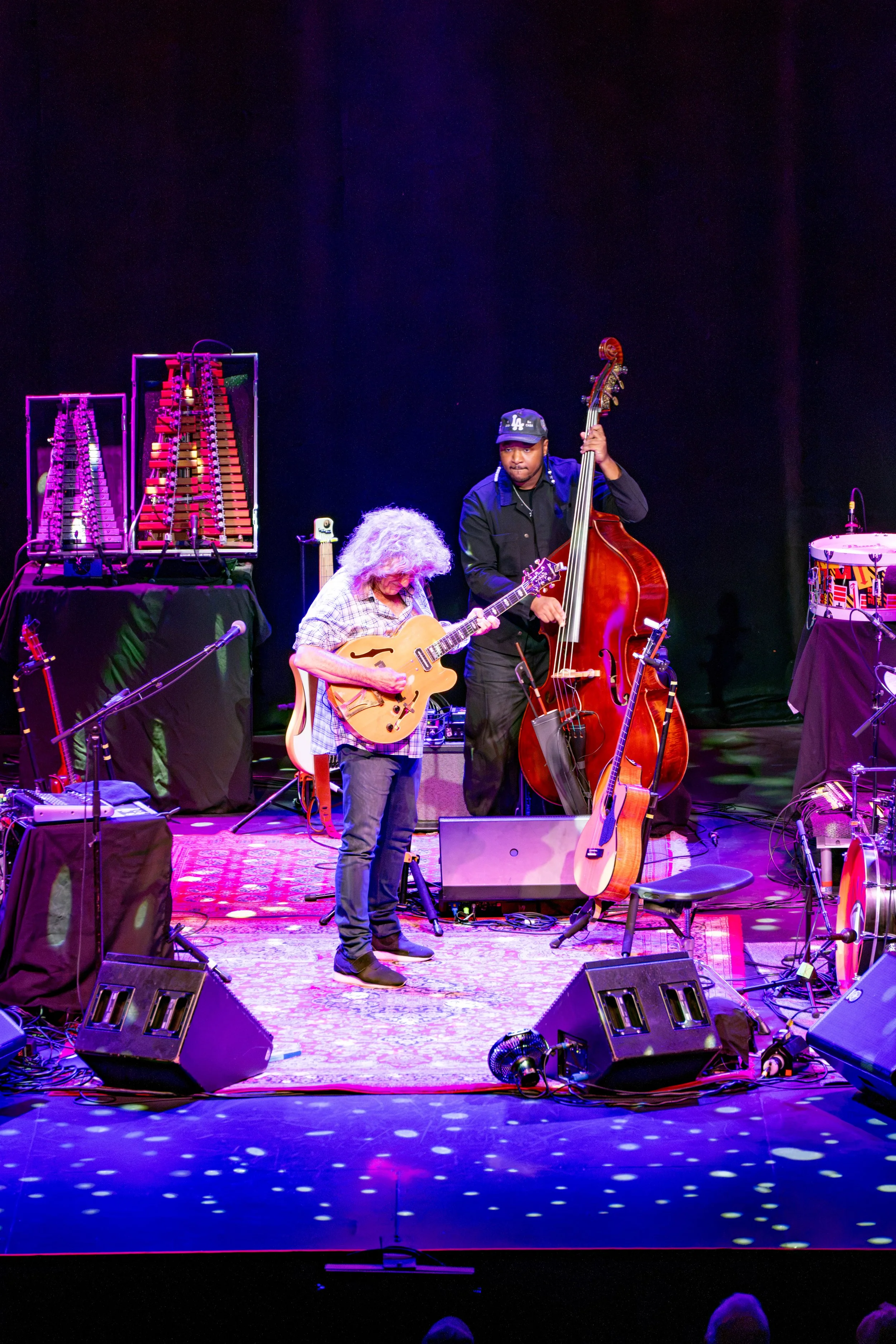
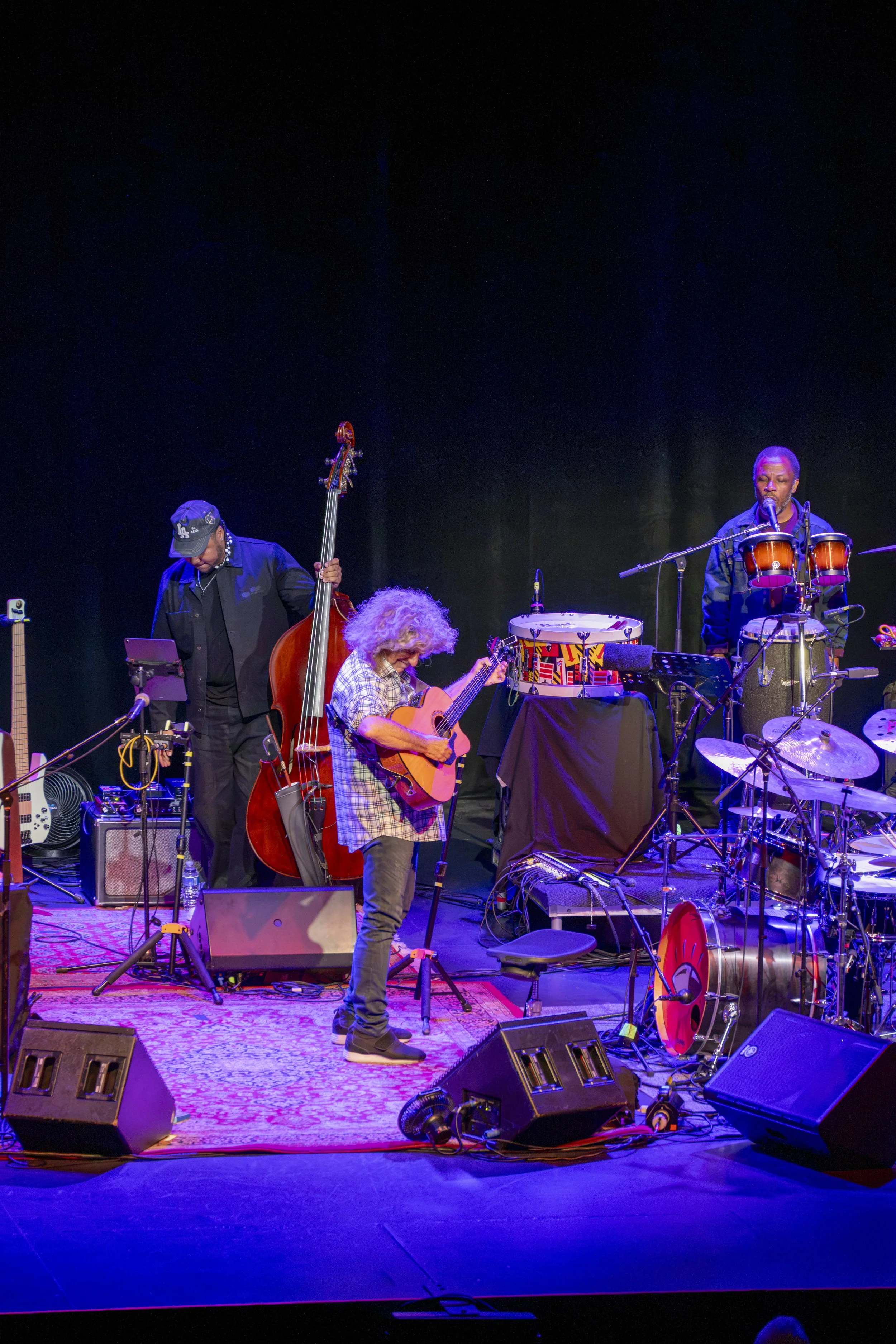
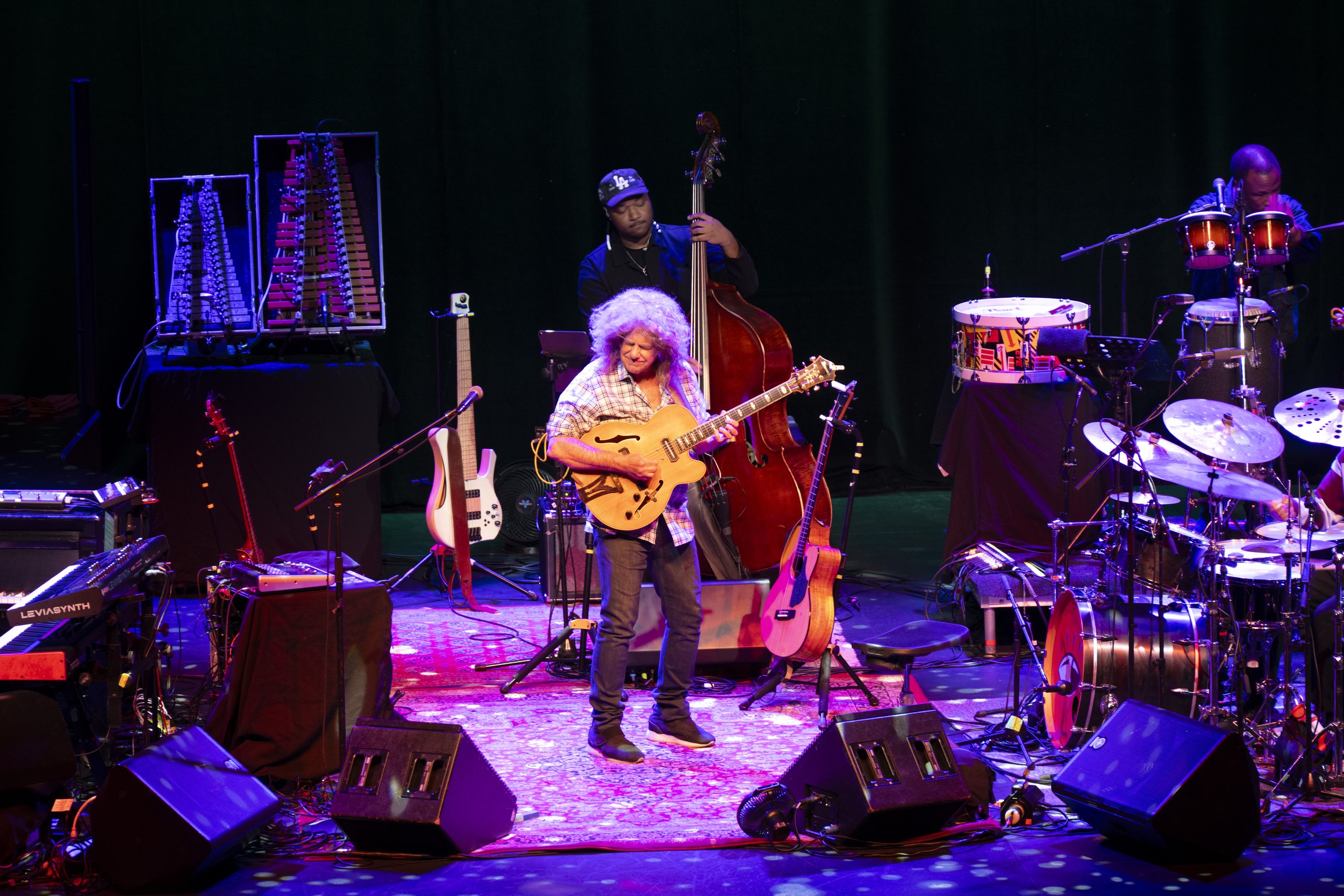
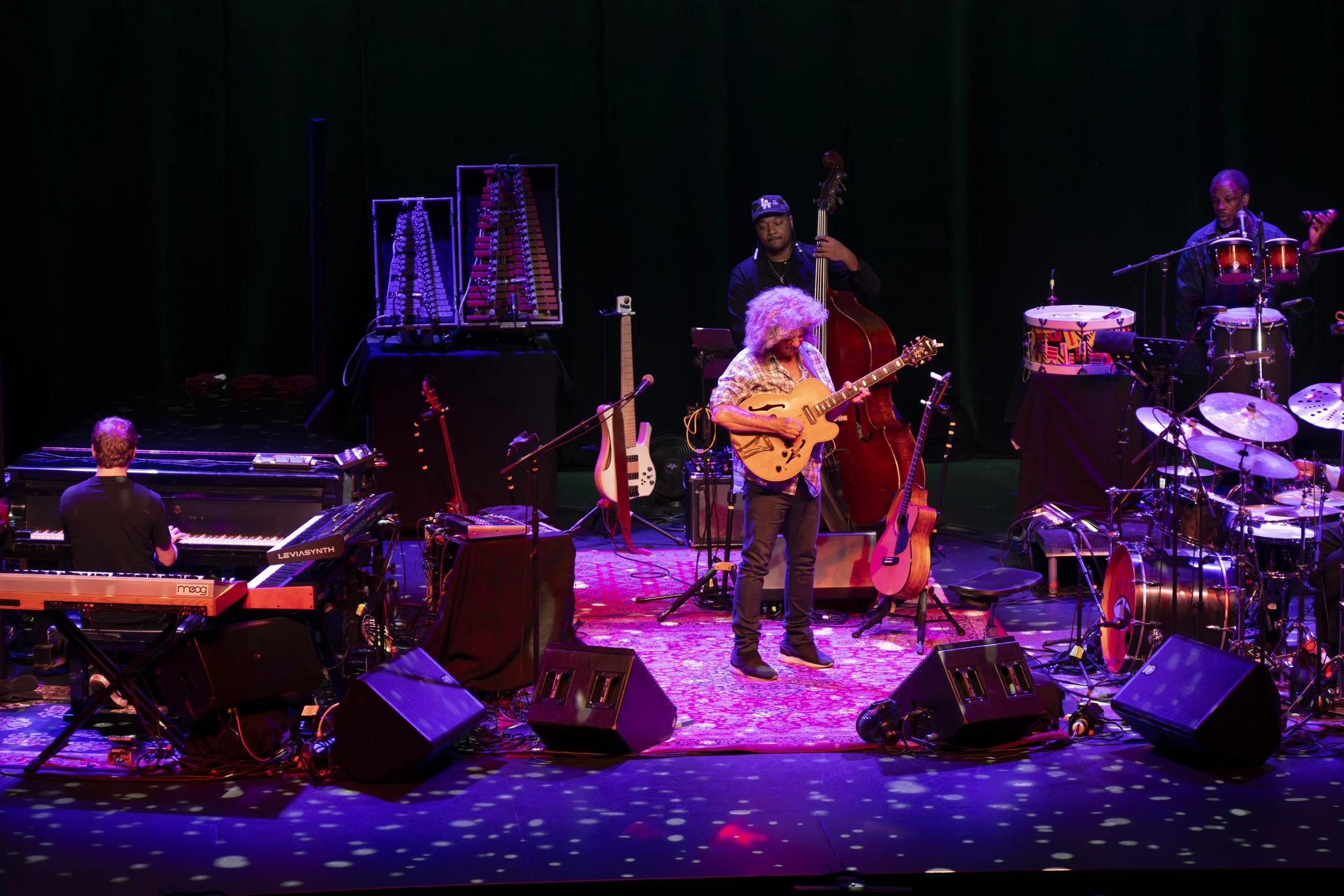
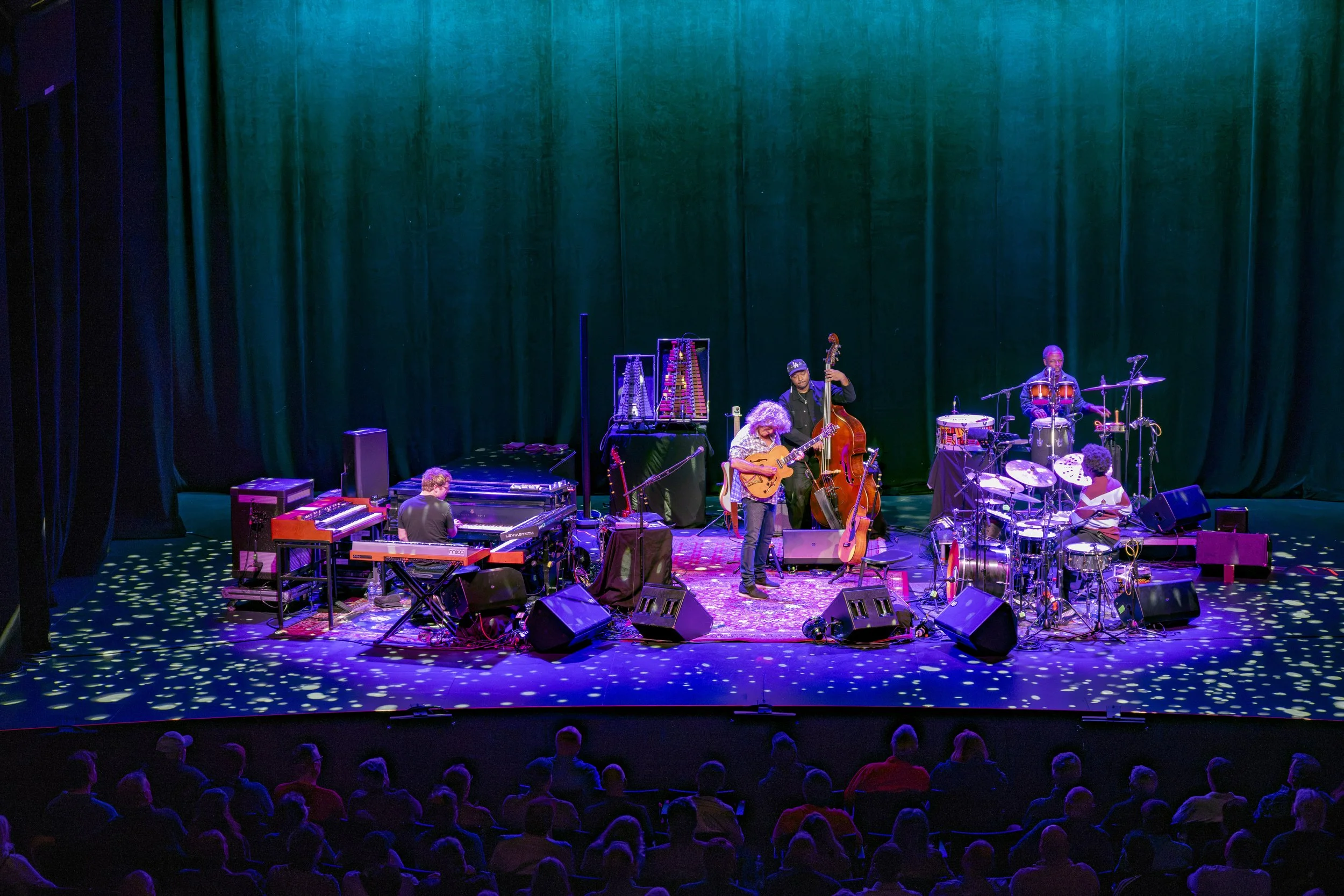
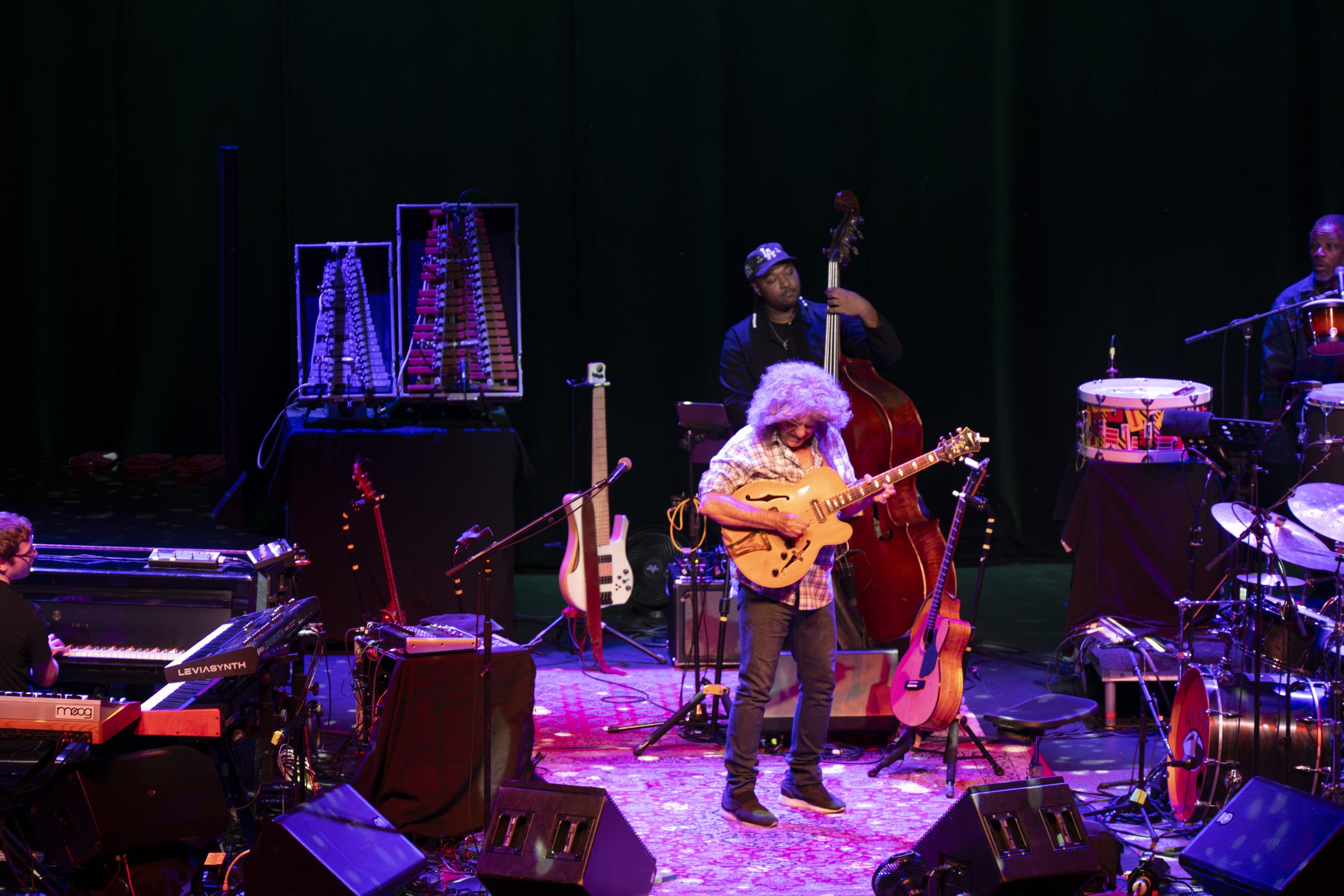
Lights dimmed on a packed house. Out from the downstage wings popped musicians with marching drums. Kicking the evening off, these musical soldiers used their humorous introduction (using drums they wouldn’t touch again) to put the audience at ease while taking their places on stage behind the drum kit (Joe Dyson), upright bass (Jermaine Paul), and auxiliary percussion set up (Leonard Patton), leaving center stage open in anticipation of the headlining guitarist. A trippy, desertic and psychedelic groove began. Because it was the Pat Metheny, expectations were high; this was always going to be a magical night. So when the world-famous musician entered from stage-right, grabbing a specially-tuned nylon-stringed acoustic guitar — even after the lighthearted intro — I’m confident that everyone in the audience felt the energy shift, our breath halted, our shoulders raised. A soaring, wordless vocalise leapt out of the percussionist-cum-vocalist’s lungs with a chilling vibrance of what I imagine jazz singers from Dune would sound like. A fifth (noticeably younger) gentleman walked out a moment later, taking a seat at a bench inside of his 360º piano/synth/Hammond organ rig. Metheny’s fingers appeared to double and triple in the blur and whizz of his playing, multiplying like those in Al Hirschfield’s 1991 etching of another jazz pioneer, Duke Ellington. Relentless rhythm and riffing. Modulation after modulation. A hit. A pause. Another hit. Unhh. Unhh-unhh. Speeding up. Unhh-unhh-unhh-unhhunhhunhhunhhunhhunhh. Faster and faster, until rhythm melted into five musicians playing the most rapid, shimmering tremolos you can imagine.
And then nothing.
Applause. But Side-Eye III+ wouldn’t wait for it to die. A quick change of guitar and the band propelled itself right into song number two.
For the next two and a half hours, the audience was taken by its tense shoulders and led down a sonic path, winding and disorienting, but safe with Metheny and his musical consociates pushing us from behind.
It must have been an hour into the show before Metheny spoke (I had little sense of time; a pre-show announcement compelled everyone to turn their phones off). He explained that this new ensemble of his began only as a trio: himself, Fishman, and Dyson. The three musicians had recently played more than a hundred gigs across the country within the span of a year. Enjoying the group so much (that trio, he beamed, was one of his favorite groups he’s ever formed), he began composing music specifically for it, only to realize that the work he’d penned would require more than three players. By the time the group took to the studio, 15 more musicians were added to the roster. That joy and confidence Metheny had in the musicians surrounding him, radiated into the audience and by some mystic force led to the aforementioned transcendence.
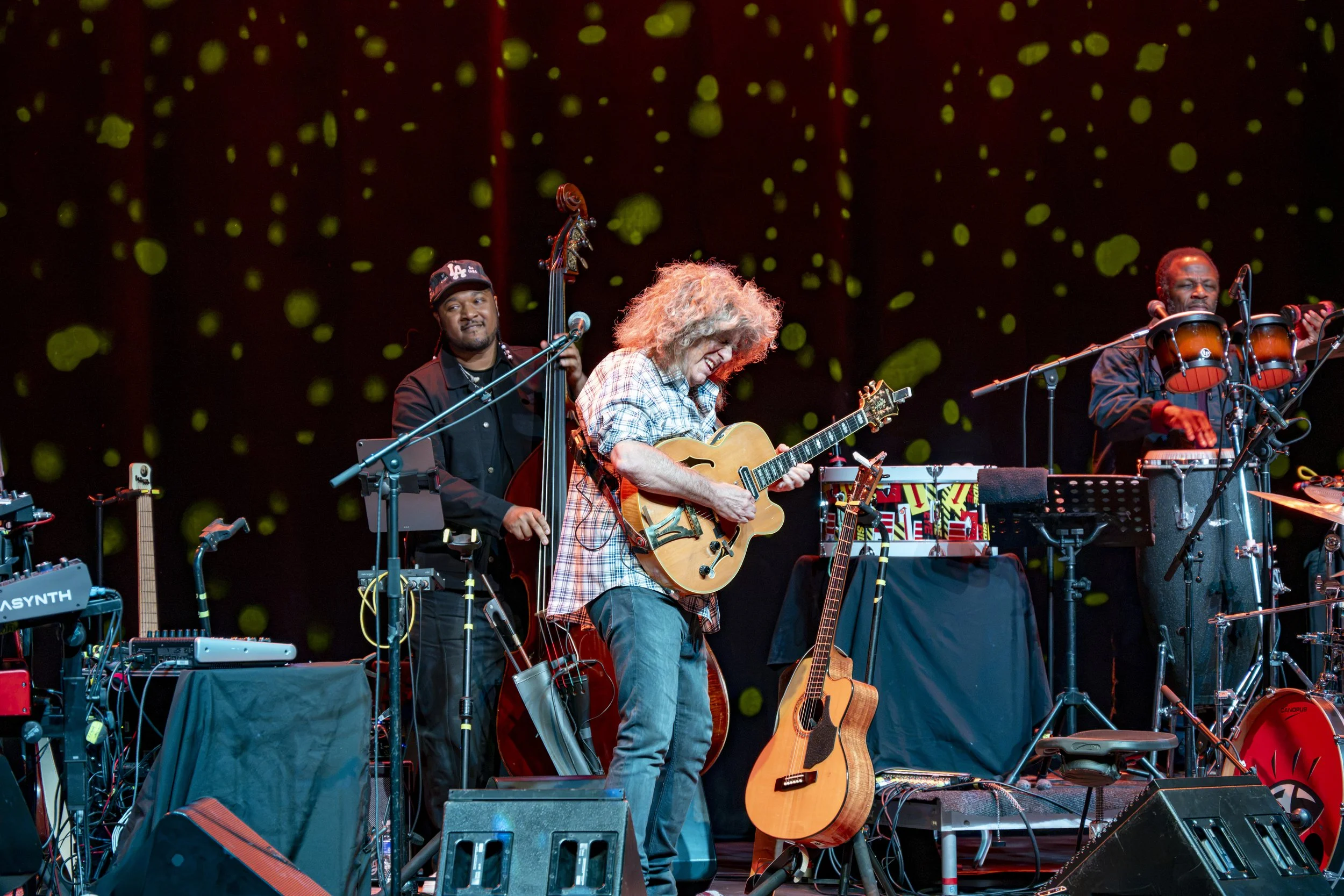
Speaking specifically of a music that transcends time, something that consistently impressed me was Metheny’s ability to improvise outside of the a composition’s metrical structure. On the song “Urban & Western” (which appears this group’s new album, released in February), Metheny, facing Dyson, played in a 4/4 time subdivided into 16ths while Dyson, looking right back at Metheny, locked himself into a slippery 12/8 pattern. Fishman’s Hammond organ chops at the top of the number set a decidedly gospel tone and Leonard Patton’s introduction of a tambourine at the height of the tune evoked a tent revival. Metheny’s lightning fast licks — which, out of time as they were, would have been questionable coming from a lesser musician — were a kind of playing in tongues.
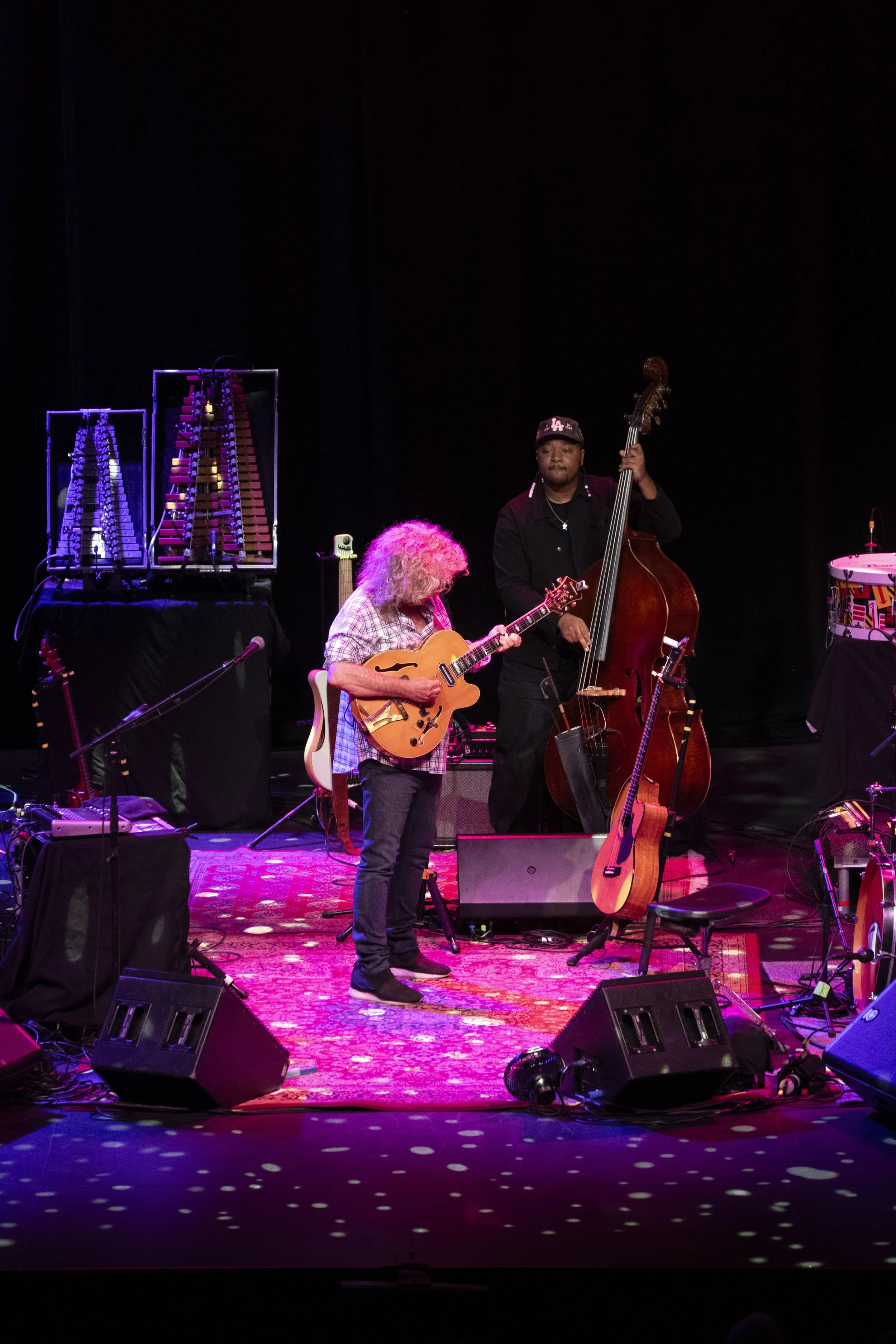
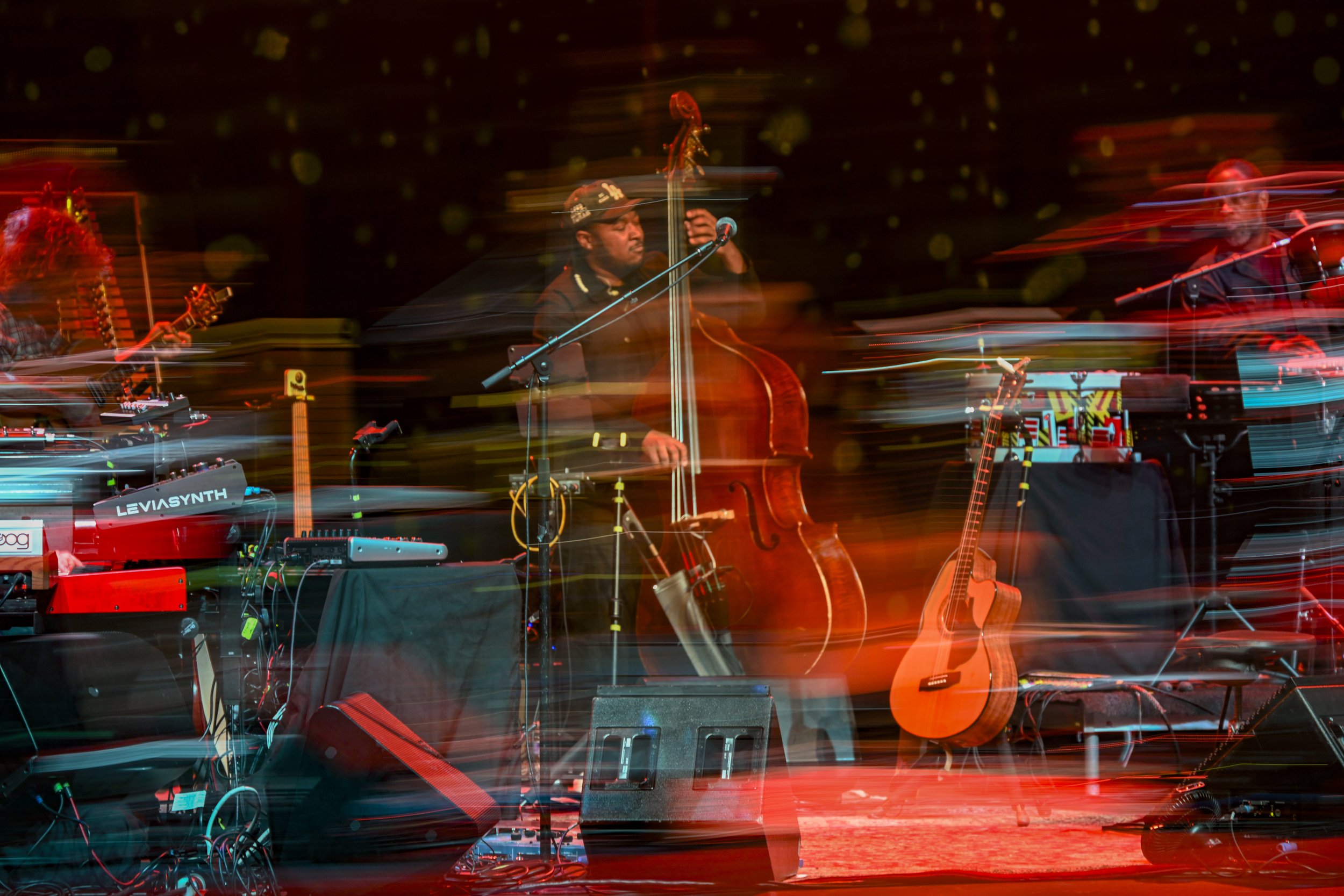
Another highlight of the evening was the introduction of a glockenspiel and xylophone which remained silent for at least an hour before they were activated, standing erect on their sides at the back of the stage. Whereas they’d normally be played by a performer with mallets, these two instruments were rigged with electronic hammers to hit their bars, one for each note, each with affixed LED lights that flashed every time a hammer was triggered. The inclusion of the extra percussion added a layer of mystery to the performance as I tried my hardest to figure out if the hammers were controlled by Metheny’s guitar (he’s known to do that sort of thing) or an audio workstation outputting MIDI signals.
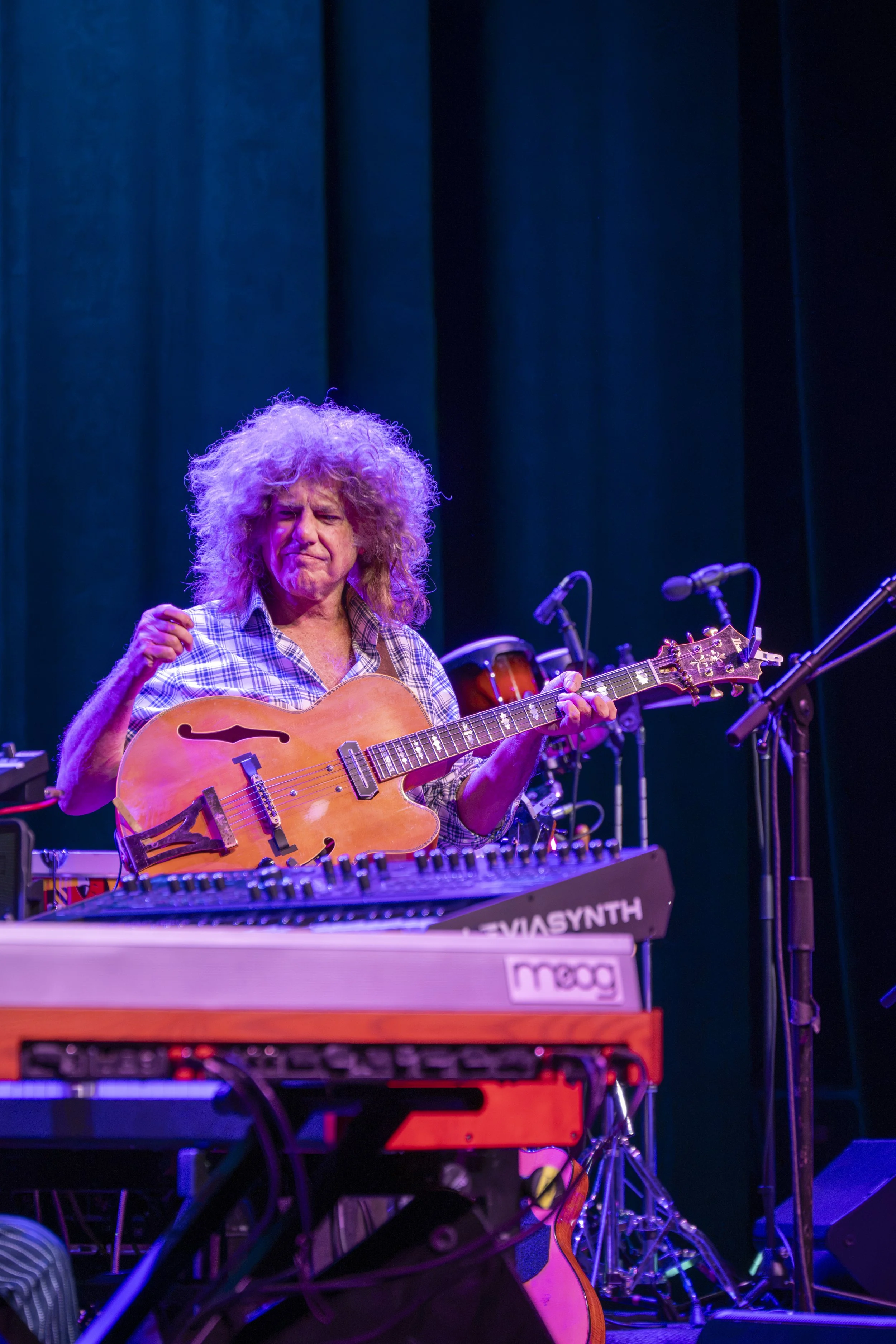
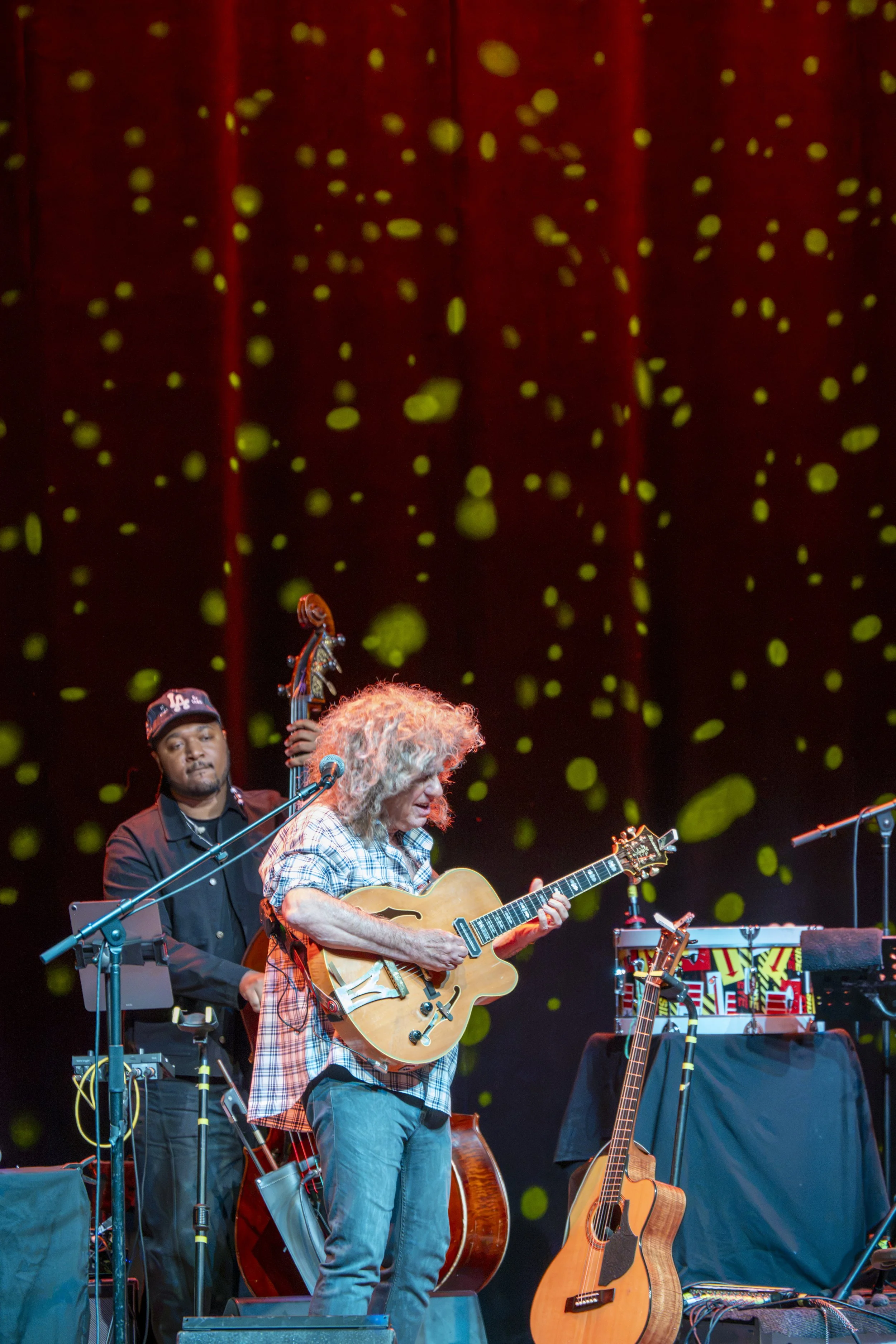
What each composition did so well, having crossed so many musical boundaries, was to evoke a sense of place. “Urban & Western” transported me to a sticky, sweltering afternoon in the American South. Metheny and Fishman’s duet rendition of Pat Metheny Group’s 1978 track “Phase Dance,” specifically because of its syncopated rhythms performed without drums, dropped me right into The Sims; it’s 2003 and I’m leveling the ground on my plot of land; tedious, but you have to do that first before you can even think about wall colors and fixtures; it’s about construction, building a home, a world. The absence of a physical performer for the glockenspiel and xylophone had me reflecting on the importance of assigning locations to sources of sound (and what happens when you can’t) when it comes to the experience of live music. Several tunes from early in the performance made heavy use of reverb, particularly on the vocals, drawing my attention to the natural resonance of the Hart Theatre. I had thoughts about community and collective experiences and how they rely on sharing space and physicality. Two times in the evening, Metheny played solo sitting in a chair. His guitar was strapless, and whereas others might use a footstool to elevate the knee so that the guitar can rest more easily on the thigh, Metheny bent his left-ankle sideways and perched his right foot atop the left’s inner arch. His back curled over as he dropped his head down, tenderly cradling a nylon-stringed acoustic baritone guitar, his dandelion-gone-to-seed of a hairdo completely obscuring his face. I pictured him as a young boy, playing guitar in his bedroom, practicing, playing for himself; no need to fix his posture, no need to look up at any audience. I was, in reality, transported to my own childhood bedroom when, in the first few years of learning to play the guitar, I’d done the same. I still do.
It goes without saying that everyone on stage was a musician of the highest order. But it would be a huge slight on my part if I didn’t acknowledge how Patton’s vocals added to the depth of the band’s already complex sonic amalgam. I hesitate to call them “jazz vocals” knowing that that’s a loaded term, although his delivery on “Mas Allá,” sung in Spanish, was certainly in line with that genre distinction. They were, instead, an excellent example of voice-as-instrument in the sense that they functioned as would a saxophone, lead guitar, or other melodic instrument. His spinto tenor in unison with another instrument’s melody (often the guitar) combined to enrich the latter’s timbre, while on its own, it cut through and soared above the rest of the band’s accompanying contrapuntal action. Recognizing Patton’s value, Metheny remarked that having such an accomplished vocalist on tour allowed the band to reach back several decades into Metheny’s repertoire when making each night’s set list.
I wrote earlier that the concert provided my mind the opportunity to meander down a rather existential path. It’s impossible to describe (or remember) every thought and feeling I had during this sublime evening, but it was in the middle of the second encore, “Song for Bilbao,” that I thought: I’m ashamed to play guitar. 25 years of songwriting and performing on an instrument and one concert forces you concede that you actually know very little about it. Think of how much practice it would take for you to come even halfway close to Metheny’s level. Yet, a few “Bilbao” bars later, I took back that thought, dangerous and needlessly self-deprecating, and offered myself this instead: I’m glad that’s where the bar is for the guitar. It’s an old instrument, 16th-century old, with antecedents going back 500 years more. Isn’t it beautiful that new styles, techniques, modifications, and improvements have continued to be generated for the entirety of the instrument's history? I can’t think of another instrument with the same degree of developmental furcation and I, for one, am proud to be the tiniest of buds on the guitar’s evolutionary tree. Metheny’s expansion of the possibilities for the instrument is permission to all of us guitarists to do whatever we want: stay within traditional frameworks, graft a new branch onto that tree, and everything in between.
A performance that reinforced and reified both collective and individual human experiences: you couldn’t ask for anything more.