REVIEW: Vijay Iyer and Jennifer Koh Kick Off A New Season of Capital Region Classical
10/18 @ Union College Memorial Chapel, Schenectady
Photos by Morgan Minear
“I was more than a little impressed by the ease and subtlety of the communication between the pair of musicians and how they made each scene change feel so natural.”
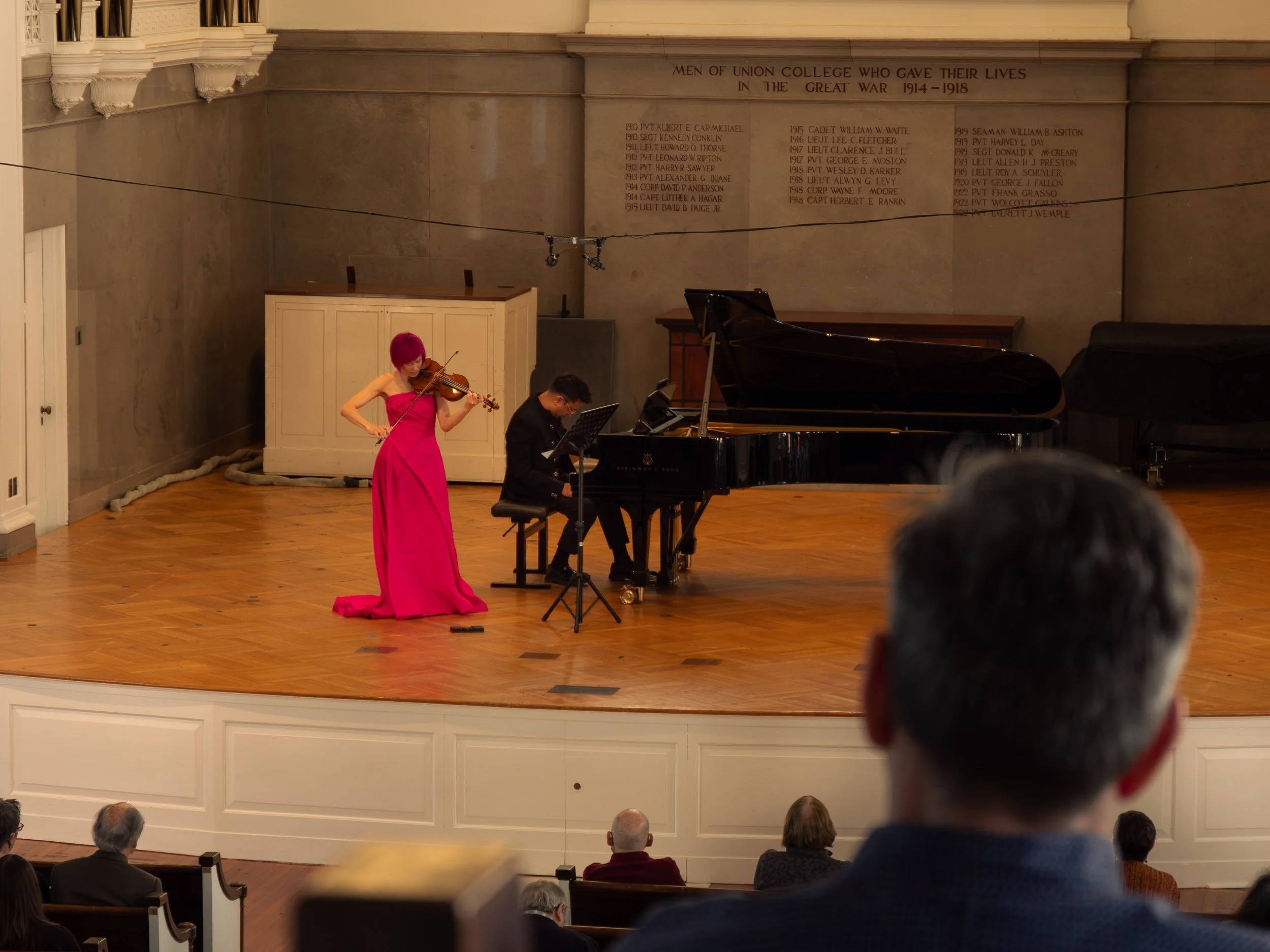
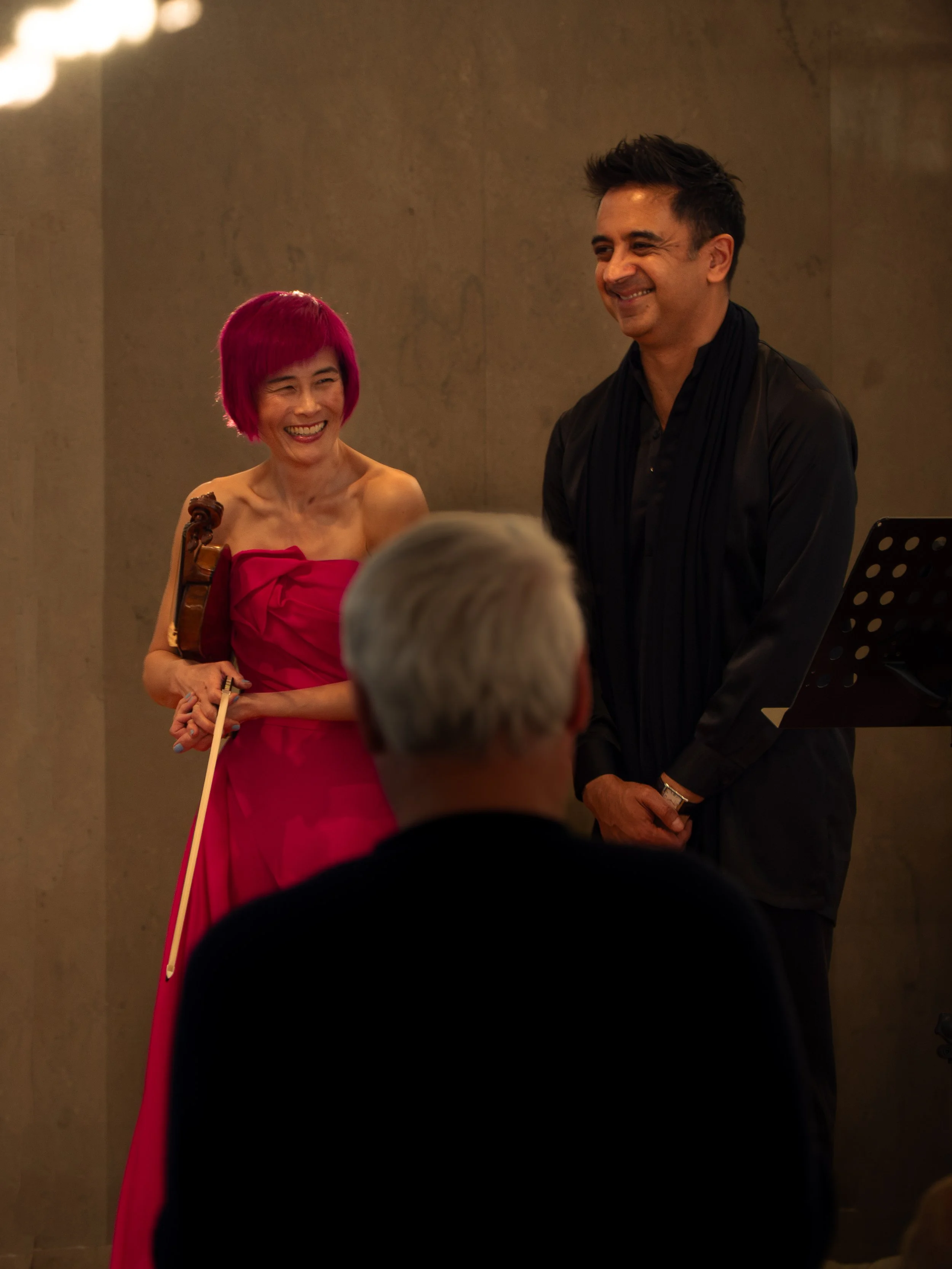
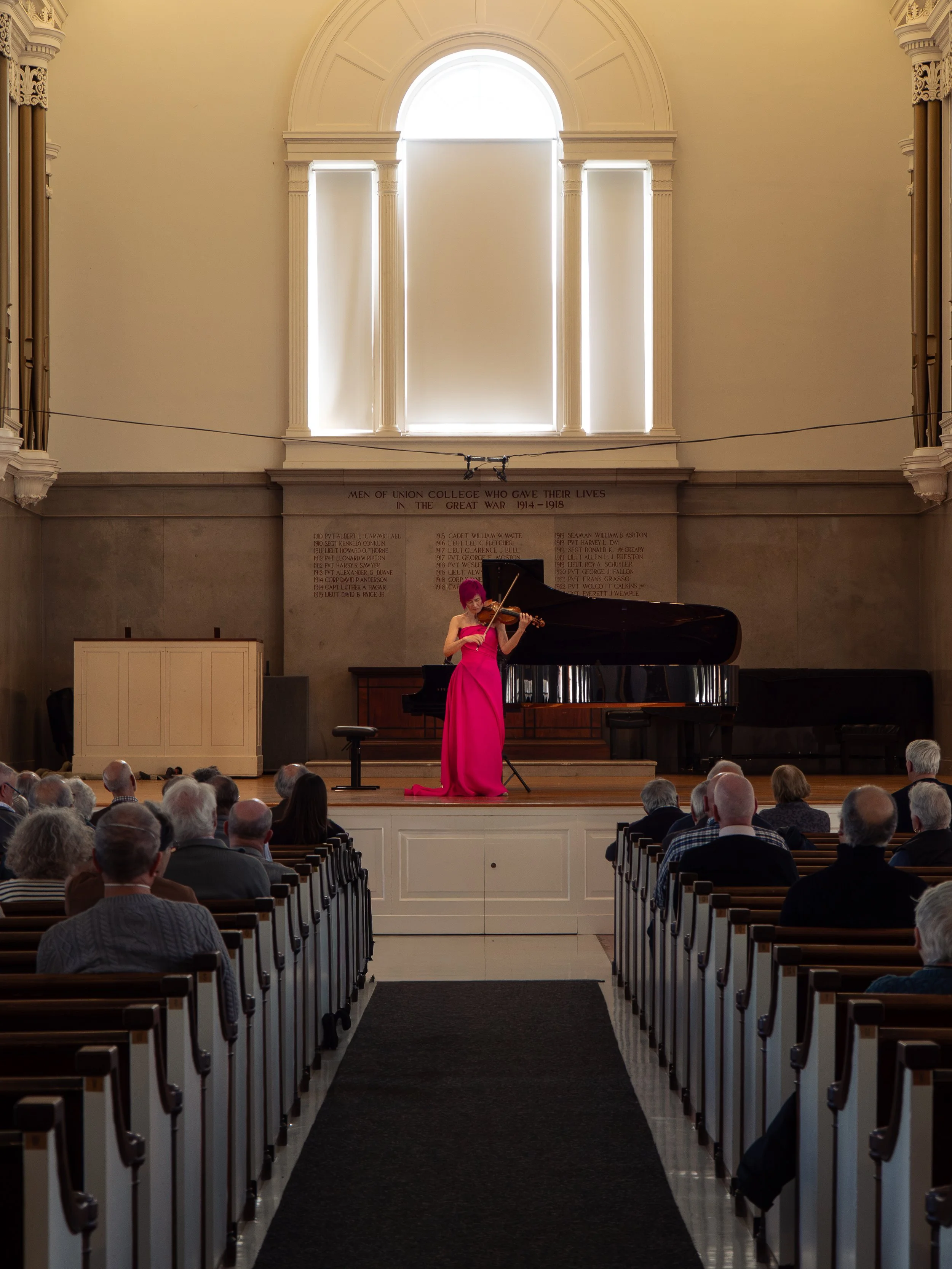
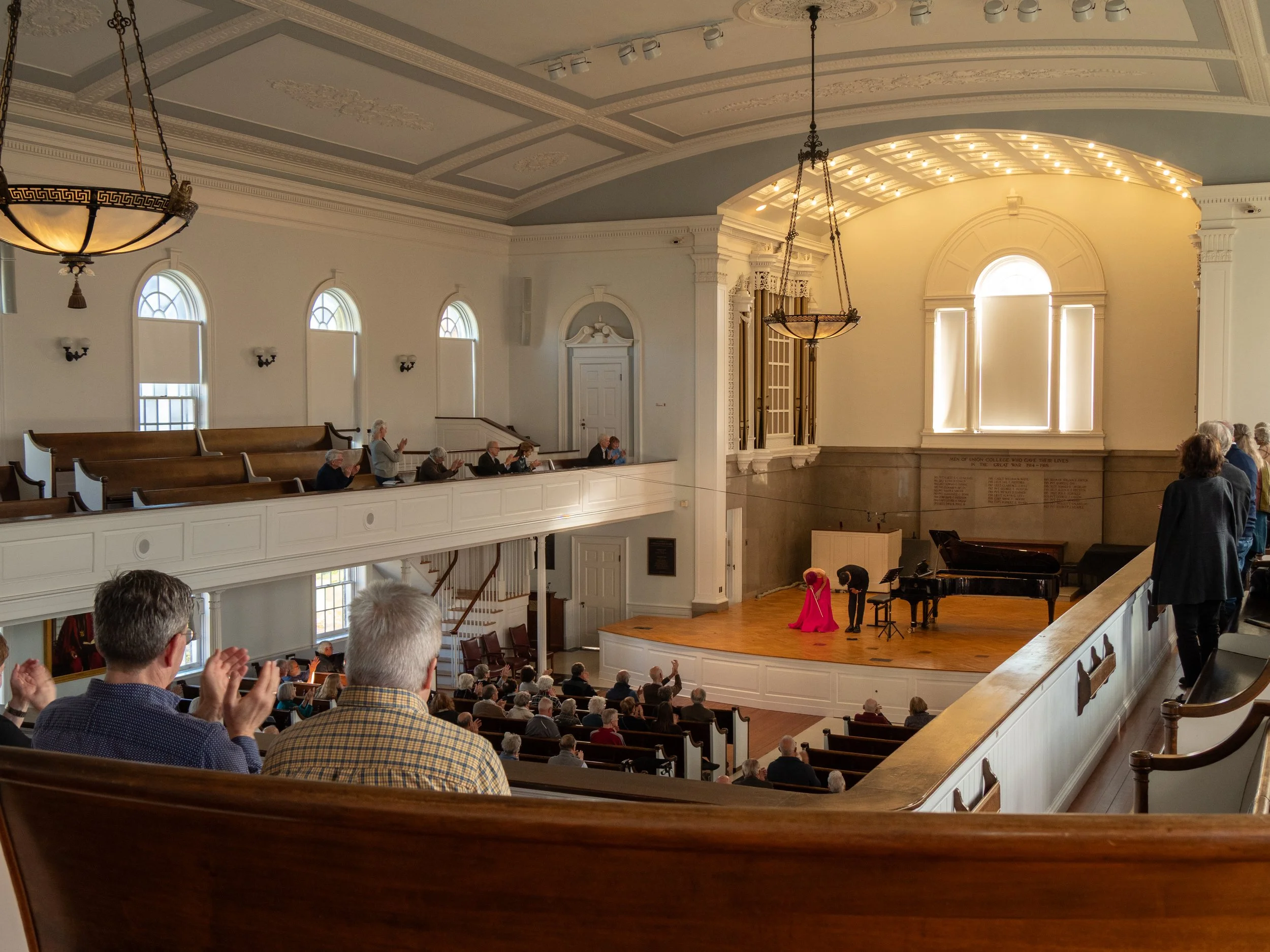
Fresh off a world premiere performance in Philadelphia and kicking off the Capital Region Classical’s 55th season, pianist Vijay Iyer and violinist Jennifer Koh served up a cornucopia of musical delights in the resplendently resonant Union College Memorial Chapel in Schenectady.
In alternation with solo performances from both artists were Parts I and II of Vijay Iyer’s own Scenes of Living and Dying, the second installment of which was co-commissioned by Capital Region Classical in partnership with the Philadelphia Chamber Music Society and ARCO Collaborative.
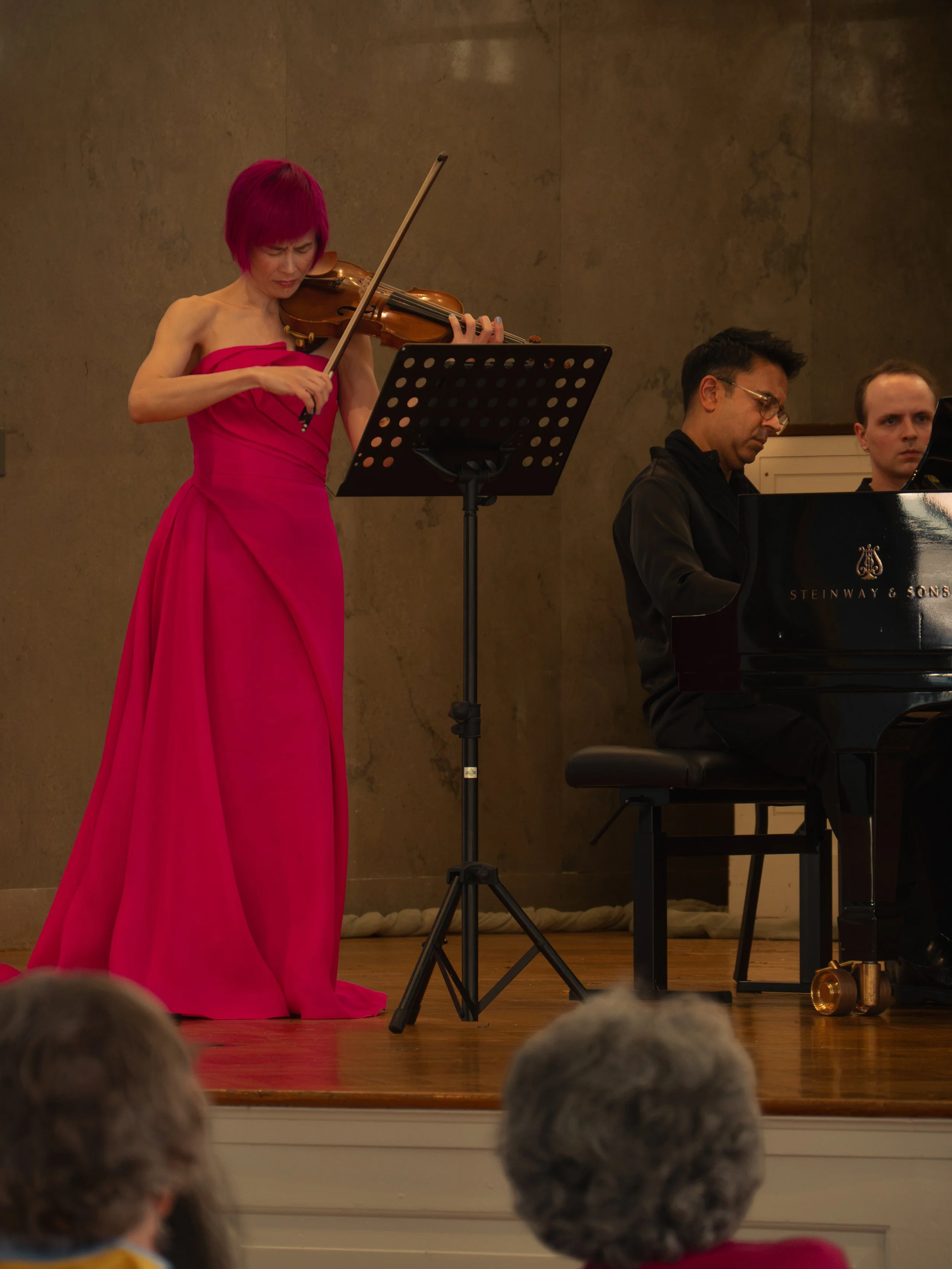
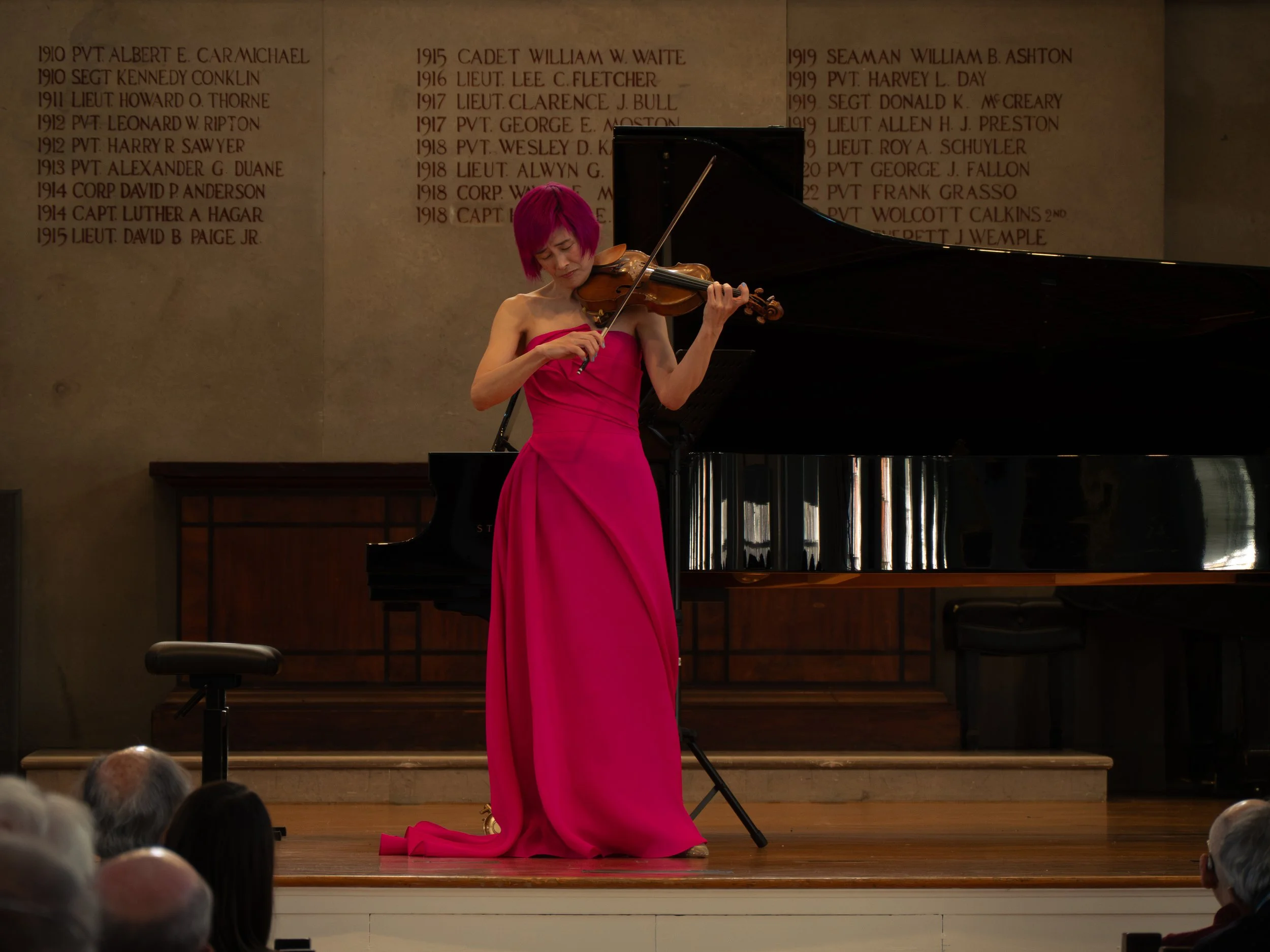
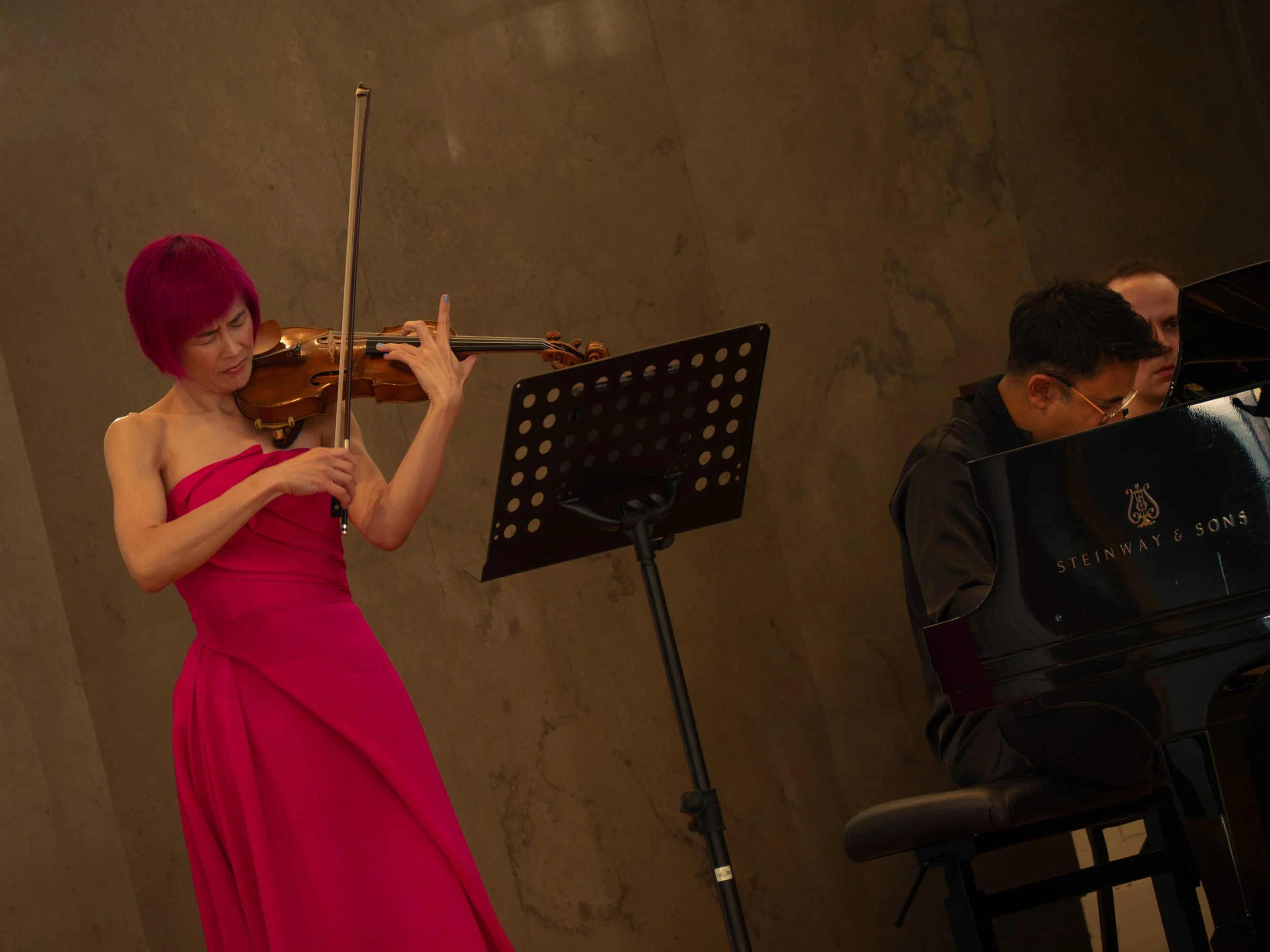
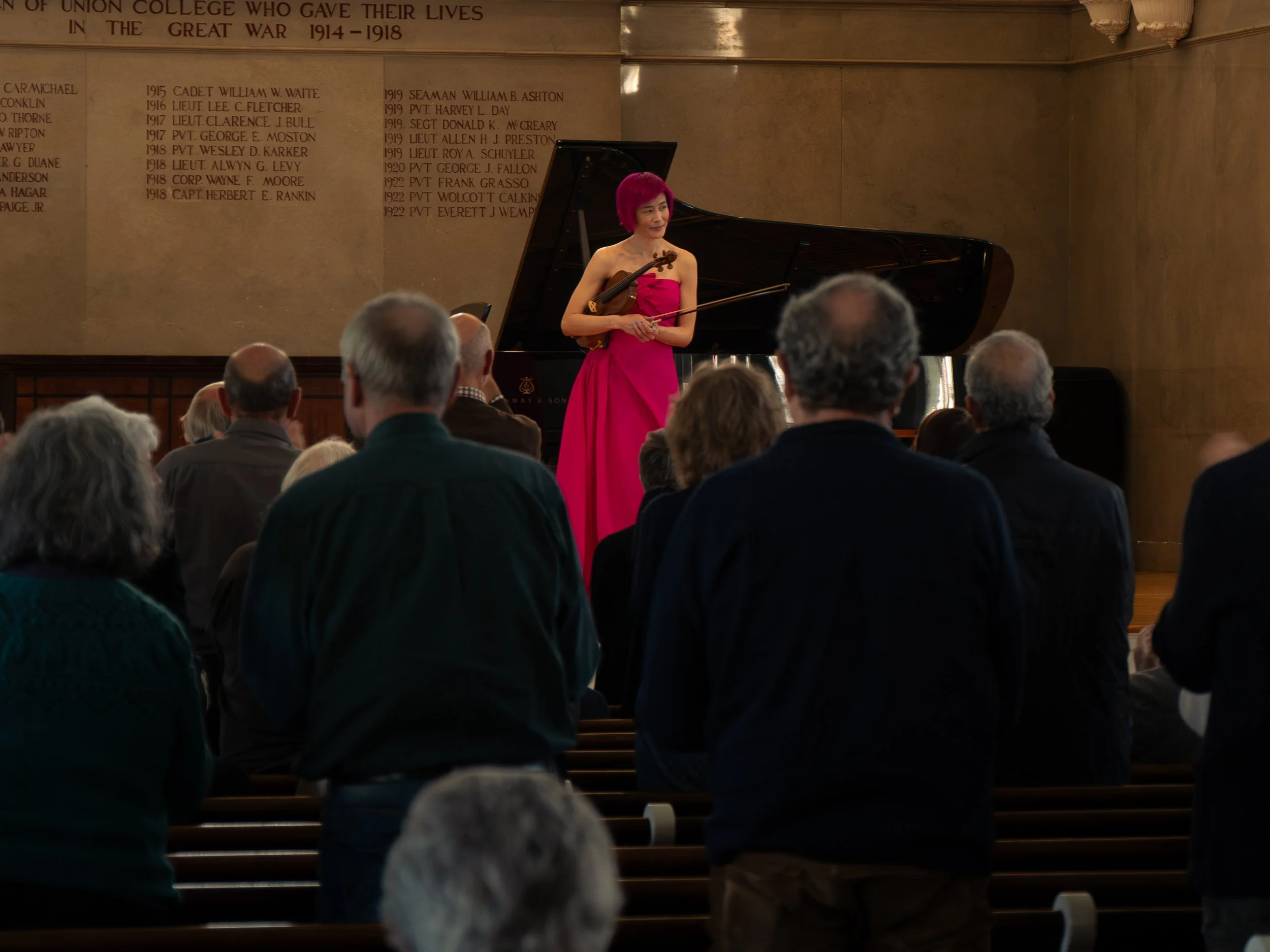
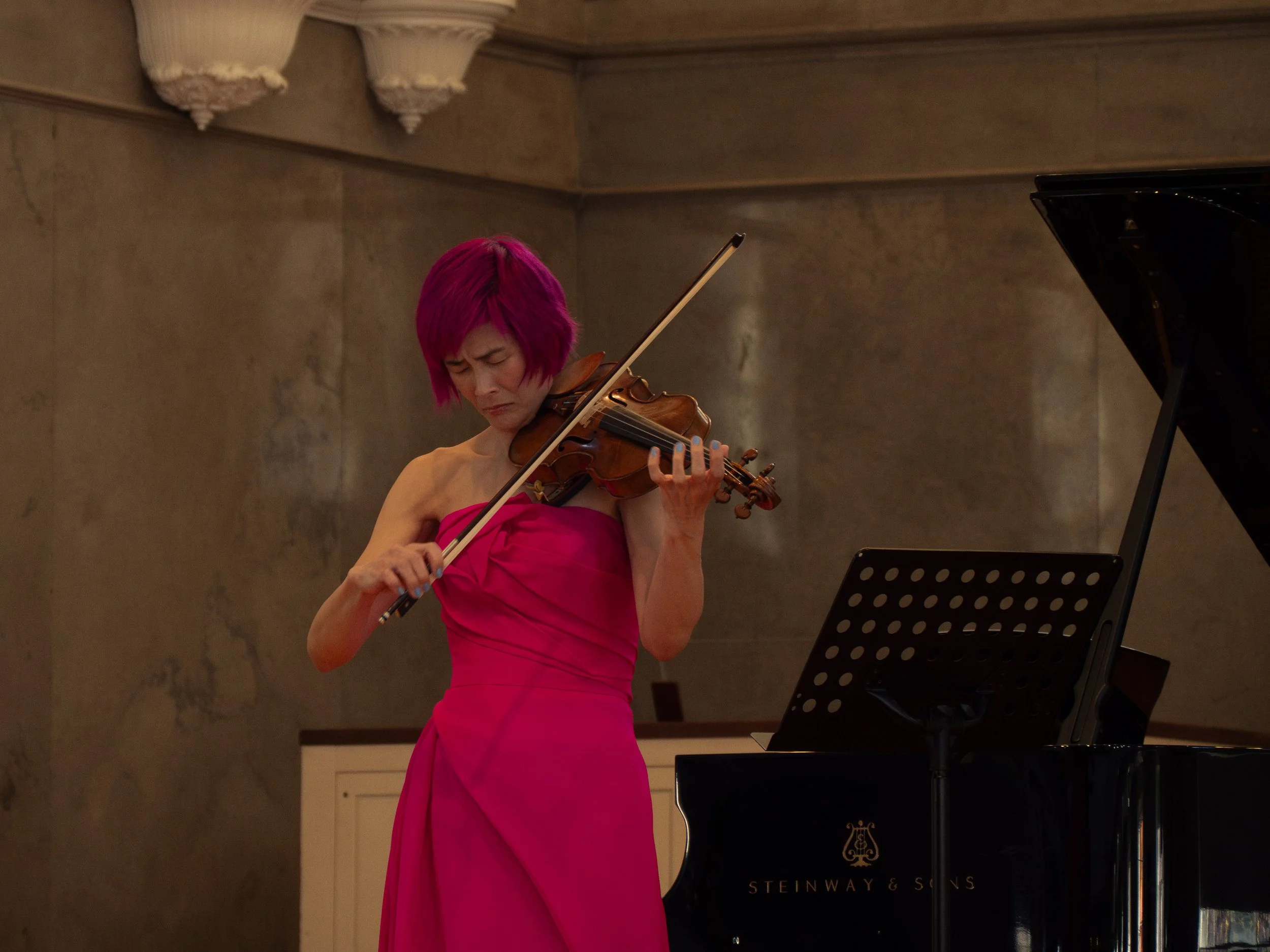
Before that, however, Koh, appearing in a striking hot pink strapless floor-length gown with her signature matching hair color, rendered a superb performance of J.S. Bach’s Partita in D Minor, BWV 1004. This five-movement work was once described by Johannes Brahms as “earth-shattering,” and the description is still apt, even over a hundred years later.
One of Koh’s many strengths is her clarity of voicings, and the Partita’s second movement, a sprightly Corrente, showcased her ability to delineate the interchange of several melodic and harmonic lines. Koh’s expressive restraint respected Bach’s compositional hand, allowing it to be heard in harmony with her own interpretative one.

Watching Koh perform the half-hour piece in its entirety with her eyes closed was like watching a great mystic on a spiritual journey to the innermost depths of the self. Her concentration was focused entirely on the movements of her limbs and digits with the same strength as a spherical array of mirrors concentrating solar rays into a single, powerful beam of light. The music, particularly that of the final movement (Ciaccona), seemed to pour out of these depths through Koh’s hands, allowing the left to stretch to lengths seemingly only possible through divine assistance and giving the right the fortitude of an oar cutting through rough waters to sharply deliver a chain of chromatically descending rolled chords.
Picking up my jaw from off the floor (I realized my mouth had unknowingly been agape for quite some time) with just a little bit more of the piece to go, I noticed that Koh moved her feet for the first time in nearly 30 minutes, a succession of upbows causing her to jump slightly with each one, before bringing the whole thing back down to earth for the final notes of the piece. Admittedly, Bach isn’t really my thing, but Koh’s performance made me reconsider my position.
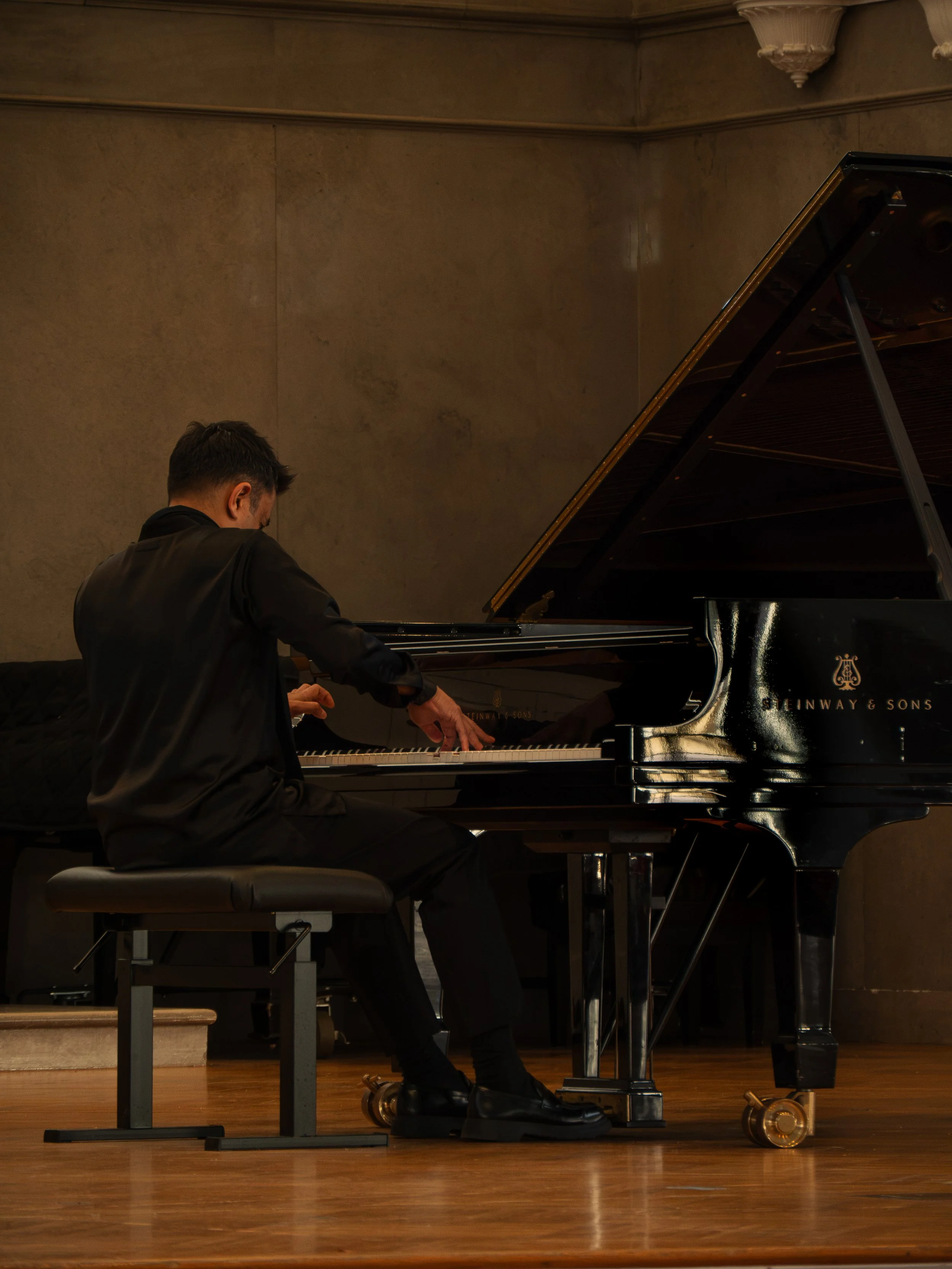
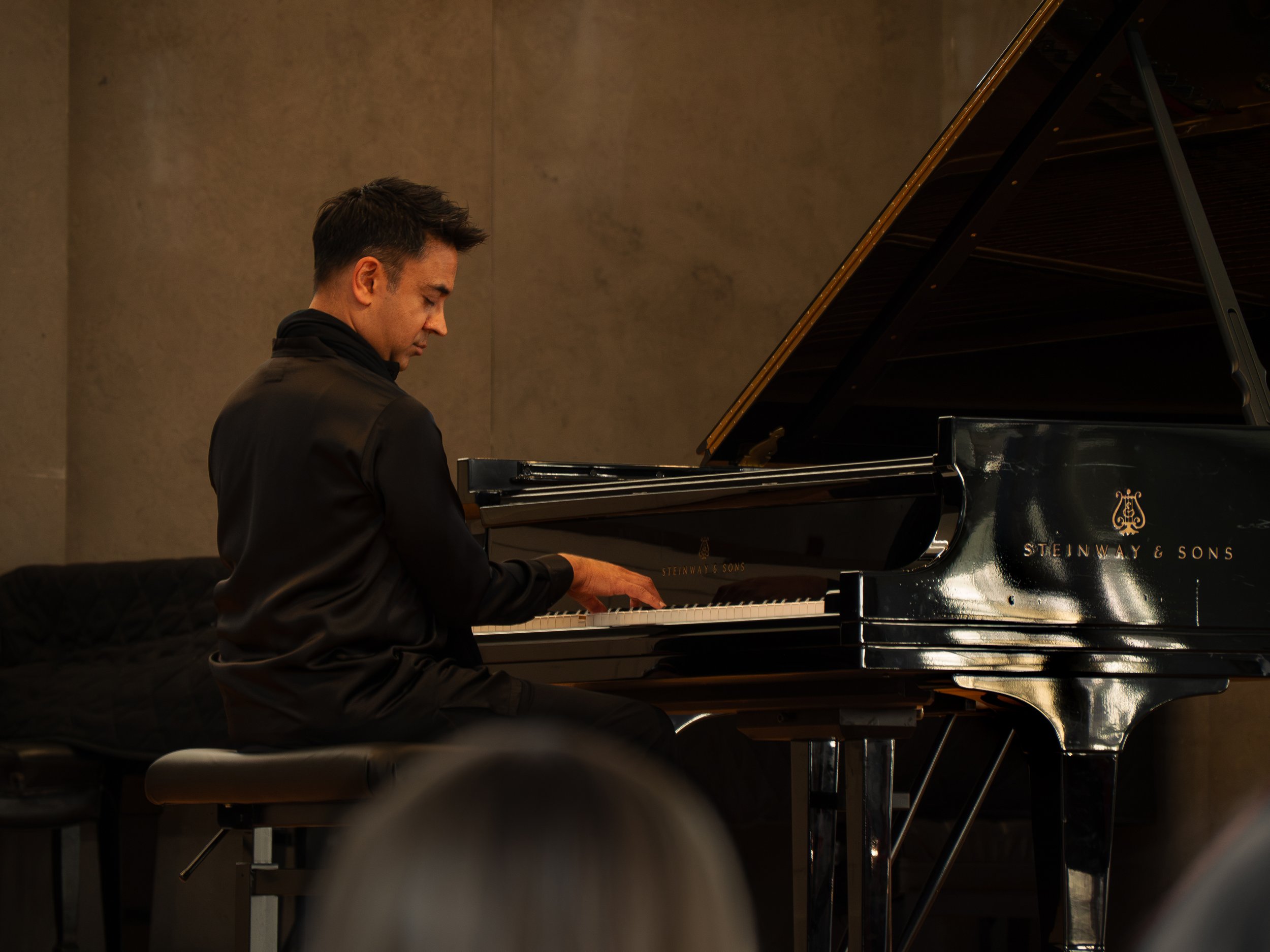
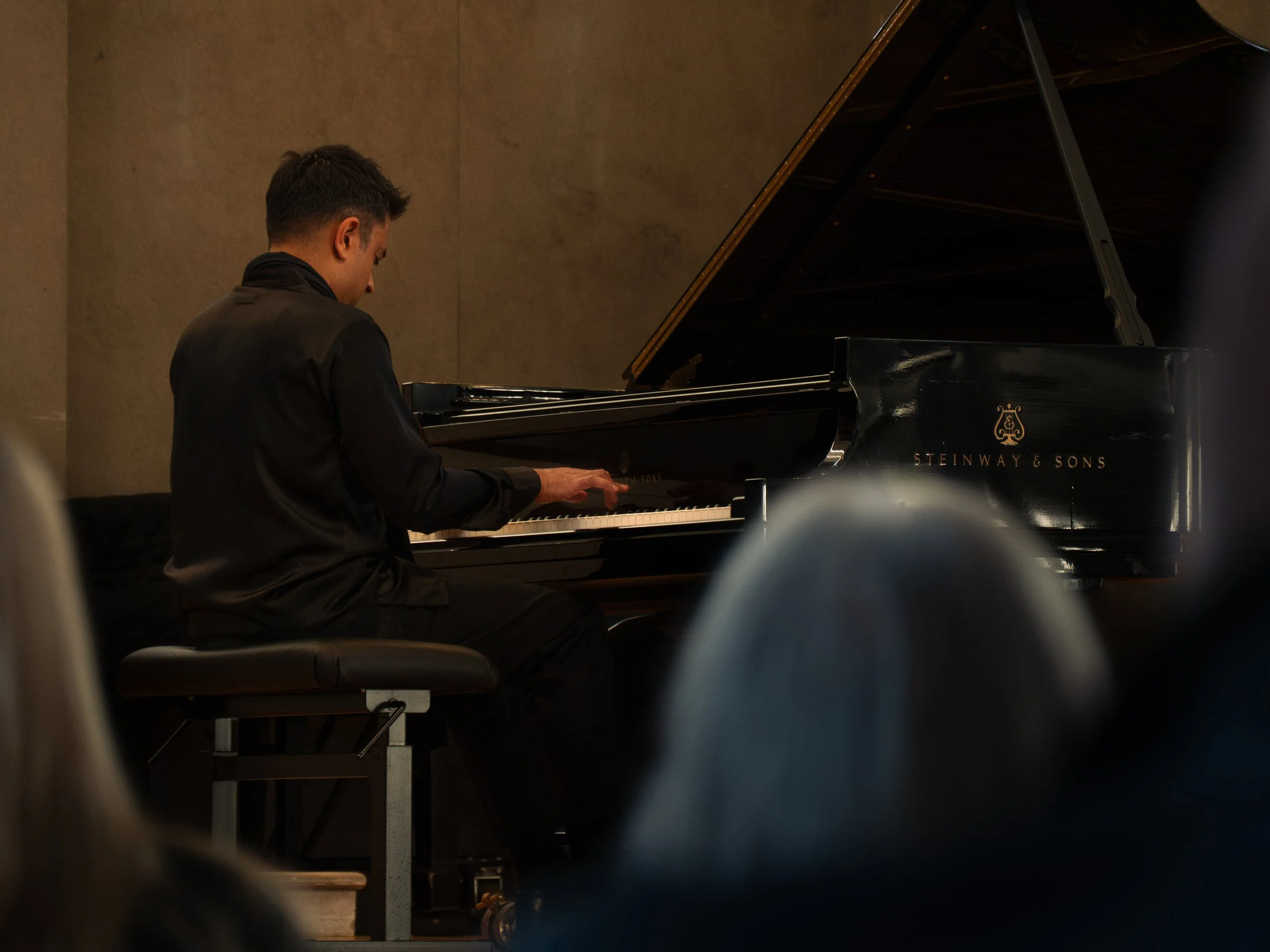
After intermission, Iyer played four solo piano compositions as a single, uninterrupted performance. These works — Segment for Sentiment, No. 2; Children of Flint; Kite (for Refaat Alareer); and Ghostrumental — each in their own way related to suffering in some corner of the globe: Japan, Michigan, Gaza, and beyond. Although they were distinct pieces composed between 1995 and 2024, they were remarkably cohesive as an unbroken unit. There was a prevalence of rubato throughout as well as tremolo and what sounded like improvisation (although the pieces could just as well have been strictly notated).
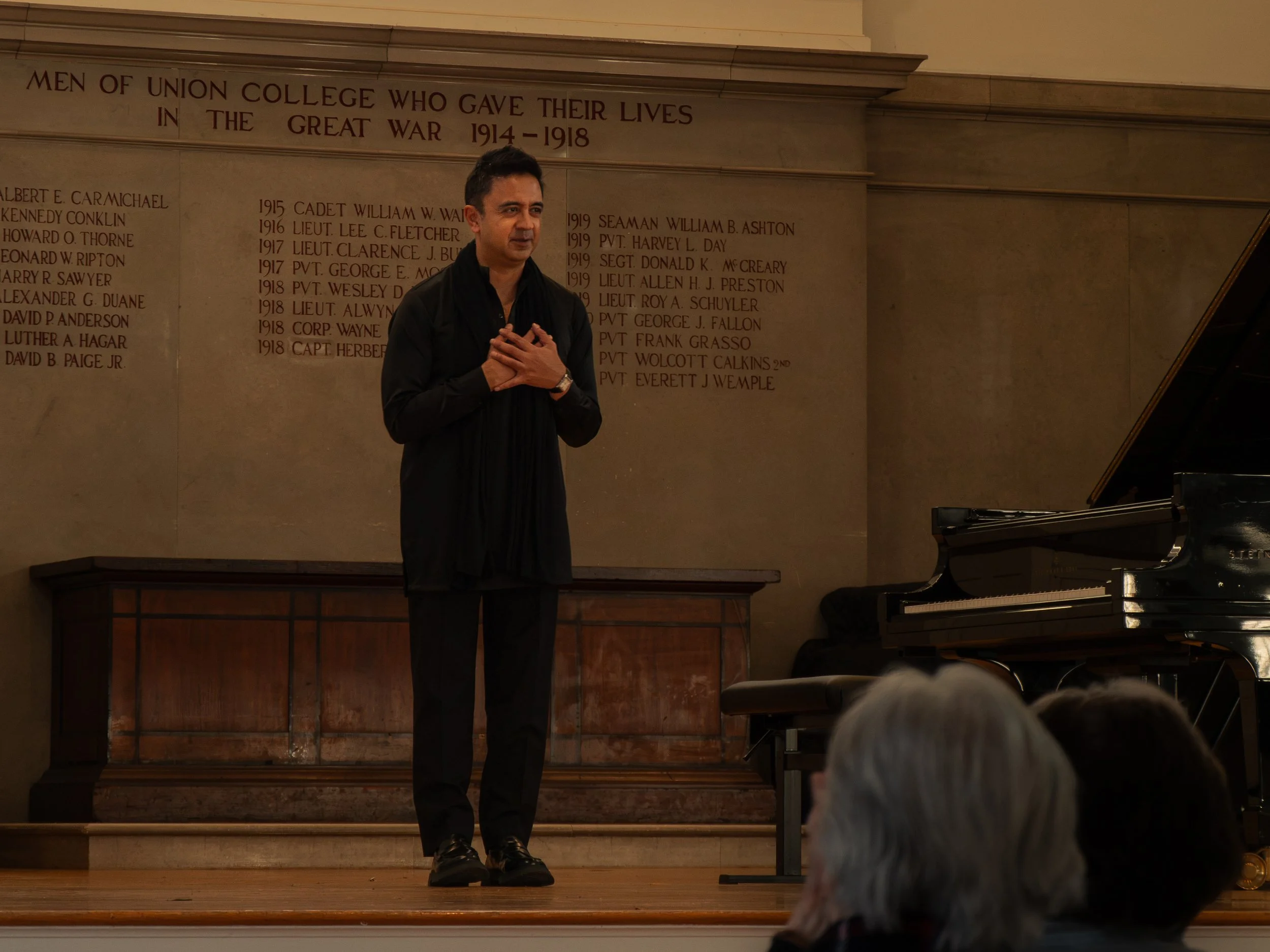
Similar to Koh’s performance, I felt as though Iyer was channeling ghosts and energies of people and places not entirely of this world to communicate to the Schenectady audience something about our real-life shared humanity; Iyer bowed his forehead down to the keyboard and arched his back, eyes closed, to look to the heavens. The program note for Segment for Sentiment, No. 2, read, “Dedicated to the victims and survivors of the bombings of Hiroshima and Nagasaki in August 1945,” and I smirked at the unplanned interplay between this composition and an engraving on the wall directly upstage of Iyer: a list of names and ranks under the heading, “MEN OF UNION COLLEGE WHO GAVE THEIR LIVES IN THE GREAT WAR 1914–1918.”
Forgive the oversimplification, but it is easy in the U.S. to look at history through only a Western lens and forget about the innocent people who are so often on the receiving end of America’s weapons of war. (Shout out to Mr. Yetwin, my 10th-grade global history teacher, for making us read Howard Zinn’s A People’s History of the United States.)
The last pieces on both halves of the program, Iyer’s Scenes of Living and Dying: Parts I and II for piano and violin, were jazz-inflected post-modernist compositions that each presented a variety of moods, styles, harmonic languages, textures, and compositional techniques. Part I began with a melody of violin harmonics on top of a dissonant piano ostinato, each instrument leaving ample space for the other to breathe.
The juxtaposition of extended technique with an almost Romantic sensibility for melody could not have prepared me for the interruption of rapid 16th notes that alternated with the previous texture. The “scenes” of Part I were often shorter than I was expecting, and at times I got whiplash from how abruptly Iyer moved on from a theme he’d introduced.
Yet, it felt intentional. I also noted more than once a strong sense of nostalgia, not in an Ivesian way (a comparison no doubt inspired by the WWI engraving) where one looks backward in delight, but in a more contemporary way, longing for a time that we ourselves have not experienced and may never have existed to begin with (our own perceptions colored by, for lack of a better word, propaganda).
Part I ended in an almost Reichian (Steve) manner, with harmonies and rhythms that could have been plucked right out of Different Trains or the Double Sextet. The cuts between the scenes were so rapid that I wrote in my notebook, “An overwhelming amount of memories & information. Is this what dying feels like? Or maybe what being born feels like?” Perhaps Iyer has some transcendental insight that they are one and the same.
Part II, which received its world premiere at the Kimmel Center in Philadelphia two days earlier, takes as its inspiration “The Betweens,” as is the piece’s subtitle. Referencing the Tibetan Book of the Dead, the Bardo Thodol, the title points to moments of birth and death not as beginnings or endpoints, but as “transitional states” (Iyer’s words) between realms. Iyer also writes that the piece is shaped almost entirely by the number 108, which in many spiritual practices is a sacred number symbolizing, among other things, enlightenment.
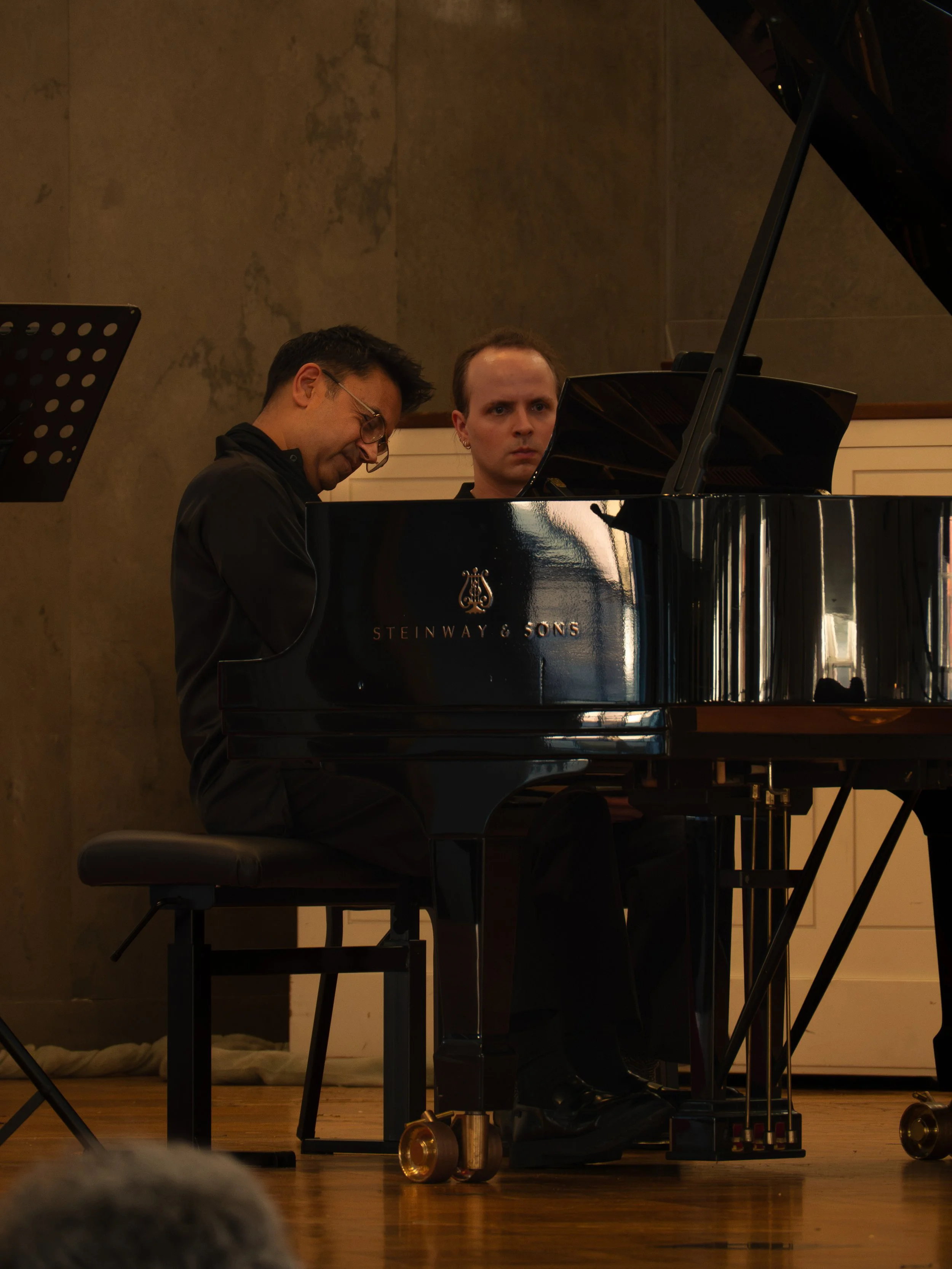
These ideas were largely, to my ear, substrates of the composition, not making themselves particularly evident at any point (not that I was trying to count 108 measures or beats or anything like that). I was reminded more of Iyer’s solo compositions than I was of Part I. So much of the work, particularly the piano writing, felt improvisatory, and Iyer’s signature tremolos and bisbigliandi made appearances as accompaniments to what also seemed to be improvisations from the violin.
Knowing that Part I required Koh to spontaneously produce melodies using a gamut of pitches provided by Iyer, it could be that this was only one of several throughlines connecting the two works. The piece is undoubtedly difficult, and I was more than a little impressed by the ease and subtlety of the communication between the pair of musicians and how they made each scene change feel so natural.
For me, the highlight of the piece was a violin solo that functioned like a mid-composition cadenza. It consisted of, fittingly, what could be described as transitional material. I was reminded of many Earle Brown pieces by the way Koh performed a disjointed succession of figures, some purely musical, some including scraping, and other unpitched timbres. Still, Koh found a cohesive shape for the solo and in the end it transitioned into what remained of the piece with surprising ease.
Although expressly about transitions, Part II seemed to also be about cycles, not endings or beginnings, but interstitial material (that explains the cadenza), almost as if Iyer cut out anything that might have felt too introductory or terminal. It was fitting that the piece ended on four or five augmented repetitions of the same melody before the violin ended the proceedings with a final, screeching halt of her bow.
No resolution. We were left hanging. Perhaps until Part III.
For more information on Capital Region Classical’s 55th season, visit capitalregionclassical.org.