REVIEW: Brandi Carlile and Her Thesis on Humanity
08/18 @ Tanglewood, Lenox, MA
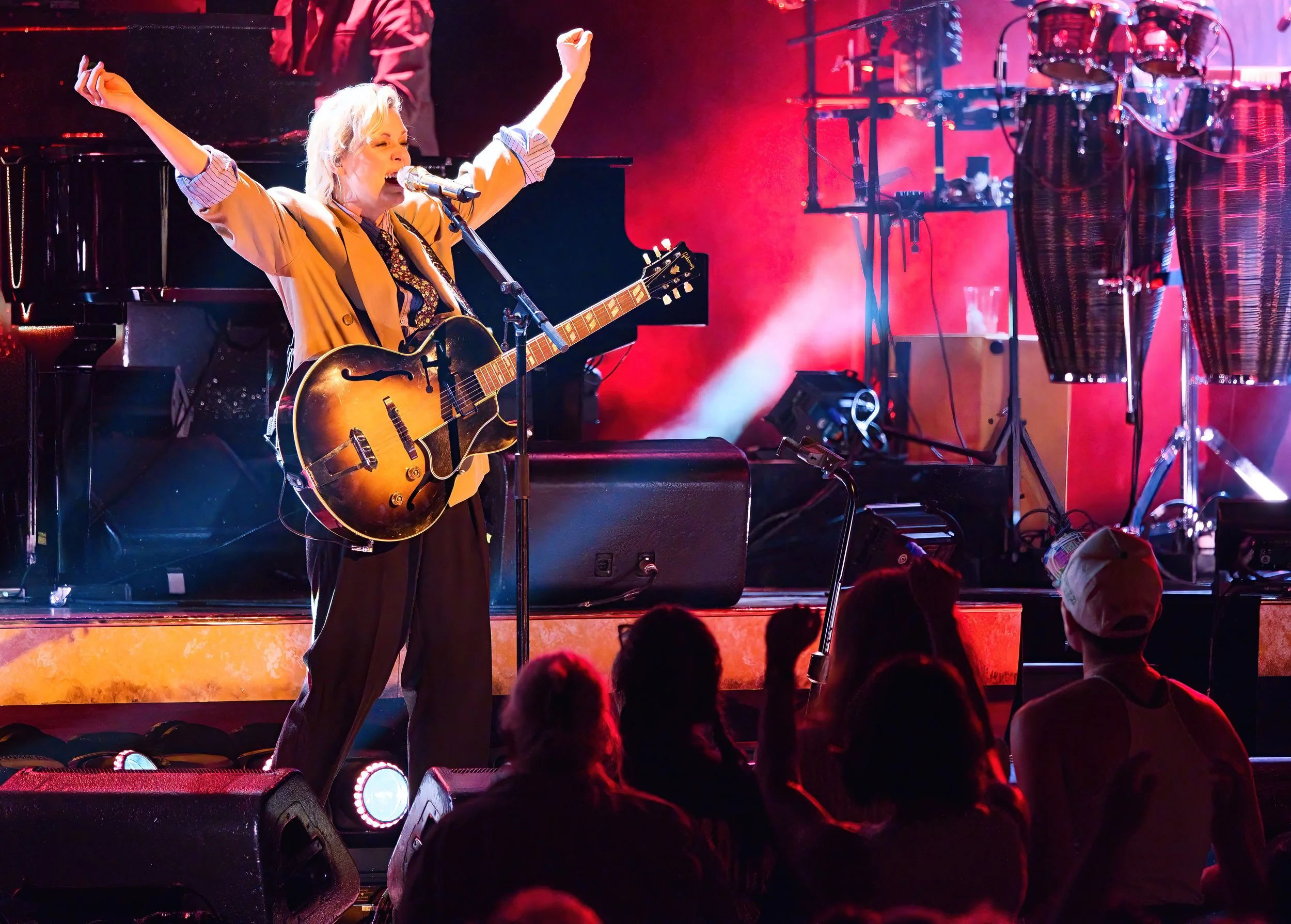
Photos by Hilary Scott
“I left feeling that 120 minutes of [Carlile’s] voice is not enough time for her to tell those stories; it’s just not enough time to listen to them. Carlile is a powerhouse, and the very specific way her voice aches is the perfect one to carry those chronicles of what it entails to embody being human.”
I’m not especially good at navigating. As a matter of fact, my senior superlative was Most Likely to Get Lost, Even With a GPS, and I am nothing if not consistent — ask any of my friends who have spent any significant time with me in the car; they’ll affirm.
And so when I was standing on the verge of the expanse of Tanglewood’s verdant lawn, I felt a familiar press of unease materialize in my chest; the same one I always get when I start to feel unsure of my place in the world.
Fanned out before me was a starfield of bodies. They were sprawled out on blankets or sunk into lawn chairs. Their clusters were close together, leaving room only for the bushes and trees that cast long shadows around them. And those that moved around me moved with confidence, but they seemed to go in a destination in every direction. I couldn’t see my own destination: The Shed.
I felt disoriented.
I felt small.
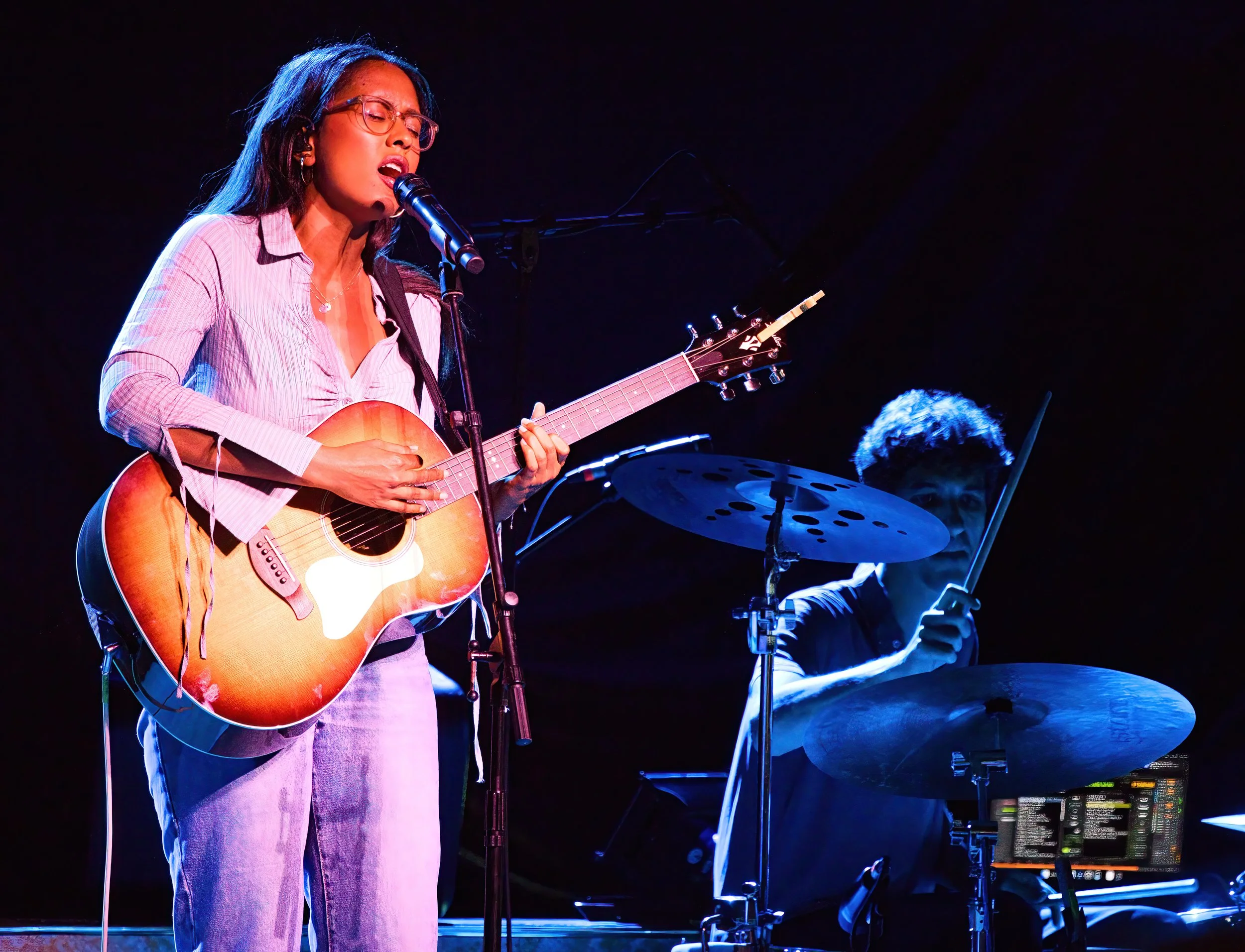
Courtesy of the venue traffic, I never got to see supporting act Jensen McRae. But her sweet alto influenced my evening anyway, her lyrics immediately falling on my ears.
“Something rotting in my brain tells me, ‘Do it anyway.’ And do not fear the long decay.”
I felt safe — as if her music had understood me, I took a deep breath, and picked a direction, using the current of the crowds and McRae’s strumming to relay me along. It was “Let Me Be Wrong.”
Around me, some concert-goers were assembling charcuterie boards of fine cheeses and caviar, and others with sticky fingers would reach into a basket of french fries and ketchup, wiping away the grease onto their jeans.
By the time I reached The Shed, McRae had left the stage with her song "Massachusetts" still settling itself into the memories of Bay Staters.
I found my seat, dead center, allowing me the perfect vantage to notice the faces of the crowd, and those that were in the sweep of my gaze were perhaps the most diversely-aged crowd I’ve seen at a show. There were children radiating with youth, adults doing their best (some maybe not), and seniors with lines of life’s wisdom etched into their faces. All of them huddled together, whispering, anxiously anticipating headliner Brandi Carlile.
Carlile entered the stage alone with her acoustic guitar, picking out the first arpeggios of “Returning to Myself.” Her voice reverberated throughout The Shed, and slowly the rest of her eight-piece band joined in, conservatively, adding a rich texture to a song about introspection and growth, and the impermanence of self.
From the moment I heard her first note, I knew the power her voice was going to have over me. I felt it in that same place the anxiety had congealed earlier in the evening. It made it so easy to immediately tune in, so much so that I had to remind myself to take notes throughout, not just lose myself in the lyrics and swell of the songs.
Then, Carlile — transposed against a total eclipse of the sun and the band emerging from stagelights of fire lily orange — transitioned into the tour’s titular song: “Human.” Her voice cried vulnerable lyrics every soul across the expanse could feel in their, well, souls.
The motif of the evening became clearer as it went on, interwoven with anecdotes, hopes, dreams, fears. “We are fighting a futile and unwinnable war with time everyday,” she philosophized, contemplating the way time slips away from her as a parent, and specifically, how she hopes and wonders where in the world her children will find growth, fear, and becoming the way she did in New York City. Her voice ached as she sang “A War With Time,” and that ache saturated every other story on the setlist. “A Woman Oversees” was a love letter to her British wife. Even her lifelong admiration and dream of working with Elton John was relatable with “Who Believes in Angels?”
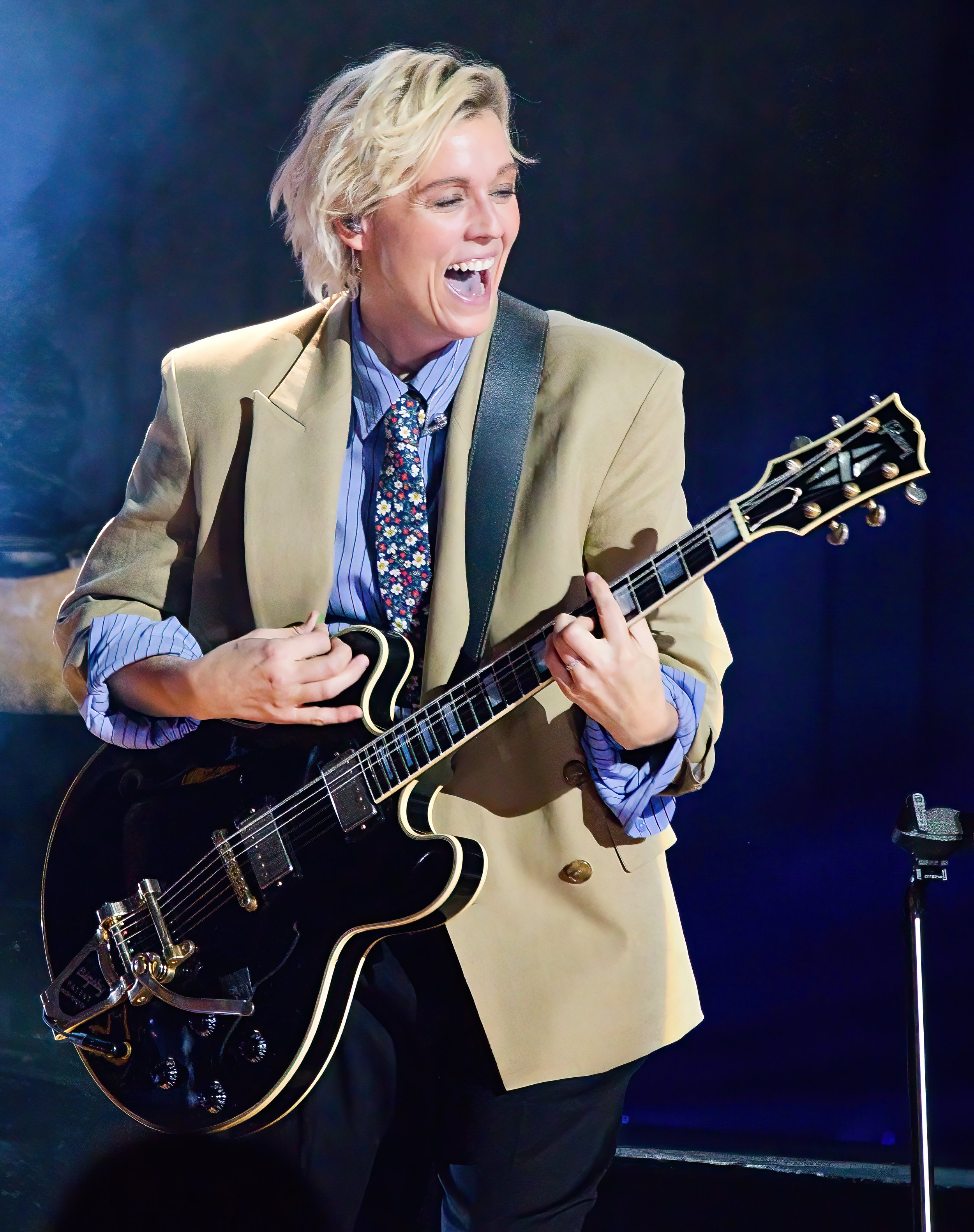
With all but Carlile and her lead guitarist and bassist, twins Tim and Phil Hanseroth, vacating the stage, then came the portion of the show where she took requests from the audience from across her catalogue. The selection process settled on “Dreams” first, and then “Turpentine,” and the well-oiled machine that was the longstanding trio left no doubts of their musicianship.
The pacing of the setlist was noteworthy; it was balanced with the thematic elements and ability to avoid being too jarring from one song to the next; it was cohesive. For every ebb of a more upbeat song, there was a flow. Like, the slower “No One Knows Us,” a declaration of queer love, moving smoothly into the upbeat song of protest and patriotism that is “Church and State.”
Understanding the push and pull, the one and only cover of the main portion of Carlile’s set was a devastating rendition of Bonnie Raitt’s classic, “I Can’t Make You Love Me.”
It wasn’t the last song of the evening that brought the setlist full circle in both power and thesis. The encore songs, “Hold Out Your Hand,” covers of Alanis Morisette’s "Uninvited" and Pink & The Indigo Girls’ “Dear Mr. President” (a duet with Jensen McRae) and “A Long Goodbye” felt more like epilogues to a beautiful story.
It was really the song that I’d argue defined the trajectory of her career which brought the setlist full circle in both power and thesis. There are few songs in this world that make me want to sing (read: scream) along in catharsis, and “The Joke” is one of them. It was placed right before the encore as the fake-out show-ender. “The Joke” is so big, it is dramatic, and it is unapologetic in the way it makes you confront yourself, your mortality, your imposter syndrome, and your doubts about your small place in this big world. And how you shouldn’t listen to those people who doubt you either.
My evening with Brandi Carlile reinforced the power of a well-curated setlist, and the precise arguments a good setlist can make. Juxtaposed against the thematic content, and with my recent rewatch of The Good Place fresh in my memory, it was especially clear how Carlile’s songwriting so successfully tells the stories and contemplations of humanity and what it means to be those who inhabit it.
I left feeling that 120 minutes of her voice is not enough time for her to tell those stories; it’s just not enough time to listen to them. Carlile is a powerhouse, and the very specific way her voice aches is the perfect one to carry those chronicles of what it entails to embody being human.
I was lost and small when I entered Tanglewood’s gates earlier in the evening; I was aimless and unsure, even with a GPS and a set destination. But music has always been my compass, and as it shepherded me through the greenspaces. It became obvious why I had immediately noticed entire lifespans sitting around me at The Human Tour — children, teenagers, adults, seniors, black, white, straight, queer, and everyone who doesn’t fall neatly into categories. When you sing songs that articulate the human experience so well, you’re going to have people from any angle or end, DNA helix, or stage in life listen in your shadow. Carlile’s perfectly-controlled smoky rasp was the right one to cradle us for the night. It was crystal clear, emotive and, in what is a sign of a truly gifted artist, it sounded better live than on a studio track.
The evening wasn’t flawless; but when mistakes happen as you’re singing about what it’s like to question your place and self in this world…
You can still feel small. You can still feel lost. You can be imperfect and constantly grow. What’s more human than that?