
REVIEW: History Collides in a Single Night at the Palace Theatre
1/17 @ Palace Theatre, Albany
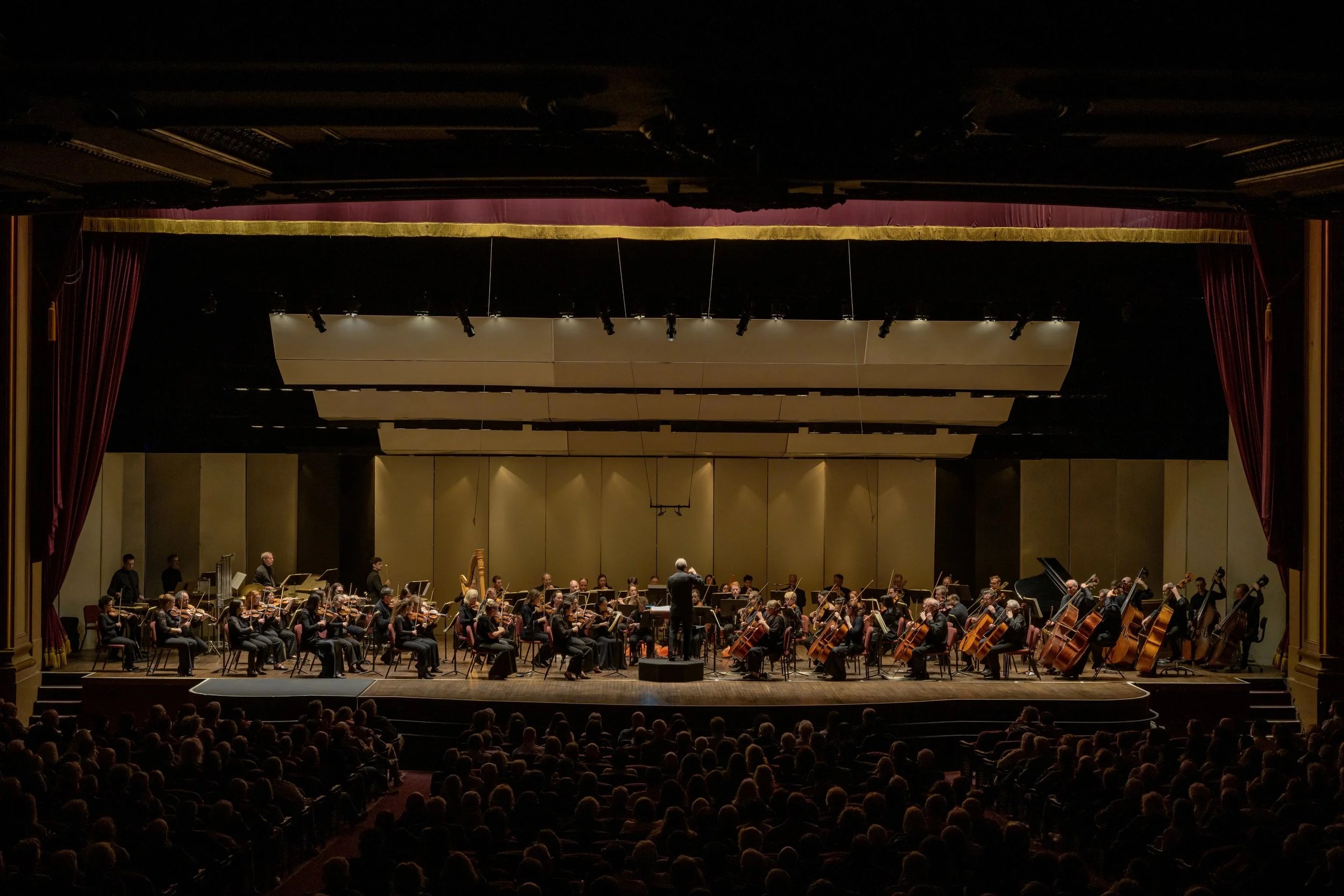
Photo provided by Albany Symphony Orchestra
“Music has the ability to transport us away from our daily issues.”
The moment the first brass call of Jennifer Higdon’s Tenfold rang out across the Palace Theatre, it was clear this was not going to be a quiet winter concert. This was electricity. By the time the final notes of Shostakovich’s “Symphony No. 10” melted into a standing ovation, the Albany Symphony had delivered something rarer and deeper than just a well-played program. It gave the Capital Region a night that felt alive and urgent. Guest conductor André Raphel and violinist Midori didn’t just lead the orchestra. They carried the audience with them, from liftoff to landing. “Music has the ability to transport us away from our daily issues,” Raphel had said before the concert, and on this night, it did exactly that.
Raphel’s presence on the podium set the tone early. There was a familiar confidence, but also warmth, a playfulness that invited trust. Higdon’s Tenfold opened the evening with brightness and momentum, its brass fanfare crisp and airy, its percussion snapping the room into focus. Raphel has long championed Higdon’s music, and his belief in its immediacy was loud and clear. “Her music always speaks to the audience,” he explained, and the response in the hall demanded it. In the first three minutes, Tenfold played as a welcome and a promise, alerting listeners that this would be a night of energy and attention.
That energy shifted into something more intimate with Midori’s entrance for Beethoven’s “Violin Concerto.” Her playing was breathtaking in its control. Her violin’s flawless pitch, a silvery brilliant tone, and extraordinary dynamic range allowed her to move from barely audible hums to full, glowing sound without ever forcing the moment. Rather than leaning into chaos, Midori focused on clarity and expression, revealing Beethoven’s melodic genius with patience and care. At times, her stance was maddening. Lost in a trance of melody, but always staying true to her elegance and calming stature. Some listeners may have expected even more fire, but what emerged instead was poetry, deeply felt and quietly commanding.
Raphel shaped the orchestral accompaniment with sensitivity, drawing chamber-like transparency from the ensemble, especially in the first movement. Woodwinds breathed naturally, strings supported rather than pressed, and the dialogue between the orchestra felt conversational. “That third movement is pretty infectious,” Raphel admitted, and when the rondo theme returned, it sparked an almost physical lift in the room. Beethoven’s struggle and triumph felt immediate, not historical, unfolding in real time for everyone listening.
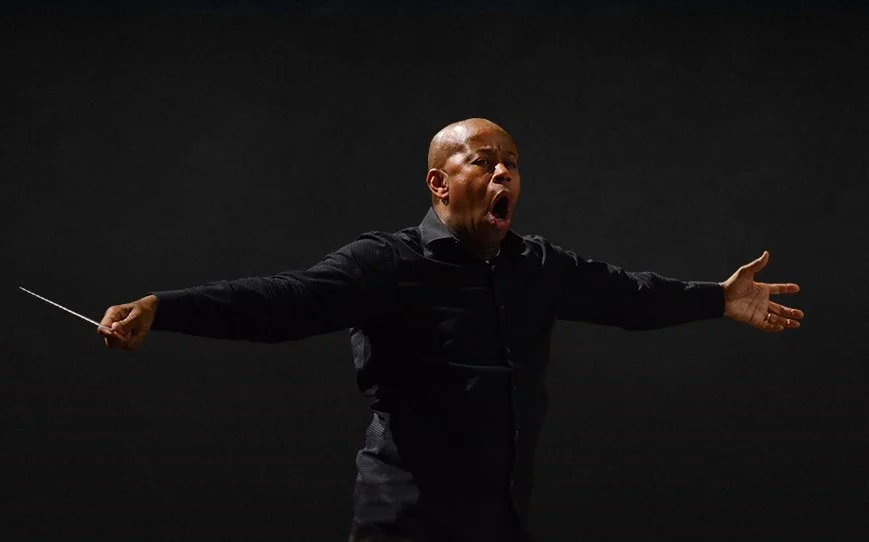
After intermission, the concert turned darker and heavier with Shostakovich’s “Symphony No. 10,” a work that demands emotional stamina from both musicians and audience. Raphel approached it with conviction and restraint, allowing tension to build organically. The long opening movement unfolded with unease and a palpable heaviness, while the ferocious second movement struck like a blow, raw and relentless. Raphel has described the symphony as a portrait of what Shostakovich endured, written after years of political denunciation, and that sense of survival was unmistakable.
“Shostakovich found a way to speak for the people,” and nowhere was that clearer than in the contrast between violence and reflection throughout the work. The orchestra responded with crescendoing intensity, never losing cohesion even in the most demanding of buildups. The finale was a divine eruption, its drive surging toward a conclusion that felt profoundly merited. “You can’t listen to the last movement and not want to applaud,” and the audience proved him right, rising to its feet for what felt like an eternity.
What made the night resonate beyond its musical excellence was its connection to Albany itself. In a state capital shaped by history and public life, a program that wrestled with expression under pressure felt especially relevant. The Albany Symphony continues to act as a cultural anchor for the region, and this concert reaffirmed that role. Educational outreach tied to the performance, including opportunities for local students to observe rehearsals, reinforced the idea that this music is not distant or elite, but shared among all.
Raphel spoke often about wanting audiences to leave uplifted. “I hope people feel inspired,” and judging by the buzz in the lobby leading to the parking lot, they absolutely did. Midori and Raphel transcended expectation, captivating the audience from beginning to end and reminding the Capital Region why nights like this matter.
The performance was not simply a success. It was a stark reminder of what happens when artistry and community collide. For a few hours, Albany listened together, and the city felt brighter for it.
For a full calendar of events, visit www.palacealbany.org