
INTERVIEW: Wei Qin: A World Sewn Together
**This article originally appeared in our October 2026 issue**
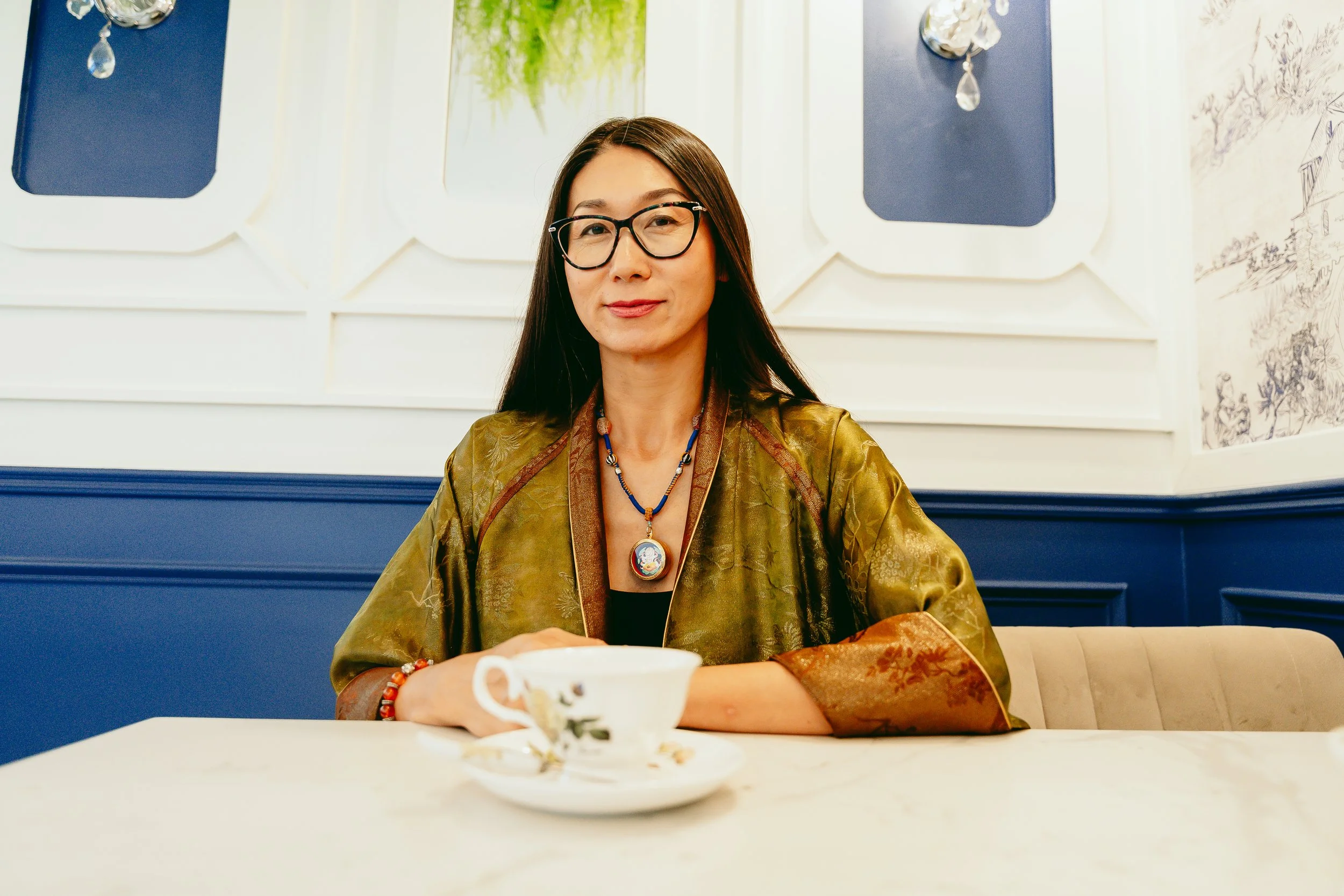
Photo by Kiki Vassilakis
"To be able to contribute with what I’m doing now, I feel that I’m actually capable of bringing happiness and harmony to the community for our enjoyment… That’s my biggest blessing.”
One of the first things that I noticed about Wei Qin was the dress.
We were standing inside the Arts Center of the Capital Region during its annual gala, surrounded by paintings, conversation, flowers and the overlapping sound of familiar voices that develops when enough people who care deeply about art find themselves together in one room.
Wei wore emerald green, deeply textured and cut through with black accents, a dress that told me she understood the room that she was wearing it in. It was beautiful without disappearing into that beauty, and more than anything, there was thought behind it.
I would learn later that this instinct runs through nearly everything Wei does.
Long before she founded Asian Arts New York, before she became president of the Chinese Community Center of the Capital District, and before she began creating workshops, performances, exhibitions and opportunities for Asian artists throughout the region, Wei studied fashion. She modeled in Beijing. She studied fashion design, and later earned a master’s degree in fashion marketing in the United Kingdom. She loved publicity, events, launches and the way brands could take an idea and build an entire world around it.
“Fashion is the easiest, quickest way for people to make a change,” Wei says. “When people get into the fashion touch, it’s so easy to transfer them from one level to another.”
She pauses before bringing the idea closer to the work she does now.
“Because of the fashion background, and especially the marketing background, I know what visual presentation means to people,” she adds. “The vision and the image can quickly get into people, especially in our modern life.”
That understanding of presentation now lives everywhere inside Asian Arts New York, from the way its artists are photographed and promoted, to the way Wei imagines an audience entering a room. She thinks in layers: what someone sees first, what draws them closer, what they discover once they are there and what might follow them home.
It is an approach built from a life lived across places that could easily look disconnected on paper.
Wei was born in Shandong Province in China and spent her early adult years in Beijing. In her twenties, curious about modeling, she simply walked into an agency and inquired. She later moved into fashion design and marketing, studied in the United Kingdom, married and moved from Beijing to Shanghai where another world of art began opening around her. Traditional instruments, calligraphy, tea ceremony, opera, costume and performance became increasingly present in her life.
Then came Albany.
“It was never in my plan to live in Albany and have this organization,” Wei says. “Never.”
Her husband’s work had taken the family through years of expatriate life in China and Asia, but after their first daughter was born, the couple decided to settle near his family in the Capital Region. There would be grandparents, siblings, cousins and the kind of American childhood they wanted for their children.
For Wei, there would also be an enormous adjustment.
She had known Beijing and Shanghai, high-rise apartments and dense cities alive with movement. Albany meant houses, suburbia, motherhood and the slow work of learning how to live inside a culture that was still unfamiliar. For the first few years, much of her attention went toward adapting. Eventually, another question began rising underneath it all: “What is my position?”
When I asked Wei about the many places she has lived and what they mean to her now, she laughed softly at the size of the question. She had never quite thought of her life that way, she told me. Looking backward, though, she could identify a thread.
“If I look back at everything in my life, it makes sense that it all brought me to what I’m here doing with this organization,” Wei says. “Though it was never my pure intention or planned purpose.”
Albany gave her something she came to value deeply: the freedom to engage openly with culture and community.
I really, really enjoy what American life can offer. People are really happily engaged with their own cultural background and community, and it gives me a great freedom and motivation to promote the culture of my background or anything that I’ve been touched by in my life.
Around her, Wei saw a Capital Region filled with cultural life. There were orchestras and festivals, opera and dance, Greek celebrations, Polish celebrations and communities sharing traditions that had traveled across oceans and generations.
She also noticed what she was seeing less often.
“I was just thinking, I don’t really see much of the Asian culture over here being presented to the public,” Wei says. “The more I’m doing, the more it just feels right.”
That feeling eventually became Asian Arts New York.
Today, the organization works with roughly dozens of artists and reaches around 7,000 people each year through a calendar of events that spans music, dance, visual art, decorative art and heritage traditions. Its artists appear in concerts, exhibitions, workshops, school assemblies, public performances, senior programs and original productions throughout the Capital Region, with Wei constantly looking for new places for the work to live.
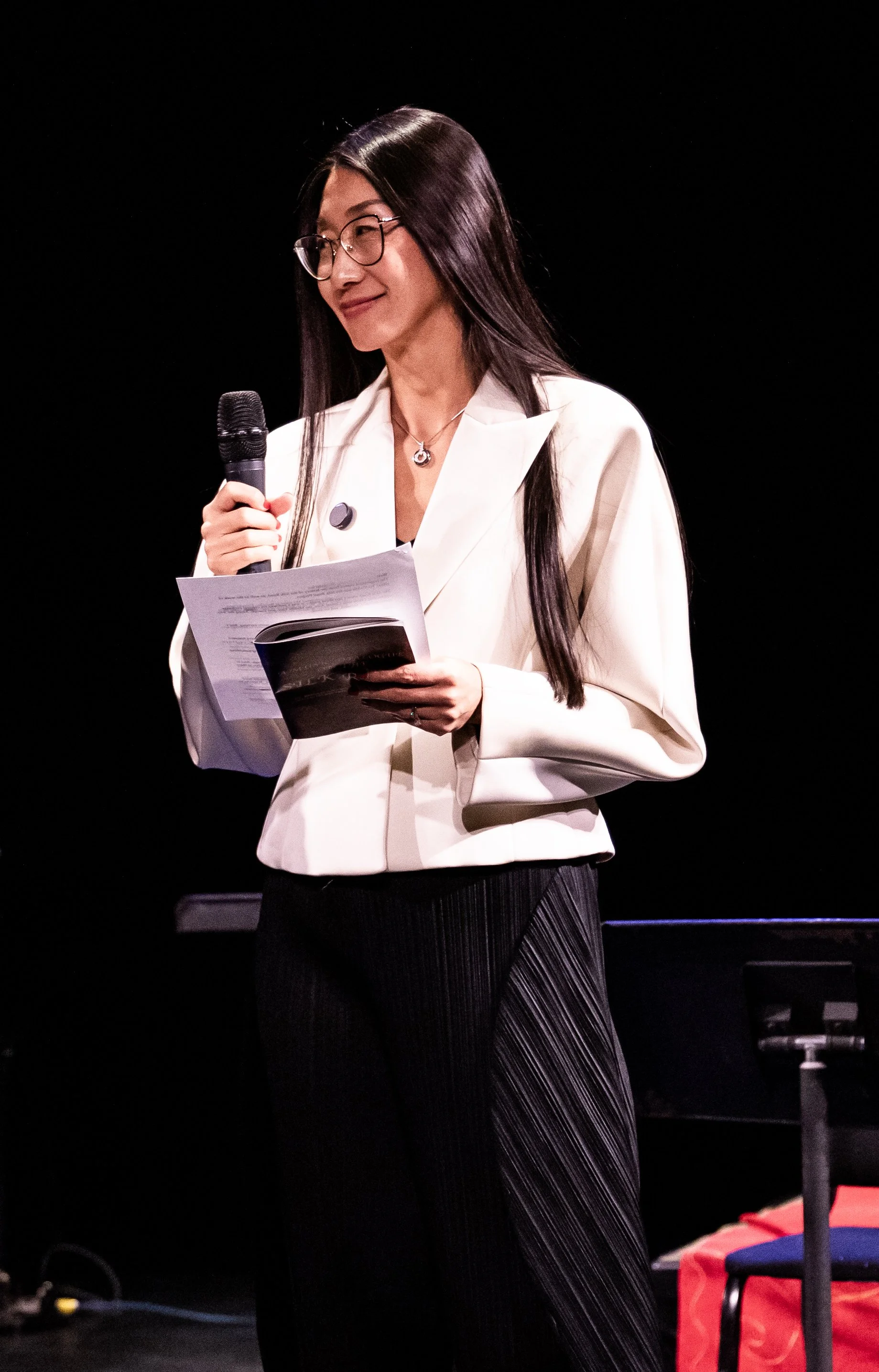
This fall, Asian Arts New York is moving between a community wellness workshop series, regular performances at Autumn Glow Festival in Rotterdam, an artist-apprentice showcase at Hudson Valley Community College, and a senior cultural celebration and preparations for its upcoming gala.
The workshops move through several traditions and art forms. There are Tibetan singing bowls, bonsai, tea ceremony, Korean dance, tai chi and other practices that invite people to slow themselves down and experience an artform from within it. Grant support allows the organization to open those programs to the public for free while still paying the artists who lead them.
Constant motion and a wide range of programs and traditions are part of Wei’s larger vision for the organization. During her years in community leadership, she watched artists pour months of practice into the few major celebrations their communities could reasonably organize each year. She began imagining a structure where those artists could keep meeting, rehearsing, experimenting and performing throughout the rest of the calendar year.
“The community artists would usually have the chance one or two times a year to present their art,” Wei says. “That’s pretty much the only chance the community artists were able to bring their work public-facing.”
That year-round structure is central to Wei’s intentions. She wants artists to have time to meet and learn from one another rather than gathering only when a festival date appears on the calendar. She wants professional artists sharing space with community artists, technical knowledge moving in both directions and younger artists growing up around traditions that feel alive enough to belong to them.
“The future of heritage art lies with the younger generation,” Wei says. “The mature artists, they need somebody to be able to teach and pass those heritage arts down.”
Some traditions demand years of training beginning when children are five or six years old. Asian Arts New York’s young heritage artist programming gives those students somewhere to be seen once that work begins reaching a performance level.
For Wei, pride is part of preservation.
Young people growing up in America bring their own language, references and instincts into these traditions, something Wei sees as an opportunity. The goal is to allow heritage art to survive its passage through another generation with enough life inside it to keep moving.
When asked how she preserves traditions without turning them into time capsules, Wei took a moment to sit with the question.
“One of the reasons that these things can be called ‘heritage art’ is because they have passed the test of time,” Wei says. “It never expired. It celebrates people, decades and years, and still has a charm that draws people in to enjoy them, to learn them, and to practice them.”
Presentation, however, requires thought.
Wei and her children practice Peking opera, an artform built from singing, movement, elaborate garments and traditions that can be difficult for an unfamiliar audience to immediately understand. Wei might present a portion of the singing, then allow movement and costume to become another point of entry.
“You need to present them in a way that can connect to your audience,” Wei says. “Sometimes it’s challenging, but once you’ve done the work, you can come out with amazing results.”
One of her favorite examples involves dragon dance.
The movement may be ancient, but the soundtrack does not have to remain fixed. Wei has paired traditional dragon dance with music that moves through Siberian singing, modern rhythm, European DJ production and Mongolian throat singing.
“When the dragon was moving, these kids were singing from the first word to the bottom verse,” Wei says, laughing. “All American kids!”
For her, that moment answered the larger question.
Culture survives when people can find their way inside it.
The same philosophy shapes Wei’s interest in bringing Eastern and Western traditions together. Her years in China, the United Kingdom and the United States have left her comfortable moving between those worlds, looking for points where histories overlap and artistic languages begin answering one another.
“I’m coming from a Chinese, Asian background, and I live in the USA, and then I took my master’s in the UK,” she continues. “I kind of like both sides — the Western and Eastern culture. I always try to find a connection in between.”
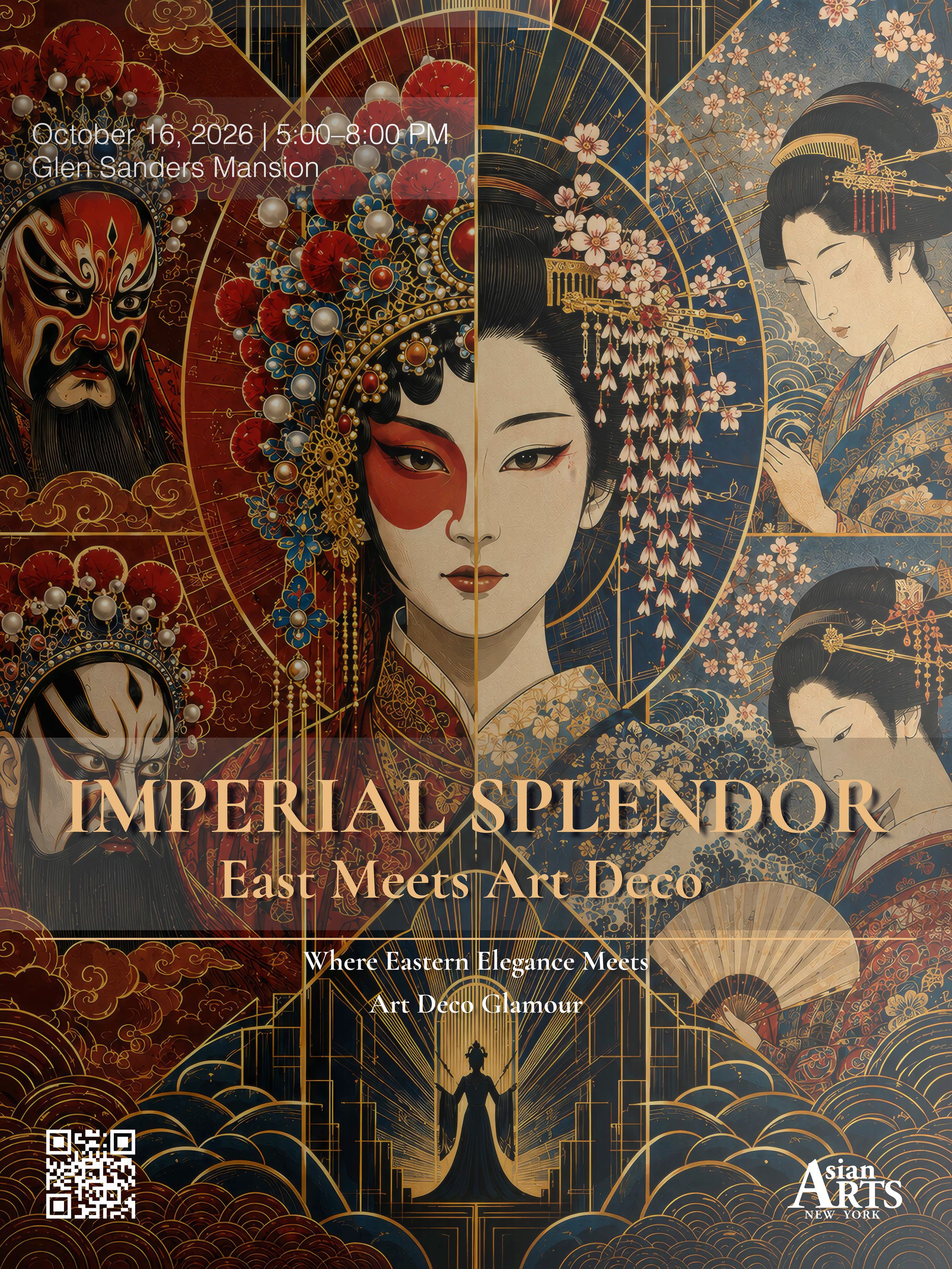
That search for connection will fill Glen Sanders Mansion at Asian Arts New York’s upcoming gala, an evening built around the meeting point between Eastern elegance and art deco glamour.
It is difficult to imagine an event more perfectly suited to Wei.
Guests will encounter art representing China, Japan, India, Southeast Asia and the Middle East. Fashion, architecture, jewelry and decorative art provide a historical bridge for an evening that will move through visual art, fashion, music, food and performance. Embroidered gowns and Japanese kimonos will sit alongside visual artworks, auction pieces and performances.
Music will form its own bridge. Wei describes one pairing in which the guqin, an ancient Chinese instrument associated with more than 2,000 years of history, will meet classical Spanish guitar.
“I like the combination,” Wei says. “I like to give people a feast, both from a visual point of view, and then hearing it and experiencing it.”
The word feast feels right.
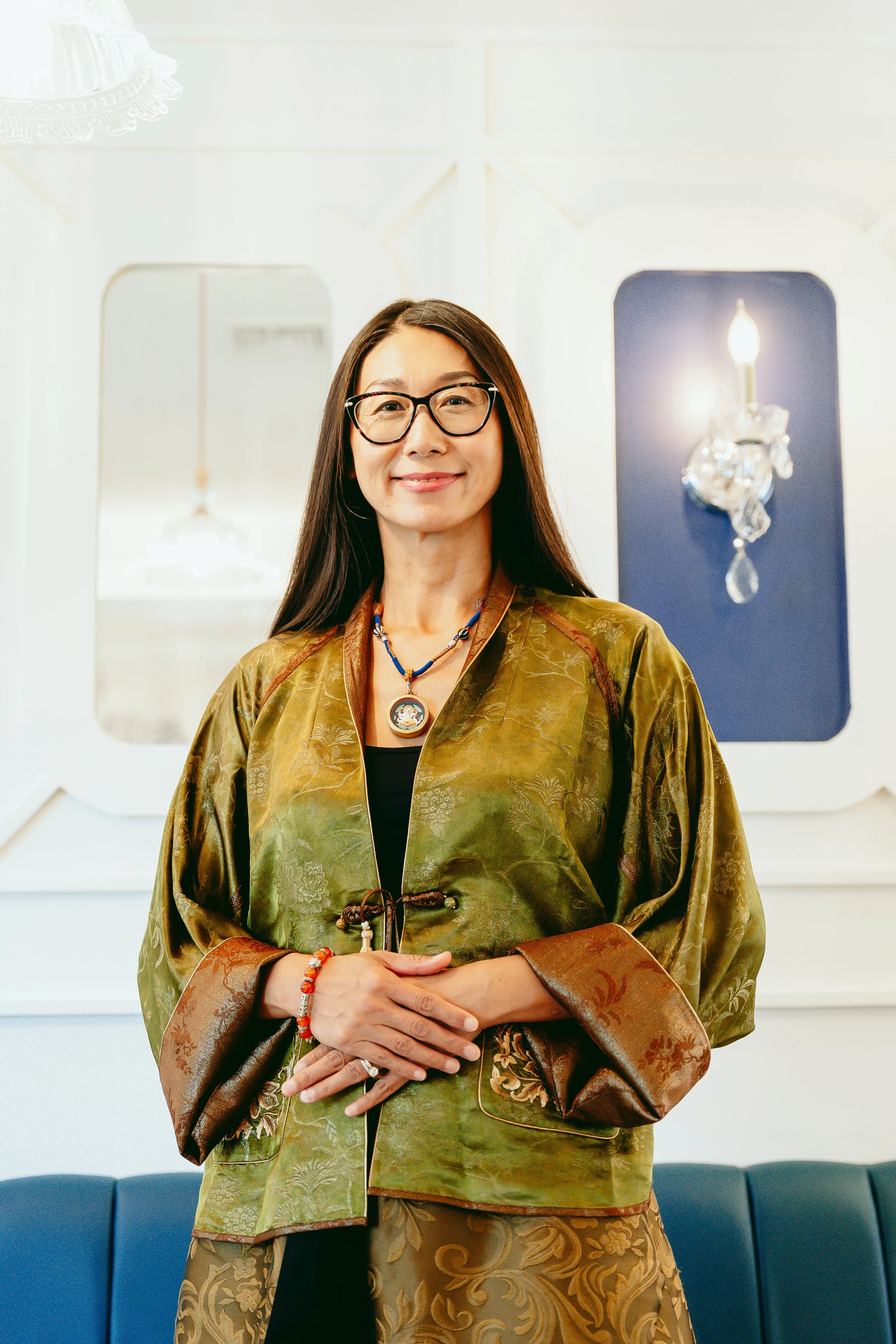
Wei builds experiences the way she once learned to understand fashion: through texture, movement, image, invitation and surprise. A room should reward curiosity, a garment should tell you something before anyone explains it, and an audience may arrive unfamiliar with an instrument, dance or tradition and still find an emotional doorway through it.
That idea carries into the advocacy surrounding her work as well.
When asked whether art and advocacy have always been connected for her, Wei told me that relationship only emerged after moving to the United States and beginning to understand how civic life worked around her.
“This is part of the American spirit that I picked up on the way,” Wei says. “Growing up in China, we do not have that opportunity to engage in such ways, but over here, I just find it is so important. This is how the American system works. This is how things get done.”
Her own advocacy frequently takes the form she knows best: showing people something worth seeing.
“If I have a chance, I love to highlight the voice through art and culture — the Asian voice throughout the culture,” she says. “This is us as Asian creatives and people; we’re here right in the Capital Region and we are presenting beautiful things.”
There is a softness to the way Wei describes this, though the infrastructure underneath it requires relentless work.
Grants have to be written, artists have to be paid, events have to be planned, partnerships have to be built. A four-day-a-week performance schedule does not organize itself, nor does an annual concert at The Egg, a month-and-a-half of Lunar New Year programming, school assemblies, workshops, exhibitions, senior events or young artist showcases.
When asked about the awards, funding and public recognition that have accompanied her work, Wei laughed at the idea that any of it might make her seem grander than she feels.
“I’m really nobody, don’t get fooled by all of those,” Wei says with a smile. “You’ll see me in daily life wearing sweatshirts picking up my kids or just sitting at the computer and working. I’m just a person who likes to do things, and when I see other people happy, whether it’s artists or the community, then I’m happy.”
By the end of our conversation, I found myself returning to the question Wei had once asked herself after coming to Albany:
What is my position?
There is something almost impossibly neat about imposing a narrative on another person’s life, especially while they are still actively living it. Lives rarely unfold with the symmetry we find when looking backward. Wei herself remembers her younger years as scattered pieces, interests and experiences collected without certainty about where they might lead.
She modeled because she wanted to try modeling, she studied fashion because it fascinated her, she moved through cities and countries, married, became a mother, learned another culture, explored meditation, volunteered, taught language, joined a community center and eventually found herself building an arts organization.
Only afterward did the pieces begin resembling a pattern.
“Early on, some people know what to do, and they already find their perfect career,” she says, pausing.
“But when I look back at all the things I’ve done, it makes sense to see where I’m at, where I am now and what I’m doing.”
Wei tells me she is grateful to use the little pieces of experience she has gathered across countries and different stages of her life, inside Asian Arts New York.
“To be able to contribute with what I’m doing now, I feel that I’m actually capable of bringing happiness and harmony to the community for our enjoyment,” she says. “That’s my biggest blessing.”
It’s so tender hearing Wei put it so simply after spending so much time talking about bigger questions, journeys, and purposes.
She speaks so thoughtfully throughout our conversation, one memory opening into another, one project reminding her of an artist, one artist leading to another idea she wants to try. Even when she looks backward, there is a forward pull to the way she thinks. It makes it easy to picture the 21-year-old in Beijing who walked into modeling simply because she was curious enough to see what might happen.
That instinct has followed her much farther than she could have known then. Years after arriving in Albany and wondering what her position here might be, Wei seems to have gradually built an answer.
“There are so many connections, and they’re all our best creations as humans,” Wei says. “I just hope people appreciate that we're not that different at all.
“There are these artforms that run down to our souls — Eastern, Western, we’re all the same,” she continues with a smile. “So that's my big picture, that we’re all just part of one really big beautiful world.”
For more information on AANY’s mission and programming, visit asianartsny.org