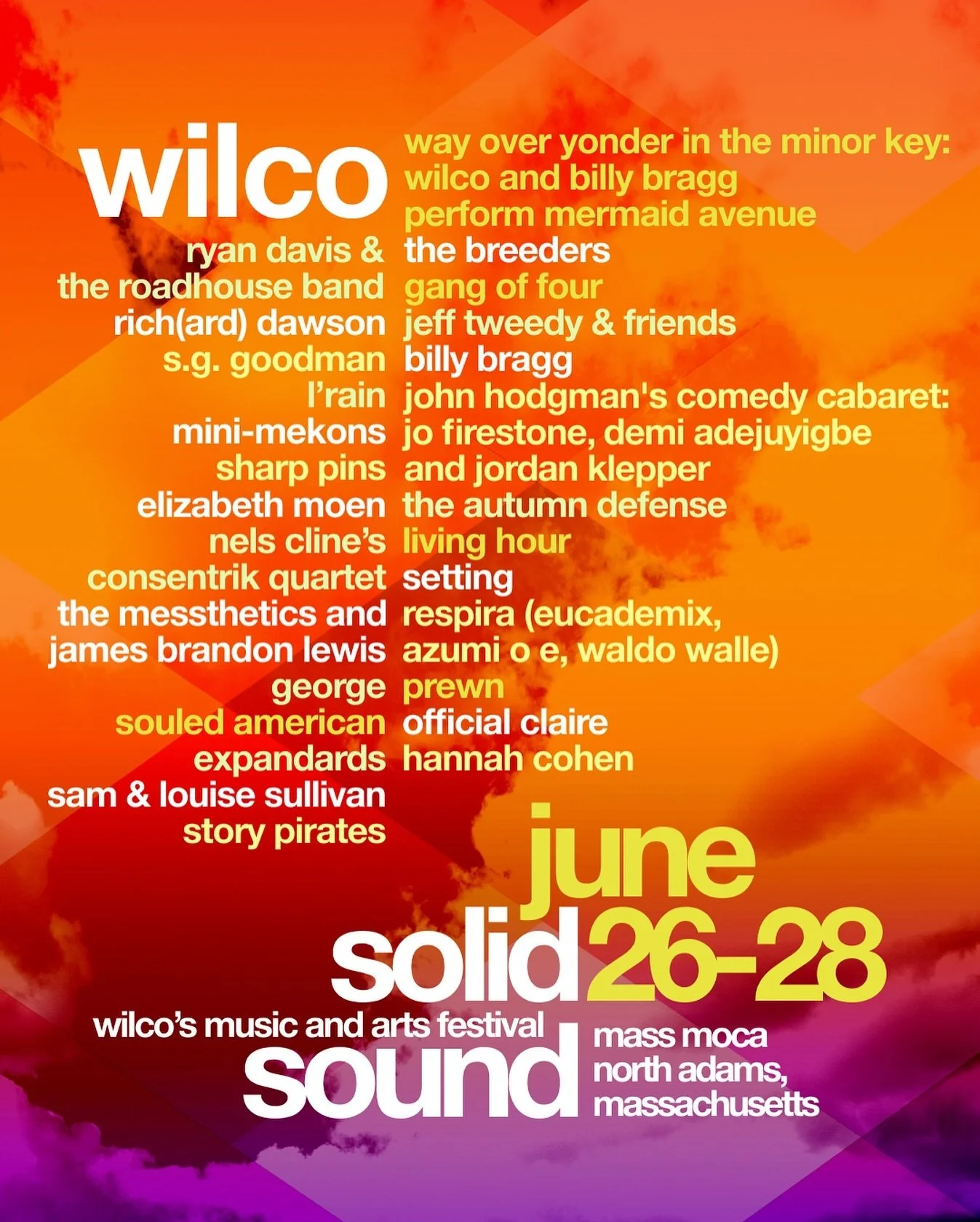
INTERVIEW: The Road to Solid Sound: Sam & Louise Sullivan
06/26-06/28 @ Mass MoCA, North Adams MA
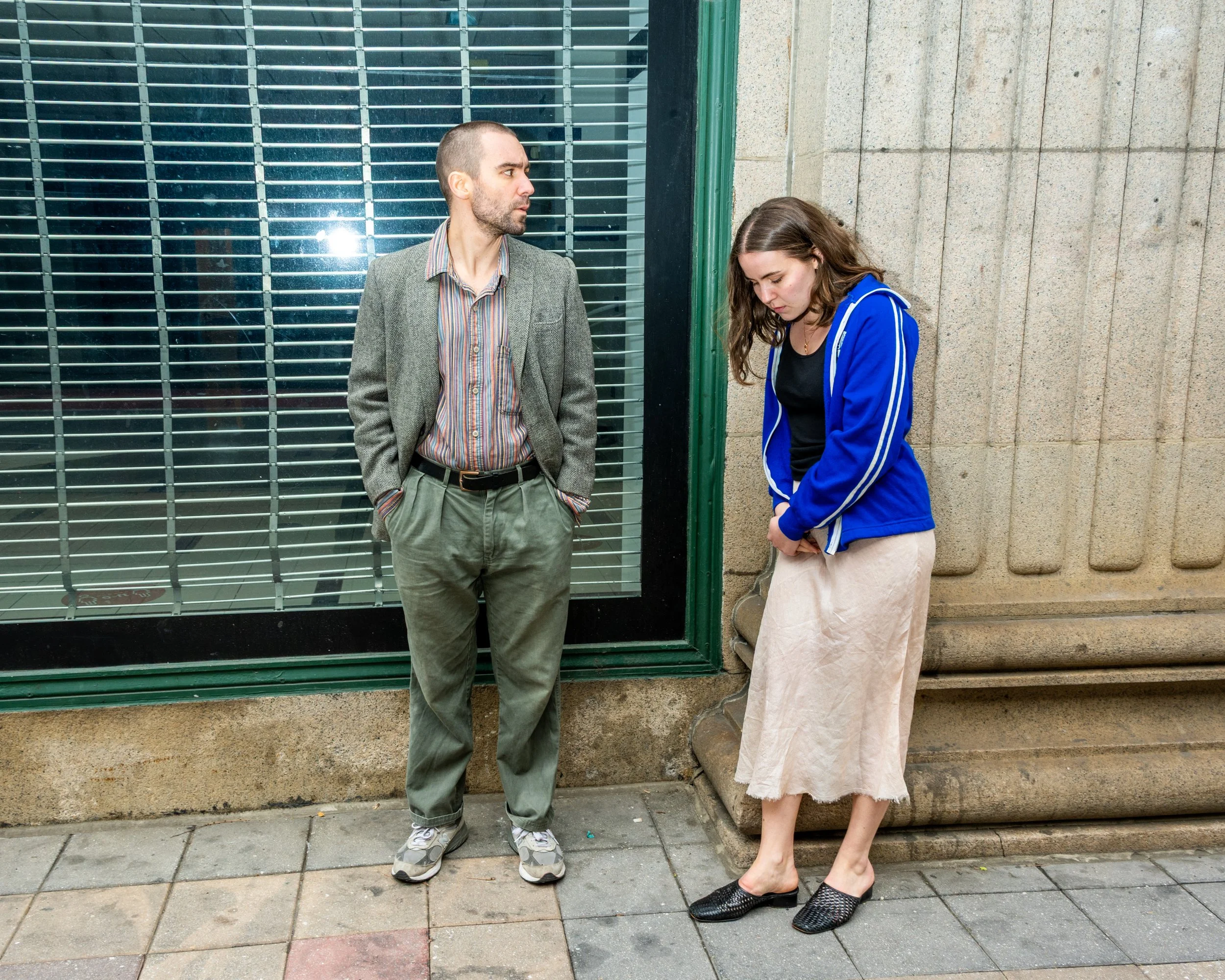
Photos by Betsey Carroll
“People feel good when they recognize something that feels deeply associated with their past and can bring them into the present in a grounded way.”
Sam Sullivan has no idea how he ended up with a spot on Solid Sound Festival. Truly.
“It's like there's been a clerical error and we've been invited to play this massive show,” he laughs. “I don't really know what's going on; I'm barely a musician. We're a tiny band, you know?”
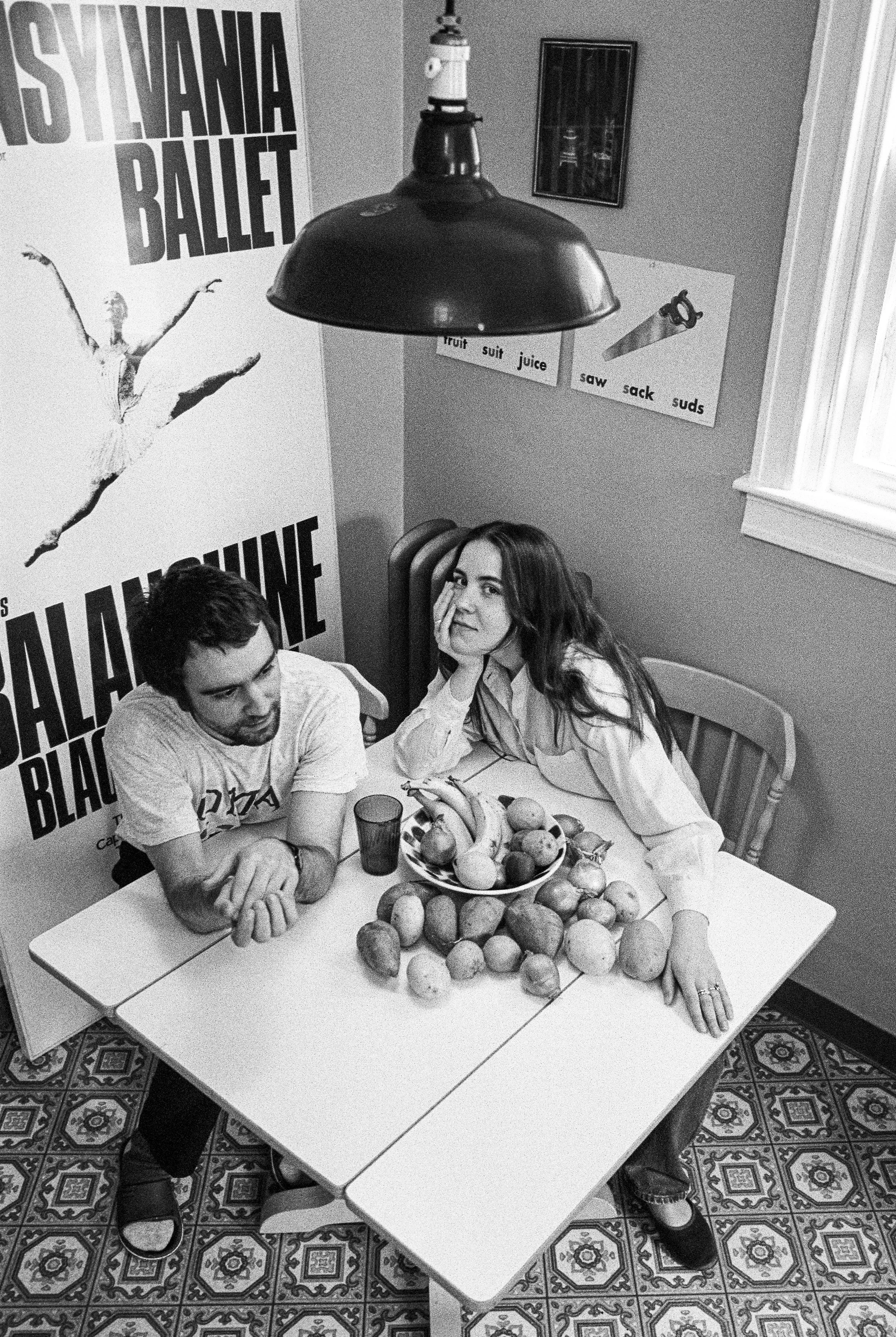
The Philadelphia-based siblings — Sam and his sister, Louise — may not be household names, but setting that aside, it’s not difficult to see why their inclusion on this stacked lineup makes sense. One listen to the family band’s latest record, Sweet Enough, and it’s as if it’s from another time and place. Yet, at the same time, it feels distinctly modern.
This could be attributed to the variety of influences the two cite for this project, but the more likely explanation could be found in their approach to writing and recording — which isn’t so much an approach as a big game of fuck-around-and-find-out. It’s actually heartwarming to hear Sam describe it.
“For better or worse, there's a real haphazardness to our process. We kind of just set up mics in random places, sit there and sing the track and then overdub on top of it. There's no conscious decision making.”
This loose approach is present even before they enter the recording process, as the duo typically doesn’t demo material ahead of time. It’s a surprising approach from a musician’s point of view, but one that’s rooted in authenticity for the benefit of the project.
“It's a million times fresher [that way],” Sam admits. “It's always fresher and wonkier in a way that speaks to the songs more.”
The Sullivans grew up playing traditional Irish music in a house with arts-oriented parents. Their father is a writer and their mother a ceramicist, instilling a love of the creative process from an early age. For a lot of young people, there is a desire to veer in a different direction than their parents, forming an entirely unique set of interests and ideals. It was quite the opposite for these two.
“Our folks took us to see a lot of things and made us read a lot of books and stuff like that,” Sam recalls. “[They showed us] ‘70s revival folk rock things like Richard and Linda Thompson and the Roaches — groups like that. I still look at all the stuff that my folks showed me and I like to think about songs in that way when trying to make a composition.”
Sam and Louise began their project remotely during the pandemic. Sam would write songs in his head, transpose them onto his guitar and have Louise sing over them.
“Louise is a really good singer. I'm kind of a failed poet; I failed at a lot of things. But I was just like, ‘I'll just write some songs and have you sing them.’ And it's been fun.
“We always kind of fail. I'm always making a song, thinking to myself, ‘This is going to sound like Pink, or the freaking Counting Crows!’ And then it's just not, but that's fine. It's where we're supposed to be, I think.”
Currently, the siblings are both school teachers in the Philadelphia area, making music as often as they can. Their performance on June 28 for Solid Sound will be their biggest opportunity to date, and one they are looking forward to taking full advantage of.
“I've barely been to a rock festival. So I'm just excited for that experience. I have no idea what to expect. I'm excited to see all the bands — The Breeders, Billy Bragg, Wilco. I'm bringing my grandma,” he laughs.
Their presence on the festival, however surreal it is for Sam and Louise, is a testament to Solid Sound’s commitment to highlighting smaller artists in front of a larger audience and in a professional environment. It also speaks to the continued relevance of folk and folk-adjacent music on stages like these.
While genre lines are increasingly blurred in modern music — for the better, I would argue — there are still old-fashioned stigmas associated with the umbrella genres. Pop. Metal. Country. Emo. And, of course, folk. Hear any of these words out of context, and it’s enough to make the stuffiest of us crinkle their nose and immediately judge the book by its cover. It’s why the hardest question to field as a musician is, “What kind of music do you play?”
For folk in particular, it can be mistakenly thought of as a historical-only category of music. Fingerpicked guitars on dusty front porches. Peace and love in a field with thousands of like-minded individuals. But to reduce it as such is missing the mark, and it’s something Sam speaks to with the aplomb that only a great school teacher could muster.
“One thing I really don't like is when I feel like I'm in a nostalgic moment. When I think about the folk musicians that I admire, it's that they’re connected to tradition, obviously. But a lot of what gets sort of packaged to us as folk music is actually party music — it's music that's for now, you know? So, when I think about making folk music, I'm always trying to think about ways to make it feel natural, not like some sort of reenactment.
“Obviously, it’s a bit of a paradox, because a good way to get to feeling like something is alive and fresh is by connecting it to tradition. People feel good when they recognize something that feels deeply associated with their past and can bring them into the present in a grounded way. So yeah I'm always trying to not be nostalgic, or be scared of, like, synthesizers. It’s a democratic kind of music. Everyone is invited to the party. And what I don't like is when it feels it’s dead, or like we're in a museum, or you have to treat it with respect. You don't.”
For more information on the festival, visit www.solidsoundfestival.com
For more of our pre-festival interviews, visit https://www.themetroland.com/blog-main/tag/solid+sound+festival