INTERVIEW: Four Siblings and the Transformation of a Rotterdam Junction Tunnel
**This article originally appeared in our September 2026 issue**
Photos by Tom Miller
"They kind of feel like this mural’s for them, versus us just slapping something on a wall… It was always, always for the people.”
Before Jade Warrick, Quill Harrison, Zoe Harrison and Shalom Harrison began painting 108 feet of concrete in Rotterdam Junction, they took the time to ask the people who passed through it what they wanted to see.
They came to the tunnel along the Mohawk-Hudson Bike-Hike Trail to speak with cyclists, walkers, and people in the surrounding community, and by the time their proposal was selected from more than 100 applicants, some of the mural already belonged to the people they had met.
“We really wanted it to be community centered, and for them to have their voices centered,” Warrick said. “A lot of the visuals you see are based on community feedback.”
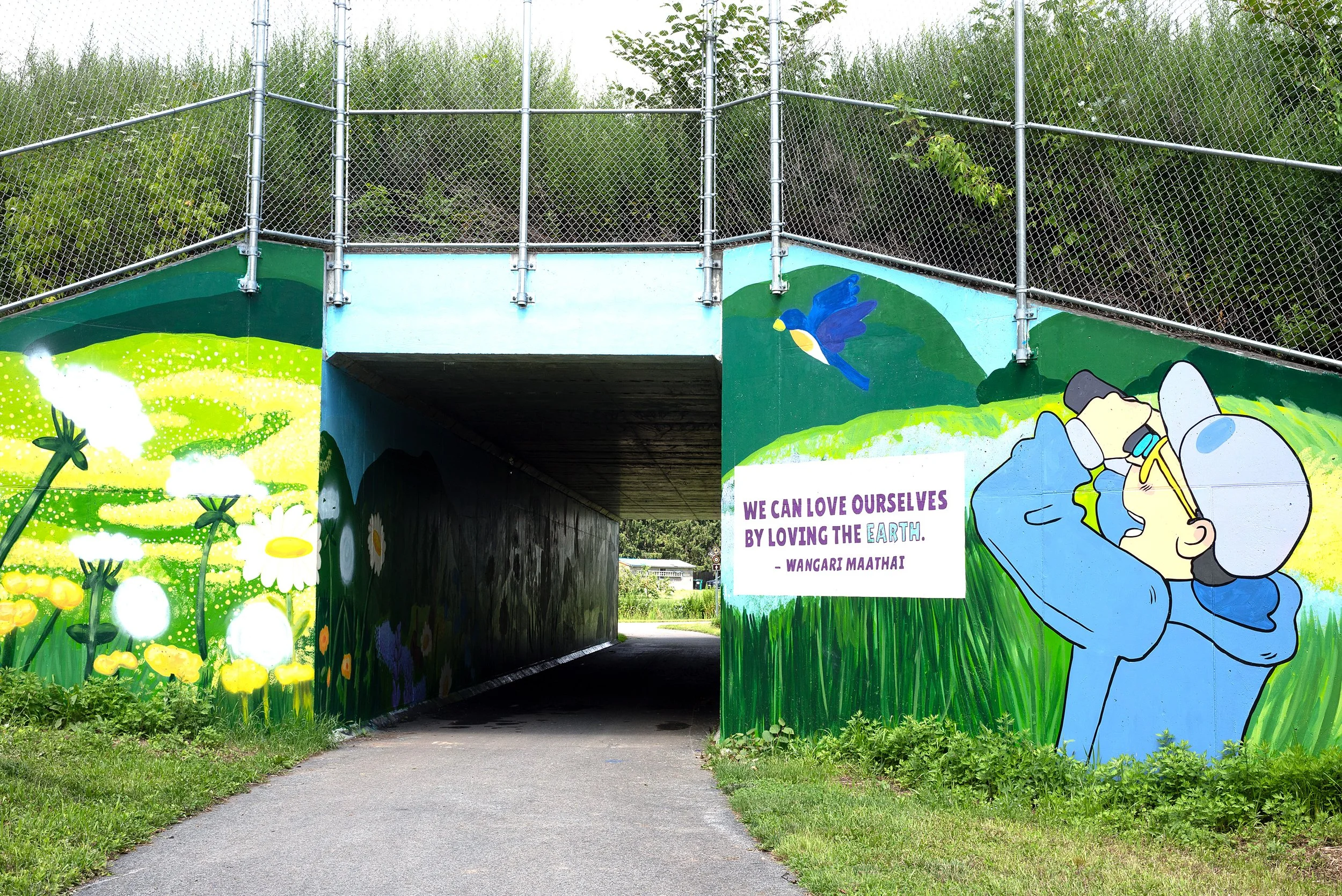
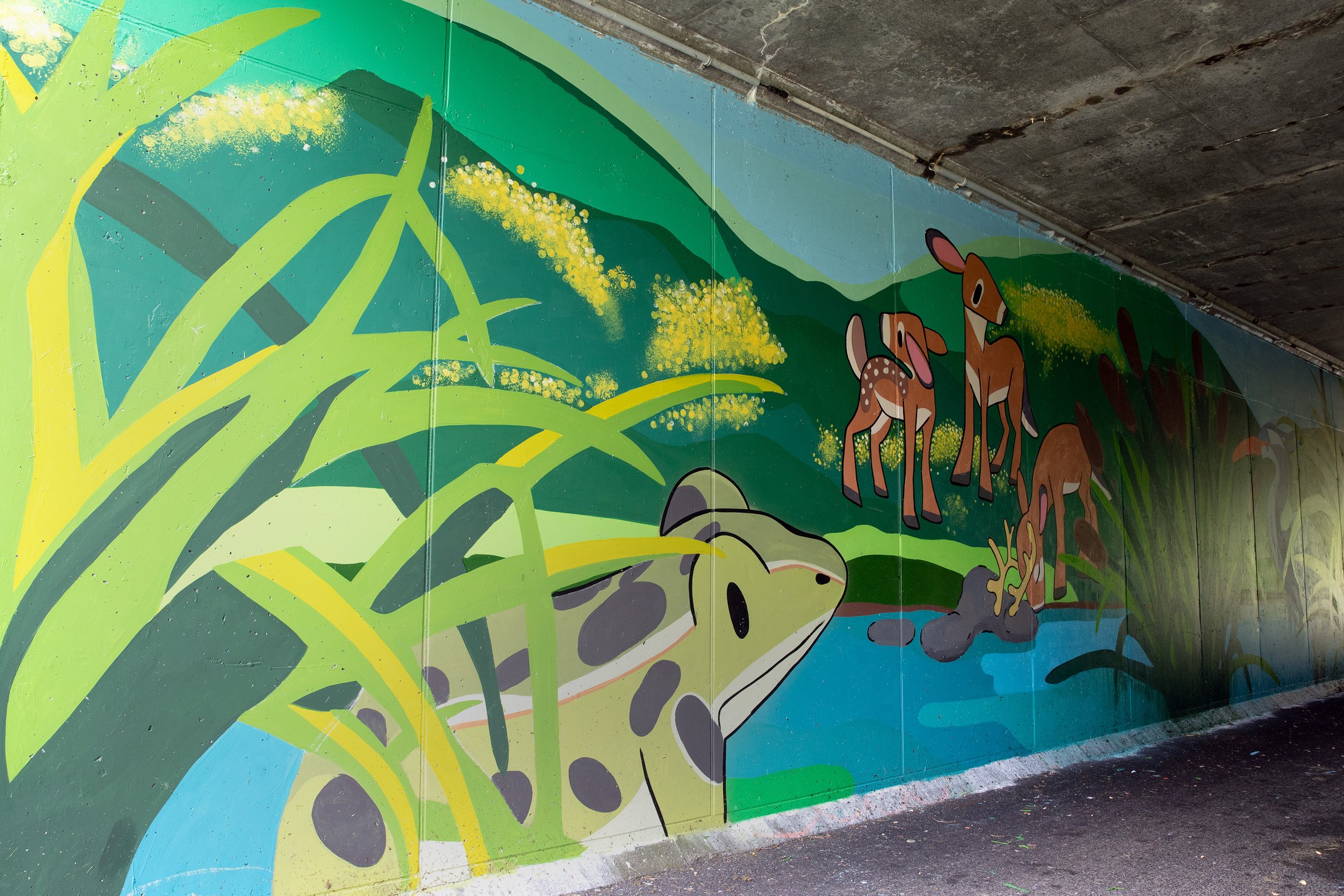
A woman who regularly walks her German shepherds on the trail inspired the dogs painted near the entrance, birdwatchers helped shape the wildlife, cyclists, roller skaters and the people who simply move through the trail all became part of the design, too.
“Talent can do a lot, but heart is a whole other thing,” Warrick said. “I think reaching out to people and bringing them in helps a lot. They kind of feel like this mural’s for them, versus us just slapping something on a wall… It was always, always for the people.”
The conversations with the local community continued after the siblings began painting July 1, with the tunnel remaining open while they worked. The same people they had been thinking about during the design process were suddenly running, riding, and walking through the middle of it, and for Zoe, those interactions became one of her favorite parts of the project.
“I’m such a social person, so I love it when people come through and they stop and talk for a bit,” she said. “It’s fun because people tell us their favorite characters or parts of it. ‘Oh, I really like all the deer,’ or ‘I really like the little foxes and the turtles!’”
And while it’s refreshing to see local wildlife reflected in the art, there’s another element that comes from someone seeing themselves depicted as well. Especially in a space that the community utilizes so often.
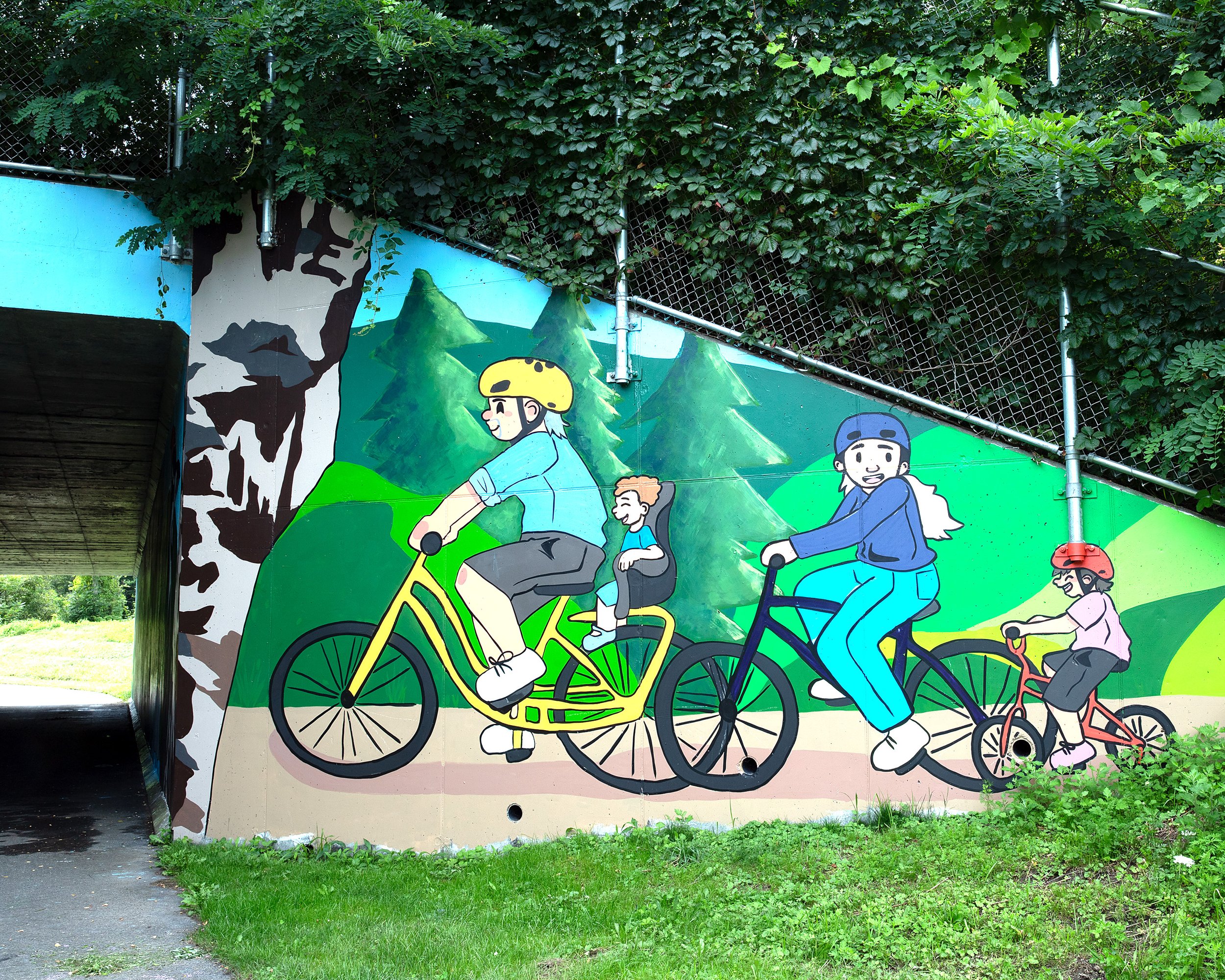
“It’s so fun to see bike riders come through and be like, ‘Hey, look, it’s us!’” Zoe said, referring to the painted cyclists near the entrance. “We had roller skaters come through also, and I was just like, ‘Look, it’s you guys!’ That community of people seeing themselves within public art is really cool and amazing.”
And, as the project continued to take shape, the siblings just kept listening. When one trail user pointed out that many of the cyclists who regularly use the path are older than the people originally depicted near the entrance, they went back and changed the figures, because that ability to see yourself in the mural mattered to them beyond age or activity.
Many of the siblings’ own artworks depict Black people, and they wanted the mural to reflect the fact that people of color are part of this community, too. For Zoe, that instinct comes from growing up searching for herself in the art she loved.
“Being a kid growing up and not having a lot of representation of myself and my own meaning and stuff, that’s why I started drawing,” she said. “I didn’t see a lot of people that look like me in fantasy, so I was like, ‘I’ll just do it myself.’”
But she said there is a difference between making that representation for yourself and having the chance to simply encounter it.
“I think it’s not always about doing it yourself,” Zoe said. “You kind of do want to just consume stuff and see yourself. You shouldn’t always have to do it yourself.”
Quill put that idea more simply; “We’re here, too.”
Some of the figures were intentionally designed to leave room for interpretation. Rather than giving each painted person an exact age or gender, the siblings focused more on what they were doing; biking, skating, birdwatching or simply existing in the same landscape as the people walking past them.
“We want people to be able to project themselves onto these characters,” Zoe said.
Getting those characters, animals, and plants onto the wall took four very different artists working together. Warrick, the oldest sibling and project manager, brought more experience with large-scale murals. Zoe gravitated toward the characters. Quill leaned into line work and fine detail, while Shalom’s illustrated style helped shape much of the plant life throughout the tunnel.
“I like learning and stealing from my siblings,” Zoe said, laughing. “They’re doing something I would never think to do, and I’m like, ‘Oh, that’s mine now.’”
There was plenty of improvisation, too. A broom became a tool for painting blades of grass, a toilet brush created texture, and techniques that made sense in a drawing had to be reworked once they were stretched across concrete.
And, as one might expect from four siblings spending weeks together on one project, there was bickering.
“Oh, there is definitely bickering,” Zoe said, laughing. “I’m just very passionate about how I feel, and I know that I’m right.”
We all had a good laugh about that, and Quill, who described themself as the quintessential example of a middle child, took a slightly more diplomatic view: “I think we make it work.”
Another factor that tested the siblings were the elements; working through one of our more unforgiving summers in recent years, with heat, humidity, rain, and wildfire smoke becoming permanent fixtures throughout the month of July.
Some days, moisture left portions of the tunnel too wet to paint. Other days the heat or smoke were simply exhausting. But somewhere between the early intimidation of the project’s scale and the final details, Zoe began to look at large-scale work differently.
“I think it’s definitely shown me what I’m capable of,” she said. “Before, people would do local calls like, ‘Paint this giant wall,’ and I’d be like, ‘I could never do that. That’s too intimidating.’ Now I see stuff like that and I’m like, ‘Oh, I can knock that out.’”
A lot of artists are used to creating their work privately and showing it after it is finished, once it’s exactly the way they intend for it to be presented. Here, regular trail users saw the awkward stages, the unfinished sections and the gradual transformation.
“There are some stages where I’m just like, ‘Don’t look!’” she said, laughing. “But I like the bragging part of it. It looked like this before, and now it looks like this.”
Some people returned often enough to follow the progress from week to week. A teenager began stopping by just to hang around while they painted. Others told the siblings the tunnel felt brighter and safer than it had before.
By late July, the thing that had intimidated them at the beginning of the month was nearly finished. Soon the siblings would stop showing up with brushes and ladders, while everyone else would keep coming through.
“My art’s gonna be here for a really long-ass time,” Zoe said. “It’s permanent, and our project is now part of some people’s routine. They can enjoy the art while they’re just out on their regular walk.”
And for the people who were there while it was still becoming something, she hopes they remember a little more. “I want them to be able to brag a bit. I want them to be able to say ‘I was part of the process.’”