
INTERVIEW: The Wonderful World of Natalie Merchant
**This article originally appeared in our September 2026 issue**
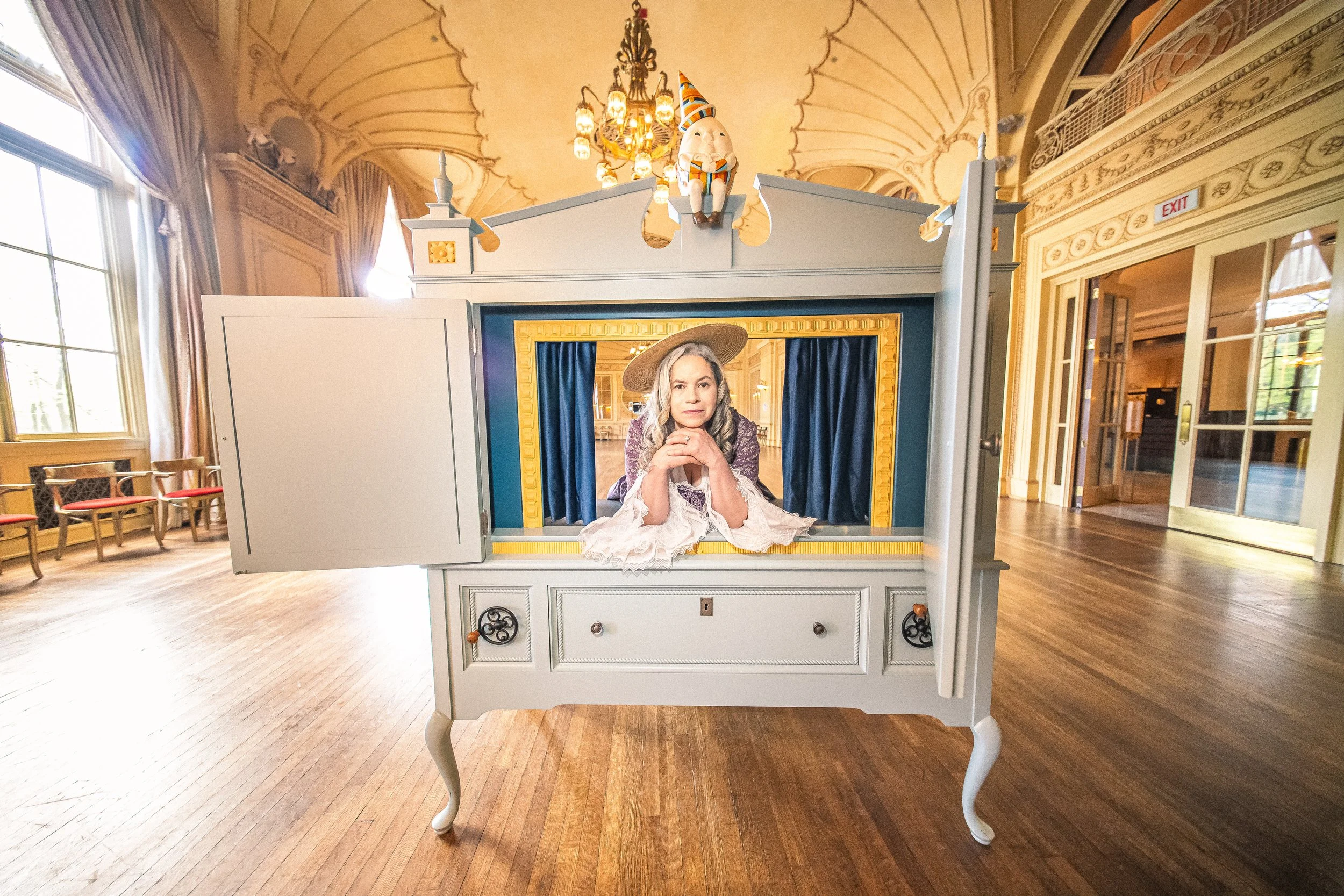
Photos by Joe Mazza
"Artists have that ability; we know how to draw people together with a common purpose, and that common purpose can just be love and joy.”
Natalie Merchant has a cold. She apologizes over the phone before the interview begins, even making a self-deprecating comment about how she sounds, as if congestion could ever alter the inherently melodic timbre of her speaking voice and her natural ability to lapse into storytelling. On her current promotional cycle, Merchant is taking the time to discuss her multimedia project Cabinet of Wonder with me and the journey that led her to this meaningful moment in her career.
“This is about the souls of children,” says Merchant. “There’s entertainment and then there’s enrichment. Enrichment is about cultivating a sense of awe and a respect for beauty, an aesthetic sense and sensibility. That’s what we’re trying to do with Cabinet of Wonder.”
Throughout her life, Merchant has always been on the move, juggling multiple projects — her latest, Cabinet of Wonder, is the culmination of her four decades of work in children's arts. She explains that it is so much more than an album of songs — the free videos, discussion guides, and curriculum are all meticulously designed and largely funded by Merchant herself.
Her ‘if it’s not there, create it yourself’ attitude reflects the rebellious quality within Merchant. From how she condemned the media’s mistreatment of actor River Phoenix after his passing through her song “River” to her announcement on MTV News in 1993 about leaving 10,000 Maniacs, explaining that she wanted the freedom to make decisions on her own, she defies definition.
Merchant moves seamlessly where she wants to go — a singer-songwriter at her piano, a charismatic band leader, and a powerful community advocate. Merchant is simply transcendent.
Cabinet of Wonder echoes this transient quality. Created in collaboration with the Chicago Symphony Orchestra and Chicago Children’s Theatre, soft folk, Celtic, and jazz music provide teachers and parents with numerous options to match Merchant’s music to their children’s needs.
“Children at this age are learning self-regulation,” says Merchant, citing multiple examples of how she’s seen Cabinet of Wonder work in real-time.
One instance was when she visited a classroom that was struggling as a group to emotionally regulate. Once the music began, she saw a hushed sense of calm fall over them. The teacher was amazed. So was a work-from-home parent, she retells in a second anecdote, who told her that they put on the “Little Miss Muffet” video for their child to preoccupy them during a meeting. Instead of merely being entertained, the child set aside her device, memorized the song, and began making her own “Little Miss Muffet” dress.
This is the exact type of result that Cabinet of Wonder is looking to achieve, from learning rhyming to the positive behavior modeling displayed by their peers in the videos. “We wanted children to see other children and their peers dancing, circle dancing, partner dancing, and playing hand-clap games,” Merchant notes about the intentionality behind the videos.
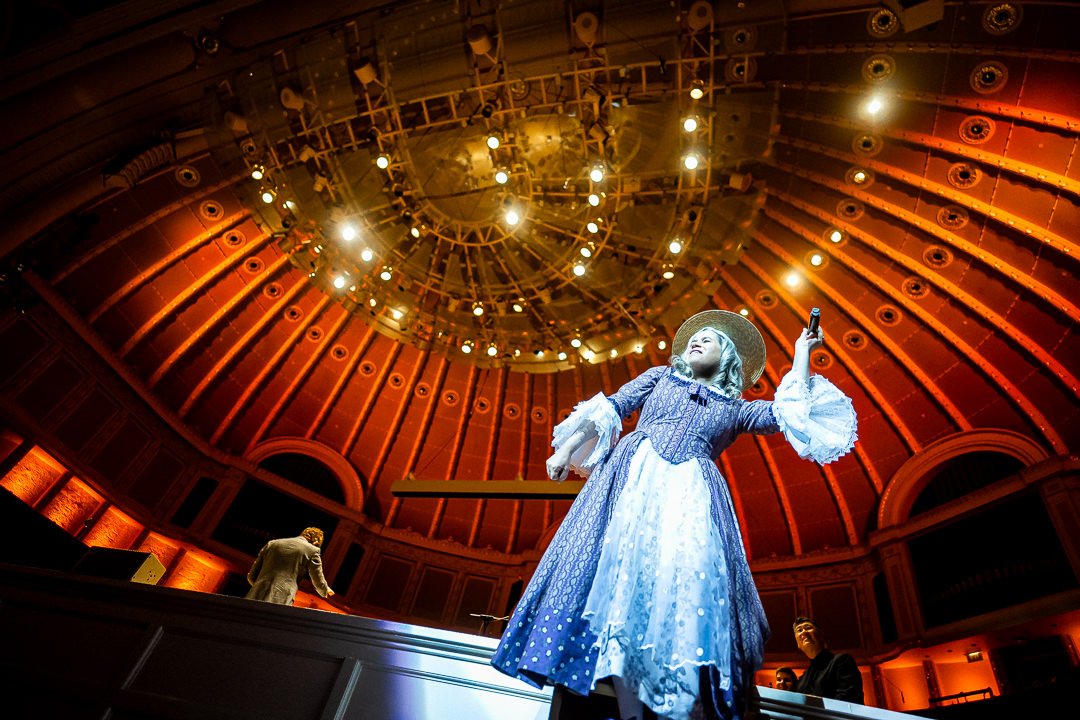
The Cabinet of Wonder website is designed for parents and teachers to navigate but is also a place for children to learn. “On the website, each rhyme has a teaching video, too, where the children learn the rhyme or display that they demonstrate that they know the rhyme,” adds Merchant.
All of the lessons are taught by Miss Natalie — a nebulous figure, who is perhaps a librarian or a teacher or a friendly neighbor. Merchant’s vagueness sparks imagination as she creates a warm environment for learning in Miss Natalie’s cozy little room, with the mystifying cabinet and a shelf full of objects that are symbolic of the different rhymes.
“I use music to self-regulate — it helps you to accept the joyful moments in your life but also helps you console yourself when you need it and calms you down. I don’t know if everybody — especially young children, if they’re not exposed to it by adults — knows how powerful music is and how many different ways it can be useful in their lives. That’s what I was very conscious of when I was writing the music.”
Merchant makes it clear that, for her, this is not ‘a career move’ but a part of her lifestyle, so interwoven into her past and present that it’s difficult for her to think of one moment where it all began. With just a few words, she takes us for a walk to her hometown of Jamestown, New York where she grew up in a working-class family.
The image is clear: many residents living paycheck to paycheck through the highs and lows of small-town Americana. Jamestown has been referred to as a place that only the people who live there think about, yet it is as vital a part of New York State as any other city. Serving as the hometown of Merchant and Lucille Ball and called the ‘furniture capital of the world,’ the people of post-industrial Jamestown have grit — Merchant describes herself, in a word, as ‘scrappy.’
“By the time that I was coming of age in the late ‘70s, early ‘80s, there was a severe recession going on in the country, and a rusting of the belt was beginning to happen,” she recalls. “It was an industrial town when I was growing up, and then it became post-industrial. That made a big impression on me in my formative years, this transition that was happening and the decay that I was seeing around me and the abandonment because people couldn’t make a living there anymore and they were leaving.”
Initially, Merchant aspired to become a teacher. Her first taste of combining art with education was at just 15, when she volunteered for the entire summer at a therapeutic arts center for children with developmental and physical disabilities.
Merchant attended college at 16, joining a band called Still Life. She began touring at 18 and although she did not finish her degree, something different was brewing for her. Still Life was about to be known worldwide as 10,000 Maniacs, and Merchant was well on her way to meteoric success.
As poetic and socially conscious storytellers, 10,000 Maniacs’ music was influenced by Merchant’s desire to connect with people. The countless audience members who have listened to “Trouble Me”, “Wonder”, or “Like the Weather”, may not have been familiar with all her community work, but they are the direct beneficiaries of her remedial touch.
“Someone came to one of my shows, and they had a shirt that said, ‘I don’t need therapy, I just need to listen to Natalie Merchant,’” she laughs. “But people tell me that there’s something very healing about many of my songs. I suppose that I infused my work with that approach and motivation to use music as a healing force.”
Merchant dabbles in all the artistic mediums of music, film, and photography to expand her advocacy surrounding environmentalism, domestic violence, and children’s needs. “There’s something therapeutic on a community level too, to bring people together around issues and try to find creative solutions, drawing attention to the people who are doing the really good work,” she notes.
Between 10,000 Maniacs’ Blind Man’s Zoo and Our Time in Eden, Merchant moved to New York City. Amid the rigorous demands of being a major alternative rock star, she was simultaneously doing a different kind of work, spending a full year volunteering at a daycare center in a family shelter.
“Once again, I just saw the power of music and other art forms when working with children, especially children who are experiencing severe trauma,” she reflects. “Music brought consolation and a sense of calm to these children, to be sung to, hold hands, and dance in a circle. It was really beautiful to see the way that we built a little community with children there.”
A recent scientific paper by the University of Chicago about Cabinet of Wonder validated the developmental value of what Merchant has dedicated her life to by teaching nursery rhymes and music to children.
Repeated like beloved folk songs, Mother Goose rhymes are the backbone of Cabinet of Wonder and belong to the oral traditions that Merchant’s mother taught her and she passed on to her daughter. The poems and their playful language prepare young listeners to become strong readers. The vocabulary, cadence, and rhythms all reinforce neural pathways.
“There’s been so much research about early childhood brain development and socialization, and there’s no disputing how crucial these years are from three to five,” Merchant emphasizes. “If their developmental steps are not achieved, it is really hard to go back and repair that damage.”
Dr. Dana Suskind, a pediatric cochlear implant surgeon, told Merchant that she “did three years of field work.” Merchant hadn’t initially considered what she was doing to be scientific. It was simply the work that needed to be done: sitting for hours on concrete floors, surrounded by children, talking and engaging with them, and learning what they like and dislike.
“It’s not something that was created by an academic in a remote environment away from the classroom,” she says, regarding how these experiences shaped Cabinet of Wonder. “The children were co-creators of the whole project.”
If something worked to engage them, she’d write it down. If it didn’t work, she’d throw it away. The wonderful part of working with kids, Merchant points out, is that they are not chained by societal politeness — if they are joyful, they show it; if they are bored, they’ll walk away; if they’re sad, they’ll cry. Many of the discussion points in the Cabinet of Wonder curriculum are inspired by real conversations that she had.
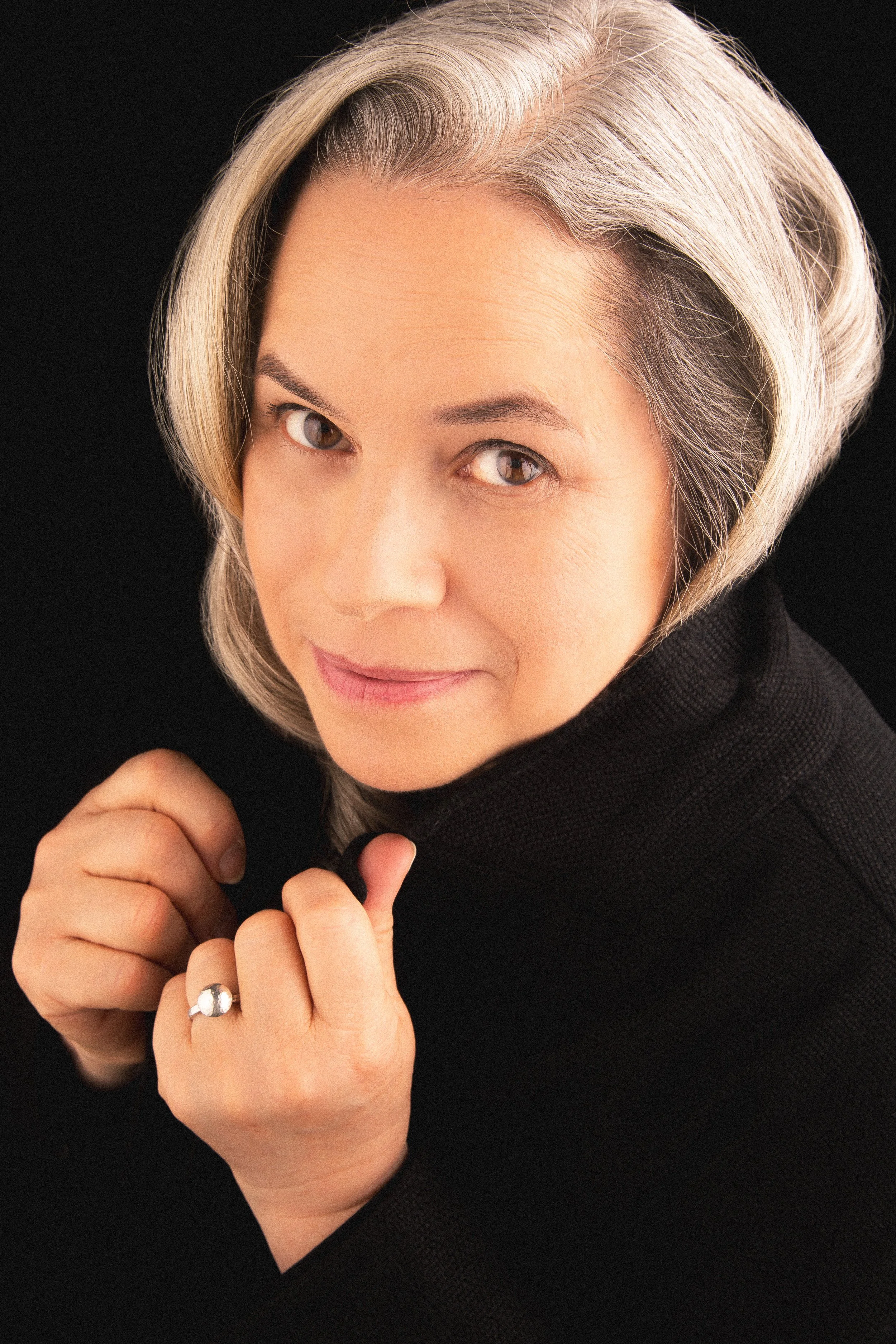
These conversations spilled out of classrooms, libraries, and, notably, the Head Start program that serves Troy, where she dug down roots with the community in a special way.
The wheels were in motion when Merchant departed from 10,000 Maniacs to forge her own successful solo path. Other changes were occurring in her life, and after having her daughter, she became devoted to immersing her in the arts by making costumes for school plays, teaching music, and inventing handicrafts. Even then, Merchant was still learning from children.
“All those years of being around her circle of friends in her school also gave me more background on how to teach children and how to captivate them because when children are captivated, that's when they learn,” she explains.
When her daughter began attending Emma Willard School, Merchant moved to Troy, New York. “When I arrived in Troy, I wanted to find some community. I felt very isolated,” she confesses. “I moved to the town not knowing anybody. By the time I left, I probably knew 600 people.”
Merchant’s efforts began small, believing that she would just volunteer again for a couple of hours a week for the local Head Start organization. Quickly, it escalated into three full days a week for three years, and she became their national Artist in Residence.
For over 60 years, Head Start has been supporting early childhood development for free; they care for children as young as six weeks, assisting families that are struggling financially, medically, and educationally to find their path forward by providing care for the whole family.
Cabinet of Wonder’s earliest roots were planted with the intention to create a program for the Troy children. “The more time that I spent with the kids, the more I thought of the magic that I’m seeing here, I would love to be able to find a way to project this in classrooms all around the country,” she adds.
Cabinet of Wonder and the importance of children’s education are coming at a critical time. “In Project 2025, there’s a paragraph about Head Start, and it’s devastating. They really want to eliminate the program,” explains Merchant with concern.
As staffing is cut nationwide due to deregulation and illegally disrupted funding, Merchant worries about how this will affect the children’s care under Head Start’s robust standards. She describes how only one caregiver to eight children is “setting them up to fail.”
To craft Cabinet of Wonder, Merchant applied all of the high practices that she soaked in from Head Start and her other volunteering entities. In the face of uncertainty across the nation, she is holding steady in her goal: to use this material to teach, inspire, and enrich the next generation.
“I never underestimate the impact of just one person who cares and takes the time,” she observes. “Head Start is caring for really young children who need to be held, who need to be spoken to, and that doesn’t cost any money. You don't have to be a big foundation. You don't have to be a wealthy patron. You just have to be someone who cares and takes the time. If everybody in Albany had the resources to volunteer, that would be amazing.”
As the interview comes to a close, Merchant reflects on what led to Cabinet of Wonder. An integral source of inspiration was derived from her double album Leave Your Sleep, based on classic children’s poetry, though she also found a spark through a music project in Italy, where she saw firsthand how children’s joy looks the same everywhere. Every experience has only further ignited the fire within her to support children’s education.
Merchant tells a story that illustrates why working with children brings her such satisfaction: a local theater, a transfixed audience, women in the Troy community gathering in her house to make over a hundred costumes, and the looks of delight on every volunteer’s face.
“A lot of my friends came to see Happy Birthday, Mother Goose! at the end of the year, and they would weep because it’s just such a beautiful display of innocence and beauty, and the children felt seen for who they were and what they were capable of,” she recalls.
The show, Happy Birthday, Mother Goose!, created for Troy’s Head Start, was recorded and shown to the Chicago Children’s Theatre and Chicago Symphony Orchestra. The conversation in Chicago, she relates, single-handedly facilitated the creation process of Cabinet of Wonder.
Merchant, determined to create the best content possible for children, persuasively told the staff how the production was staged in Troy and it deserved to be taken to another level. What would it look like if they recorded the songs, made videos, and somehow found a way to put these on the internet for free to give to children all over the world?
All she could remember was the feeling in that theater during the show, the motivation to keep doing more, not only for these local children in her Troy community but for all children, everywhere.
“Everyone was so full of joy and love for the children,” she reminisces. “It’s good medicine for your community. Artists have that ability; we know how to draw people together with a common purpose, and that common purpose can just be love and joy. There’s a lot of anger and desperation going on in the world right now, and the best way to counter that is with love and joy.”
Merchant pauses, ever thoughtful, her words hanging sweetly in the air. “That’s a nice way to end, isn’t it?”
For more information on Head Start, visit https://www.ceoempowers.org. Parents and educators can also find the material referenced in the article at https://cabinetofwonder.org.