
INTERVIEW: Portrait of God Takes Shape From Saratoga to Universal Pictures
January 23-25 2026 @ Saratoga Film Showcase
*This article originally appeared in our January 2026 print issue*
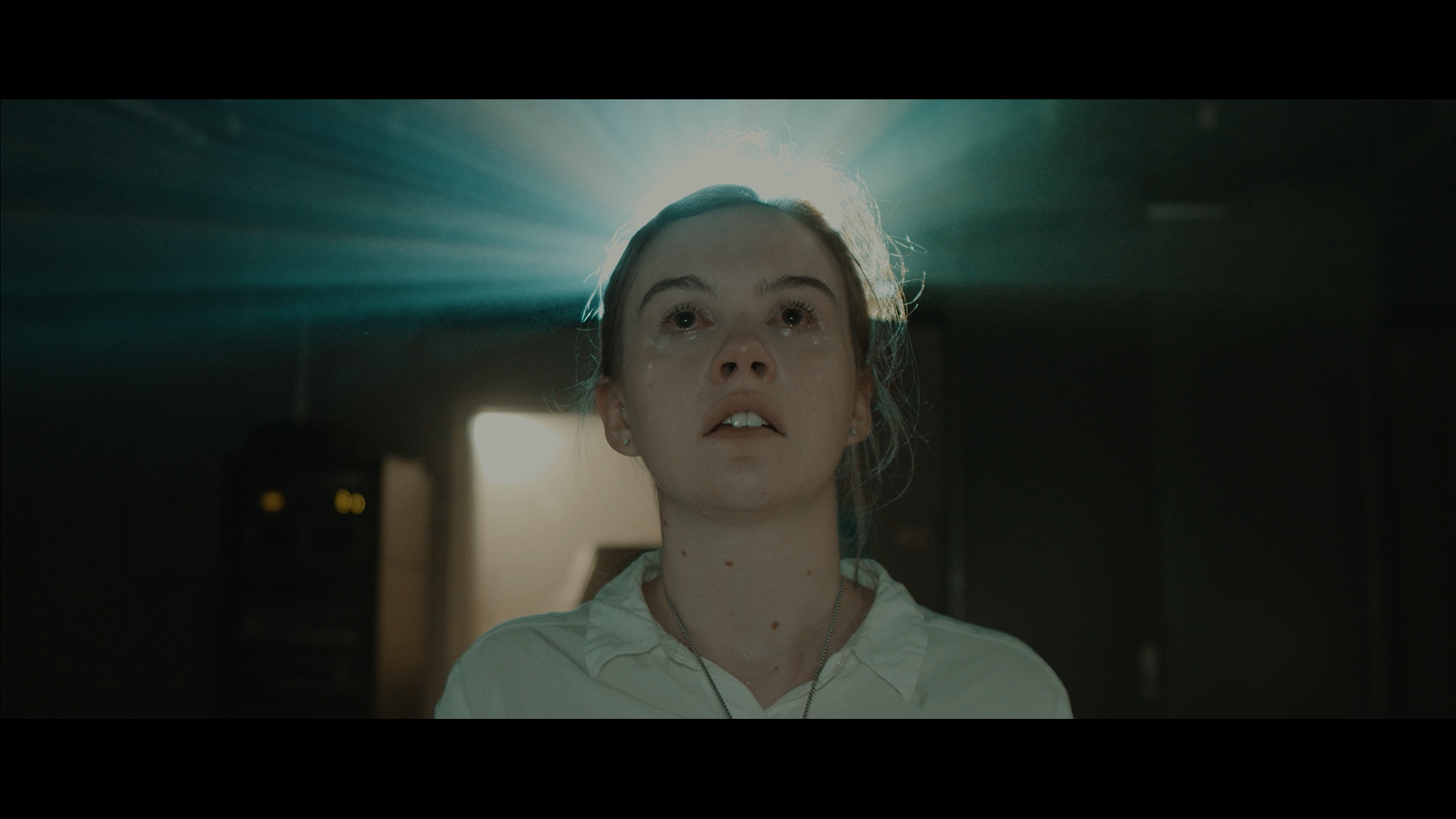
Photos by Surina Belk-Gupta
“Good horror also leaves you with questions. It’s an ethos that places curiosity above closure.”
Saratoga Springs has a way of turning film screenings into shared experiences rather than passerby viewings; the Saratoga Film Showcase, now in its second year, has quickly become one of the region’s most meaningful places for that type of experience.
It’s the perfect event for Portrait of God, the quietly haunting short film by writer and director Dylan Clark, to thrill an audience at a moment when its journey has shifted from festival buzz to national recognition. The short is now in development to be a feature backed by Universal Pictures, with Sam Raimi and Jordan Peele attached as producers. What an exciting time it is not only for Clark, but for the community as well, being one of the few times the short will be viewed on the big screen with a crowd. “I haven’t actually gotten to see the film that many times in a theater,” Clark says. “Very few times with an audience. Film is meant to be seen with an audience, so it’ll be cool to have that opportunity again.”
That opportunity holds particular meaning in Saratoga Springs, a city that understands the power of gathering around art. Clark shot the short while attending school in Ithaca and considers upstate New York an important part of his creative growth. Though he grew up in Virginia and is now based in Los Angeles, the region remains familiar and personal. “I haven’t been back to upstate New York in a while,” he admits. “I do have family in Saratoga, so I’m hopeful I can be there and see the audience’s reaction.”
Portrait of God begins with a deceptively restrained premise. A young academic student studies a mysterious painting rumored to depict God, or something close enough to provoke obsession and fear. The horror does not announce itself loudly. It emerges slowly, almost unnoticeably, through subtle shifts in perception. Clark says religion was not the original entry point.
“It was originally divorced from the religious context,” he explains. “We started with the idea of a scary painting. If there’s a scary painting and there’s this thing slowly appearing in it, why would you have a character that wants to see it?”
That question led him toward faith, though not in a traditional or doctrinal sense. While developing the short, Clark was taking a religious studies course focused on Islam, where discussions about idolatry and the prohibition against depicting God lingered in his mind. Those ideas merged with his love of religious horror, forming a framework that feels expansive rather than prescriptive. “It felt like an interesting fit,” he says. “Not about one specific god or denomination, but about the concept of faith more broadly.”
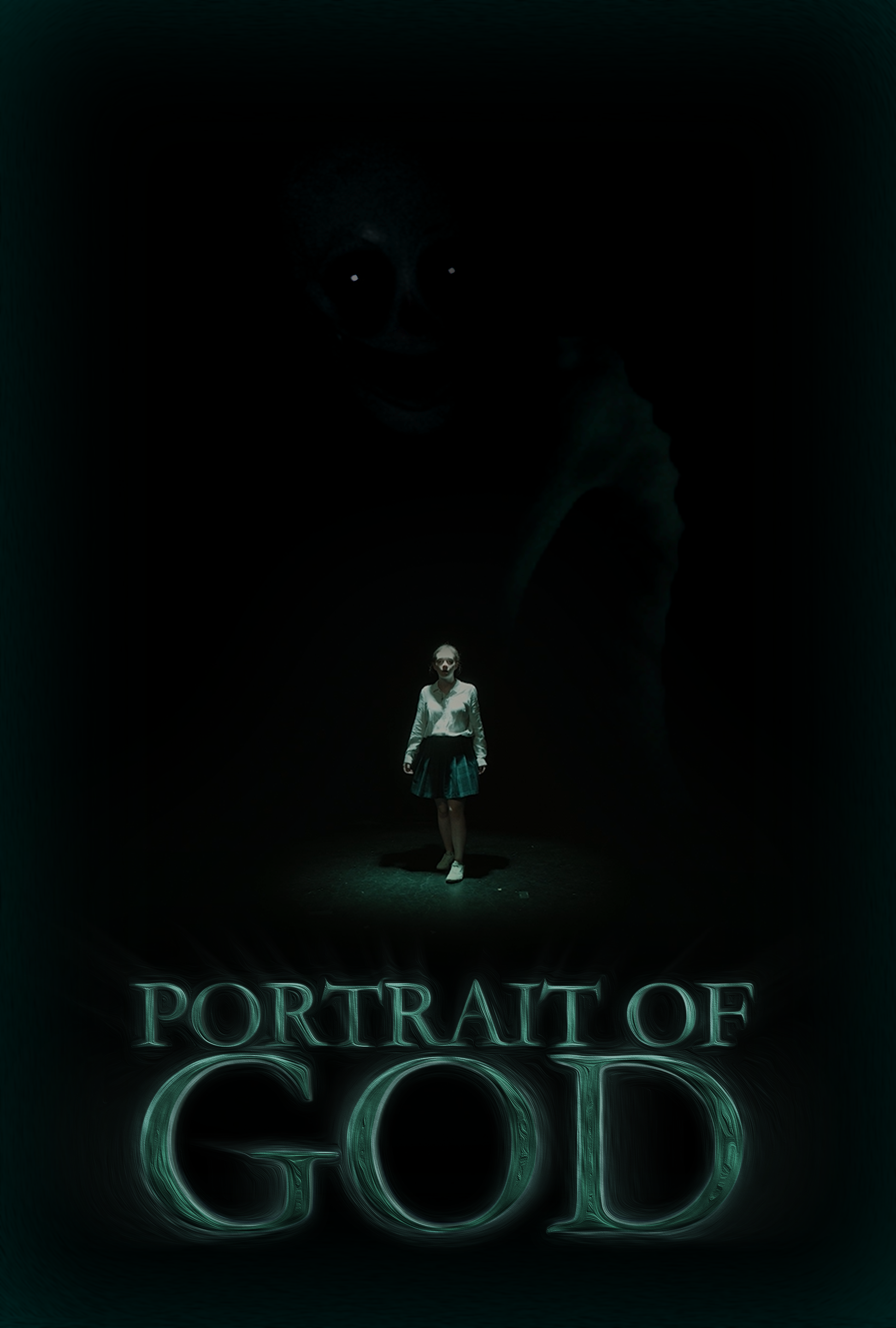
Clark’s own relationship to faith is observational. He grew up in an agnostic household, surrounded by friends of many different religions, which fostered curiosity rather than certainty. “I’m not a very religious person,” he says. “I’ve always kind of looked at it from the outside.” That glance gives Portrait of God its openness. The film never tells viewers what to believe. Instead, it asks them to confront what they think they are seeing and why they trust that viewpoint.
One of the film’s most unexpected inspirations comes from a few years back — the viral image of the dress that some people insisted was blue and black while others saw it as white and gold. “I remember thinking it’d be so cool to do a horror version of that,” Clark says. “Where you’re looking at the same thing and seeing something different, and defending that opinion pretty aggressively.”
How fascinating and timely is that? One of the most compelling aspects of Portrait of God is how it quietly transforms a fleeting moment of internet culture into something lasting and artful. Clark has cited the viral image of the dress that split the internet as an early spark, not as a gimmick, but as a study in opinion and conviction. By taking that modern scroll past obsession and slowing it down, he reframes it as something unsettling and human. What begins as an online argument about what people see becomes, in Clark’s hands, a meditation on belief and the discomfort of realizing someone else’s reality may feel just as true as your own.
That idea unfolds with an unnerving watch. Portrait of God demands active viewing. Your eyes search the frame, your mind fills in gaps. Some viewers catch unsettling details immediately while others miss them entirely. Clark hides moments in plain sight, rewarding close attention without punishing those who do not catch everything. It is horror built on participation, and it lingers. This makes it a perfect selection for Saratoga’s showcase.
From a critical standpoint, the short is remarkably controlled. The pacing is patient, the sound design quietly oppressive. When the film delivers its most disturbing moments, they feel earned rather than sensational. It resists the genre’s tendency toward over-explanation, trusting atmosphere and ambiguity instead. The result is a film that feels confident, restrained, and genuinely unsettling.
That confidence garnered attention quickly. Shortly after the short’s release in 2022, it made its way to Ghost House Pictures, Sam Raimi’s production company. A feature development followed soon after. “It wasn’t one big moment,” Clark says of the process. “There were checkpoints along the way where it was like, holy shit, this is awesome. But there’s a lot of waiting. A lot.”
Those checkpoints eventually led to Universal and a partnership with Jordan Peele’s Monkeypaw Productions, placing Portrait of God alongside a wave of modern horror that values intelligence and tension. For Clark, the challenge is expansion without erosion. “You don’t want to stretch it thin,” he says. “And you don’t want to ruin every mystery. There are some things we’re not going to give all the answers to.”
That restraint defines Clark’s approach to horror. He gravitates toward stories that give audiences something concrete while still leaving them curious. “Some of my favorite horror moments are effective on their own,” he says. “Good horror also leaves you with questions. It’s an ethos that places curiosity above closure.”
The Saratoga Film Showcase offers an ideal ecosystem for that kind of experience. With panels and a great selection of shorts exploring boundary-pushing narratives, the event celebrates film’s power to bring people and ideas together in an intimate setting. Clark is especially intrigued by how Portrait of God will play in that communal space.
“This is supposed to be a theatrical experience,” he says. “A bunch of people in a very dark room, looking at this very dark movie.”
For the Capital Region, the Showcase highlights why local festivals matter. They are spaces where ambitious work meets engaged audiences and where filmmakers and viewers not only share proximity, but also the same curiosity for cinematic emotion. Clark’s success feels connected to that ecosystem, proof that meaningful cinema can grow from regional celebrations before reaching a global stage.
For more information about the Saratoga Film Showcase (January 23-25, 2026) visit: https://www.discoversaratoga.org/events/saratoga-film-showcase/