INTERVIEW: The Road to Solid Sound: Gang of Four
06/25 @ Bearsville Theater, Woodstock
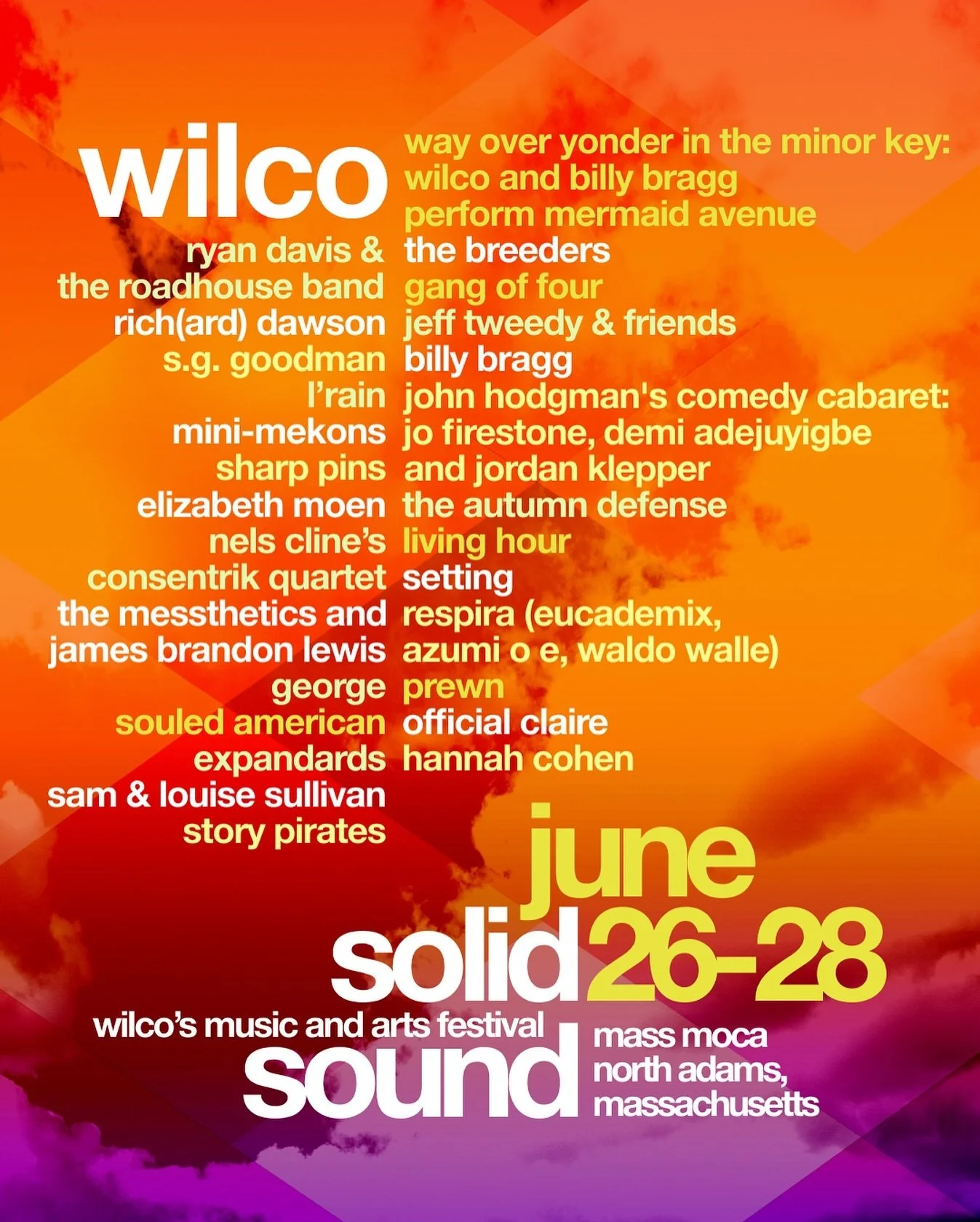
06/26-06/28 @ Mass MoCA, North Adams MA
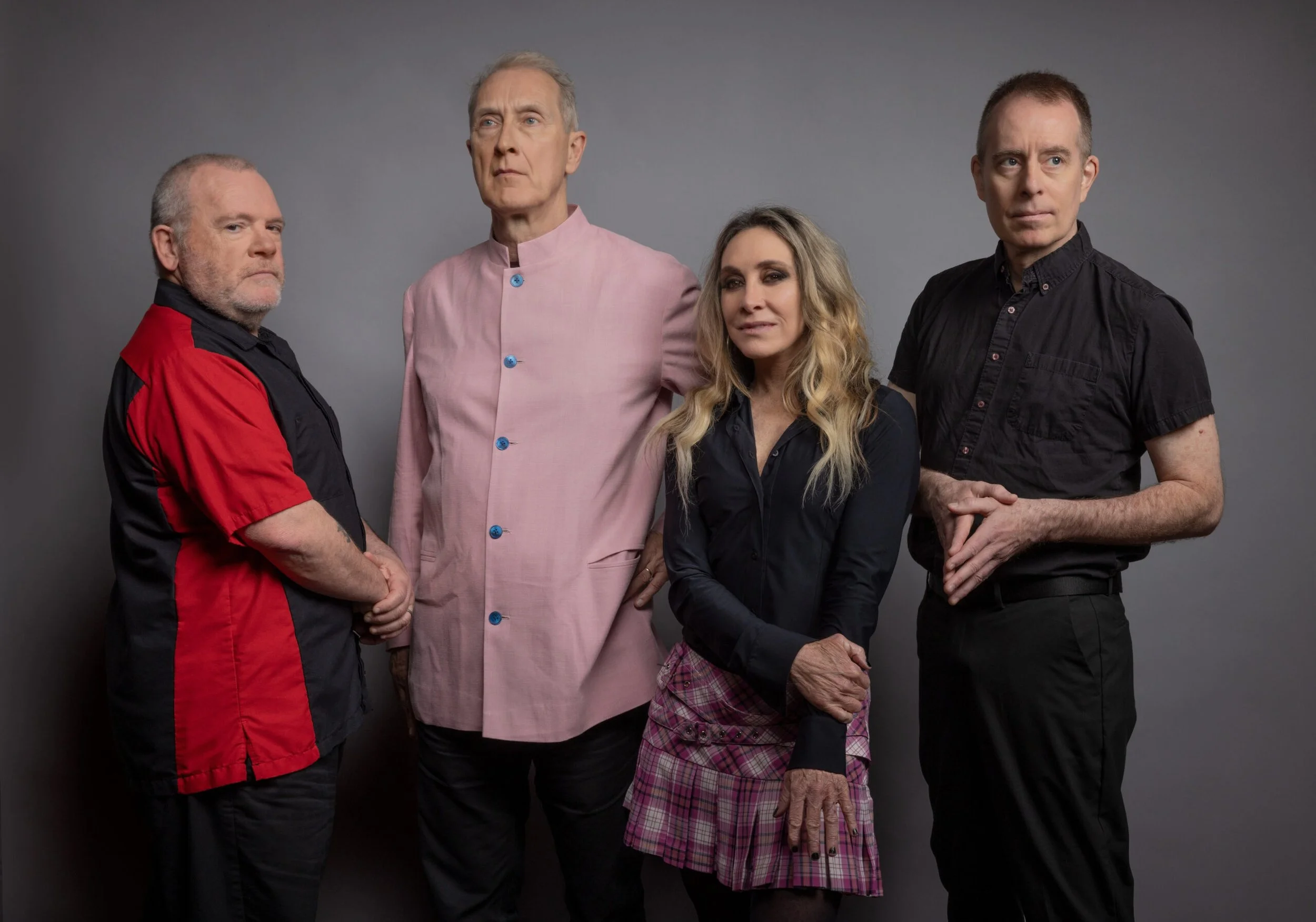
Photo by Jason Grow
“Our agent told me that about a third of our audience today are Gen Z or younger millennials. I find that tremendously flattering.”
Although Gang of Four completed their “Long Goodbye” farewell tour last September, the band has not retired and will return for a select run of shows in the northeast this month, including two dates in our region at Bearsville Theater on June 25 and Mass MOCA on June 26 as a part of Wilco’s Solid Sound Festival.
I spoke with vocalist Jon King about the band’s new approach to playing live, their new protest single, “No Kings,” and why political music remains as relevant today as it was when Gang of Four emerged from the political context of late-1970s Britain. Original members King and drummer Hugo Burnham, are joined by bassist Gail Greenwood (Belly, L7) and guitarist Ted Leo (Ted Leo & The Pharmacists, Aimee Mann, et al).
“I don’t want to tour anymore," King says. “There were some places in the U.S.that we didn't get to for one reason or another and I wanted to add them on.”
Former bass players of Gang of Four, Sara Lee and Gail Ann Dorsey, have called Woodstock and Kingston their homes for over 20 years, yet Gang of Four has never played the city before.
“I’m looking forward to it. It’s an odd area of the world that attracts a lot of artists that you might not expect, but it’s beautiful.
“This all started because Jeff Tweedy has always been a bit of a fan of the band. He asked us if we’d do the festival, and if you’re doing one show, it’s best to put some dates around it so you can really get into the swing of things.”
Wilco has also invited the Mini-Mekons to the festival — an acoustic project featuring Sally Timms and Jon Langford of The Mekons, a fellow post-punk band that began in Leeds alongside Gang of Four. The lineup reflects Wilco’s appreciation for post-punk and the influence these two pioneers have had on shaping their alternative sound. King explains Solid Sound will not only be the first time connecting with Wilco, but artists like Billy Bragg as well.
“Billy is a great artist. It’s surprising that we’ve never played together because we share similar ideas about many things, even if we’re not working in the same musical tradition,” he says. “What I admire about Billy is the bravery of standing there with just a guitar and presenting his ideas so directly. We’re not really in that world, but I have tremendous respect for it.”
Post-punk’s electric experimental textures, jagged rhythms, fragmented lyrics and funk grooves definitely differs from the acoustic-driven storytelling of folk. King explains the connection between folk and post-punk lies in the underlying protest ethics and themes in both.
“Folk music is often about narratives, telling stories about oppressions and deprivation. I’ve never really written songs like that,” he says, referencing his lyrical style that ponders complex concepts, builds off of the experimental instrumental sounds of his bandmates, and leaves listeners room to build their own narratives around the themes.
Folk music has inspired how he approaches protest songwriting, specifically the band’s recent single, “No Kings.” The timely song is meant to spark action to defy kings in the US, UK, and everywhere else in the world.
“It's meant to be driving and fun and aggressive,” King says, discussing the importance of being able to collectively sing and dance as an audience as an effective strategy for political resistance. “You'll be thrilled by it and sing along. That's what I want.
“I read the list of complaints against King George III from the American Revolution and was struck by how relevant many of them felt today.”
Complaints included having a standing army, suppressing your people, not limiting the powers of the courts and the judiciary which are all still ills of today’s societies in the US and the UK.
“It’s probably the closest I’ve ever come to writing a traditional protest song,” he says.
The song was produced by Nick Launay, who began collaborating with the band on their 1981 single, “To Hell With Poverty!", and tracked live to give it a more immediate sense of urgency that supports the call-to-action message.
“We didn’t want assembly-line editing,” he says. “I find that kind of thing boring. We played the song over and over until it just felt right. It’s a very old-school way of recording things, but you get something different from it. You don’t get that homogenized flavor where everything is locked into a machine. In rock music, you want the thrill of it all.”
“No Kings” is one of five tracks recorded in Gloucester, Massachusetts that will be gradually released. Three are new songs and two are re-recordings. One is “I Parade Myself” which the band has frequently played live but never got a recording that felt right. Another is “Elevator,” one of the very first Gang of Four songs that was often played in early sets but never recorded.
These recordings are the first with current members Greenwood and Leo.
“This version of the band is great. With Dave Allen and Andy Gill both gone, Hugo and I are the last men standing. But I love what this band has become.”
In 2025, King released his memoir, the aptly-titled TO HELL WITH POVERTY!. The book details the stories of his life and career with particular revelations of how the political tensions and anxieties of the late ‘70s and early ‘80s affected the beginnings and legacy of the band. King is quick to note how politically similar things are today when compared to that era.
“The similarity is the anxiety. When I was a child, we did duck-and-cover exercises because people genuinely believed nuclear war could happen. Later, every household in Britain received pamphlets telling us what to do in the event of a nuclear attack. The circumstances are different now, but the sense of uncertainty is familiar,” he explains.
“Our agent told me that about a third of our audience today are Gen Z or younger millennials. I find that tremendously flattering, to be thought of as relevant,” he adds, although admits this feeling is bittersweet. “I think it's because the things we were writing about are still relevant, but I wish they weren't.”
We discussed the importance of political music that addresses greater social issues but also how it is not quite as prevalent in the lyrics of all musicians as it once was. This may be due to any number of reasons, not least of which is an increasing sense of fear and isolation in today’s society. King encourages musicians to not be afraid of writing political music and to remember that they are not alone.
“The worst kind of censorship is self-censorship. You can write a song about anything. If you want to write about being young, being a woman, wanting a job, worrying about AI, whatever it might be — write about it.
“Musicians also face a difficult reality now. The digital platforms are making billions while musicians receive very little. But we don't have to play their game.”
For more information on Solid Sound Festival, visit www.solidsoundfestival.com
For more of our pre-festival interviews, visit https://www.themetroland.com/blog-main/tag/solid+sound+festival
Gang of Four will host an exclusive pre-show party and Q&A at Bearsville Theater at 6pm on June 25 with add on ticket sales that will directly benefit O+’s year round clinic which provides healthcare for artists and musicians.
King will also host a conversation on TO HELL WITH POVERTY! at 4pm on Friday June 26 at Mass MOCA before Gang of Four takes the stage at 7:30pm.