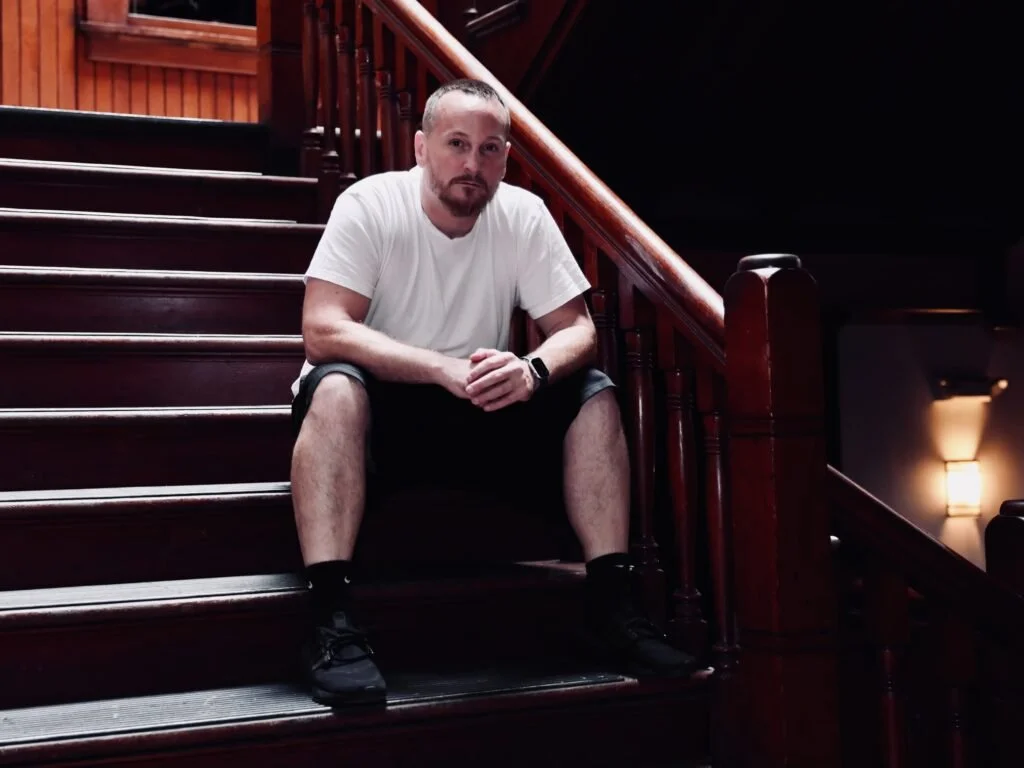
Photos provided by Tommy Strong
“The tone on the guitar is so fierce that it cuts through the low end like a knife, slicing for attention, while the smokey vocals move throughout like a ghost, and the drums demand that everything fits in place.”
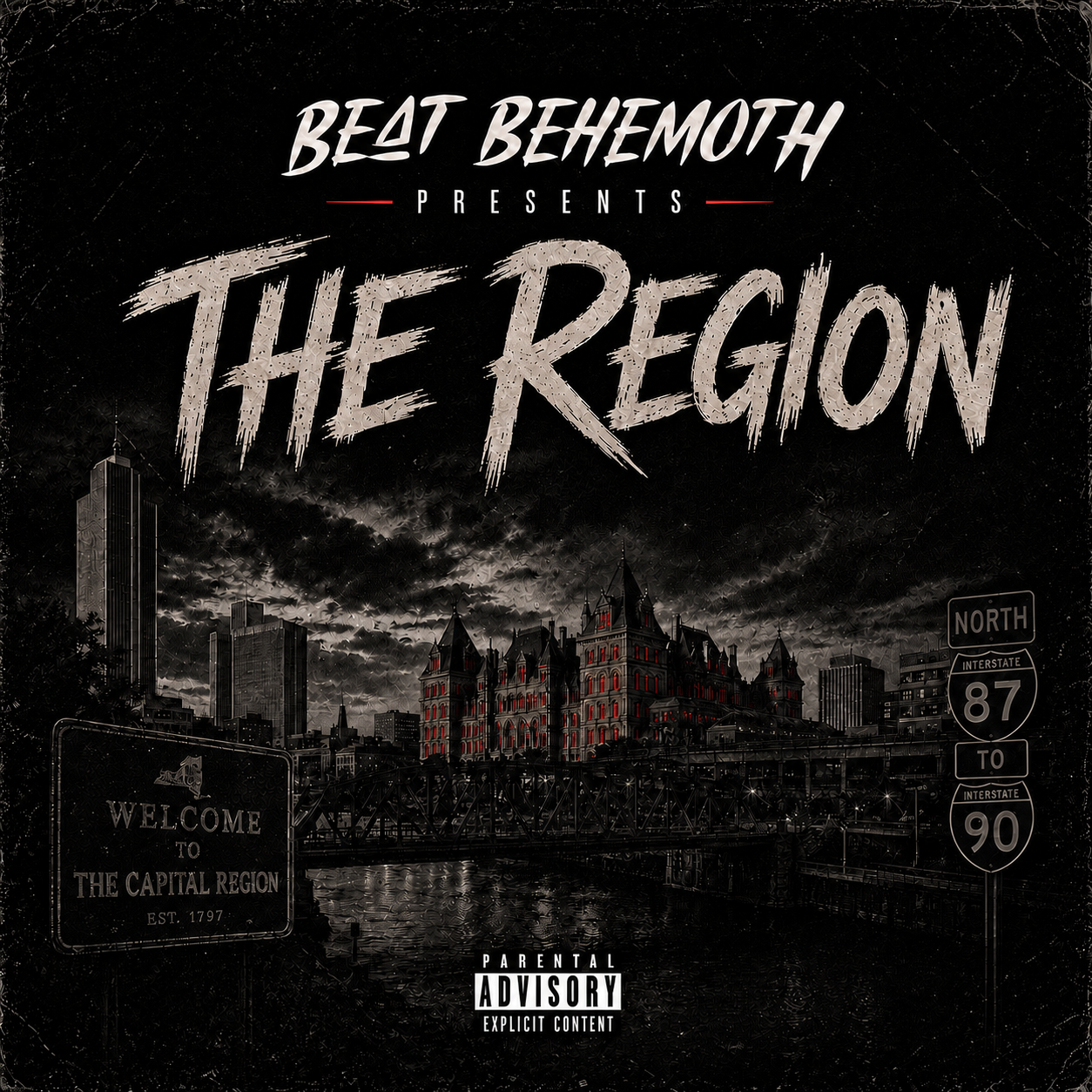
Hip-hop has always been good at telling you where someone comes from. The best records go further, making you feel like you are right there on the sidewalk, catching the rhythm of a neighborhood and the voices that give it life. With The Region, producer Tommy “Beat Behemoth” Strong takes that idea to heart, assembling a 21-track love letter to the Capital Region and the artists who make its hip-hop scene move.
Released earlier this year through Beat Behemoth Productions, The Region is more than a showcase for Strong’s production. It is an exercise in community-building, bringing together collaborators across the local scene for a project that feels gritty, grounded and proudly connected to its 518 home front. There is a lived-in quality to the sound, with rugged beats, soulful horns and a street level atmosphere that recalls hip-hop’s golden era without feeling stuck in it.
Strong has been making music since the ‘90s, working as a rapper and producer and even playing in bands as a young musician. But The Region represents a new milestone — Strong’s first full-length album of this scale, built around a broad network of artists rather than a collection of isolated tracks.
“I’ve just felt like for a long time, if we all really got behind one thing, there’s a lot more creative energy and electricity that can push outward,” Strong says.
That idea fuels the record. With collaborators including Mirk, Hoffa, Chaz Money and Albany Luna, Strong creates space for different voices while maintaining a steady sound. Tracks such as “Try That” and “Fight Night Two” deliver the hard-edged energy that gives the album its forward momentum. The production favors texture and personality, with horn flourishes and sturdy rhythms that make the songs feel lived in rather than assembled from parts.
Strong’s approach comes from a belief that the best music happens when artists create together in the same room. In an era when producers can send beats across the internet and receive a verse in return, he prefers the unpredictable spark of a genuine session.
“The magic really happens here,” he says, describing the back and forth of musicians building on one another’s ideas, challenging choices and discovering something none of them would have reached alone.
That spirit gives The Region its strongest identity. The album does not simply gather artists under one name. It documents relationships that have grown through studio sessions, local shows and shared enthusiasm for the work. Strong admits that bringing so many people together required persistence. Coordinating schedules alone became a challenge. But he found something more encouraging than the competition he expected. Enthusiasm and a willingness to participate.
The project also carries a personal story. After serving in the military, starting a family and finishing college, Strong drifted away from music as a central pursuit. He says he began to see it as an unrealistic ambition rather than an essential creative outlet. A leukemia diagnosis in 2017 forced him to reconsider what made him happy. Music, he realized, had never stopped being part of the answer.
Rebuilding his confidence took time. Connecting with local artists helped him move beyond working alone in his basement and become part of a larger creative community. Fellow musician Mirk became a mentor and close friend, opening doors to relationships that helped shape the album.
“I think life is really about that,” Strong says. “It’s about relationships, it’s about community.”
That perspective gives the record an emotional center beyond its hometown pride. Strong is candid about how intimidating it can be to put yourself out there, particularly in hip-hop, where competition and image can sometimes overshadow encouragement. He makes a point of showing up for other artists, attending shows and telling musicians directly when their work moves him.
“Just being an artist and putting yourself out there is brave,” he says.
The album becomes an extension of that philosophy, offering collaborators not just a beat but a place on a shared platform. Strong even organized a contest to give two artists the opportunity to join him onstage, continuing the project’s emphasis on opening doors rather than guarding them.
His ambitions stretch beyond paying tribute to the Capital Region. Strong wants the local scene to develop a sound of its own instead of chasing whatever style happens to dominate elsewhere. He knows influences are inevitable, but believes artists become more powerful when they build on those influences rather than imitate them.
“I don’t do type beats,” he says. “I make what I make.”
Then comes the line that may be the clearest expression of his vision: “I want to be Tommy Tsunami, man. I want to make waves.”
On The Region, those waves come from collective energy. The album has the feel of a long stroll through familiar streets, with each track introducing another voice from a scene that deserves to be heard. Its 21 songs may be a big undertaking, but the scale feels connected to Strong’s central idea. There is too much talent to fit into a small circle.
For Beat Behemoth, the goal is not simply to put the Capital Region on the map. It is to help the people making music here recognize what they can accomplish together. The Region makes a convincing case that a local scene becomes more than the sum of its parts when artists stop waiting for someone else to bring them together and start building something themselves.
Stream The Region on your platform of choice by clicking here.