
NONPROFIT SPOTLIGHT: Albany social Justice Center
Photos by Tom Miller
“The Social Justice center is a great way for people to build a coalition, to connect with one another and understand the nature of our struggle for liberation.”
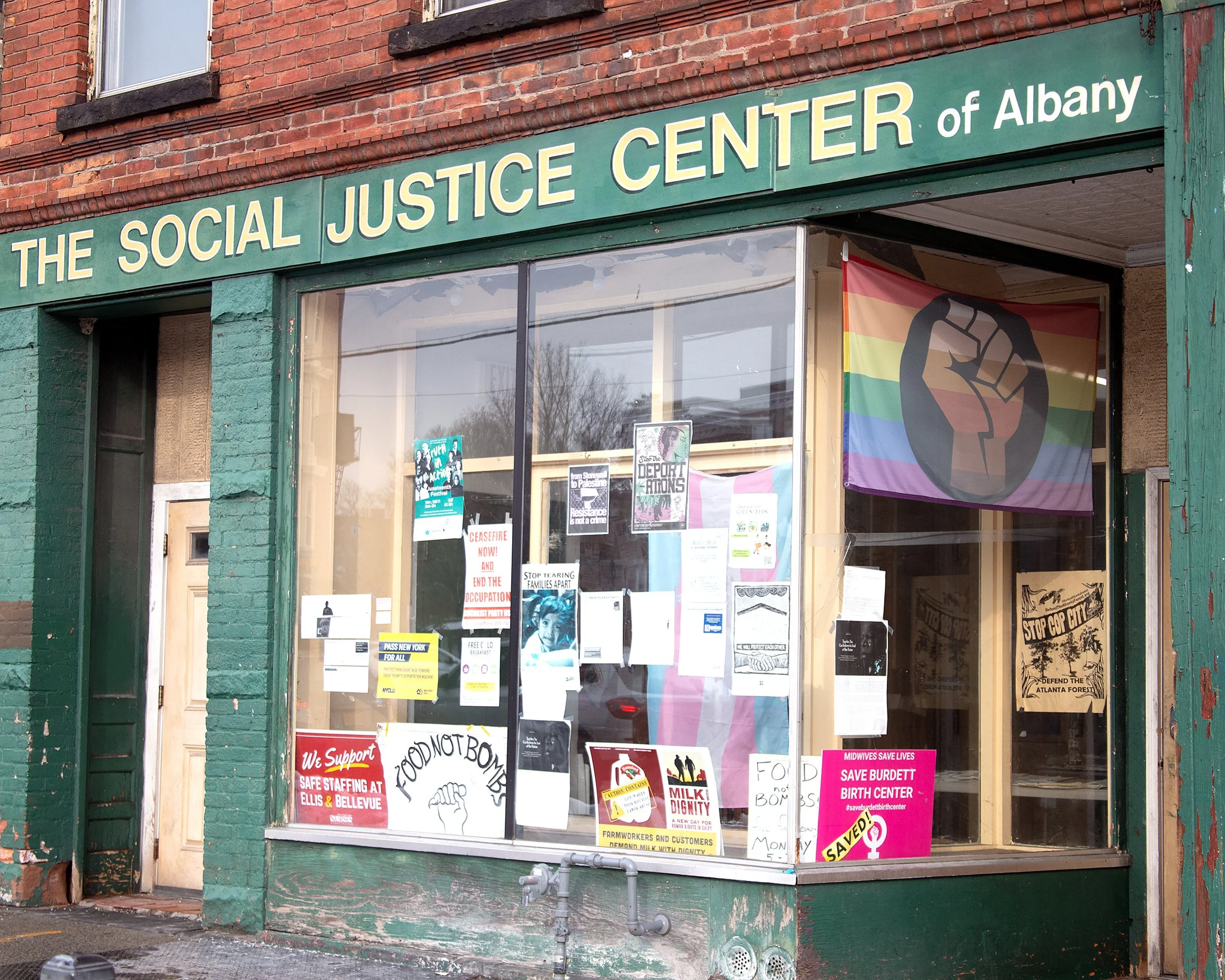
For over 40 years, the Albany Social Justice Center has served as a backbone for grassroots activism in the Capital Region. Located in downtown Albany on Central Ave., the Social Justice Center is an intergenerational hub for organizing, education, and community care. A place to feel inspired for peace and justice in the face of post-Covid hopelessness.
Founded in 1982, the Social Justice Center emerged at a time when international solidarity movements such as opposition to U.S. intervention in Central America were gaining momentum. Longtime board member Naomi Jaffe recalls using the Social Justice Center as an activist organizing base as early as 1983.
“We, in those early days, intentionally changed this organization to be inclusive, and to serve the needs of people of color, of people of diverse gender and sexual identifications, and defined justice around that kind of inclusiveness,” Jaffe says. “That has changed the definition of people's power and of justice in our movements, and has given us the ability to continue to resist from generation to generation.”
What distinguishes the Social Justice Center is its role as a physical space for many organizations with social justice ideologies rather than a single-issue nonprofit. The organization exists to support organizing by providing physical space, office rentals, mailbox use, and fiscal sponsorship so organizers can focus on their impact rather than logistics.
“I tend to think of that as letting [the partner organizations] be this square peg, and we will fit into the round hole so that they don't have to,” board member Laura Travison says, discussing the SJC’s responsibility to support organizations with their logistic needs.
The Center serves as a meeting place and administrative home for a wide range of member groups such as New York State Prisoner Justice Network, Albany Food Not Bombs, and Vocal NY. The space also offers a way to connect with others from different ages, experiences, and social justice concentrations, becoming a hub to exchange ideas, learn from others, and find a community of others with shared goals.
Administrative Director Samaiya Ibraheem explains, “In Albany movement spaces, we are often so spread out and isolated that we don't have a single rallying place to be able to see the interconnectedness of our struggles. The Social Justice center is a great way for people to build a coalition, to connect with one another and understand the nature of our struggle for liberation.”
While the Social Justice Center supports activists across the Capital Region and beyond, it is also deeply rooted in its immediate neighborhood in downtown Albany. Several long-running programs focus on meeting basic needs while fostering community connection. Every Monday, Food Not Bombs operates out of the SJC, providing free prepared meals and groceries to neighbors. Once a month, the Free Store opens its doors, offering clothing, household goods, and essentials at no cost. Every Tuesday, the InfoShop makes anarchist literature, zines, and political pamphlets available to anyone who wants to read and learn. Every third Thursday of the month the SJC hosts a poetry open mic by the Poetry Motel Foundation.
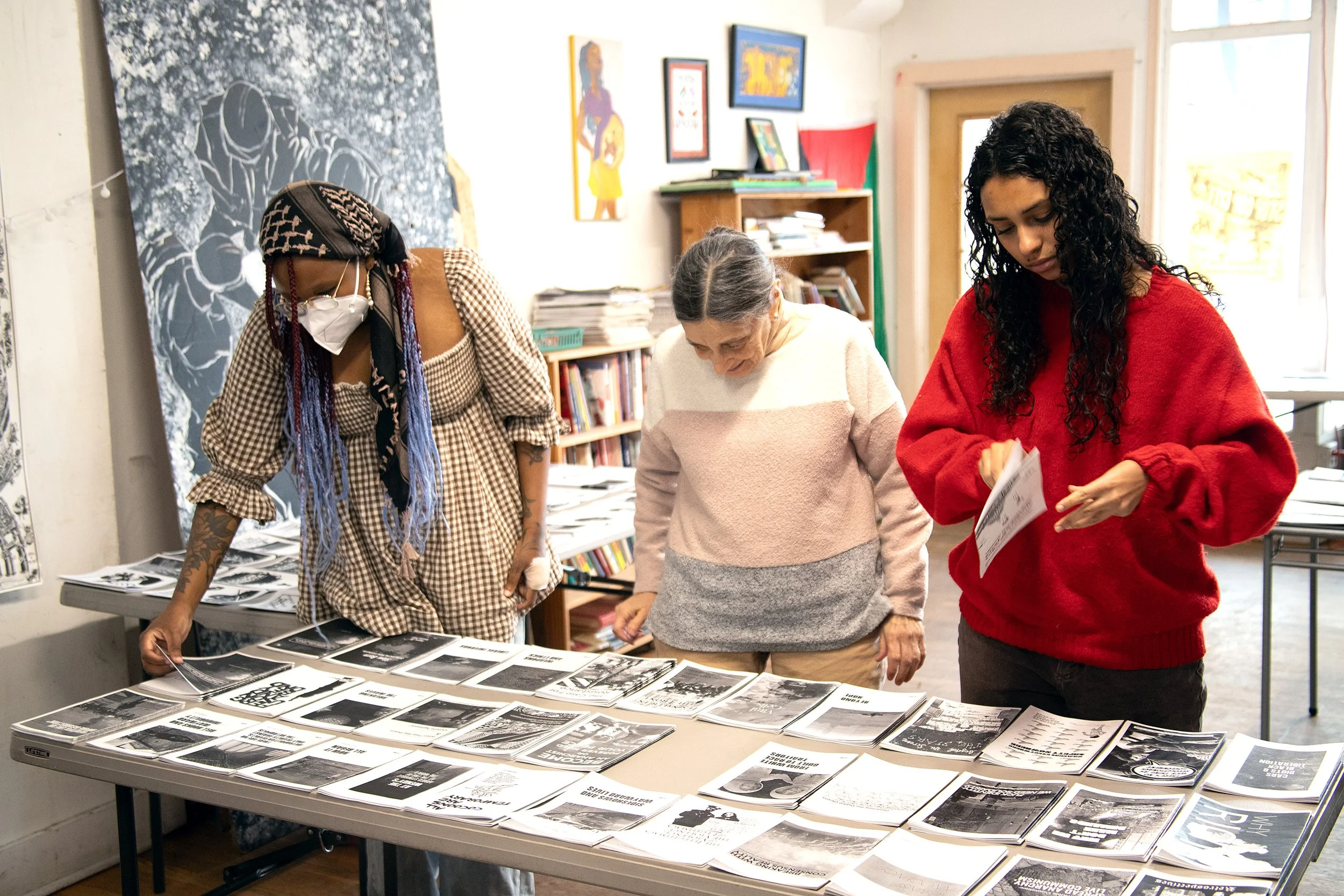
“Being in the community of the Social Justice Center gives me hope, because I see people who have been in the trenches working on activism with no spotlight and very little financial reward for the work that we do,” says board member Jean Fei. “They have long term goals that sometimes seem really far away, but I see a mass of people who are dedicated to doing social change work, and that's what gives me hope over and over again.”
One of the most striking features of the Albany Social Justice Center is its intergenerational leadership. Board members range from people who helped shape radical movements of the 1960s and ’70s to organizers in their early twenties who are responding to today’s crises.
Aurora Sikelianos, one of the youngest board members, describes activism as something she grew up with. “I’ve been involved in activism since before I was born,” she says, recalling her mother attending anti-Iraq war protests while pregnant. That early exposure evolved into direct organizing work with the Capitol Region Sanctuary Coalition, helping with ICE watch efforts and keeping people in the community safe, eventually leading to her role on the board.
Much of the Center’s behind-the-scenes work focuses on maintaining the building itself, a historic structure that has served many purposes over the centuries. Keeping it safe, accessible, and functional is essential to everything else the organization does.
“The building is the work in many ways,” says Travison. “If we don’t maintain it, none of the organizing can happen.”
Funding comes primarily from community support, individual donors, annual fundraising gatherings, and modest fees from fiscal sponsorship services. Unlike many nonprofits, the SJC is not program-driven in a way that attracts large institutional grants. Instead, it relies on a broad base of community members who believe in the importance of movement infrastructure.
This year, the Social Justice Center is launching a new monthly health and wellness series focused on trauma-informed care to support the mental health of organizers. Drawing on expertise from local multicultural experts, the series will explore how chronic stress, political violence, and burnout can affect organizers, and how communities can respond collectively.
“A lot of organizing efforts can fall apart because activists are under so much stress,” Fei says. “There's something going on in every direction all the time, and we get very upset. Then we don't get along very well, and our organizing falls apart.”
As Albany’s organizations confront new challenges, the Social Justice Center remains a place to gather, exchange ideas, and remember that no one does this work alone.
For more information about events, programs, or getting involved, visit the Albany Social Justice Center in downtown Albany or explore their community calendar online at www.albanysjc.org.