
Confessions From the Underground #21: Alternate Spaces
**This column originally appeared in our August 2026 issue**
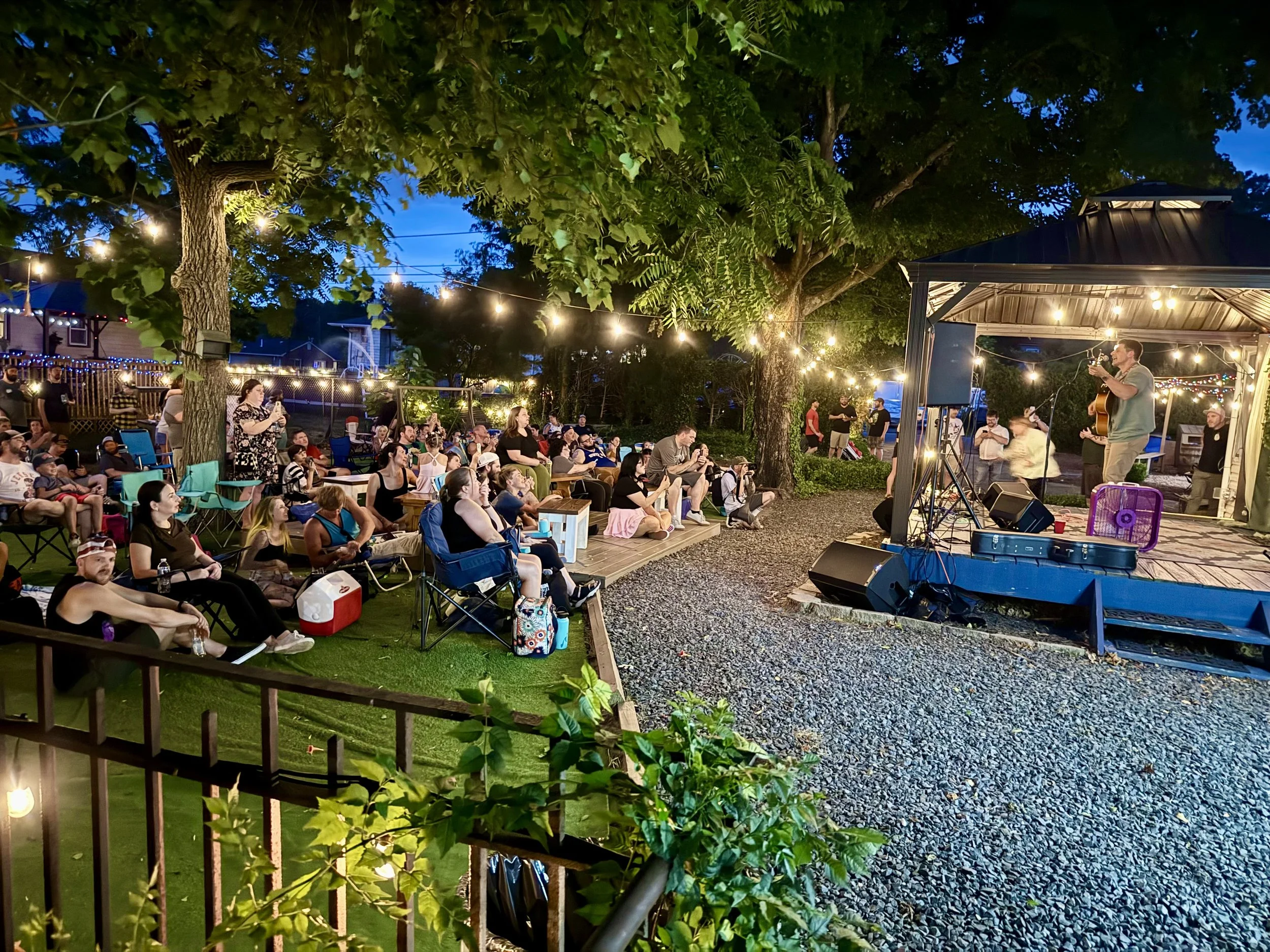
Last Fall, The All-American Rejects had a bit of a viral moment when they showed up to play in a random backyard to a sea of adoring fans, and the delight of the internet. Fast forward to a couple months ago, and they launched a full-blown House Party Tour, partly in protest of exorbitant ticket prices at bigger venues, and partly because, well, it’s fucking awesome. It’s not like AAR invented the idea of performing in a backyard, but to see a band with as much recognition as them do it was inspiring in all the best ways.
In the early days of the pandemic, Brian Schantz and his wife Mel — along with so many others — were clamoring especially hard for live music. They took matters into their own hands and created The Kill Shed, an intimate live music mecca in their own backyard in Toms River, NJ. Since their early days, they’ve had artists like Ace Enders, Vinnie Caruana, Fred Mascherino and more grace their stage… er… deck. With a great number of alternate performance spaces in our area, and likely a number of people thinking about setting up their own, I thought Brian would be the perfect person to discuss this topic.
TJ Foster: Let’s start with a little background — when did you decide to pull the trigger on [The Kill Shed] and what prompted that?
Brian Schantz: My wife and I used to go to shows all the time. That’s all we did. And then 2020 hit and there were no shows. That summer, my friend Dave and I both turned 30. A shitty summer to have a monumental birthday. We were big fans of the band Valencia, and Shane [Henderson, vocalist] was always posting, at that point, music and his new project. Dave’s 30th was in July, and I think by then in New Jersey, you were allowed to have outdoor gatherings with like 50 people, whatever it was. And I decided to just reach out [to Shane]. He hit me back and we worked out the details and had a surprise birthday for Dave. Dave’s brother built a stage out of a pallet at his house — it was awful.
That September after COVID, we did the first show at our house. It wasn’t The Kill Shed yet by any means, but my wife Mel and her stepdad, who she played with in an acoustic duo, performed. We had all these people in lawn chairs and realized we had the space for this.
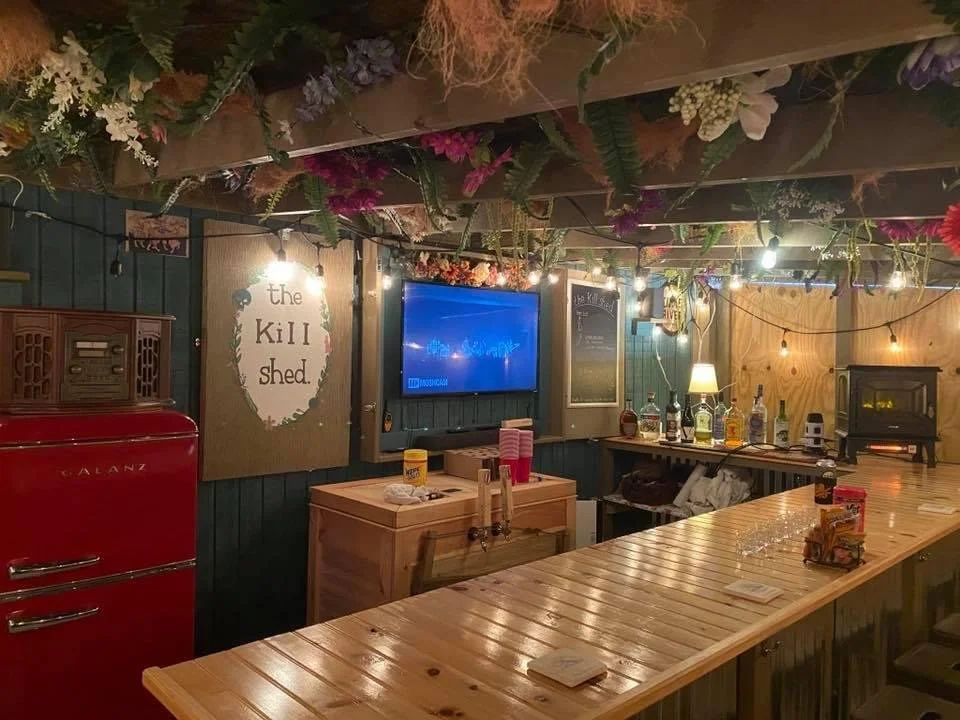
The following year we built the bar. The Kill Shed was [originally] the bar because when we tore down the structure that was there, we found a bunch of rabbit remnants. The [previous owners] used to raise rabbits and use all the parts, I guess you could say. That’s why there’s rabbits on [all of our merch]. So in June of 2021, we did the first show as The Kill Shed, and we booked AJ [Perdomo, The Dangerous Summer] to play. And again, there were still no shows yet. It was a year into the pandemic, no one was touring, and 100 people came from all over the country. People flew in from Ohio, North Carolina, everywhere. It was wild.
After that, we just started reaching out to people. We got some clout because AJ did it. People were like, ’You’re going to go there and you’re not going to get killed.’
TF: That’s so cool how it just spiraled like that. And there’s such a great network of artists in your neck of the woods, who all must know each other at least tangentially, right?
BS: Yeah, that was key. Shane, AJ, Vinnie [Caruana, The Movielife/I Am the Avalanche] were the first couple of shows. Then I remember we reached out to Fred Mascherino who wasn’t back in Taking Back Sunday yet. He was still just doing The Color Fred and getting back into music. He had an agent at the time. We were like, "Well, we did Vinnie Caruana and AJ from The Dangerous Summer." And he’s like, "Alright, I guess I’ll give you a shot." Once we got Fred, it was a bit more legit. Everyone knows Fred in that scene.
TF: What an awesome DIY spirit. I love that. Now, given that most of our readers are probably not aware of what you have going on there, can you paint a quick picture for them? Because you’ve thought of everything.
BS: Yeah, we’ve gone to a lot of shows and festivals and so we tried to bring that to our backyard. Essentially, we have a side yard with a deck. The night before the first show, my wife sawed off the side of the deck and we basically converted that into a “stage.” We bought rolls of fake grass from Home Depot and put that down [in the yard]. My friend Eric runs a food truck called Scrambled Yegs and so he parks his food truck in the driveway. You bring your own chair, we have a fridge with beer or water or whatever you want to drink and that’s the setup. It’s very much like a backyard party with some awesome music. We let everyone come into the house to use the bathroom.
We just had the Ace Enders show and we had to move the show inside due to rain, and our house has never been cleaner. We had like a hundred people use the bathrooms, right? We have two bathrooms and my two-year-old ruins the house more than these hundred people. [laughs]
TF: I didn’t even think about the amount of trust you guys are putting in people to respect your space. That’s just a beautiful thing, you know? I feel like there are venues that don’t treat you that well.
BS: My wife, every night after a show, she walks around and makes sure the windows are locked. She listens to too many true crime podcasts. [laughs]
TF: I know during COVID there was a dearth of live music, but now, five or six years on, what do you think it is about what you’re doing that attracts not only these artists to come play, but also the folks in the audience?
BS: What’s cool is we’ve found that a lot of these artists like Ace and Vinnie and AJ, they have their main projects, right? And then a lot of them will play acoustic in between tours and different things. Luckily, we’re located in the Jersey Shore area. We have a pretty good radius to pull from; artists can get here quickly. And I think it kind of just cuts out all the nonsense, right? Once we’ve become cool with them, generally we don’t have an agent or anyone involved. Not that there’s anything wrong with agents, but it makes it very simple.
The artist knows they’re going to come play a spot and get paid whatever they think is cool to get paid. They’re going to meet everyone that’s there, sell their merch hand-to-hand, make that connection... it’s a chill show. They can just show up with their guitar and plug in.
What we find is that people come because it’s an easy night out. Last weekend, people got to see Ace Enders here. A lot of people have spent 25 years listening to [his band] The Early November and seeing them at all these awesome venues around the country. And now the guy just played in front of 100 people in a side yard — and inside our house at one point — for $20! They got to meet him and everyone took pictures and bought a T-shirt from him directly. It’s a cool night and it’s done by like, 9 p.m.. You can still go out after if that’s what you want to do.
TF: There’s a lot more outside-the-box thinking that’s going into playing shows — the most notorious example lately is The All-American Rejects and their pop-up shows. And what a cool way for an artist to tour.
BS: Yeah, it’s crazy. We’ve been trying. [laughs]
TF: I’m sure you have!
BS: It’s so cool that artists like that do it, too. Even for us in the last year, we’ve had Brandi Carlile’s family play (her niece, nephew and her brother’s band). The guys from Jack’s Mannequin, they’re in separate projects; MikelParis, who plays keys in OAR — the guy just played Red Rocks last weekend for about 10,000 people. And then there’s 40 people in our yard watching him play “Black Rock.” It’s the best. It’s a lot of work, but it’s the best and people are so complimentary.
TF: It definitely must be a ton of work. On that note, when you started this whole venture, what are some barriers to entry that you ran into? Anything you wish you knew in the beginning?
BS: It’s funny, I don’t think we had monitors for the first couple of shows. I think we’ve upgraded a bit there. [laughs] But it’s the little things like, ‘Did we put the garbage cans out? Do we have water? Is there toilet paper in the bathroom?’
You don’t need to do anything really special. Sometimes you don’t even need to be plugged in, right? If you have a cool spot and cool neighbors, that’s probably number one, at least for us being in a residential neighborhood. We’ve probably done close to 50 shows now and we’ve only had the cops come twice.
The one thing that I would love to do that I don’t think we’ve done really well yet is involve the community more. We haven’t really tapped into that because we’re not quite sure how to do it.
TF: Have you had any horror stories that made you think, “Shit, I don’t know if we want to do this anymore…”?
BS: Hmm. We actually had our first medical emergency. My father-in-law’s band plays every year; they were huge in the ’70s and ’80s. It’s usually every Memorial Day weekend, and we call it the AARP show. There’s just like, a hundred people over the age of 60 in our house or outside on lawn chairs. It was hot and this woman just started to fall down. She was caught, but she lost consciousness for a bit and four ambulances came. She was fine, but we’ve seen that now. We’ve seen the cops.
I mean, Ace Enders last weekend, the forecast looked beautiful. It was 103 degrees all day, so 90 degrees at night, which felt amazing. All of a sudden, he’s going on, and my friend comes up and tells me to check out the radar. There’s something coming. Ace plays for 30 or 40 minutes outside. And then we’re like, “We got to move this inside.” So we had 60 to 70 people in my living room, which you’ve been in — it doesn’t hold 60 or 70 people. [laughs] He did another 45 minutes. It was 92 degrees in the house. It smelled like complete body odor, but it was the coolest thing ever because when was the last time Ace played a living room?
I think people have a sense of, when it’s at a house, if things don’t go perfectly, they’re kind of okay with it. You get ticked off when you go to an amphitheater and they’re messing with you with the weather. At a house, people are kind of okay with the imperfection.
TF: What a great story, and just a testament to how artists obviously respect the space and what you guys are doing. That’s awesome.
When you were growing up playing in bands, was there a go-to space that you hold in high regard? A spot you repeatedly hosted shows at?
BS: The Waretown Fire Hall. Waretown is right off the Garden State Parkway. It’s a half hour from Atlantic City. This place was like… if you could play there, you were playing like Giants Stadium or Madison Square Garden. It was just like a fire hall, nothing special, on this dingy road. I think the capacity was maybe 300 people, if I remember correctly. There was this company, Jersey Shows, that would do all these shows out of there. I remember The Ataris played there. Four Year Strong, Four Letter Lie, The Dangerous Summer. All these crazy bands would play there. It was the best because it was in Waretown, New Jersey, where there’s no market for anything. They would rent out the fire hall, and these bands would play. No stage, just on the floor. It was the best.
TF: Those hall shows hit differently, man. I grew up in Connecticut and there was a spot that my high school drummer’s dad was like, the pastor of a church or something. They had this hall on the church’s property and it was just sitting there vacant, and so we asked to throw some shows in there. We started bringing in bands from all over Connecticut and Massachusetts to South Church Hall and turned it into a sweet little DIY spot for a minute.
BS: So good. Especially Connecticut. I mean, even New Jersey in the 2000s you’d see all these incredible bands.
TF: Is there anything you take from those experiences at the fire hall and instill in what you’re doing today?
BS: I think what they created was this sense that everyone is equal. There’s no stage and no division between the band and the crowd, and we all would just hang out. And I think that’s the biggest thing here — there’s no room to hide in our house. We don’t have a green room, so all the artists are just hanging out and everyone’s partying together.
TF: One of my favorite things about being there is that it’s a true family affair. Obviously you and your wife built this, you mentioned your in-laws come and play there. And then there’s your little son who’s growing up in all of this, which it’s just incredible watching him roam around. All the people love him. What do you hope that he takes away from growing up in this?
BS: One, he’s probably going to know how to throw a hell of a high school party. We’re screwed. We’ve created a monster. We’ve given him all the tools, so we’ve just gotta prepare for that. [laughs]
Two, we have so many people that help us. Everything from hanging lights, to making sure the sound is cool, to making sure he doesn’t run into the road, to filling the coolers, and setting up the equipment — I think he sees this sense of community. A lot of people wouldn’t just let people over to their place or try to do this. So for him, he kind of just sees the best in people. You can just come here for a couple of hours, everyone gets along, and it doesn’t matter what you’ve got goin’ on.
To keep up to date with the events happening at The Kill Shed, follow them on Facebook or on their Instagram @thekillshed
