
REVIEW: Composer Max Richter Brings a Thrilling Landscape of Music to Albany
06/23 @ The Palace Theatre, Albany
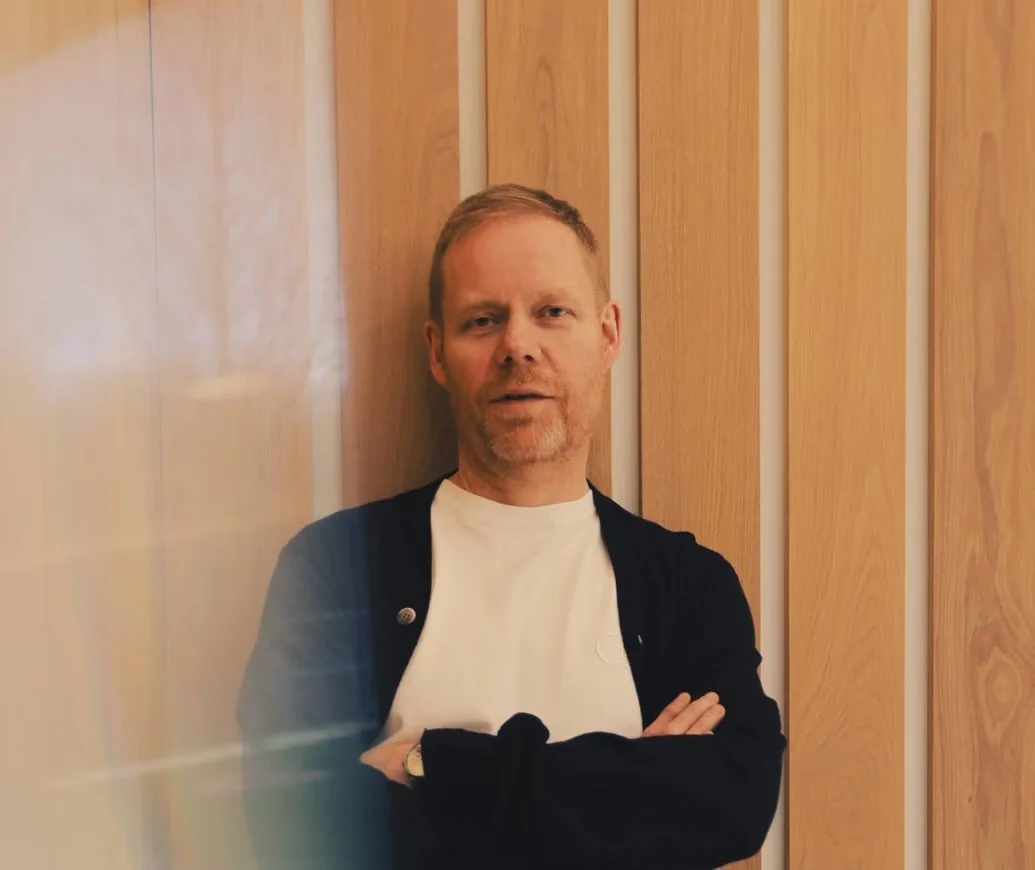
“The net effect, which thrilled a cheering crowd at the act’s close, was that of a hot air balloon ride, peeking out over emotional vistas…”
As the ‘90s dawned in Austin, Texas, a fellow record store clerk took it upon himself as a voluntary second job to educate my ass on some cool stuff. Stewart Wise, a shock of curly red hair and a devilish sense of humor to match, was older than me, and, as his name might suggest, far more sage. He had been, after all, Lester Bangs’ roommate and was good friends with the Velvet Underground’s Sterling Morrison.
Chief, it seemed, among Stewart’s pursuits, was hipping me to the work of composer Michael Nyman — specifically Nyman’s scores for the films of Peter Greenaway, such as The Draughtsman’s Contract, The Cook, The Thief, His Wife, & Her Lover and Prospero’s Books. The flicks could be rented, this being the ‘90s after all, from Waterloo Records’ video department. The soundtracks could be purchased, at a far loftier price on import CD — and worth every penny.
Stewart, were he still with us, would have loved Max Richter’s concert Tuesday night at the Palace Theatre.
A German-born Brit, Richter is one of today’s most popular contemporary classical practitioners. His own score for Chloe Zhao’s Hamnet, for example, was recently nominated for an Academy Award. That still doesn’t make him a rock star — the performance drew about 800 attendees, ardent though they were.
Richter’s name is often uttered in hushed tones alongside those of minimalist pioneers like Philip Glass, Steve Reich, Terry Riley and Lamonte Young. His work, though, is not as brave, brainy or conceptually adroit as that of those gentlemen.
He is, in fact, closer to Nyman, a gentle boundary pusher capable of great beauty, which often feels effortless, even if it is clearly not.
Richter’s Palace show consisted of two pieces — 2025’s “In a Landscape” and his flagbearer “The Blue Notebooks.” He was joined onstage for the former by a string quintet, featuring Brian Snow on additional cello.
In his recent generative documentary Eno, director Gary Hustwit includes an interview in which the film’s subject discusses the idea of introducing “geography” into his music.
From his beginnings in 1975 with Discreet Music, Brian Eno, like Erik Satie before him, wanted to create music — Eno dubbed it “ambient” — that could serve as background and foreground at once, allowing the listener to employ it casually or to focus on it.
Richter hits that mark, but with “In a Landscape,” he zeros in on the geography as well, and not just because of the title. By intent, the long, shape-shifting piece melds electronics with the more organic sounds of the strings (provided by violinists Ben Russell and Yuki Numata Resnick, violist Caleb Burhans and cellists Clarice Jensen and Snow).
The net effect, which thrilled a cheering crowd at the act’s close, was that of a hot air balloon ride, peeking out over emotional vistas; the stray bits of speech and found sounds that separated movements lent their own cinematic structure. There were moments from the six musicians, with the composer on keyboards and stately piano, that were truly breathtaking.
Following the intermission, reader Grace Davidson joined the players to narrate brief passages from some titular unpublished journals by Franz Kafka, who Richter referred to as “the patron saint of doubt.”
Richter wrote the piece in 2003, during what he referred to as the prologue of the Iraq War. If the first act was a balloon ride, the second was a submersible. That’s not a knock — okay, it sort of is. Despite Davidson’s presence, “Notebooks,” lit with shafts of blue light reflecting its theme, was not as evocative as “Landscape.” Its wider chromatic intervals were welcome; its more open sound — with Snow occasionally joining on Glass-like second keyboards — entrancing.
Unfortunately, despite its landmark position in Richter’s catalog, it sometimes veered towards a new agey-ness absent in the first act.
A quibble given “Landscape’s” appropriate melodrama. Stewart Wise would have approved.