
PREVIEW: HVCC Welcomes Nusantara Arts’ Gamelan Performance
03/07 @ Maureen Stapleton Theater at Hudson Valley Community College
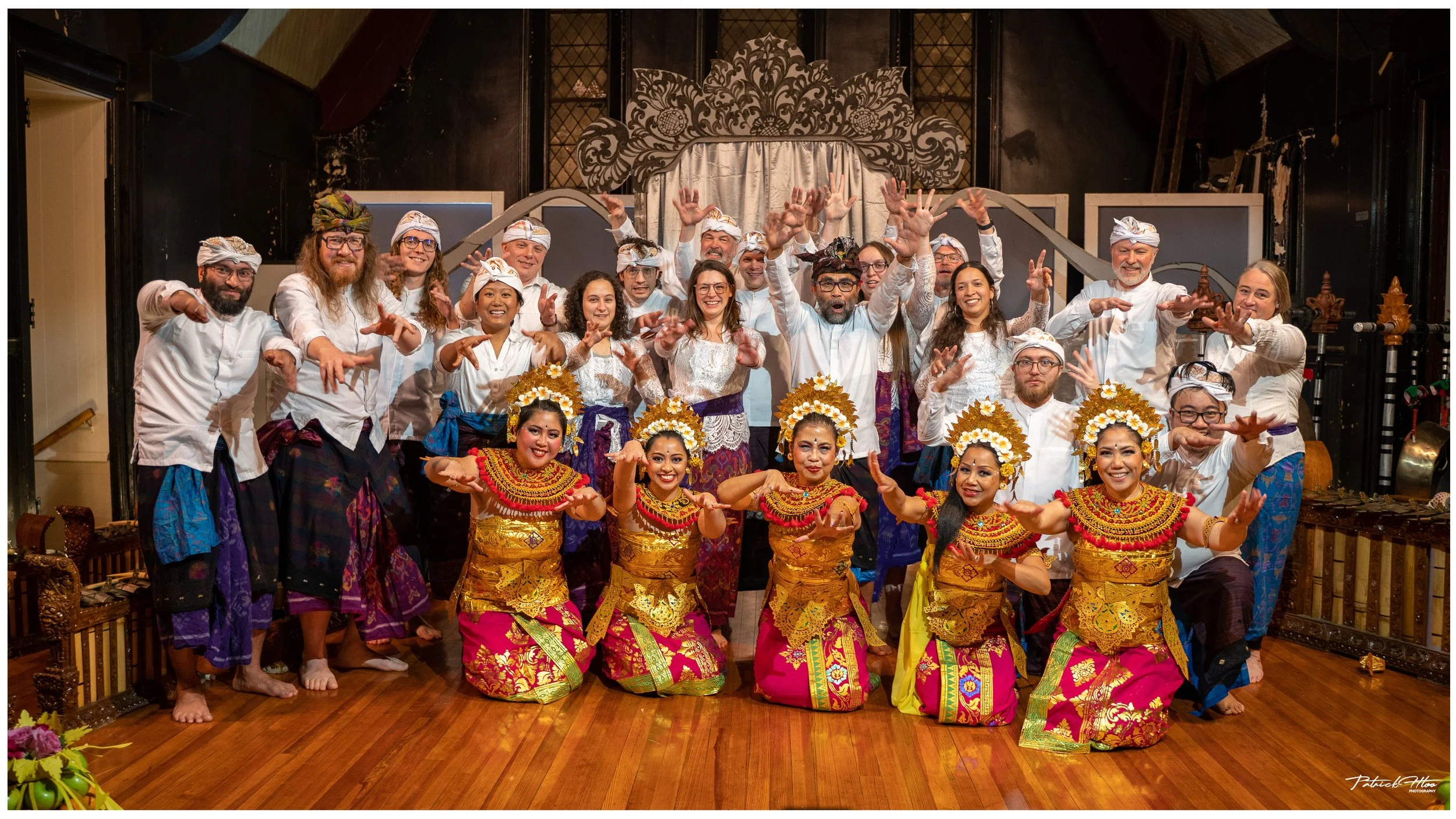
Photo by Patrick Htoo
“Nobody really knows exactly how far back it goes, but there are records or mythologies about Gamelan existing up to 2,000 years ago. On top of that, it’s still a living tradition.”
Hudson Valley Community College is hosting the Nusantara Arts Balinese Gamelan ensemble for a performance and two workshops as part of their new global cultures series. Thomas Torrisi, the Cultural Affairs Coordinator at HVCC, sat down with me to discuss the upcoming event.
‘Gamelan’ is an umbrella term to describe traditional Indonesian metal percussion instruments played in large ensembles. “It’s one of the oldest continuously performed musical traditions,” Torrisi tells me. “Nobody really knows exactly how far back it goes, but there are records or mythologies about Gamelan existing up to 2,000 years ago. On top of that, it’s still a living tradition.” Gamelan is still performed in Indonesia today, in addition to typical modern music.
Nusantara Arts, hailing from Buffalo, is a collective built out of love and a deep appreciation for the genre, inspiring the group to share the culture. There are two main styles of gamelan, Balinese and Javanese, from Bali and Java, respectively. Javanese gamelan, Torrisi explains, “tends to be slower, more meditative and thought provoking. Balinese is fast, explosive, exciting.” Nusantara Arts was the first U.S.-based organization to perform both Balinese and Javanese gamelan, an absolute feat for an American group.
For both styles of gamelan, “the music is built off of one melodic idea and sits in the middle of that texture.” The lower instruments will play a toned down, more simplistic version, while the higher octave instruments will play an elaboration, all mixing to form one cohesive piece.
“I say the melody is like the trunk of a tree,” Torrisi continues, “then the reduced parts are the roots of the tree, where they play more of the essential beats and support the melody. I would call the faster, higher parts the branches because they’re elaborations. They decorate the melody.”
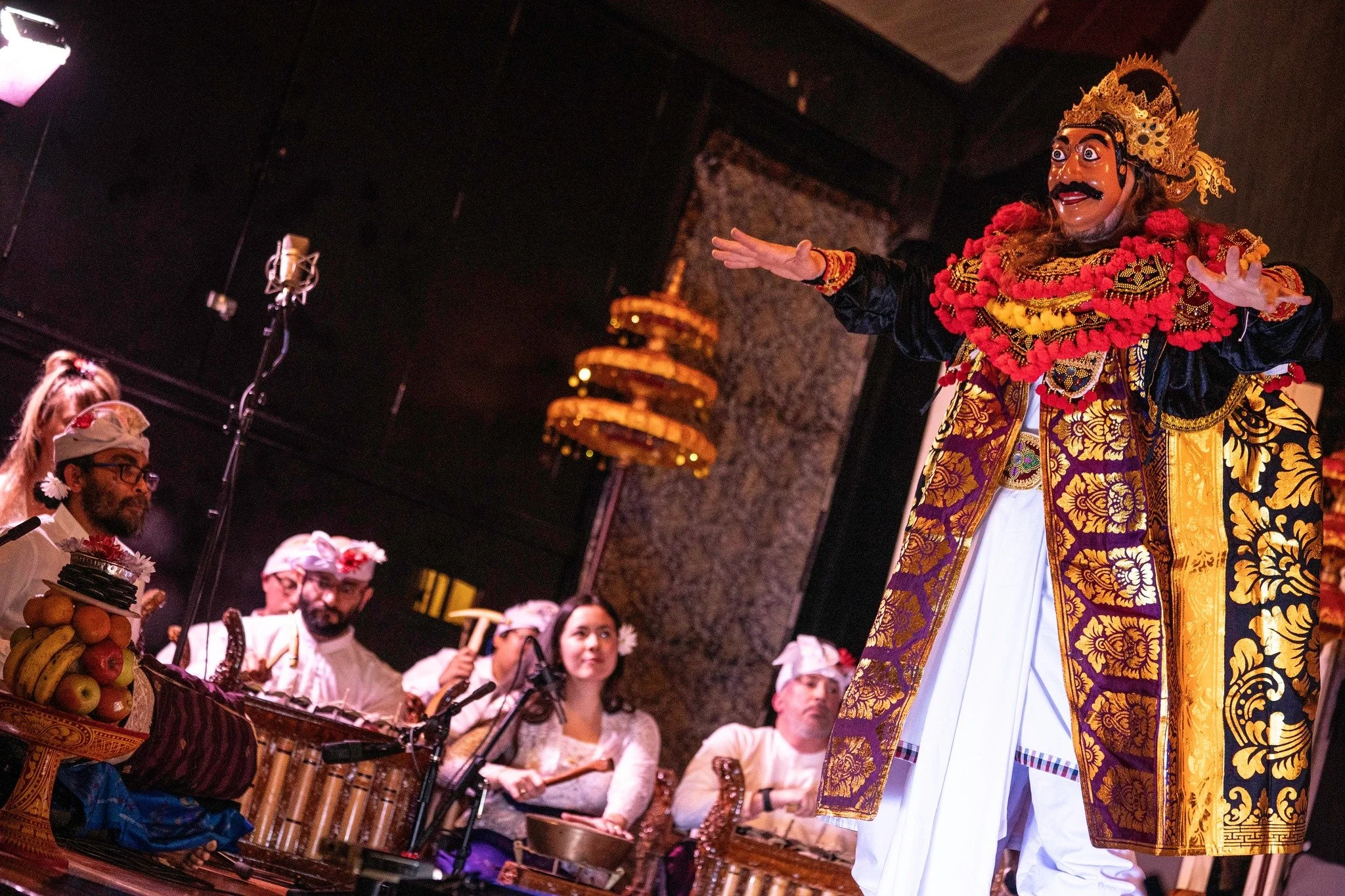
Photo by Brandon Bannon
Gamelan typically consists of xylophone-type instruments, large gongs, and various types of drums. Torrisi emphasizes that it’s rare that a gamelan group is traveling to perform because the instruments are quite difficult to move, many of them made in Indonesia. Some of the instruments are even built to be played by several people at once, such as the gender wayang, designed for two to four people and typically used during wayang, a type of puppetry.
Luckily, one of the workshops Nusantara will be hosting focuses on the instrumentals, a unique opportunity because of the rarity of these instruments in the U.S. The other workshop will be an introduction to the style of dance that accompanies gamelan performances. Typically, the dancers wear colorful, intricate, traditional costumes, sometimes paired with masks, where the dancers play certain stock characters, like Barong, the king of spirits, Rangda, the queen of black magic, Condong, the maidservant, or various warriors.
The instrument workshop will be held at noon and the dance workshop will follow at 1:30 p.m. Though HVCC students will be selected first, the college has made this entire event free to encourage everyone to try their hand at gamelan and see Nusantara in action. Both the workshops and the performance will be in the Maureen Stapleton Theater in the Siek Campus Center on the Hudson Valley campus.
For more information and to sign up for the workshops, go to hvcc.edu/culture where you will also find information about upcoming concerts including their Lunchtime Concerts series. For more about Nusantara Arts, go to nusantaraarts.com.