
PREVIEW: The 43rd Iroquois Arts Festival Celebrates Haudenosaunee Artists and Community
09/05—09/06 @ The Iroquois Museum, Howes Cave, NY
Photos provided
“I love teaching about who we are, not only our past, but also who we are as Native people today, and reminding people that we continue to exist as members of a contemporary community, that we are people of the 21st century.”
When strolling through the 43rd Annual Iroquois Arts Festival, the friendly voice of emcee Perry Ground will guide you through the annual weekend events. On September 5 and 6 at the Iroquois Museum in Howes Cave, NY, the Haudenosaunee Confederacy (known colonially as Iroquois) will have their creativity celebrated at this vibrant event that is as educational as it is deeply personal to the artists and attendees.
“We try to explain that Native people have been in North America and the Northeast for thousands and thousands of years, but people often don’t think of them as being here now, still being their own distinct culture,” says Museum Director and Anthropologist Stephanie Shultes. “The artists are fantastic for bringing that forward and showing people what their culture is all about through their art. That’s very important to us.”
Attendees, returning by yearly tradition or visiting for the first time, may be there to learn from the museum’s staff, discuss conservation with wildlife rehabilitator Kelly Martin, or try delicious food from the Haudenosaunee vendors. Some guests, says an amused Shultes, are just there to see the museum’s ‘resident cat’ of 14 years, Little Boy. With creamy orange fur and piercing hazel eyes, Little Boy watches over the proceedings with adoration from all who meet him.
Regardless of which corner of the festival that a guest wanders into, they will find an extraordinary testament to the Haudenosaunee’s traditional and contemporary arts and fine crafts. An estimated 25 artists will be selling their works, from stone carvers, bead workers, antler carvers, potters, and artisans of musical instruments, including special guest singer-songwriter Darryl Tonemah.
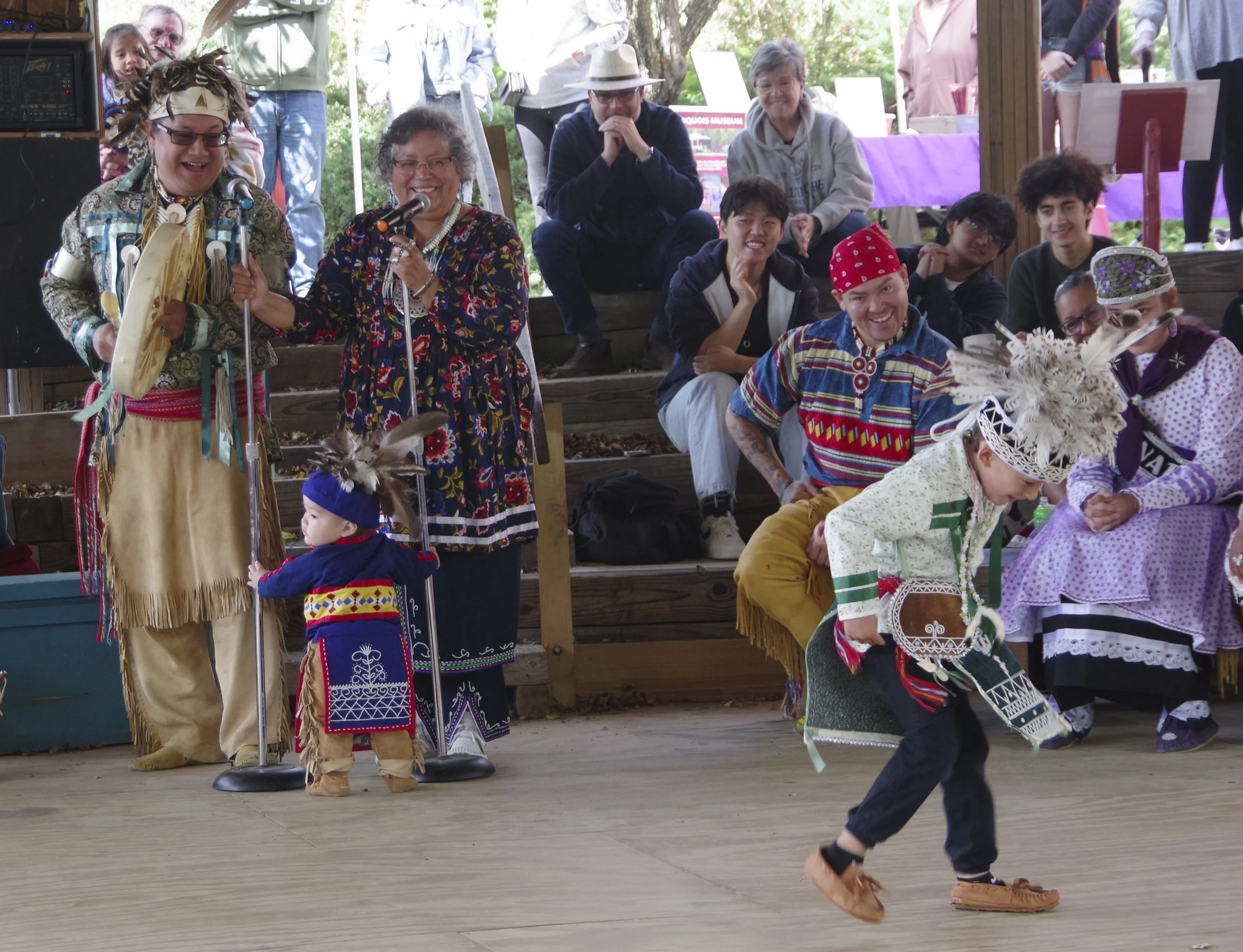
The Sky Dancers are a signature aspect of the weekend’s events, arriving since the first festival. “The babies at the first festival now have grandkids,” says Shultes with nostalgia. “It’s kind of like seeing your family that you only see once a year, because we’ve known some of these people for so many years.”
The museum itself plays an active role in the festival, as its archeology department will be available to offer artifact identification and demonstrations of early technologies.
“As they say, you really have to know your background in order to know where you are today,” says Shultes. “At our festival, our archeology department is set up so people can bring in things that they’ve found; we try to identify them and — if you are an amateur archeologist — talk about the best ways to keep a record of where that piece came from.”
In a program that complements the archeology department, the museum’s Cultural Interpreter and Educator, Michael Tarbell, will host Tools of the Hunt. He will explain the utilization of various tools and instruments made many years ago. Tarbell, an Akwesasne Mohawk of the Mohawk Nation Turtle Clan, has dedicated his life to the study and preservation of Haudenosaunee culture.
“There’s really something for everybody of all ages to have some fun,” notes Shultes. To engage younger attendees, the activity tent for children is one of the highlights of the festival. Children can make a cornhusk doll, bead a keychain or decorate a tote bag with symbols of the Haudenosaunee clan animals.
“What the activity tent does is reinforce a lot of the kinds of art that are being created by the Haudenosaunee but on a level for kids,” Shultes explains.
This is an example of the hands-on learning that the museum encourages. Textbooks and virtual learning environments can only simulate, explains Ground, what daily, lived-in culture looks like for so many people.
“People forget that we've evolved, that we continue to be part of this community, that we make contributions to America, to history, and American society,” says Ground. “For me, to talk about that is very important to remind people that we continue to be part of this community, not only in the past.”
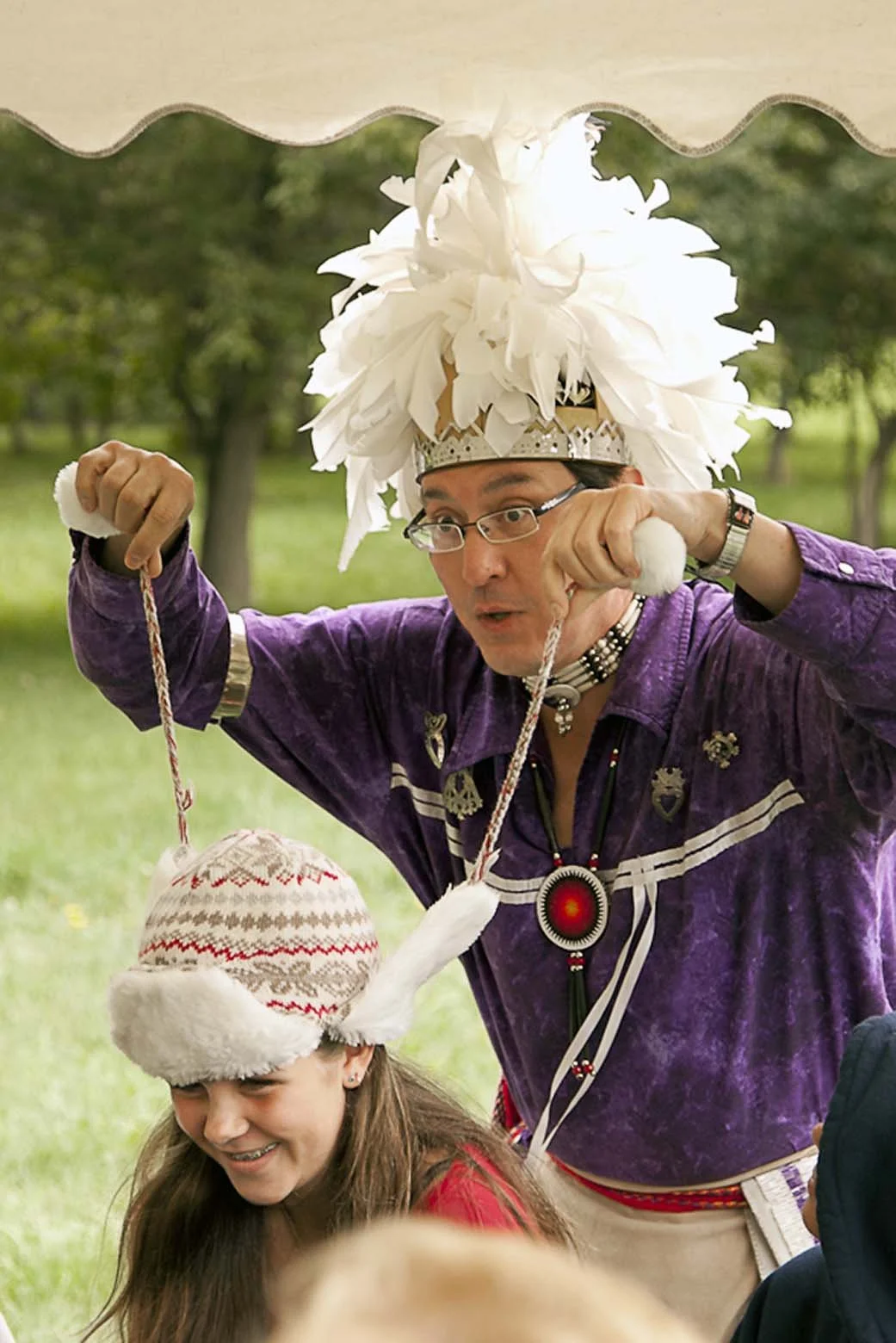
Ground likes to use himself as an ‘example’ for people to see. Providing this education is one of the most important things to him as a Traditional Storyteller and Cultural Educator. Attendees at festivals across the Northeast and beyond flock to see him. At the 43rd Annual Iroquois Arts Festival, he will be telling Haudenosaunee stories in-between emceeing the weekend’s events.
A member of the Onondaga Turtle Clan, his style of storytelling reflects his outgoing personality — theatrical, emotive, and passionate. Throughout the interview, he gestures, emotes, and speaks with the clarity that comes from experience serving as a seasoned educator. He puts his purpose succinctly: “I go where the stories are needed.”
Ground may be one of the most in-demand storytellers available, visiting over 200 festivals, shows, and other educational events in a given year. His schedule, he admits, fills up fast now that he has committed fully to this work full-time, but the annual Iroquois Arts Festival is ‘permanently’ set on his calendar.
“It’s a job, but it’s also my passion,” he continues. “I love sharing information about who we are as Native people. I love teaching about who we are, not only our past, but also who we are as Native people today, and reminding people that we continue to exist as members of a contemporary community, that we are people of the 21st century.”
Ground has been telling stories for 40 years, starting in college at Cornell University. At Cornell, he credits Storyteller Stephen Fadden, an Akwesasne Mohawk, as being instrumental to his realization that this was a path he wanted to explore. After working for the summer as a park aide at Ganondagan, a state park dedicated to Seneca culture in Victor, New York, he learned even more stories from Marion Miller, a Seneca storyteller.
Originally from Niagara Falls, Ground did not grow up on a reservation. His parents divorced, and his mother married into an Italian family. It was only when he visited family on the reservation that he was exposed to the culture that he was missing in daily life. While his peers on the reservation wanted to play outside, Ground was content to sit inside and soak in the stories.
“I was the one who wanted to sit around and listen to the older people talk about these things,” he recalls. This patience, willingness to learn, and penchant for research fuel his storytelling, such as in his masterfully engaging work, Stories from the People of the Longhouse.
Fresh out of Cornell, Ground began working at the Iroquois Museum. Despite how many festivals, schools, and museums he visits throughout the year, there is unmistakable affection in his voice for the Iroquois Museum. Fondly calling Shultes ‘Steph,’ he points out the significance of the house across the street from the Museum, which is situated among picturesque walking trails.
“This does feel like a homecoming, because I used to live across the street!” he laughs warmly. “It was my first professional job out of college, so it is nostalgic for me, but it also reminds me of the growth that I’ve gone through in my career in my learning and in my storytelling. I’m a different storyteller today than when I was 22 years old.”
Ground has built a repertoire of stories and refined his style. Maintaining this oral and written tradition is his life’s passion, and his love for it bubbles over exuberantly. “Positive” is a word he likes to use to describe himself and his approach to teaching. At the 43rd Annual Iroquois Arts Festival, he will lean into what he does best — reaching out to people, whether they have heard his story before or are just learning for the first time, like he did from his mentors.
“I get people from the audience involved in my stories,” explains Ground. “There are some storytellers that stand at the microphone and use their voice to weave the story or make animal sounds. Mine is a theatrical show. I am all over the stage. I jump off the stage, flapping my wings, whatever it might be.”
Making connections helps to generate the positive response he’s looking for. Even using physical locations can draw an audience in; if a story is about Speculator Lake in the Adirondack Mountains, there is familiarity from recalling a family vacation or studying it on a map of New York. This is the essence of the connection that Ground relates to Haudenosaunee culture.
“I have stories that specifically come from the Haudenosaunee,” he says. “I have this newer show I’ve been doing for a little while now that I call ‘Stories from Across Turtle Island’, where I'm telling stories from other tribes. People have really responded to that, especially here in New York because they have the opportunity to hear stories from the Navajo people, California tribes, Alaska, the Cherokee, Oklahoma, and South Dakota. I will talk about those tribes a little bit before I tell the story.”
He and Shultes both emphasize that the festival is not a novelty performance for tourists; it is an authentic, heartfelt celebration of culture. Ground observes that the audience, which is usually split between returning guests and new ones, can be ‘surprised’ by his cheerful approach to his work. It flies in the face of the negative, untrue stereotype of Indigenous Americans ‘not laughing, smiling, or having fun.’
He strongly opposes this absurd notion — and the full spectrum of the Haudenosaunee experience will be on display at the 43rd Annual Iroquois Arts Festival. Every artist, from storytellers to painters to bead workers, is a diverse example of Haudenosaunee joy, perseverance, and a thriving future.
“The culture is alive and dynamic… it’s going to continue,” affirms Ground. “We’ve been here a long time; we’re still here, and it’s very meaningful. It’s not just a show. It has meaning to us, and it’s going to continue.”
Included in the festival entrance fee is museum admission. The museum’s newest exhibit continues the theme of contemporary art that attendees can see at the festival. ‘Talkin' Bout a Revolution: A Haudenosaunee Response to the 250th’ offers an immersive perspective from over 20 Haudenosaunee artists about the 250th anniversary of the signing of the Declaration of Independence.
Festival attendance costs $8 for members and $10 for non-members. Children aged 5-17 are $5 and free under five.