
PREVIEW: Albany Film Festival Returns With Short Films and Notable Guests
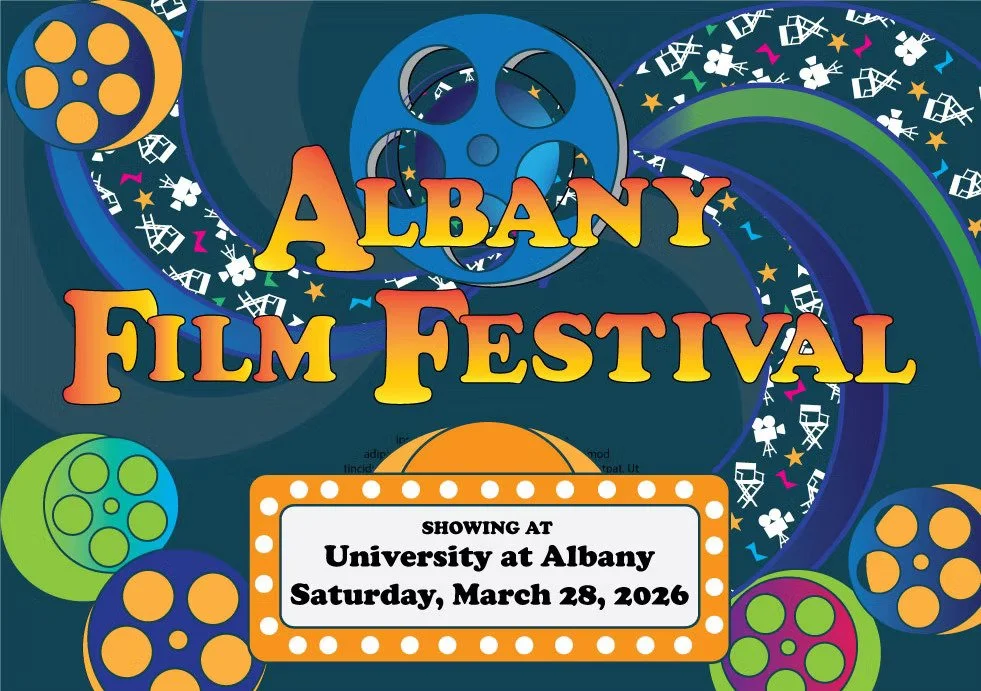
03/28 @ University at Albany, Albany
**This article originally appeared in our March 2026 print issue**
“When you bring writers and filmmakers into the same room, something electric happens.”
The Albany Film Festival returns with a newly refined sense of focus, on track to bring local filmmaking to the national stage.
Now in its sixth year, the Albany Film Festival is becoming a predominant state fixture, sitting alongside the likes of the Lake Placid Film Forum and the Woodstock Film Festival. It is firmly established as one of the Capital Region’s most vibrant cultural gatherings, and continues to blur the lines between literature and cinema, pairing bold storytelling with an open invitation to community participation. At the center of that vision is Paul Grondahl, Opalka Endowed Director of the New York State Writers Institute, whose collaboration with the festival has helped shape its identity as a place where writers, filmmakers, and audiences meet on equal footing.
“This festival grew out of a belief that great stories don’t belong to one medium,” Grondahl boasts. “Film, like literature, is about voice, point of view, and risk. Albany is the perfect place to explore that intersection.”
That philosophy defines the festival, which takes place on March 28, but stretches well beyond a single day. In the weeks leading up to the festival, audiences can attend free screenings tied to confirmed special guests, channeling energy from the buildup into an ongoing conversation about the art.
Among those guests is Oscar-nominated director and screenwriter John Sayles, whose work has long championed independent voices and regional storytelling. Sayles’ return to the Capital Region feels especially resonant given his deep ties to both filmmaking and literary culture of which the festival is now known for. Also confirmed is author Elijah Wald, whose book Dylan Goes Electric inspired the Timothée Chalamet film, A Complete Unknown. Together, their presence underscores the festival’s commitment to storytelling that travels freely between page and screen.
Grondahl sees those connections as essential. “When you bring writers and filmmakers into the same room, something electric happens. You start talking about structure, character, dialogue, and suddenly everyone realizes they’re asking the same questions, just in different languages.” That shared curiosity has become a hallmark of the festival and a major reason it continues to draw both local creatives and nationally recognized artists.
While the guest screenings build anticipation, the heart of the Albany Film Festival remains its celebration of short films, offering a snapshot of emerging voices and local talent. “Short films are where experimentation lives,” Grondahl said. “They’re fearless. You see people trying things, breaking rules, finding their voice in real time.” For audiences, the experience is immersive and immediate, with filmmakers often present to talk about their work and process.
That sense of access matters in a region where the arts play a vital role in shaping identity. The Capital Region has long nurtured writers, musicians, and filmmakers who choose to stay and build rather than leave. The Albany Film Festival reflects that choice back to the community.
“A festival like this tells people that their stories matter here,” Grondahl acknowledges. “It says you don’t have to go somewhere else to be taken seriously.”
The very partnership between the Albany Film Festival and New York State Writers Institute speaks to their belief that culture thrives when it is visible and accessible. “These events aren’t just for insiders,” Grondahl states. “They’re for anyone who loves a good story.” It offers a gathering like no other. One that plants Albany into the ground of some of the greatest film festivals New York has to offer.
For more information, visit https://www.albanyfilmfestival.org/