
MADE BY MANY: I’m Thinking About Leaving
**This column originally appeared in our December 2025 issue**
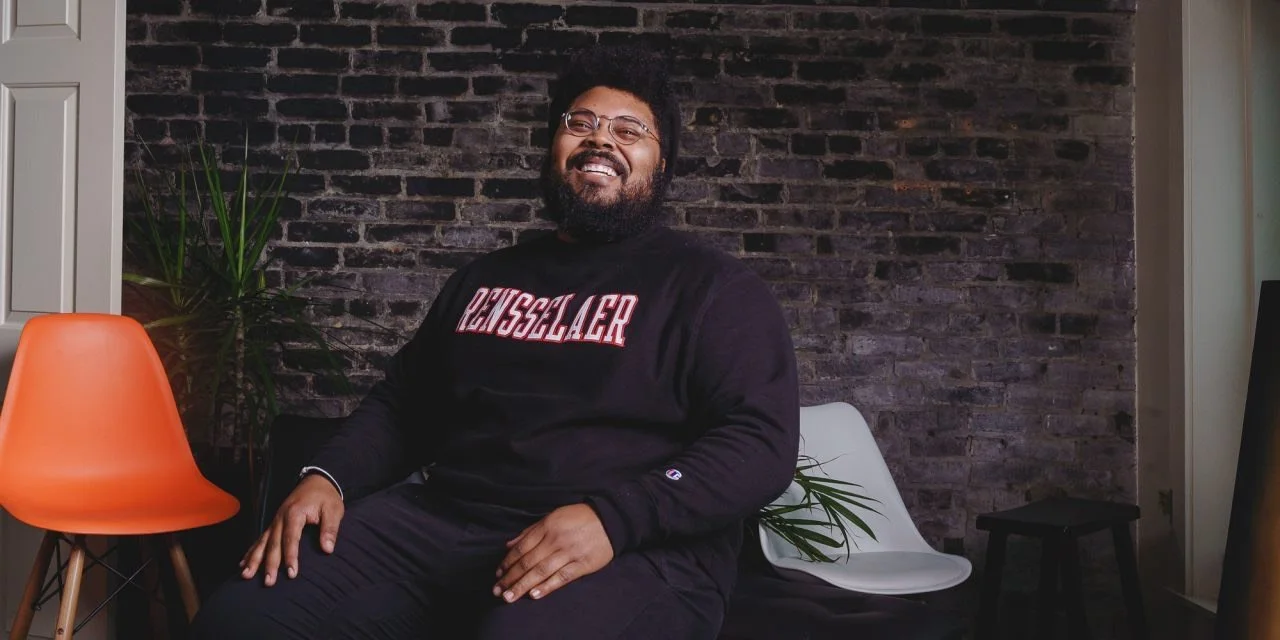
This is a conversation I’ve had with many people from many backgrounds, industries, and cultures over the 17 years I’ve spent in the 518. Some have stayed. Others have gone on to create incredible things that could have been built here.
When asked why, it’s obvious—but the way people arrive at the same answer is worth hearing. We fell in love with, cried over, bled almost to death, then rose from the fallen textile and iron industries, the blight of urban renewal, the degradation of culture from extractive tourism, and a general malaise toward anything “different.” We found footing in the pockets of protection created by people who believed there was something worth saving.
Our resilience has been our own—often stifled by those lacking the skillset to create or the interest in connecting with those who can. Mostly, it’s a misunderstanding of what it takes to build and rebuild.
“First life, then spaces, then buildings. The other way around never works.” — Jan Gehl, The Human Scale
My longtime friend and business partner Dan Lyles showed me a documentary that brought me closure to a part of my past and inspired something new. We met after I graduated from RPI in 2011 and connected over our shared interest in urban design—how people move through space.
I was an engineer who quit after freshman year and went into marketing and design when I really wanted to be an architect (they wouldn’t let me in because I wasn’t an artist then).
The Human Scale, directed by Andreas Dalsgaard and based on the work of Jan Gehl, explores how modern cities were built around cars and industry at the expense of human life and well-being. It asks: What if we built cities for people, not machines? That question would drive my life for the next decade.
At an early age, I learned about the necessity of space and place—how one’s environment shapes you. My dad, Pat Sr., was a youth football coach and college-prep consultant who became the central male figure in the lives of hundreds of young Black and Hispanic kids in my hometown of Riverhead on Long Island. Football became space and place. I translated that lesson into throwing parties at RPI for minority students often denied access to social spaces.
“A good city is like a good party—people stay longer than really necessary because they are enjoying themselves.” — Jan Gehl, Cities for People
When I found myself alone after graduation, I turned to what I knew best: throwing a good party. The Troy art scene was in its infancy. Spaces like 51 3rd were staples for fun weirdos who loved to make stuff. I threw after-parties at art shows. From 2012 to 2015 we made space wherever we could—living rooms, rooftops, parking lots. We got in a little trouble and had a lot of fun. The city was alive but didn’t know why. Still, people felt something when they came to Troy. Then someone called us “the new Brooklyn,” and everything changed. Developers circled the skies, and those of us who’d built the culture—now sold to a national audience—said, “Well… f*ck.”
Fast forward to 2025. The 518 is a partially known entity—viral TikToks about how boring Albany is, how dangerous Troy and its police are, and varying ways to pronounce “Schenectady” from the mouths of celebrities. We are here, a shell of ourselves, and at great cost.
Our story has been bastardized by newcomers and city officials convinced that lofts and NYC transplants equal success. Folks who left and returned tell me it “doesn’t feel good anymore.” I can’t disagree. We lost our way before we could define ourselves. The “life” that must come first, as Gehl says—the life that turned our lights back on—has been strangled by the idea that this place was meant for everyone else but us: the creatives, the risk-takers, the ones who believed before the headlines.
Before anyone thought of calling North Central Troy “NoHo” (north of Hoosick—thank God it didn’t stick), the 518 was a playground for those who knew making something here and now was the best thing we could do. And we did. Then we went on, unsupported by institutions that save a buck while selling us “exposure.”
We relied on one another to eat, sleep, find gigs, and build something of this effort that’s been extracted and rinsed dry. Some of us left. I stayed. I built, engaged, and held space with my partners.
Without life, space and place mean nothing. Culture doesn’t fit into an appraisal. It’s harder to value when you don’t understand who gives a place life. As sociologist David A. Banks warns in The City Authentic, “Cities are branding themselves into predictably unique products,” turning place into a packaged aesthetic to be consumed, not inhabited. Heritage becomes veneer. Identity becomes a marketing line.
“Public life in good-quality public spaces is an important part of a democratic life and a full life.” — Jan Gehl, Cities for People
Cities that invest in culture retain talent and attract sustainable growth. Getting back on track means remembering that cities and people are not portfolios. The lesson of The Human Scale is simple: start with life, then build around it. When we invest in connection—in places where people meet, create, and belong—the value follows. Real resilience isn’t measured in square feet but in how long people want to stay.
The path forward isn’t to abandon development but to redefine it. Growth grounded in human experience—walkable streets, art, and shared space—is the kind that endures. When culture is treated as core infrastructure, cities don’t just survive market cycles—they evolve through them.
So what’s a good first step? Find the people who stayed. Ask how and why they did. Support them financially, center their stories, and build something real. And if you’re a creative reading this who hasn’t yet found a space and place, reach out to me. I probably know some people for you.