INTERVIEW: How Young Futures Co. Is Making Money Palatable for Capital Region Kids
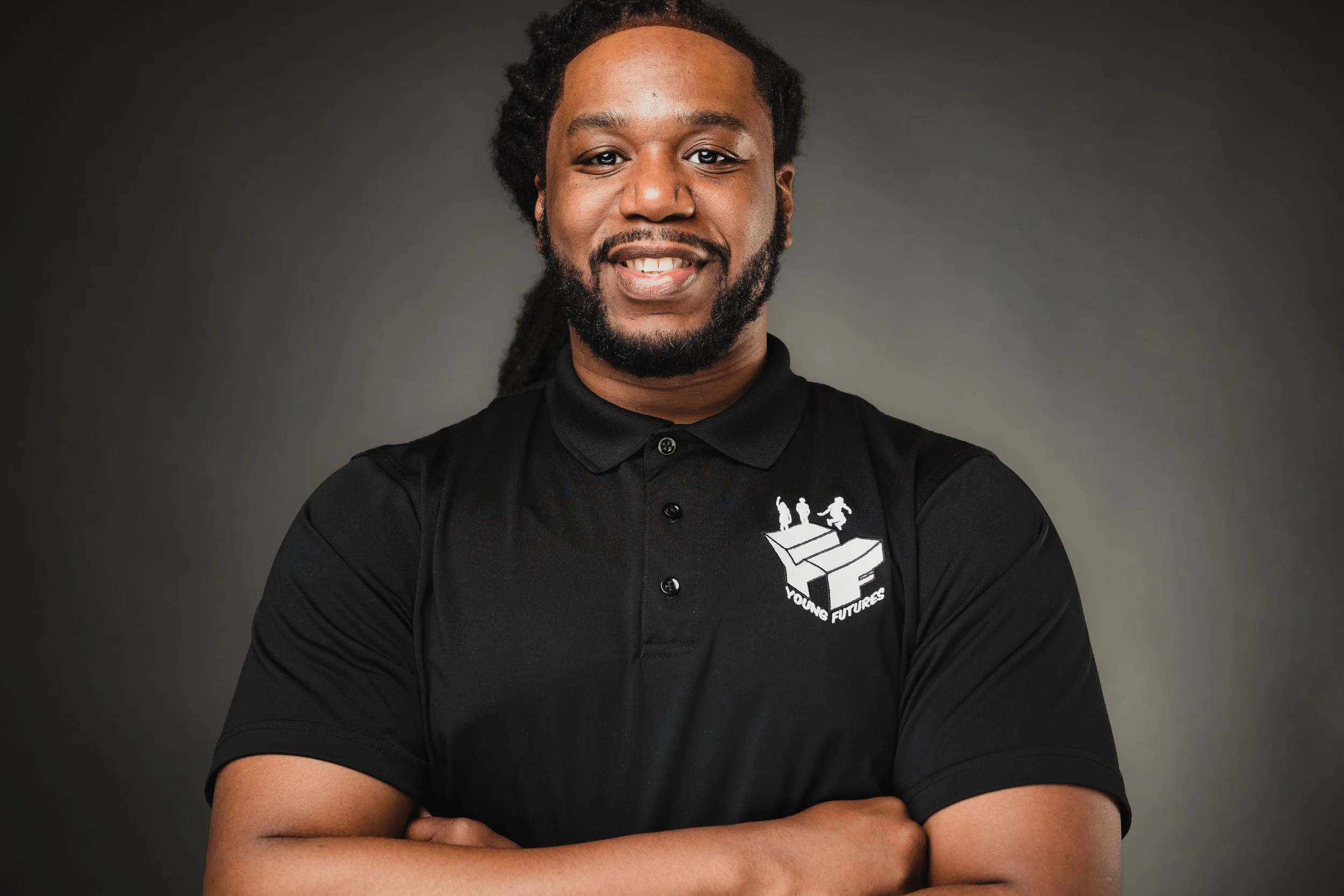
Photo by Andrew Elder
“I know the age group that we serve. We want to have something that attracts their attention.”
In many households nationwide, money is the silent guest at the dinner table — the elephant in the room too taboo to address, especially when it's between parent and child. James Mitchell, the founder of Young Futures Co., is trying to change that.
“If you don't have the conversation, and the conversation's never had, then the cycle just repeats,” Mitchell says.
By creating a financial literacy program that empowers young people, particularly those from low-income families, to talk about finances without feeling shame, Mitchell is helping to dismantle the stigma that often surrounds money and the belief that finances are something to fear instead of understand.
His mission is simple, but important in a society that preys upon ignorance. To ensure that the children in his classes grow up viewing aspects of finances in a serious manner, like credit cards, treating them as actual money, not just a piece of plastic that gives them permission to spend without consequences.
For Mitchell, breaking this cycle wasn’t about the “traditional” classroom approach with unengaging textbooks or lectures that are often forgettable. If he wants children as young as seven to understand the concepts of equity, interest rates, investing, saving, banking and selling products, he knew he had to make those ideas approachable.
“I know the age group that we serve. We want to have something that attracts their attention,” he tells me. “With the art projects, we are able to convert some of the lessons so it ties directly into the art, making it a bit more palatable.”
This “palatable” approach is the life line of Young Futures Co.; it's what makes it unique to other financial literacy programs, transforming the daunting parts of entering young-adulthood into something tangible.
Each lesson pairs at least one financial literacy concept with a hands-on-project, giving students something they can physically connect to and better conceptualize for years after they complete the course. When the discussion is centered on budgeting, students are challenged by being given a limited amount of paint to use across an entire canvas. A lesson centered on banking comes with a ceramic piggy bank they paint and get to take home. But Mitchell’s favorite lesson of all begins with nothing more than a pile of shaved wax on the desks.
To the students at first, these scraps look like trash, but by the end of class, the students have melted the shavings down into cinnamon scented candles. The point of this lesson isn’t to teach them how to make candles; it’s about teaching kids how something gains value through work — a tangible way to understand the concept of equity.
“You can kind of visualize the information and internalize it a little bit more, as opposed to just reading something on a sheet and answering questions,” Mitchell says. “I do think that component really, really allows the students to retain the information a lot longer.”
The same idea is carried across into other lessons, much like Mitchell’s “candy game,” where students borrow pieces of candy before having some taken back through interest, giving them a memorable lesson on the cost of borrowing money.
“They’re not at the age where they can actually do anything,” Mitchell notes, “but now, when they get that first credit card, they know instead of signing the agreement and spending the money, they have to pay it back.”
According to Young Futures’ annual report, students who completed the program saw a 196% increase in financial competency, while participants at Arbor Hill Elementary alone saw a 369% increase.
Mitchell says that although these numbers were encouraging, they aren’t what sticks with him the most. It is his students, and the application of what they learn outside of the classroom.
One reached out to him nearly a year after completing the course asking for help opening a custodial brokerage account so that she could begin investing. Another, at just 12-years-old emailed her school dean herself in hopes of integrating Young Futures into her school’s curriculum so her classmates could have the same opportunities.
“There’s no way I can really articulate that feeling,” Mitchell admits. “A child taking the initiative to ask about financial literacy… she wants her peers to have that same experience.”
Mitchell says that there have been plenty of moments that made him question whether he could keep going with the organization — before Young Futures, he worked a traditional nine-to-five job. Starting a nonprofit meant learning an entirely different skill set while trying to keep the programs free and accessible to as many families as possible. But finding funding, he says, has been one of the biggest hurdles.
He shares that people have even called him a “toxic optimist” because of his refusal to give up when the funding runs low or the future feels uncertain. Even so, he believes too strongly in the work Young Futures is doing to let those moments stop him.
Despite the large amount of time he has devoted to the organization, Mitchell does not want all the credit. He even dislikes being called the "founder" of Young Futures, because, in his eyes, the project is a public resource for everyone, not a business he built for himself.
“I don’t consider Young Futures my foundation,” he says. “I typically say it’s the community’s organization, and I am just here to run it in a way where it supports the community, the best way it can.”
That mindset has allowed him to weave the organization, and the programs it offers, into the fabric of the Capital Region.
For more information, visit youngfuturesco.com.