
INTERVIEW: A Troy Hidden Gem: Through the Lens of Time
Photos by Elissa Ebersold
“It is an amazingly eclectic collection of a whole host of different areas of interest. Nick's eclectic nature has brought together a wonderful confluence of objects."
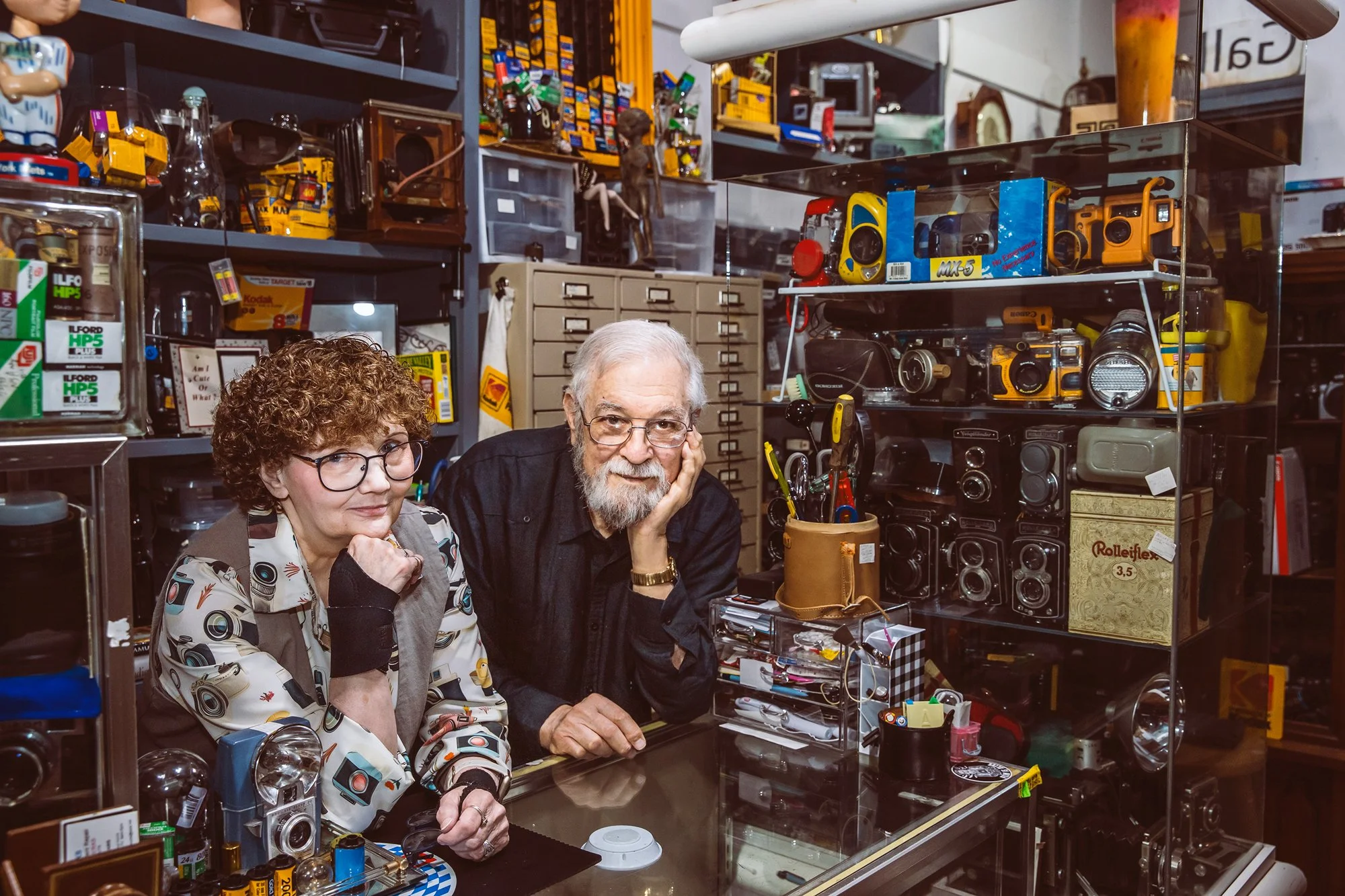
As you age, you see life through a different lens. Nick Argyros views it through at least 1,500 lenses.
“Nikon Nick” is an 83-year-old “conspicuous acquisitioner” and the owner of The Photography Center of the Capital District, in Troy.
His brownstone store is covered with ivory and marked with a small sign: “Photocenter.” Compared to its unassuming outside, the inside was quite the opposite. I was perplexed when I first entered. It’s the kind of place you could look around for hours and not get bored.
The clutter is a result of Nick's enormous collection. He goes to auctions, estate sales, and whatever he deems worthy to find the gems that fill the store.
“I am fascinated by anything that requires specific craftsmanship,” he told me as he glanced around at his inventory. “To be able to make something — whether it was something ceramic, or wooden carving, or something that required some kind of specialized talent — I was always fascinated by that.”
However, the center wasn’t always a store, and even today, their minimal advertising proves that revenue is not their primary objective. In 2005, Nick used his retirement funds to start a nonprofit membership photo gallery. Despite his experience as a statistician and math teacher, and little experience as a photographer, it was clear Nick was pursuing his passion.
“There were talented people who had hobbies in photography,” he said. “So I felt they needed to have a place.”
Nick cultivated a space where photographers from the area could showcase their work. He hosted salon nights, movie nights, dinner nights. He even had students come in and showcase their photography, offering opportunities to win a scholarship. “And then a pandemic came along,” he sighed.
Since the gallery was shuttered by COVID, Nick had to think quickly about what to do with the space.
“We've already had much of the whole history of photography,” he explained. “I have images that were made in the 1800s, 1840s, and 1850s.”
So, he decided to put his collection to use. He turned it into a shop showcasing all the photography, cameras and more that he’s acquired over the years. Or as he lovingly calls it, a museum of the history of photography — which is a work in progress.
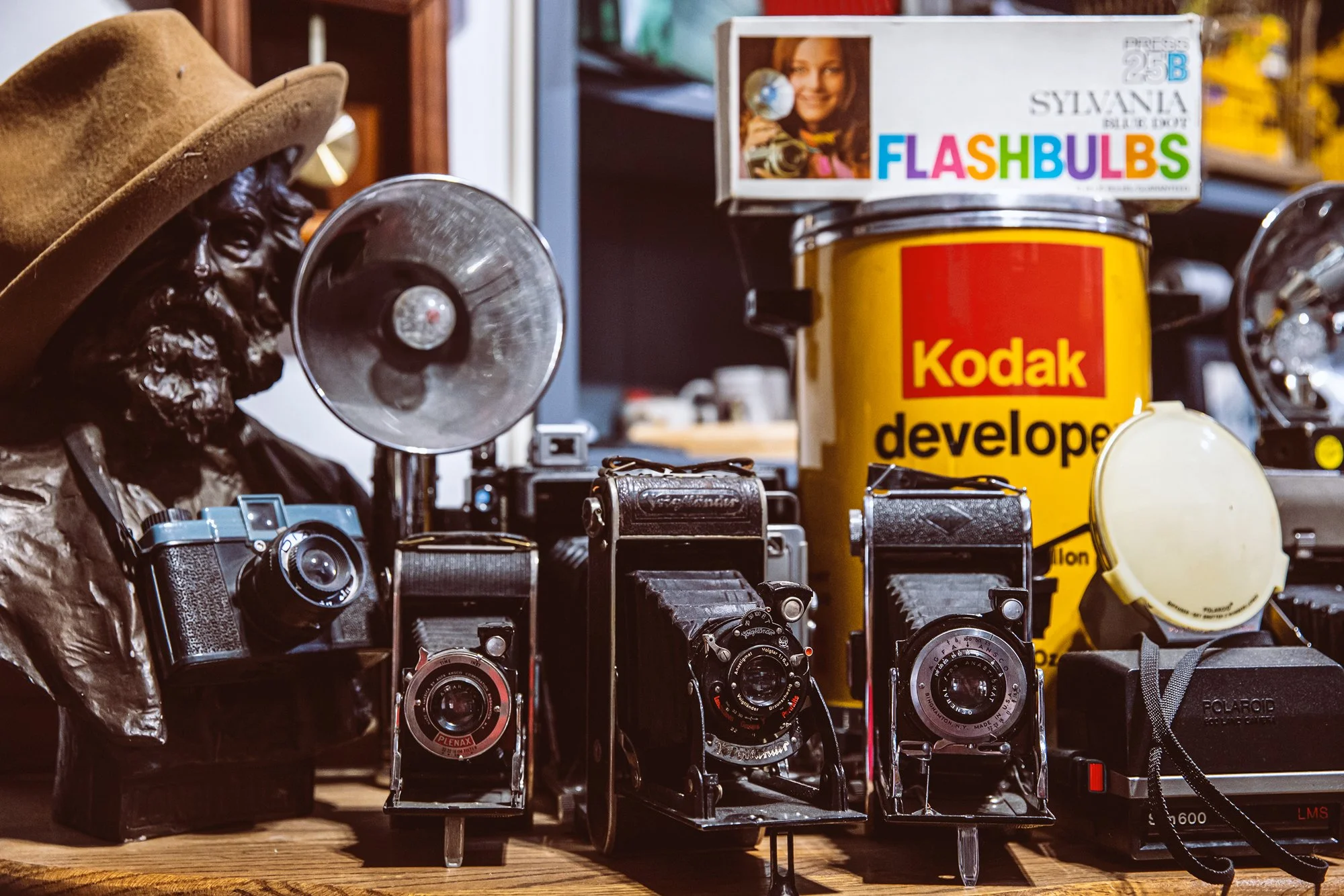
The store has a narrow strip of a walkway, almost like a maze, and every other foot of the place is covered with an abundance of things — crafted lamps, paintings, clocks, vintage photos, cameras and art of all kinds.
However, right as you enter, your attention is grabbed by the short, curly haired woman, Luanne M. Ferris.
“It is an amazingly eclectic collection of a whole host of different areas of interest,” Luanne said, describing the store. “Nick's eclectic nature has brought together a wonderful confluence of objects.”
Luanne is a 66-year-old photographer, and the Associate Director of the shop. She is the opposite of Nick. Talkative, excited, and extremely blunt: “I’m not afraid of shit,” she laughed.
They met through a photoclub, which she was invited to be a judge at, and Nick was a member of. Eventually, when Nick started the business, Luanne would come in as a customer. Four years ago, after coming into the store multiple times, she decided she wanted to help him out.
“This is where my OCD meets his ADD,” she explained. Their roles are set. She does the organizing, and selling. He knows the history, and collects. “The collection is ever growing. I'm constantly trying to put out a fire.”
Although they bicker, you feel the love they have for each other. “We probably would not still be in existence without Luanne,” Nick told me.
As I entered the store, she stopped me immediately. “Did you find us through the TikTok?” she asked eagerly.
The shop gained recent popularity after a TikTok user featured them and the video gained traction. In fact, that is indeed how I discovered the hidden gem in the first place. And because of my love for vintage finds and new interest in photography, I had to go check it out.
Ironically, Luanne and Nick described the overall impact cell phones have on photography. As phone cameras advance, older photography becomes further out of touch. Yet, it’s due to a social media platform that their business has been gaining recent traction.
Nonetheless, I’m very happy I doomscrolled that day.
“Point to your earliest cameras and write down a list of, let's say, the 50 most important cameras in history,” Luanne said proudly. “And they're in here. We have them.”
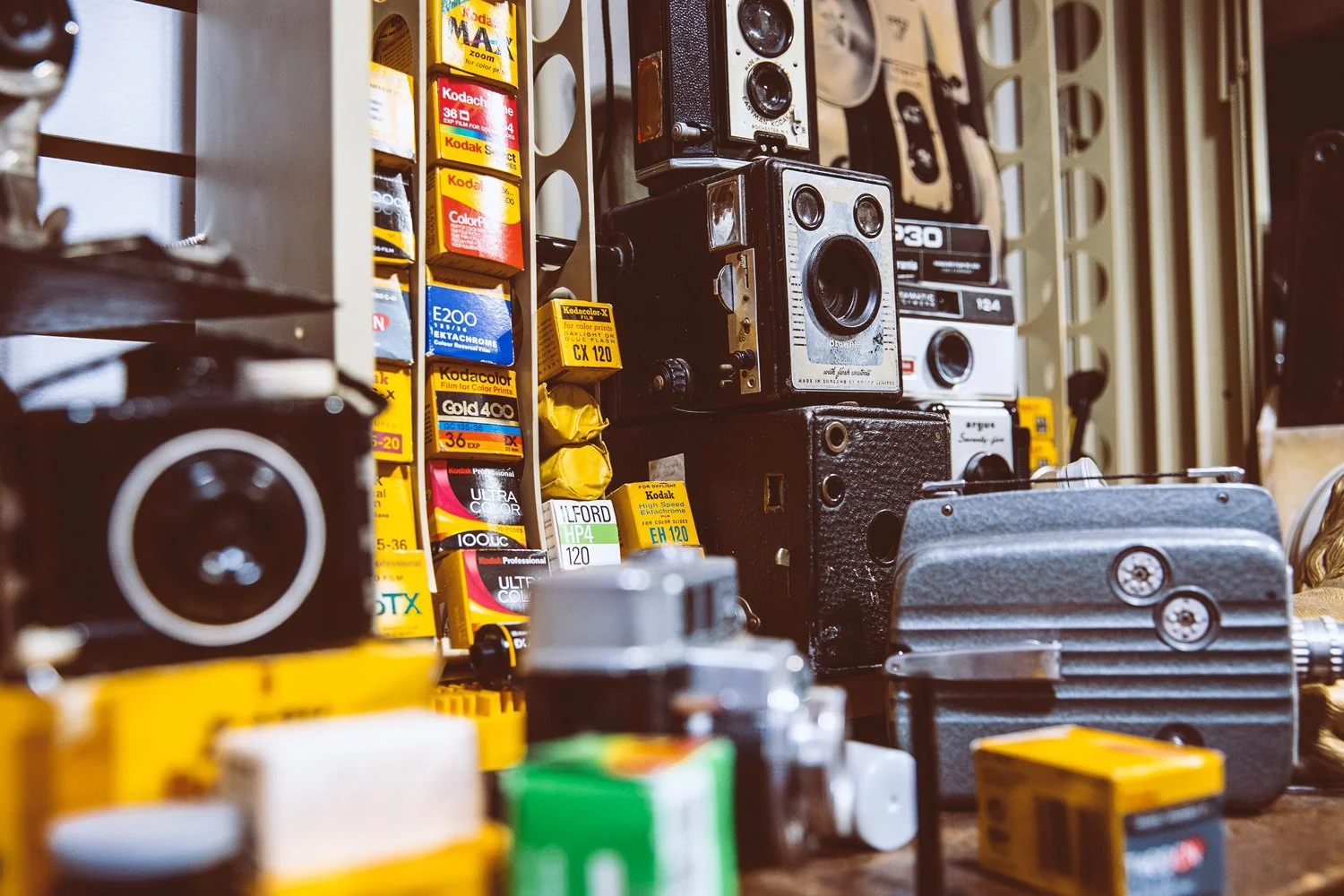
The Photography Center of the Capital District has at least 1,500 cameras. They carry Nikon, Canon, Panasonic, and basically any camera brand you can imagine from the 1840s to now. They also have “probably a million” photographs from the 1800s to today.
At one point, Nick pulled out a photo album he recently got from an auction. It was from Ireland in the 1800’s. I watched him examine the pages as he flipped through, noticing each family portrait. He didn’t just admire the images, but recognized the art of the photographic process behind it.
Nick and Luanne's dedication to collecting and sharing so much photography has been remarkable. They grant immense amounts of time to simply showcase the artwork and cameras they collect.
So, the question is: why photography?
“You're making moments in time more tangible,” Luanne described. “An artist with a paintbrush doesn't have to have anything real. But a photographer is pointing at something that's real, something that someone will pause to look at — that's important,” Nick added.
Photography helps us learn. It makes us better. It educates and presents the hard truth, granting it a role in society that evokes change. Photography shows the raw, unfiltered past.
“We've seen what happens when we don't learn from history,” Luanne started. “We're supposed to be individuals who regroup and learn from our mistakes and do better. And when you know better, you do better.”
A huge contrast I noticed in the store is an influx of not just cameras, but clocks. So, I asked Nick the reasons behind having almost as many clocks as photographs.
“A photograph freezes an instant in time and place. I need to be reminded that time is moving. Every second is going by. And we have only a limited number of them. So a clock is the opposite of a photograph. And that's why I started to collect [them].”
While it looks like clutter, everything Nick and Luanne have and do is intentional. They don’t just sell cameras, but they teach customers how to use them.
Luanne crafted a page of photography terms that she teaches customers, hoping they leave with more knowledge than they entered with.
“Somebody described me earlier as a drill sergeant,” she grinned. “You learn these terms because if you don't learn these terms and how they relate to each other, you're not speaking the language of photography.”
The more people understand about photography, the more they are able to respect Nick’s vast archive of art, history and humanity.
“This is one of the most amazing collections, probably in the world. And I am here because of Nick,” Luanne said. “I'm trying to organize one of the most amazing things I've ever seen in my life and make it more presentable so that people can appreciate his life's work.”
In March of this year, the shop's basement flooded intensely, ruining thousands of Nick's archives. It set them back immensely, and is a significant reason why the place seems so unorganized.
As they recover, they are working on forming a museum within the center where they showcase a side-to-side comparison of a camera, and the photograph it took. It will be the only museum in the world to have both presented together.
“I want to leave something behind besides a hole in the ground,” Nick muttered sincerely. “And maybe, maybe it'll last beyond me.”
For more information, visit www.photocentertroy.org or their shop at 404 River Street in Troy.