
INTERVIEW: The Long Hike Toward Healing in Darryl McGrath’s The Message Catcher
**This article originally appeared in our April 2026 print issue**
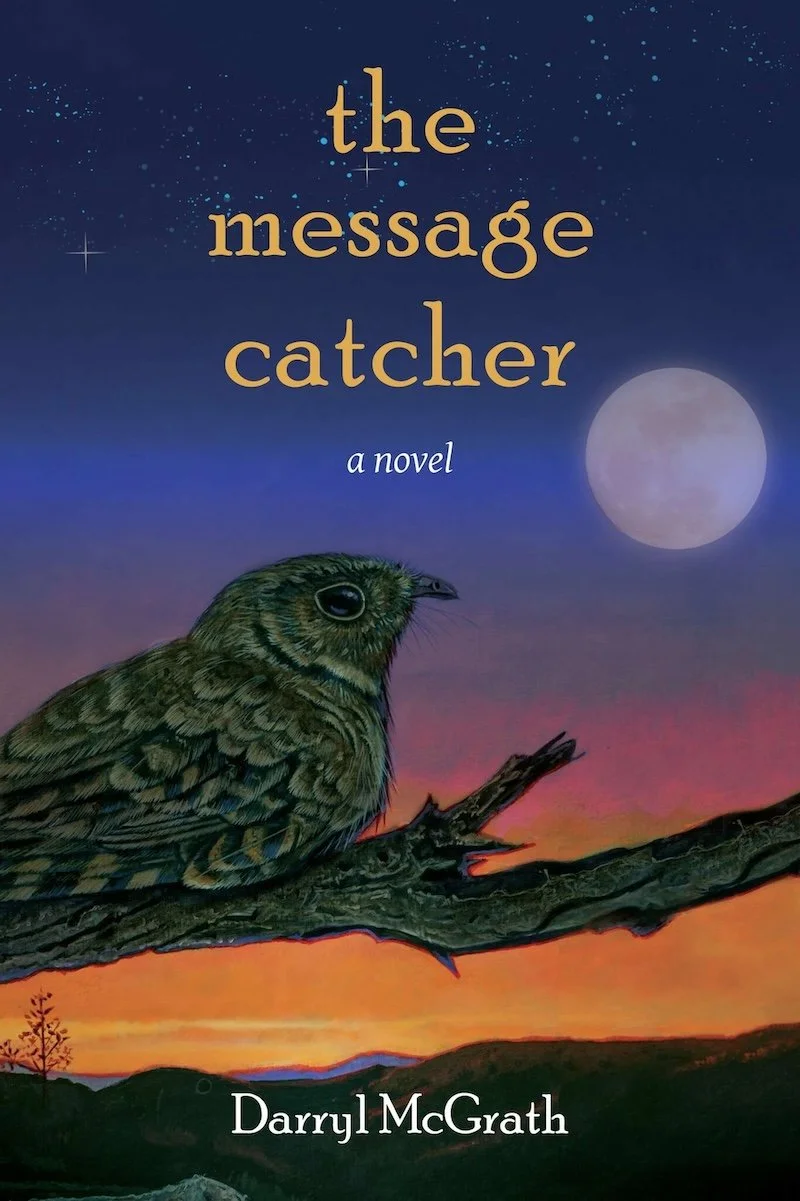
“Where the novel finds its most surprising power is not in loss, but in movement.”
Darryl McGrath did not set out to write a novel. She set out to survive. What emerges from that effort is The Message Catcher, a deeply-felt work of fiction that reads with the emotional clarity of lived experiences. McGrath, a longtime journalist and former reporter for the Times Union, channels personal grief into a narrative that is both intimate and empowering. The result is a novel that lingers not because it dramatizes loss, but because it insists that life, even after devastation, still asks to be lived.
The emotional center of the novel grows from McGrath’s own history. In 2013, she survived a life-threatening allergic emergency while vacationing on Cape Cod. Her husband, editorial writer Jim McGrath, rushed her toward medical help, only to suffer a sudden cardiac arrest and die while following the ambulance. McGrath has described the aftermath as “sudden traumatic widowhood,” a phrase that captures the brutal immediacy of loss.
“As a writer, I knew I would have to write about this event,” she later reflected. At first she imagined a memoir. Instead, she discovered that fiction offered a wider emotional landscape with an audience experiencing similar grief.
The novel follows Davie Devlin, a woman whose life fractures after the death of her husband Michael. The parallels to McGrath’s own story are clear but never feel exploitative. Instead, the book approaches grief with the curiosity of someone determined to understand it. Davie moves through the bewildering early stages of widowhood where friends do not know what to say, the rhythms of daily life collapse, and the future seems abstract.
McGrath writes those early passages with quiet precision. At one point, Davie reflects that grief is “not a single feeling, but a thousand small shocks arriving at random.” Moments like this show McGrath’s gift for translating emotional chaos into language that feels both poetic and grounded.
Where the novel finds its most surprising power is not in loss, but in movement. Davie’s friend Andrea convinces her to try a backpacking trip along the Appalachian Trail, an experience that mirrors McGrath’s own introduction to long distance hiking. What begins as a short three-day outing slowly evolves into a ritual of endurance and healing. The physical act of walking becomes a form of meditation.
McGrath captures that transformation beautifully. Davie notes that when she walks long enough, the noise of grief fades into something quieter. The trail demands attention to simple things like water, weather, and the next step. The character begins to rebuild her sense of self not through dramatic revelations, but through persistence. The message of the novel is clear: Healing is rarely sudden. It accumulates mile by mile. One step at a time.
McGrath herself has hiked more than 600 miles of the Appalachian Trail across multiple states, often alone. She has described the experience as both restorative and liberating. “Backpacking taught me how to be more self-sufficient,” she said. “You spend hours walking and solving problems in your head.” That philosophy permeates the book, giving Davie’s journey an authenticity that readers can feel in every muddy boot step and sleepless night in a tent.
One particularly memorable scene places Davie alone in the woods as she hears a bear moving somewhere beyond the thin fabric of her tent. The moment is tense but oddly calming. Fear sharpens her senses and reminds her she is still part of the world. The forest does not eliminate grief, but it offers space where it can breathe.
By the novel’s final pages, McGrath refuses the temptation of easy closure. Davie’s life continues to expand but it does not erase what came before. The ending feels honest and hopeful. Realistic rather than tidy. That restraint becomes one of the book’s greatest strengths.
For readers in the Capital Region, the novel carries another layer of meaning. McGrath is not an outsider passing through the literary landscape, she is part of the community’s journalistic and cultural fabric. Her decision to transform private tragedy into a work of fiction reflects a broader tradition of storytelling where writers draw deeply from lived experience. The voice that emerges in The Message Catcher is compassionate and deeply human.
For readers searching for a story about resilience that feels authentic rather than sentimental, Darryl McGrath has delivered something rare. She has written a novel that listens carefully to sorrow and then gently reminds us that hope still has a voice. For readers facing despair, she delivers the message that recovery is possible, and that message lands with passive force. The novel does not pretend that grief disappears, but instead shows that meaning can still be found in motion, friendship, and the long-patient work of rebuilding a life.
The Message Catcher is available online and at many independent bookstores throughout the area.