
INTERVIEW: Peter Lesser Honors a Historic West Coast Venue in New Book
“Not to get too dreamy about it, but I think that is how these places end up surviving — that passion and willingness to make sure good music gets out there no matter what.”
As fans of live music, we all have our favorite places to see a show. Venues that hold a special place in our hearts for any number of reasons, be it nostalgia, sound, or even just the fact that they have relatively clean bathrooms. But generally speaking, there are only so many venues that cross the threshold into becoming truly legendary.
CBGBs. The Grand Ole Opry. Red Rocks. Madison Square Garden. You know the spots I’m talking about.
The status of “iconic” isn’t just limited to household names, however. There are places you likely haven’t heard of that are rife with history, quietly hosting intimate performances from some of the biggest stars in music. One such place is McCabe’s Guitar Shop on Pico Boulevard in Santa Monica, California. Opened in 1958 and presenting concerts since 1969, it’s a place that has become synonymous with hosting singer-songwriters of all walks of life, eager to perform in front of an attentive, passionate audience of no more than 150 people at a time. Take my word for the fact that McCabe’s deserves an “oral history” — who better to write such a thing than somebody with plenty of his own experience behind the scenes at revered venues?
Enter Peter Lesser. For over 30 years, he was the concert director for The Egg and Troy Savings Bank Music Hall, two beloved venues in our neck of the woods. When it came time to retire in 2021, he and his wife moved out to Santa Monica to be closer to their two adult daughters, leading him to become more acquainted with the folks at McCabe’s.
“I actually had been aware of it for many, many years,” Lesser tells me. “McCabe's, besides being a music store and a place that fixes instruments, obviously is also a concert venue. They recorded a whole string of albums there — Takoma Records, which was started by a guitarist named John Fahey in Takoma Park, Maryland, eventually moved just two doors down from McCabe's. They had the idea to record [and release] the concerts taking place there.”
The first to see a proper release was Norman Blake Live at McCabe's in 1976, an album which Lesser owned and loved. This introduction to McCabe’s led him to keep up with it throughout the years, especially as he became a concert director. It was an inspiring place, even from 3,000 miles away.
“Here was this little store that had 150 seats, basically presenting many of the same artists that I was trying to present in a 1,000 or more seat venue. How do they do that? Why are artists that I’m trying to convince to come here, so easily playing there?”
In February of 2022 — almost exactly four years before releasing his book — Lesser got to experience McCabe’s in person for the first time, attending their first show back after the COVID shutdown. It was at this show that some of Lesser’s questions were answered.
“Their concert director was introducing the show and welcoming everybody,” he recalls. “[He spoke] a little about the history of the place. You walk around and there's all these photos of people who have played there, and I got really interested in their history. I thought, ‘There's got to be a book about this somewhere.’ There was not. One thing led to another, and I got a hold of these folks and told them that I'd be willing to research and write a book. Long story short, here it is.”
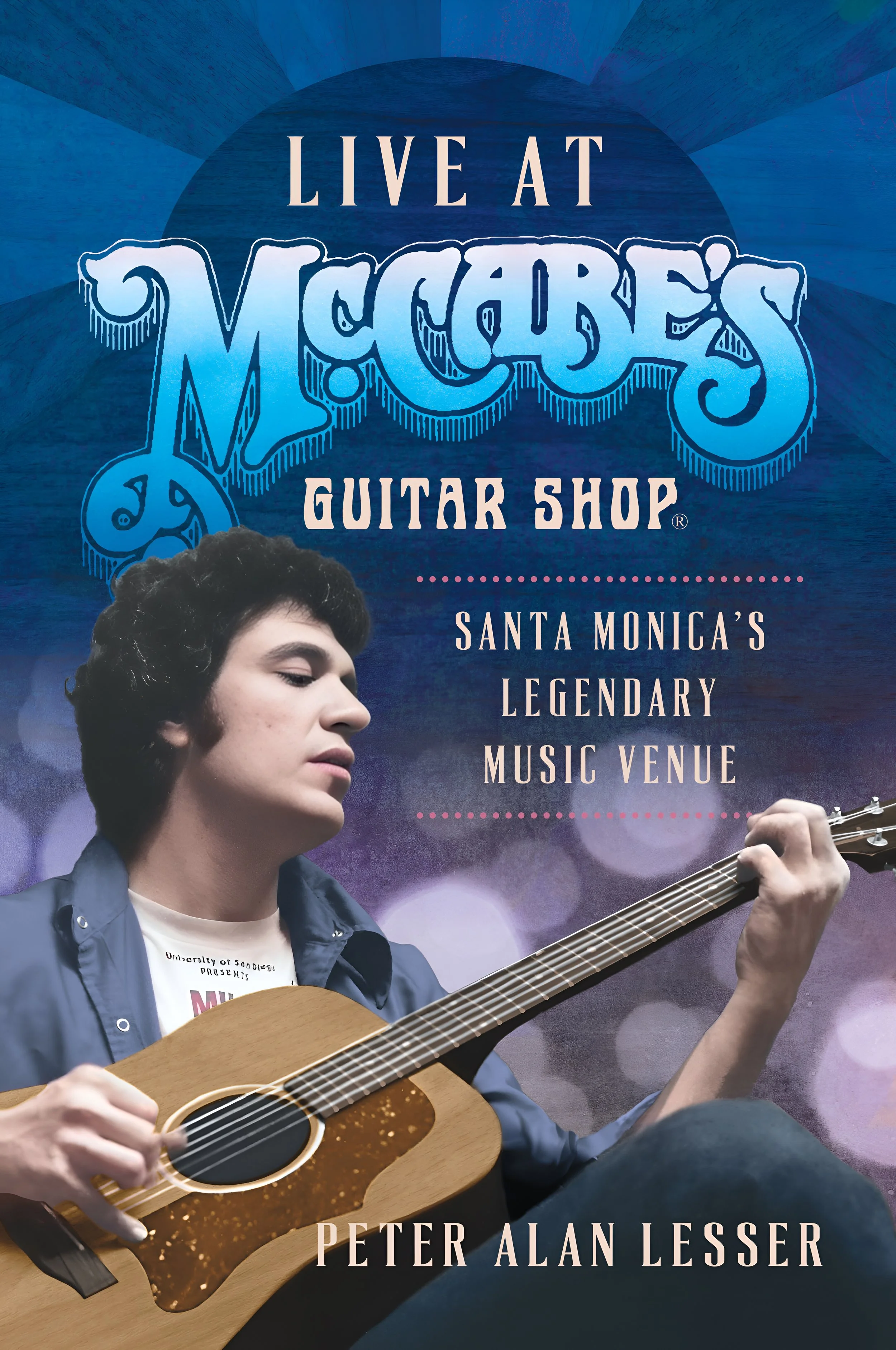
Live at McCabe’s Guitar Shop features interviews with key players involved in turning McCabe’s into what it is today. There are stories from people like original owner Bob Riskin and current owner Walt McGraw, right alongside musicians like “T Bone” Burnett, Rosanne Cash and Lucinda Williams regaling us with their tales of a venue so highly regarded by the music community. Venues like this don’t garner respect and adoration overnight; it takes years and years of word-of-mouth and consistent excellence.
“When I talked to some of the artists, they were like, ‘There's Carnegie Hall, there's the Ryman Auditorium in Nashville, and there's McCabe's Guitar Shop.’ They put it in the same category just because of the people who have played there over the years, and the fact that they're still doing it when so many venues have come and gone.”
It’s hard not to think of McCabe’s in the same way we Capital Region folk (pun absolutely intended) think of Caffe Lena. Both venues are determined to keep the spirit of folk music alive, and both succeed at presenting consistently strong, intimate programming for their communities. It was clear Lesser thought the comparison was apt.
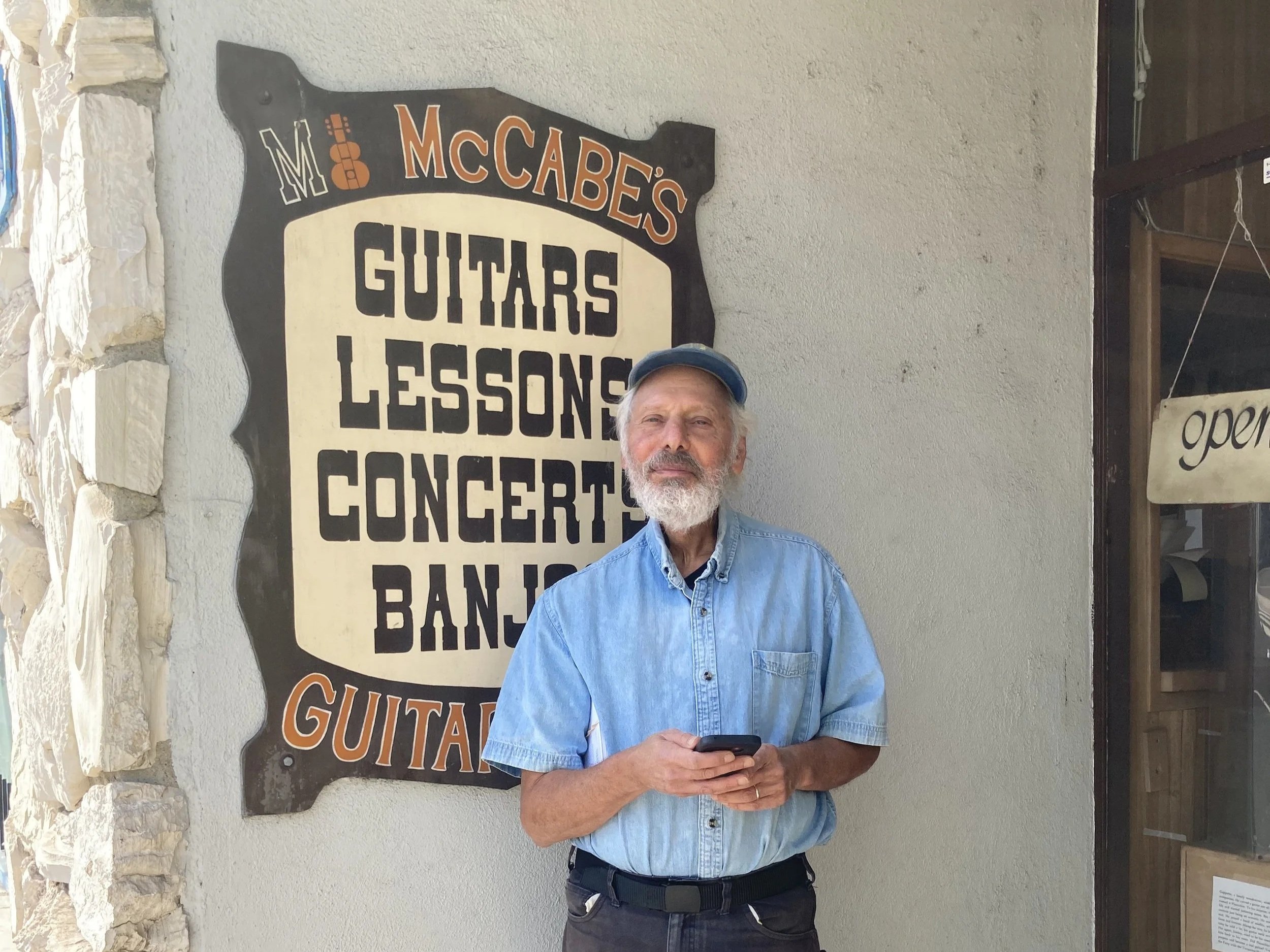
“It is similar, and again, held in that similar high echelon of places that have magically survived. [McCabe’s] is definitely not a modernized place. There’s an old-fashioned bulletin board with, you know, guitar lessons advertised and some concert posters and things. There's a stairway that leads up to rehearsal rooms where they [also] give lessons. To the left is the guitar store itself, and to the right is where they do the guitar repair work, which is open to viewing. It’s pretty magical because that’s how the shop started.”
Then there’s the performance space. By day, the walls are adorned with every kind of guitar imaginable, and other than the stage off to the left, there’s no real indication this would be a living, breathing music venue. The staff transforms it to serve that purpose, taking down displays of guitars in the center of the room and putting out folding chairs for the incoming audience members. It’s stories like this that help answer the question, “How do some places survive, and others don’t?” You have to wonder if part of it is the personal touch behind the scenes.
With all of this in mind, Lesser knew there was no way he could do an exhaustive history on McCabe’s — for starters, the publisher only gave him 35,000 words. Sure, it sounds like a lot, but it became clear very quickly, with a place so revered, he couldn’t include everything. Not even close.
“I tried to interview as many key people as I could,” he says. “Obviously, the performing artists, since it's really mostly about the concert series, but also the owners of the store, the different concert directors who have put their individual visions into each phase of the store’s history, the guitar teachers, some of the journalists who have covered it over the years. It's so much more than just one person's retelling. And that was probably one of the biggest challenges, being able to find people who have those distinct memories.”
In order to accomplish this as successfully as Lesser has, he tapped into his own history here in the Capital Region. In his tenure with venues like The Egg and Troy Savings Bank Music Hall, Lesser naturally built himself quite a stellar reputation with musicians and their agents. He knew how to present concerts, but he also knew how to communicate and work with artists — an important distinction. Arguably, you have to be able to do both to achieve any meaningful longevity in this business.
With this experience in hand, and his desire to honor a place with such a unique place in music history, Lesser was able to step into writing his first book with ease, providing colorful snapshots of moments in time. It’s all in service of analyzing how certain places survive, even when it seems like the odds are stacked against them. A true hero’s tale, really. Towards the end of the book, there is a lone quote from musician Taj Mahal that Lesser paraphrases to me: “It’s about the music. That’s why they’re still there.”
“That’s what McCabe’s does. That’s what Caffe Lena and the Troy Savings Bank Music Hall does. I have witnessed this firsthand, and the people I’ve talked to about McCabe’s witnessed it from all the different concert directors there. It wasn’t always about the money. You have to be willing to give people a chance. When Lena Spencer relents and says, ‘Okay, bring this guy Bob Dylan up, he can play a few shows,’ not many had heard of him. Hardly anyone came to those shows.
“You’ve got to be aware of the dollars and cents, but you also have to take the risk and figure out ways to make it work on the back end if it doesn’t always work on the front end. Not to get too dreamy about it, but I think that is how these places end up surviving — that passion and willingness to make sure good music gets out there no matter what.”
Live at McCabe’s Guitar Shop is available now. For more information, please visit https://peteralanlesser.com/
