
INTERVIEW: Nathan Meltz Discusses His New Golem Trilogy
“I feel like most of my favorite artists respond to the world around them and this is the weird way that I decide to do so."
In 2023, an idea came to multi-disciplinary artist (and Rensselaer Polytechnic Institute professor) Nathan Meltz: if the mythological Jewish golem — a protector of the disenfranchised — existed today, who would it stand up for? Despite a history of working in screen-printing, digital 2D animation, physical art installations and music, Meltz decided the best form for the narrative was stop-motion.
"Sometimes when you're working with still images, you can tell a story in a linear or nonlinear way, but sometimes you need a time-based media to really let the narrative play out. So it's film or video," said Meltz.
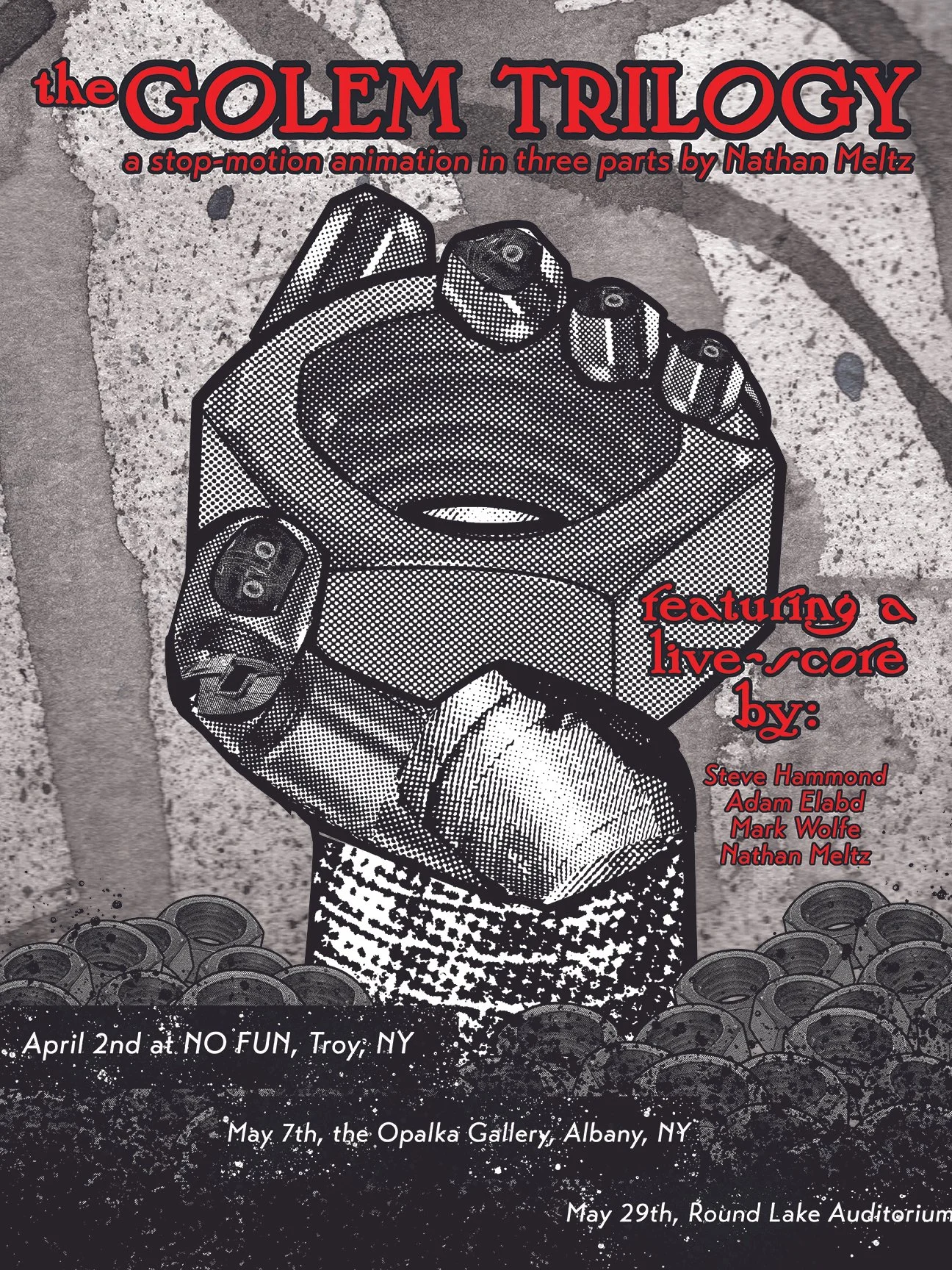
Such is The Golem Trilogy — a series of short (less than 10 minutes each) films directed by Meltz, that will screen three times in the Capital Region this Spring; April 2 at No Fun, May 7 at the Opalka Gallery, and May 29 at the Round Lake Auditorium.
The trilogy began with The Golem Returns, a reimagining of the golem’s origin story, which was originally intended as a standalone.
"I felt like the politics in it were maybe a little ambiguous, and I wanted them to be more didactic and clearer that this is a story about oppressed peoples and colonization,” Meltz told me. “The sort of thing we see in many parts of the world. I wanted the second part to kind of respond to the first part."
And so he made part two, The Golem Smashes All Walls. The motivation for the third-and-final short, Destroy the Golem, was two-fold: Meltz "likes stories that come in threes," and wanted to show that peacemaking “is probably a more profound way to solve our problems and resolve conflicts." The Golem Trilogy handles its contrasting tones very well, with multiple instances where peaceful joy directly follows excessive violence, a balance that Meltz handled carefully.
For Meltz, the creative process of a stop-motion short starts with a basic concept, which becomes a set of bullet points, and then a storyboard — detailed drawings that he can usually complete in a day. Meltz was quick to point out the benefits of this approach.
“If there's an image of the golem, and it's basically in the same positioning, you want to do all the shots that use that same positioning before you basically get rid of everything you've created and start over again.
“Things get complicated and [storyboarding] keeps me from losing my mind in the complexity of this sometimes."
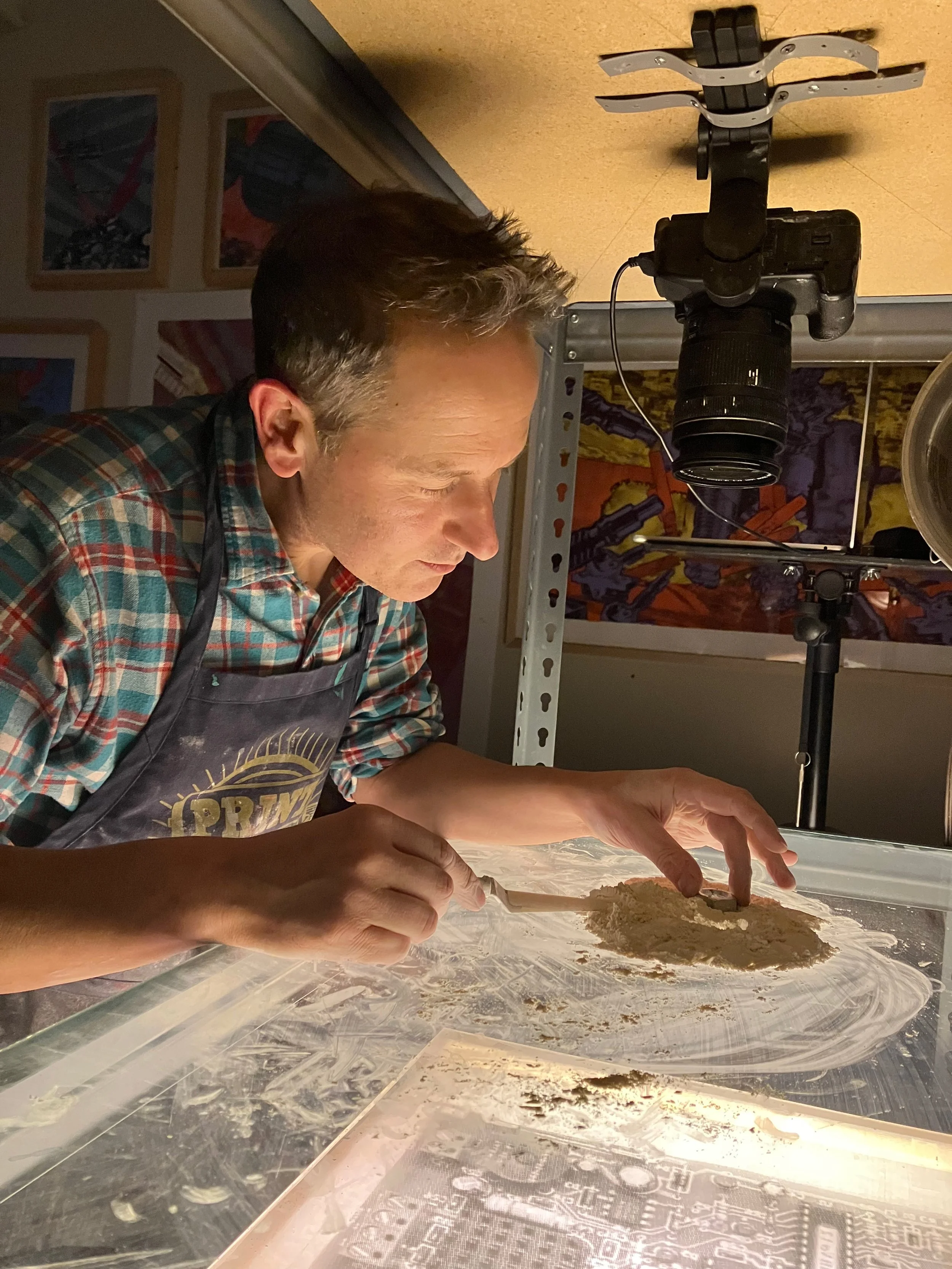
He shot the shorts by pointing a DSLR camera perpendicular to a light table, shooting through multiple layers of glass. “You can have some things in focus, some things out of focus,” he explained. “On top of this light table, most of the robot characters are collaged, either digitally, by hand or a combination, and then printed out on a transparent medium. The light goes through them so they look kind of illuminated."
Meltz said that the story of the golem, raised with Jewish sorcery and clay, inspired his choice of materials for the creation of the golem.
"The particles that make up the golem are actually real clay. Not liquid or wet clay, but clay dust. Sometimes artists like to use materials that matter and have meaning to the process."
The entire process of making The Golem Trilogy took about two years, or about six to eight months per film. Even with his day job teaching at RPI, Meltz was able to get 15 to 20 studio hours weekly. But the help of one of his undergraduate students, Rhea Vurghese, sped up his workflow for the final short significantly.
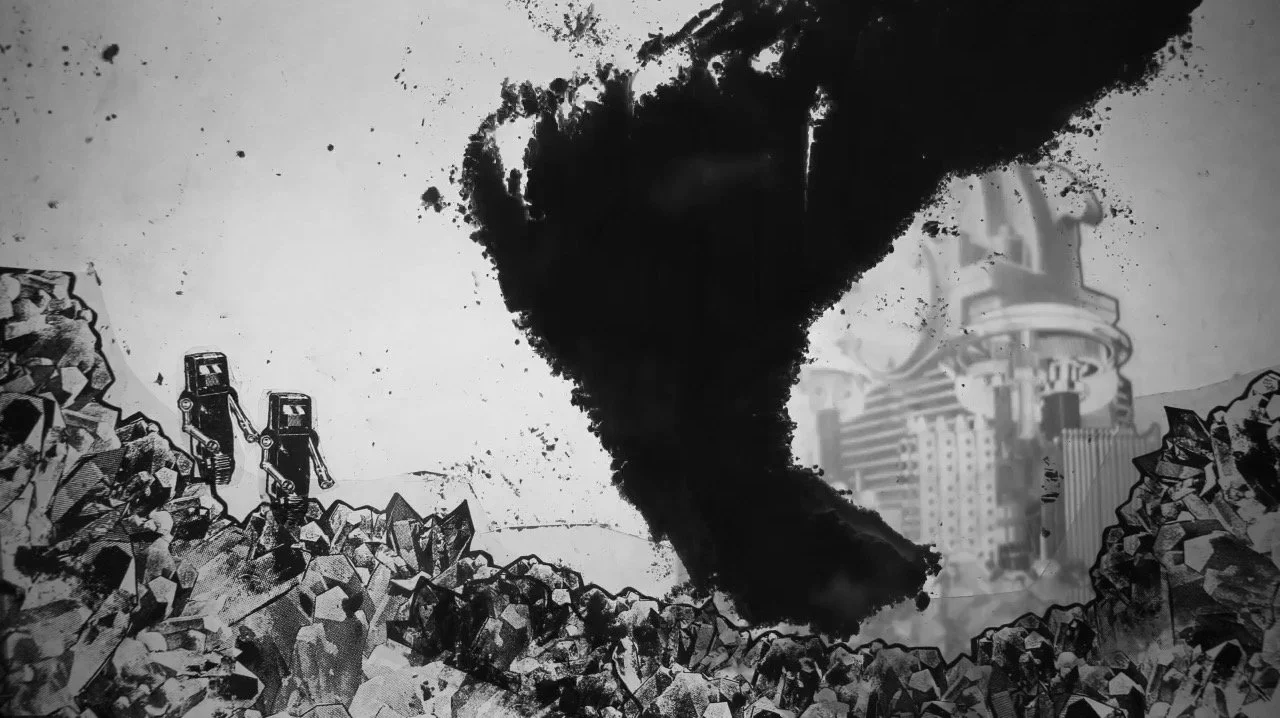
Still image from The Golem Trilogy
"She got to animate for credit, and I would show her how to do things. By the end of the six month period, she was just as good as me. I could eventually just show her a storyboard and then she would send me clips that would look really, really great."
Parts of The Golem Trilogy have screened internationally, including at the Hallucinea Film Festival in France, the T-Short Film Festival in Germany, and on TvFILM, PBS-WMHT’s upstate New York independent film series. Part two of the trilogy even won a special jury mention award at the Electric Dreams Festival in Italy.
Though it's been great to see the film connect with audiences at the few screenings he's been able to attend, Meltz has only one sounding board creatively: his wife.
"If I'm trying to design a robot animal, I'll just be like, 'What does this look like?' And if she says a robot cow, I'll be like, 'Oh shit, it was supposed to be a robot pig', but if she says, 'Oh, it's a robot pig,' I'm like 'Bingo!'."
When The Golem Trilogy is screened later this spring, rather than the original recorded score, it will feature musical accompaniments from Meltz himself; Mark Wolf, who played guitar for The Golem Returns; Adam Elabd, who provided bass for Destroy the Golem; and Steve Hammond, who did the lap steel guitar for the shorts.
Compared to what was recorded for the screened recorded shorts, Meltz says the live accompaniment will “be improvisational, to a certain extent, and complementary.” Meltz dearly respects his collaborators and their ability to create sound that pairs wonderfully with his visuals.
“I try to leave room for the collaborators to input their own creative interests and agency because they're really, really good. I have no interest in telling Steve Hammond what to do. I'll send basic things to him, then he'll send me tracks that will just make the hair of my arms stand up. He's so good about responding to visuals in a really expressive way.”
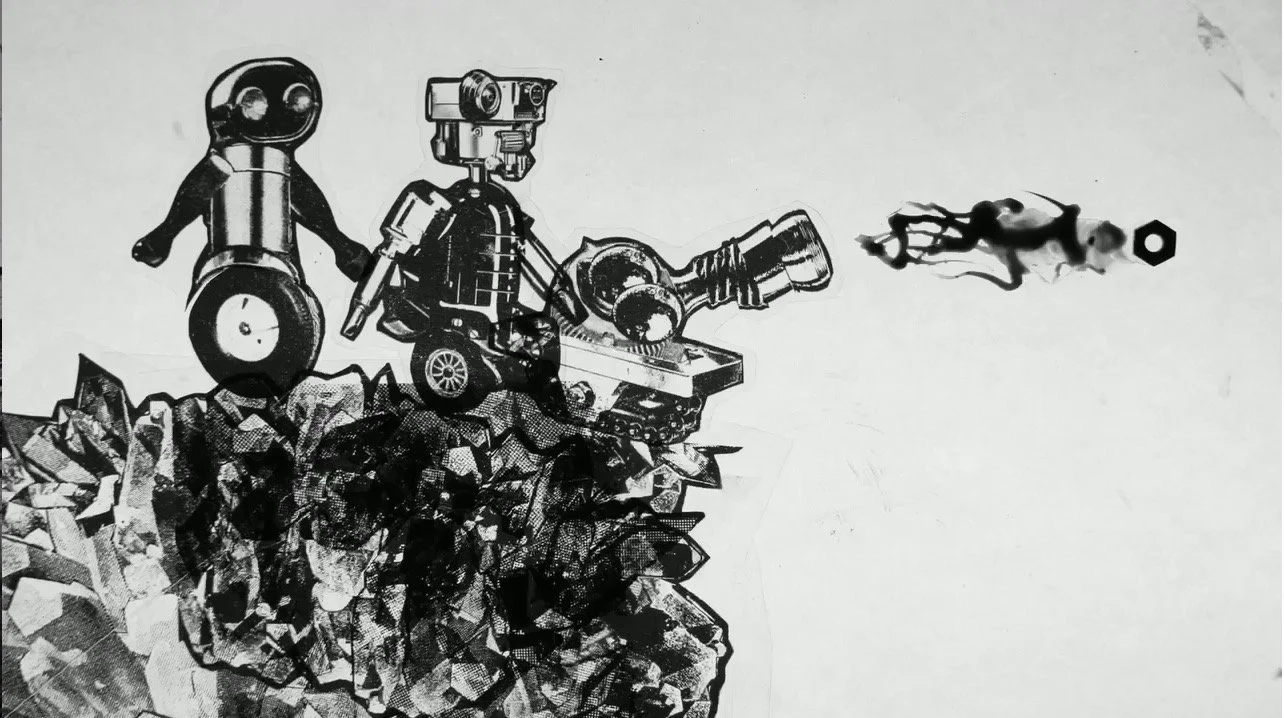
Still image from The Golem Trilogy
The visuals in question include imagery that is equally expressive, but also consistent with Meltz’s visual vocabulary; humanoids, animals, and architecture that are all made of machine parts. He's fascinated by how reliant people have become on technology in all facets of life — the medical industry and drone surveillance, for example — and explores the positives and negatives of that in much of his work, including The Golem Trilogy.
Ultimately, Meltz feels artists have a responsibility to use their skills to help people in some way.
"I think the low-hanging fruit is to make art about politics. The Golem Trilogy is a low bar. I'm making art that's like a political metaphor, sure. The real political art is people making art that's actively involved in social movements. Making these protest posters, making the documentary work documenting police violence or ICE violence."
He hopes that people project a bit of their own interpretation onto the shorts and that the trilogy nonetheless speaks to global political injustices.
“I feel like most of my favorite artists respond to the world around them and this is the weird way that I decide to do so."
Be sure to catch one of the three local screenings of The Golem Trilogy over the next several months:
April 2 at No Fun, Troy
May 7 at The Opalka Gallery, Albany
May 29 at Round Lake Auditorium