
INTERVIEW: Mike Dwyer and his Catskill Recording Mecca
*This article originally appeared in our February 2026 print issue*
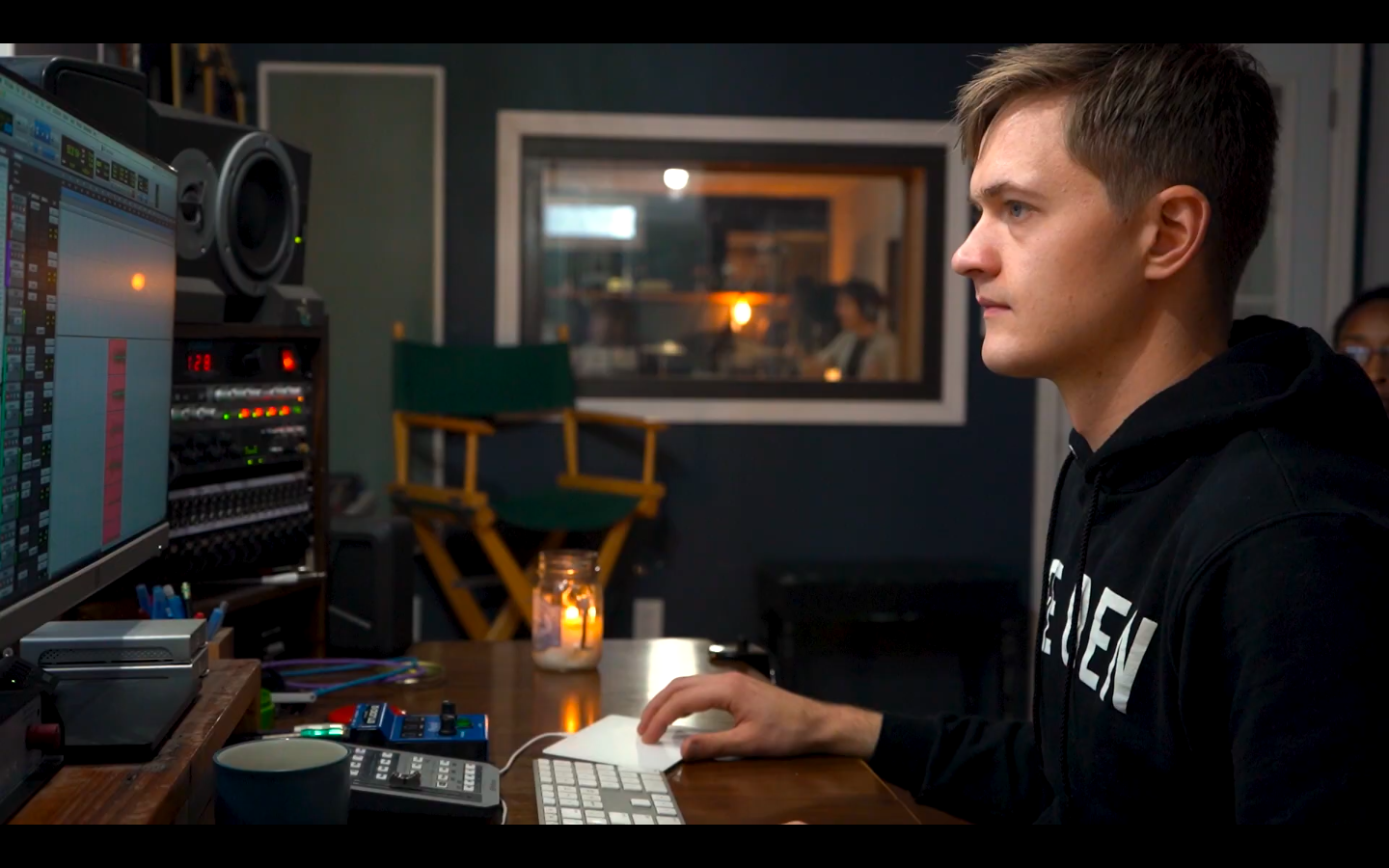
“If somebody's gonna trust me with their music, I want to make it as awesome as I possibly can.”
In a 2002 interview with the New York Times, David Bowie famously compared music to water, in the sense that one day, it would be treated like a utility. Lo and behold, this turned out to be a prophecy of sorts, with streaming services taking over the industry as we knew it and casual listeners paying for the artform just like a mortgage, electric, or water bill.
For some, comparing music to water takes on a deeper meaning — both are essential to survival. It should go without saying that anyone who’s dedicated their livelihood to making music falls into that category.
Mike Dwyer, owner and engineer at The Bunker Recordings, is undoubtedly one of those people. Nestled on a wooded property in the heart of Greene County, Dwyer cemented his dedication to the artform by building his own private mecca: a recording studio that feels as personal as it does professional.
“It had previously been an in-law suite or something,” Dwyer tells me, “so it needed a lot of modification to become a studio. That was all me — putting up walls, knocking down walls, figuring out soundproofing and all of that.”
On New Year’s Day, 2019, Dwyer’s updates were complete; a few days later, he was able to put it through its paces with his first official session. On paper, a space the size of an in-law apartment may not be the most ideal candidate for a big-sounding recording. But with the help of some self-education and a little bit of luck, Dwyer ended up with an incredible sounding room ready for full band and intimate singer-songwriter sessions alike.
“I assumed I was going to have to make the live room fairly dead just to deal with inevitable problems,” he recalls. “Once everything was done, I moved a drum set in to see what it would sound like and it was shockingly good, better than it probably should have been. I was able to keep it really lively. That was a pleasant surprise.”
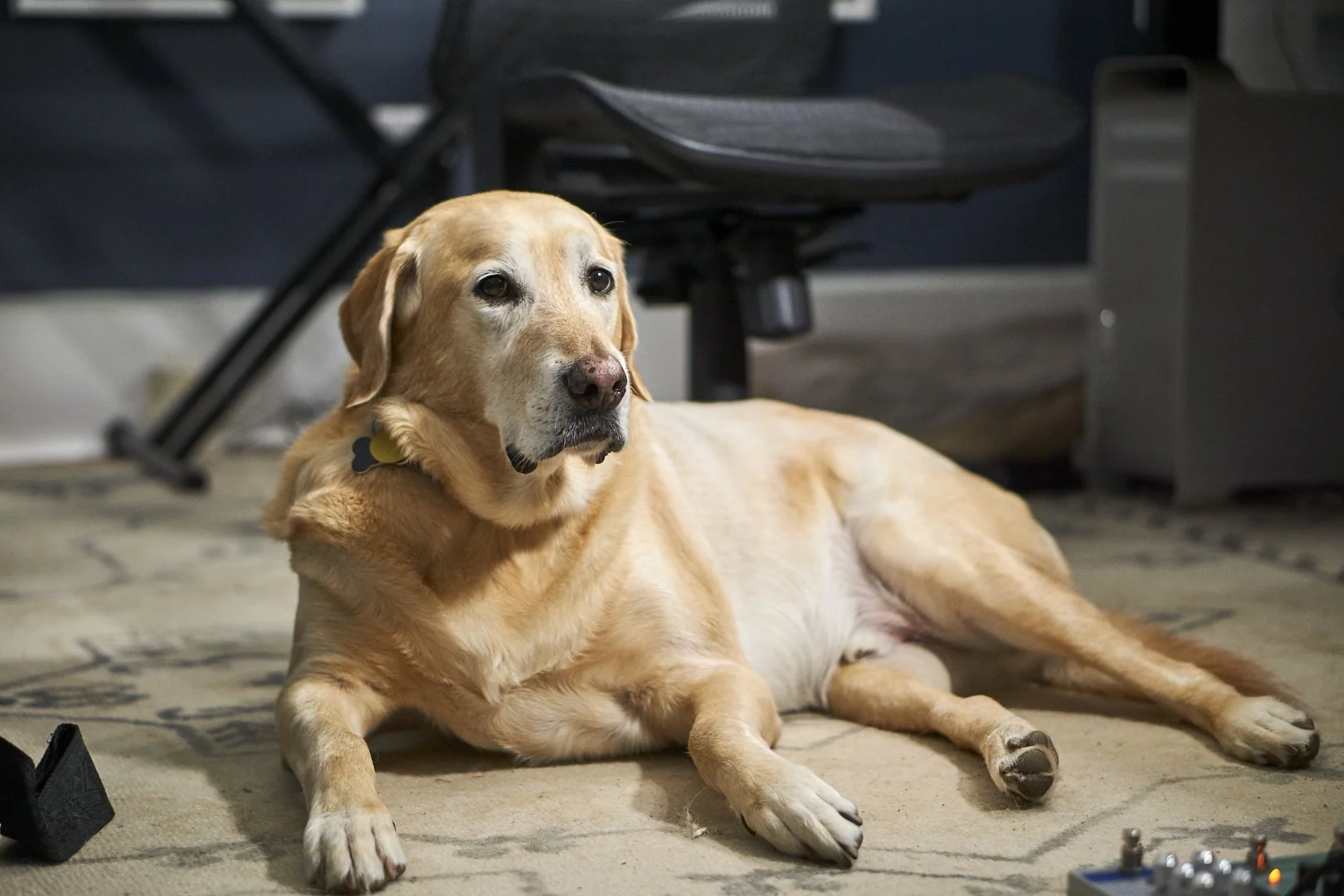
But it’s not just the sound of the room that makes a great studio. Providing the right experience is equally as important. When an artist walks into The Bunker, they are greeted by a basket of snacks and a sign personally welcoming them. There is a room equipped with bunk beds and video games for artists who may need to spend the night. And most importantly — and adorably — there’s Dwyer’s furry, four-legged assistant, Cooper, who sits in on every session, ensuring things run smoothly and comfortably.
“He's the studio manager,” Dwyer says with a grin. “He is our emotional support dog. He makes everybody relaxed in the studio. The vibe of a studio is such an important thing so that people feel comfortable and welcome and able to be vulnerable. Having a big lovable dog sitting next to you? I think that really helps the vibe.”
It’s these little touches that make what Dwyer’s built so attractive for underground artists: they’re getting their own version of the star treatment, while working with an engineer who’s worked with his fair share of stars. After college, Dwyer began an internship at a world-class studio called The Clubhouse in Rhinebeck, working his way up to become the Assistant Engineer. It was in this role that he landed credits on albums by The National, The Lumineers, Jade Bird and more. Most importantly, it gained him priceless bits of hands-on experience and education from big-time engineers and producers.
“It was an incredible experience being able to observe and learn from so many different famous and talented people. I was able to grab little bits and pieces from each of them which helped me to form my sound.”
Having such a variety of tips and tricks is especially useful since Dwyer doesn’t just specialize in one genre of music. One session might find him working with a rock artist, whereas the next might have him paired with a pop act or a solo singer-songwriter. It’s because of this that he doesn’t follow a strict code or set of rules when running a session — quite the opposite.
My very first day as an intern, the guy producing was Joe Ferla who I believe has five Grammys. He famously worked with John Mayer. I was fresh out of audio school where you learn all these rules about ‘how’ you do things — what’s correct, what’s incorrect.
Seeing this multi-Grammy winning guy completely going against all of those rules and doing everything that I was told not to do, and having it sound absolutely incredible, I realized there are no rules. You can do anything; just make it cool. That's all that matters. And that was such a valuable lesson that I carry with me today. I do all kinds of crazy things on records that would probably give my audio school teachers absolute nightmares.
Before starting The Bunker, Dwyer played in bands himself. His band in the late 2000s called Albany home and as such, he found himself immersed in the Capital Region’s music scene. Although the particular scene he was part of slowly faded away, his affinity for what the area has to offer only grew stronger after opening his studio.
“I started this live, in-the-studio, stripped down video series, largely as a way to meet more people in the area. There are so many incredible artists; I just want to know them. This was an easy way to make a little art during downtime. It's been a lot of fun reconnecting with the Albany music scene.”
Via the power of word-of-mouth networking, his video series — which he offers artists free of charge, and subsequently posts on his YouTube channel and socials — has already included Capital Region favorites like Angelina Valente, Julia Alsarraf, Sydney Worthley and many more. It’s just one of the many ways he’s able to put artists first while also being able to stretch his creative muscles and continue to grow while doing so.
“Everything I do, my goal is to make it the best thing I've done so far. That obviously doesn't always happen, but that's the goal; I’m always trying to get better at my craft and help people make better music.
“Every project is different, and every artist is different. I really try to talk to the artists and find out what I think will work best for what they're trying to achieve and customize the experience around that. And while we're actually in the studio, if things change or things aren't working, it’s important to be flexible and willing to switch things up.”
Regardless of what Dwyer is working on at any given moment, he is putting every ounce of himself into it as if he is a silent partner in the lineup. In a lot of ways, that’s what being an engineer is: the person behind the curtain bringing life to a mere vision. And if you’re going to do that successfully — there’s no better way to say this — you can’t half-ass it.
[Having worked] with tons of different producers and engineers, there were a lot who would absolutely phone in records. And they still turned out fine. But I remember specifically working with Neil Dorfsman, probably best known for working with Dire Straits as well as Paul McCartney and Bruce Springsteen.
I was lucky enough to do a handful of sessions with him, and there were a couple that he was basically doing as a favor, getting paid virtually nothing. Some tiny record that, in the grand scheme of things, wasn't going to be a big career move for him or anything. He could totally have phoned it in and it still would have turned out fine. Seeing him go absolutely 110% on everything he did was really inspiring to me and I thought, ‘I need to do that. That's critical.’ If somebody's gonna trust me with their music, I want to make it as awesome as I possibly can.
The thing that the average music listener can often overlook is the fact that, behind all of your favorite albums, the songs you hear on the radio, the soundtracks to your favorite films, there is someone in a recording studio crafting sounds with fine-toothed precision. They’re devoting hundreds of hours to minutia before it reaches your ears, elevating songs to the next level. Dwyer is nothing short of a wizard in that regard, and it all comes back to one thing for him: the music.
“I remember in college, my roommate and I had a record player set up in the living room of our suite. And every couple of days or so, we would just pick a record, put it on, sit there and just stare at the record player and focus on experiencing this record.
“I feel like that's something that fewer people do now — sit down, throw headphones on and really listen. Not as background noise while you're doing something else, but really experience the music. Now, I get to watch someone hear their song come to life in a way that they’ve never experienced before, and that just makes me really happy.”
For more info. on The Bunker, visit https://www.thebunkerrecordings.com/. And check out high quality performance videos from a plethora of your favorite 518 artists over at https://www.youtube.com/@thebunkerrecordings/videos
