INTERVIEW: Michael Slayton Made the Mundane his Muse
Photos by Yasmine Alregabi
“I like to try to pare an idea down as much as humanly possible to where it's still recognizable…”
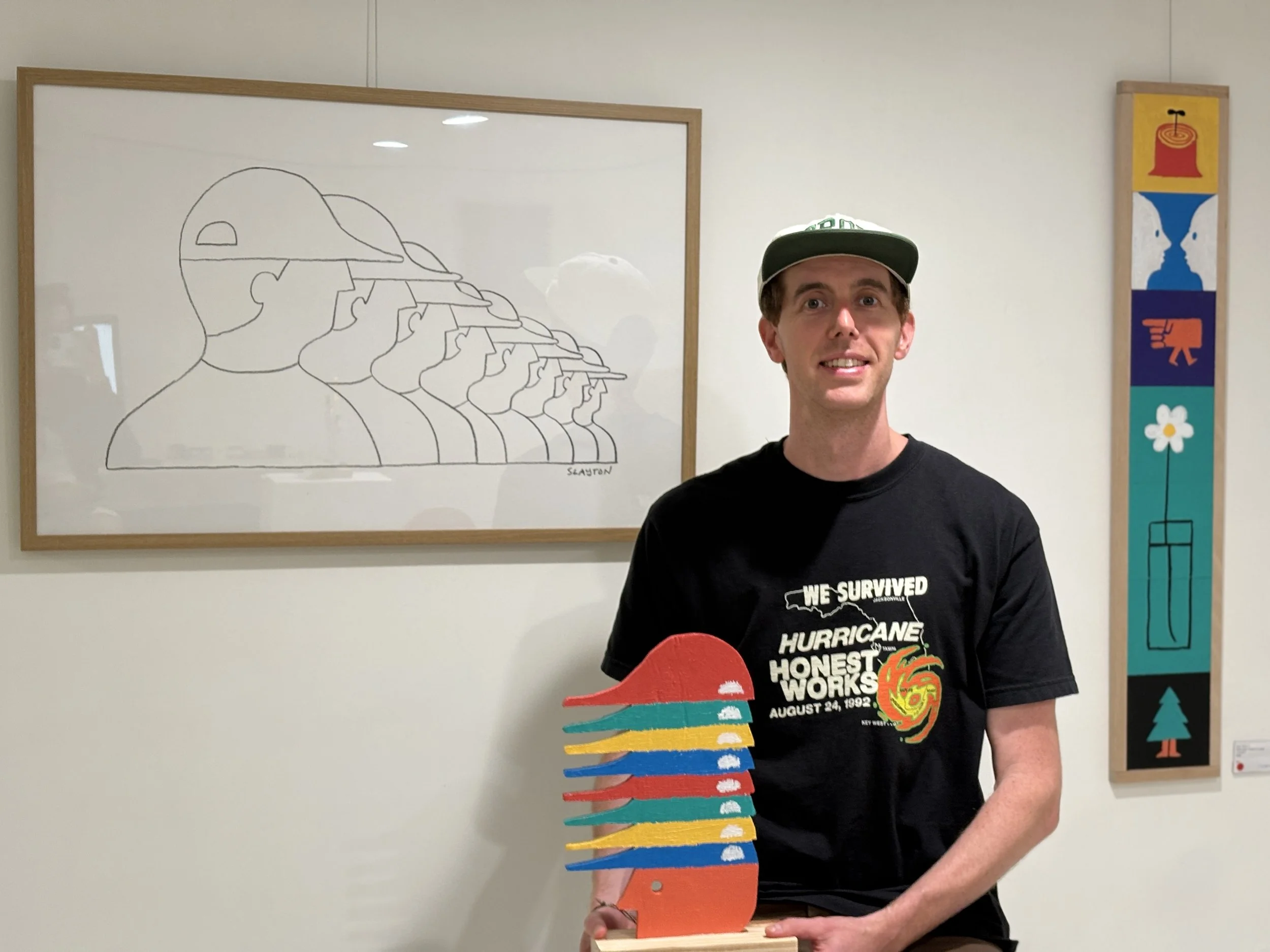
Oscar Wilde once wrote that life imitates art far more than art imitates life. Walking through Michael Slayton's "Extraordinary Mundane," however, it seems that Slayton has taken the opposite approach.
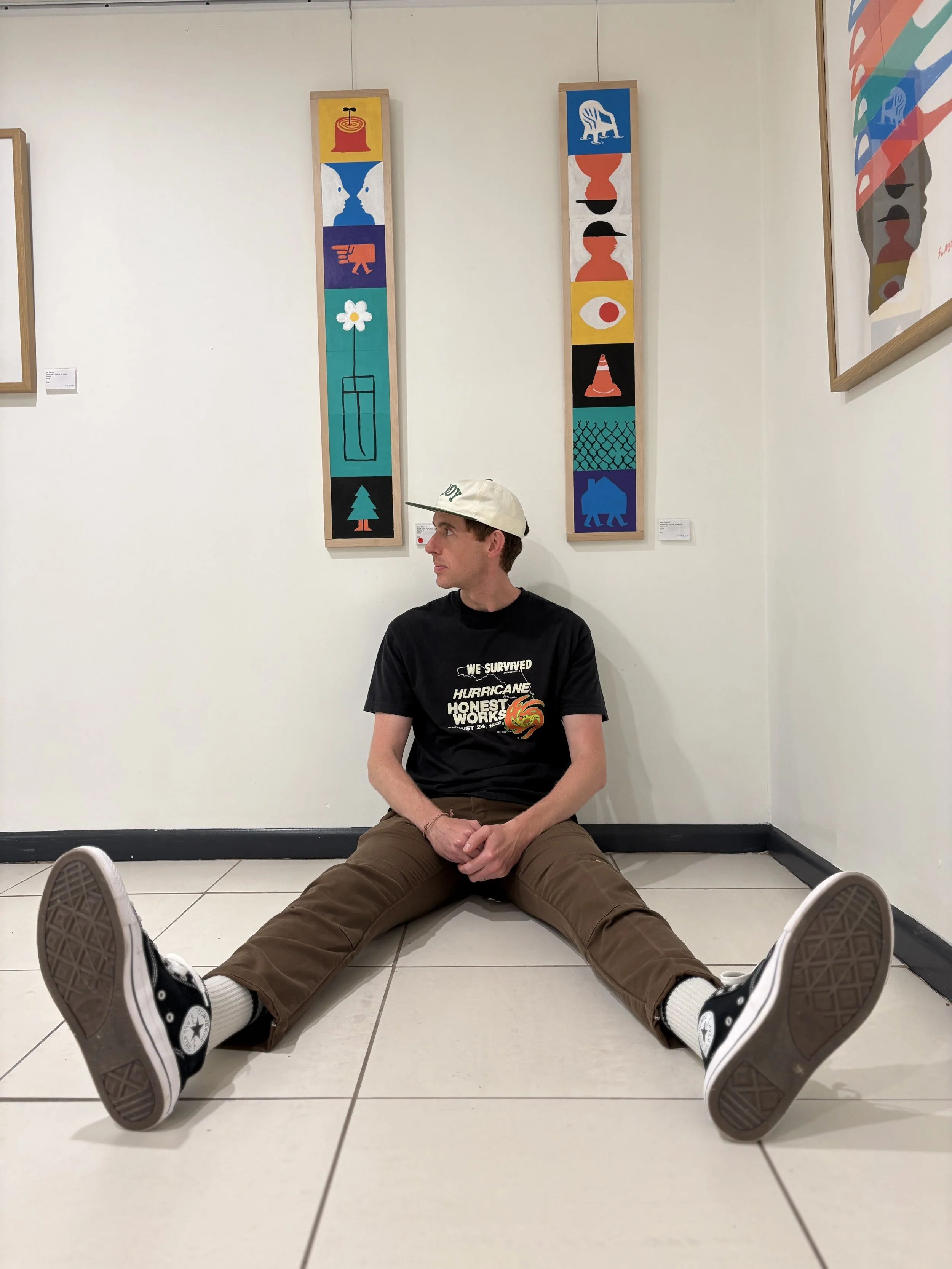
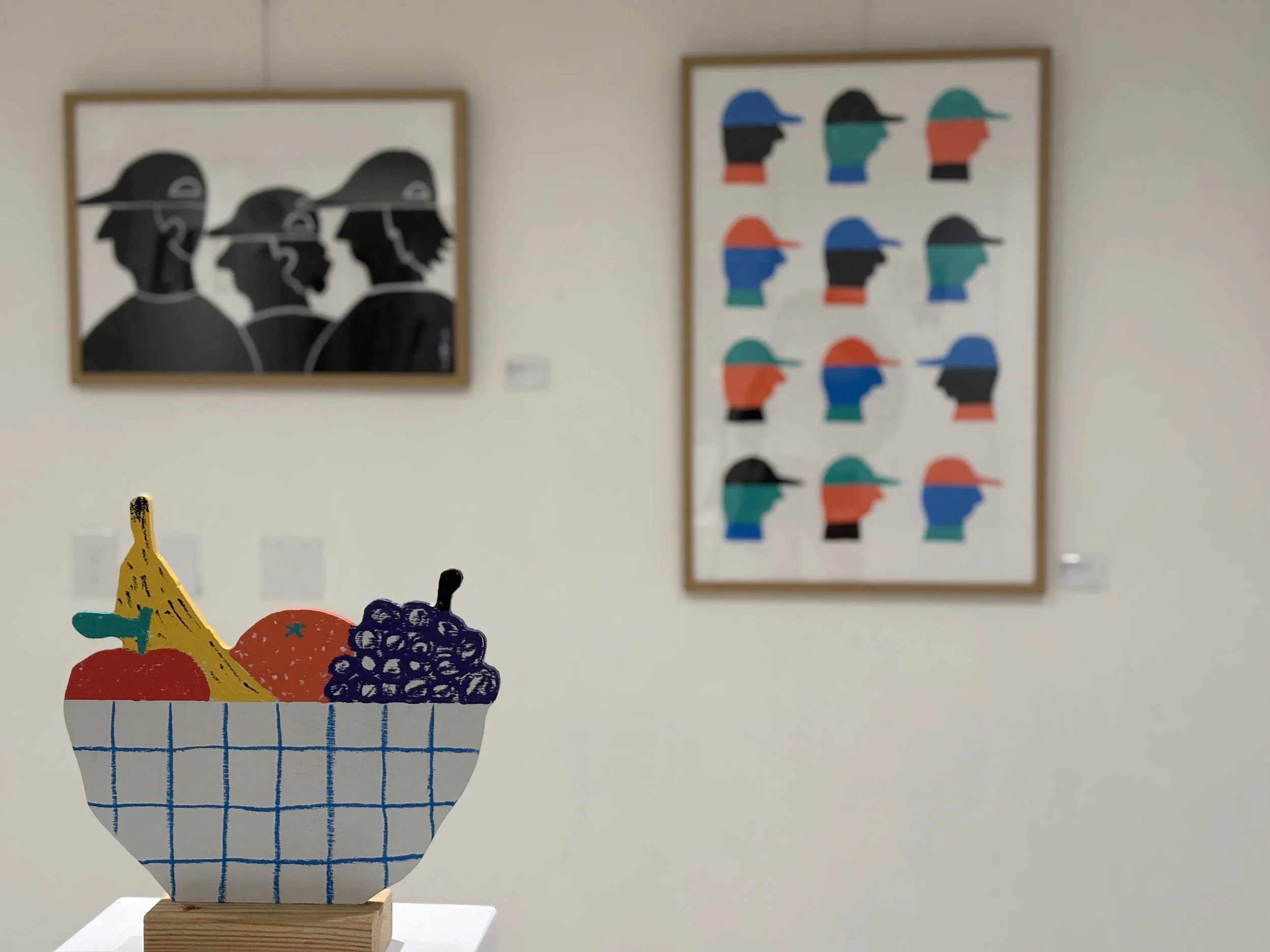
Inside Two Selves Gallery, bright primary reds, blues, yellows and greens cover the walls in drawings of objects that are normally overlooked in any other setting: a traffic cone, a chair, flowers, and sketches of faces. Slayton turns them into the subject of his work — the mundane has become his muse. The exhibit is whimsical and is fitting for Slayton’s personality, whose work is built around finding the humor, absurdity and beauty in everyday life; he simply looks at the ordinary from a different angle, appreciating things exactly as they are.
Though, Slayton didn't set out to make this kind of work. For a long time after graduating from the University of North Florida, he kept his illustration and design experience separate, and kept his Zen Buddhist practice separate from both of them. It wasn't until a conversation with a friend, while walking home from a bar one night when his friend suggested combining all of them.
"That's kind of all it took," he said, "meshing all those things, giving time to explore and find that."
Slayton moved to the Capital Region about two years ago, after growing up and working in Florida. The slower pace upstate has given him more room to concentrate on the work itself. The move has started to shift his subject matter, too — where his symbols used to lean toward Floridian imagery, like alligators and palm trees, he's begun incorporating things more specific to his new surroundings, something he may explore further in an upcoming show.
He describes himself as a gestural, expressionist illustrator with a minimalist design background, and he used both of these aspects of himself to create his art style which sits in the middle of the two.
"I like to try to pare an idea down as much as humanly possible to where it's still recognizable," he said, but not so simple that “it's just a red square.”
His approach to color, meanwhile, comes from Slayton working primarily with solid paint markers, which come in a limited palette. He initially worked with them to save money, but has found that the restriction of the colors has helped him in the long run.
"I'm super indecisive with color," he said, describing how he used to constantly interrupt his wife to ask her opinion on which color to use. Now with a strict color pallette, he said, it’s forced him to concentrate on the idea itself rather than getting stuck deciding between colors.
Slayton said his biggest inspiration is his grandfather, a children's book illustrator who worked in Miami for 50 years, crediting him with getting him into art as a kid, before he later built on that in design school and began learning from the artists around him.
Although he used to keep his Buddhist practice completely separate from his art, it is now exactly how he gets the ideas for his work. It has taught him to focus on what’s right in front of him instead ofworrying about the future; he compared his act of drawing to “when you wash the dishes, you just wash the dishes.”
For him, inspiration rarely comes from sitting and thinking about an idea. That practice of being present in the moment has become very much the way he finds ideas, which can come from almost anywhere — driving, walking through an alley, seeing something in someone’s yard or hearing someone say something.
"It just gives you the opportunity for every day to be an inspiration," he said.
That idea of being present is also what he hopes visitors walk away from his exhibit with. He described a piece he made for an outdoor show in St. Augustine a few years ago, a hand turning into a palm tree, and how he liked watching people stop and stare at it. Specifically he shared that a little boy stopped and looked at it and then began spreading his fingers while looking down at his hand.
But Slayton still understands that no matter what he may want people to think about his art, it will be different from person to person.
“I hope that people see things differently or feel joy [after viewing his art], but ultimately, people see what they see, and it's up to them,” he said.
He is particularly affected by how his work for SkatePal impacted one of the kids who saw it. SkatePal is a nonprofit organization that supports young skateboarders in Palestine, and months later he saw a photo of a kid there who had cut a homemade stencil of his illustration.
"I fucking cried when I saw that... that meant a lot," he said.
Making this kind of work has changed how he experiences his own life outside the studio. He talked about how much weight society puts on the big milestones, like graduations and weddings, and how little most people think about the fact that the bulk of a life is actually made up of small moments like waking up, petting your dog, spending time with friends or sitting around with your partner.
"I feel like that's really made me appreciate all of those a lot more," he said. "It makes me enjoy my life more [too]."
Not every piece in the exhibit follows the same rigid format either; along with the canvases are several wooden pieces of artwork as well. My favorite of the gallery being wooden block totem poles with a collection of different objects painted on them, which Slayton said came about mostly by accident because he disliked them at first when they were individual wooden blocks.
"I hated to see the way they all looked [separately],” he said, so he screwed them together for the final product now in the exhibit.
Looking ahead, Slayton is focused on getting his work out there further. He recently had his first piece shown in Japan, which he spent the entire shipping time stressing about whether it would survive the trip or not. Locally, he's been building a relationship with the Bear and Bird Gallery in Schenectady he is particularly excited about, and said his approach to expanding beyond the Capital Region has been about building relationships, treating the business side of things as secondary to the friendships that should come first.
"I feel like people try to go into it too quickly," he said of networking with other artists and galleries. "It's good to start as friends."
Although Slayton said he doesn’t have any specific upcoming plans after “Extraordinary Mundane,” but whatever comes next, he doesn't expect the mundane to stop being his primary subject matter.
"That theme just seems to be in my work right now," he said, "and it probably won't ever stop."