
INTERVIEW: Jerry Douglas of Alison Krauss and Union Station talks collaboration, the energy of modern bluegrass, and more
07/22 @ The Palace Theatre, Albany
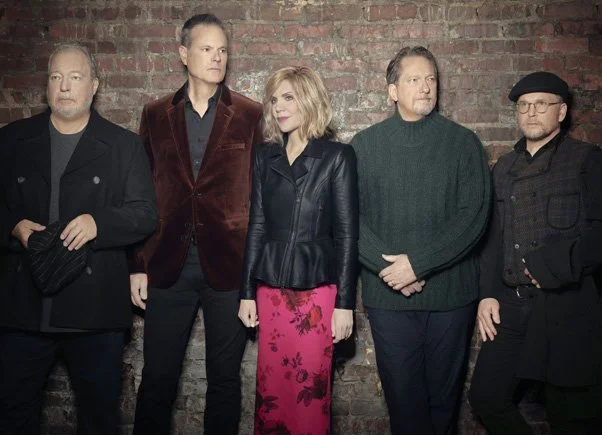
Photo provided by the artist
Douglas transformed expectations of the Dobro by bringing jazz improvisation, blues phrasing and rock and other influences into an instrument once viewed primarily through a traditional bluegrass lens.
For nearly four decades, Alison Krauss & Union Station have both upheld and expanded bluegrass and American roots music. When the band comes to Albany's Palace Theatre on July 22 as part of the Arcadia Tour, audiences will see a group that remains committed to honoring its past while continuing to evolve.
I spoke with founding member and Dobro player Jerry Douglas ahead of the show. Few musicians have shaped modern acoustic music more profoundly than Douglas. The 16-time Grammy Award winner has spent decades redefining what the Dobro can do, expanding the resonator guitar far beyond its traditional bluegrass role. Whether performing with Alison Krauss & Union Station, leading his own Jerry Douglas Band as well as the Earls of Leicester, or collaborating with artists such as Paul Simon, James Taylor, Elvis Costello, Ray Charles, Garth Brooks and Molly Tuttle, Douglas has consistently blurred the boundaries between bluegrass, country, jazz, rock, Celtic and Americana.
Arcadia is the band's first studio album since 2011's Paper Airplane. This year’s tour is the longest tour the band has done together since 2012.
“We're out here having a blast,” he says. “It's just like a big family vacation for us, because we've missed each other.”
On Arcadia, Alison Krauss, Jerry Douglas, Ron Block, Barry Bales and Russell Moore placed attention into allowing the songs themselves to reveal their direction. Songs like "Looks Like the End of the Road," "The Hangman" and "Granite Mills" unfold patiently, allowing the emotional weight of the lyrics to linger long after the final notes fade. The album's title evokes an idyllic place of peace and simplicity, fitting for a record filled with longing, resilience and stories of underrepresented characters rather than grand statements. Douglas explains that Arcadia may also be the most clearly realized artistic vision Krauss has ever brought into the studio.
"She had a good hold on it before we ever started," Douglas says. "She had an idea of what she wanted it to be, and then we fleshed out the other parts. She listens to everybody's ideas, but [on] this record, she had the whole plot in her mind."


“She and I turn over all the rocks,” he tells me. “We try every imaginable way to play the song. That part of it's really fun; to get everybody's ideas and try everything.”
That collaborative spirit has become one of Union Station's greatest strengths. Each member maintains successful solo careers and outside projects, yet when they reunite, Douglas describes the experience as relaxed.
“I have to make a lot more decisions on my own with my other bands. Here, it's comfortable," he shares.
This comfort is built on decades of playing together as well as creative values that brought the members together in the first place.
Douglas explains that every one of his projects feeds another. His adventurous improvisation with his own bands, production work and collaborations all circle back into Union Station, while the discipline of Union Station influences everything else he does.
“It's cyclical; musically, they all tie together,” he says. “I get to experiment a lot more in my band, and that gives me new things that I can bring back to this band.”
That creative exchange extends onto the stage every night. Although audiences can expect to hear favorites from throughout the band's career, the show has been carefully structured to highlight Arcadia. Older songs are often woven together into medleys, allowing the band to perform more of its extensive catalog while giving the new material a space to be explored in live arrangements.
Douglas remains one of the most distinctive voices in acoustic music, and his approach to the Dobro reflects a philosophy that extends beyond technique. Before adding a single note, he studies the lyrics carefully, looking for ways his instrument can support, not overshadow, the singer.
“I like to sit down with the lyrics and go through them and really understand them, and be able to emote different feelings and substance, and think of how to maneuver around a vocal,” he explains. “Sometimes, I play harmonies to Alison’s vocals. The Dobro is good for that, because it's such a vocal instrument.”
He compares arranging a Dobro part to painting.
“I wait to see what the picture looks like, and then I start painting. I paint around things, with different colors,” he tells me. “If I need some yellow over here to brighten things up, I'll find that. I follow the singer and embrace what they’re doing, and try to paint around that and paint in the correct colors.”
That methodology has allowed Douglas to bridge traditional bluegrass and more contemporary musical landscapes throughout his career. It is a way to experiment within the parameters of respecting traditions while not letting the past confine what comes next.

Occasionally that means stepping well outside bluegrass conventions. Douglas laughs recalling one memorable appearance at Grey Fox Bluegrass Festival in the Catskills, where he unexpectedly joined Gangstagrass for a performance blending bluegrass instrumentation with rap. The collaboration eventually led to a recording session and reinforced his lifelong willingness to cross stylistic boundaries. We discussed the importance of finding connections more so than divisions across everything, including music.
“I think that's really important beyond music and in culture in general: breaking these barriers of genres and pushing the envelope as far as you can push it. Still stay within the big picture boundaries, but take a swing at it.”
That willingness to embrace new sounds has been a large part of Douglas' career. Douglas transformed expectations of the Dobro by bringing jazz improvisation, blues phrasing and rock and other influences into an instrument once viewed primarily through a traditional bluegrass lens. His approach has inspired generations of players while remaining firmly rooted in the music's history.
That openness has also defined Alison Krauss' career. Her celebrated collaborations with Robert Plant introduced countless hard rock fans to bluegrass music, and the same is true vice versa. These two musical worlds were never really as far apart as they appeared, and Plant and Krauss’s collaborations served as a reminder that the great dividing river was really only ever a creek.
He explains that when Krauss decided to collaborate with Plant, “I was a cheerleader for it. I thought it was great. You should do something out of the box, get out of this bluegrass box and go in there.”
While those collaborations expanded Krauss' audience and skills, Douglas believes her artistic center remains with Union Station.
“I think that her heart really lies in this band, and it's important for us all to embrace that,” he says.
This year's tour also reunites the group with guitarist and mandolinist Jacob Burleson, whose playing helps connect different eras of Union Station's history.
“He plays mandolin like Adam Steffy. He plays guitar like Dan Taminski,” Douglas says.
He continues, “We brought all the different bands that we've had here in Union Station together. They're all on stage at the same time. So, it's comfortable, and it's a known quantity, but we're still trying to improve it.”
That commitment to constant refinement may explain why Union Station has remained one of acoustic music's defining ensembles for so long. Even after winning countless Grammy Awards and influencing generations of musicians, the members continue searching for new avenues.
Douglas admits that sometimes he deliberately changes his own solos, simply to keep himself creatively engaged.
"I'll decide not to play the solo that I played on the record," he says with a grin. "Just to give myself something different."
That musical curiosity explains why Douglas has become one of the most sought-after contemporary musicians. His unmistakable Dobro has appeared on more than 1,500 recordings, while his production work has helped shape albums by Alison Krauss, The Del McCoury Band, Steep Canyon Rangers, John Hiatt and Molly Tuttle. Yet despite a resume that includes an NEA National Heritage Fellowship and serving as co-music director of the BBC's acclaimed Transatlantic Sessions, Douglas remains focused on one thing: serving the song.
Douglas' schedule remains very full. He'll spend the coming months recording with The Earls of Leicester, producing a record for Irish singer-songwriter Niall McCabe, continuing work on Transatlantic Sessions and preparing for next summer’s Union Station tour.
For audiences attending the show at The Palace, expect one of America's finest ensembles continuing to explore and redefine what bluegrass and American roots music can become. Douglas has long enjoyed performing throughout upstate New York, including numerous appearances at Grey Fox Bluegrass Festival and Albany's Egg.
"I love going there," he says of Albany. "I'm looking forward to playing The Palace!"
Alison Krauss & Union Station featuring Jerry Douglas will perform Wednesday, July 22, at 7:30 p.m. at The Palace Theatre in Albany.