INTERVIEW: 60 Years of Music, Activism and Education with Janis Ian
**This article originally appeared on the cover of our July 2026 issue**
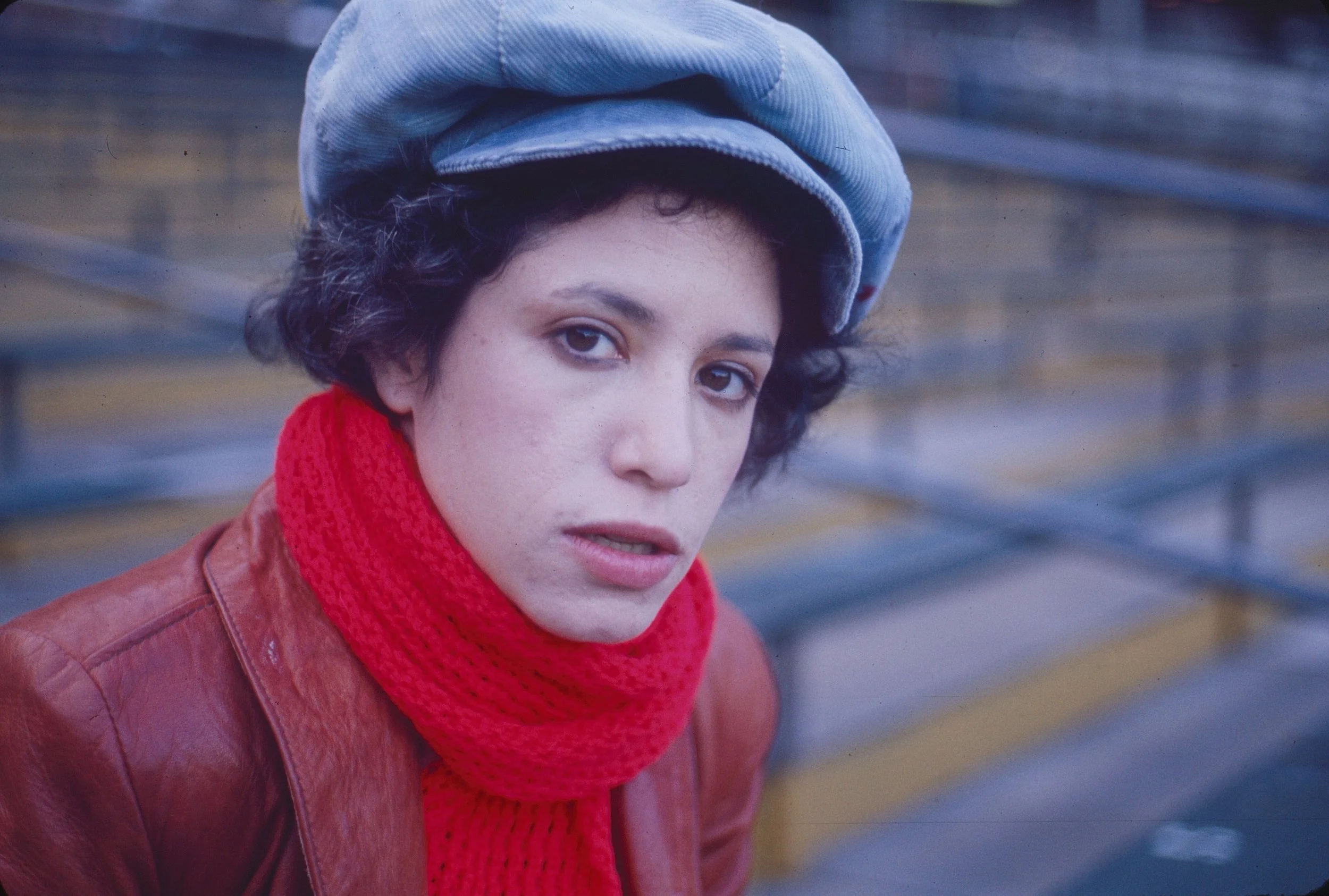
Photo by Peter Cunningham
“Artists are scary because we challenge the status quo. That's part of our job. And we are listened to. We are trusted more than politicians…”
Ask any writer; oftentimes the most difficult part about writing anything is getting started. The impending doom of the blank page staring holes into your reflection, taunting you like an invisible spirit in a made-for-streaming thriller.
When it comes to a living icon like Janis Ian, that daunting feeling is multiplied exponentially. Where on earth does one begin? From her civil rights activism, to her unwavering support for artists’ rights, to her ten Grammy nominations (and two wins!), to her status as the first-ever musical guest on Saturday Night Live — you get it; the options are endless.
But, perhaps the best approach is to just shut up and let her speak.
“I'm one of those lucky people who always knew what they wanted to do, and I've been doing it professionally now since I was 12. I'm 75 [now]. So, as I say to people, that means I either know nothing or I know an awful lot.”
In the half hour I spent with Janis on the phone, it became crystal clear the latter is the truth. She spoke with the utmost care and wisdom that only someone with over 60 years in the music industry could muster, relentlessly persisting through the highs and lows on no one’s terms but her own.
Janis lived on a farm until the age of six, where entertainment meant listening to her father playing the piano or the guitar — that guitar being a 1937 Martin D-18 that her father bought from a farmer's widow in 1948 for $25, and eventually passed on to Janis herself. It’s considered one of her most prized possessions with quite the story of its own. The short version? This very same guitar was stolen from her LA apartment in the early ’70s, and after a long 26 years searching for it, it was unexpectedly returned one day after a musician realized who it belonged to.
For her family, music was much more than just a form of entertainment, however. It was a means of connecting with a heritage.
“My folks were activists,” Janis tells me. “We went to a lot of workman's circle meetings where people would gather and sing together — folks like Pete Seeger would come. There was just music all around. Being first generation Americans, my parents tended to use music as one of the ways they passed on their culture as Jews to my brother and me.”
Her upbringing in a progressive, activism-driven household may have had the biggest impact on her life. She fondly recalls attending rallies and demonstrations with her parents. Even as a young person, she recognized the chaotic times she was being raised in and understood the importance of everything her parents and their peers were fighting for. So important, in fact, that for years her family was extensively surveilled by the FBI.
“You couldn’t miss them. These were not terribly bright people,” she recalls, somewhat scathingly. “It was the HUAC years in the ’50s when I was growing up, and it continued through the ’70s into Nixon and the incursions of FBI and CIA agents into domestic areas. By then, pretty much everybody in organizations like SDS [Students for a Democratic Society] or the Black Panthers were aware of the surveillance. But we didn't realize the scope of it until it started coming out [in later Congressional hearings]. We didn't know that they were experimenting on people or encouraging violence or infiltrating to that extent.
“Some things don't change. The world just seems to bring back the same crap; now we have the same situation where ringers from the government are being sent into peaceful protests to try and encourage violence. Authoritarians always go by the same playbook. They don't have a lot of fresh ideas.”
It was in 1965 that Janis released one of her most well-known, and most ‘controversial,’ songs in “Society’s Child.” The song details an interracial romance at the height of the Civil Rights Movement, two years before interracial marriage was even legalized. From there, her discography never shied away from commentary on the societal and political issues of the day. As recently as 2022, she’s continued her stand with songs like “Resist” and “Better Times Will Come” on her final album, the aptly-titled The Light at the End of the Line.
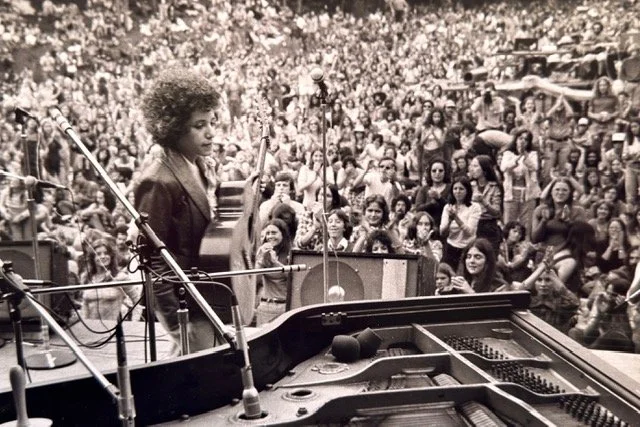
Photo provided
Writing politically-charged songs that can stand the test of time is not an easy feat. At the risk of being somewhat reductive, if one were to undergo a Carl Jung-style exercise for ’60s-era protest music, songs that come to mind most quickly would probably be Bob Dylan’s “The Times They Are A-Changin’,” or even Pete Seeger’s “We Shall Overcome.” But Janis’ songs from the same era demonstrate a similar knack for pointed lyricism that delivers a message in just the right way. This is particularly evident in these passages from her 1967 self-titled record:
”The holy water you bathe in mingles with the sewer
All your disciples have reclaimed their rifles and taken the cure
Your lectures of ways are only today's pool room jokes
Sprawled on the walls of tenement halls and bathroom bowls”
(“New Christ Cardiac Hero”)
“Come to my door, baby
Face is clean and shining black as night
My mama went to answer
You know that you looked so fine
Now I could understand the tears and the shame
She called you "Boy," instead of your name
When she wouldn't let you inside
When she turned and said
"But honey, he's not our kind"
(“Society’s Child”)
All these years later, there’s not necessarily any rhyme or reason to how she approaches such incendiary songwriting, as she tells me. Some songs are toiled over, while others pour out of her effortlessly.
“I try not to impose any restrictions,” she admits. “I think the hardest thing for a writer, or any artist in any form, is to learn not to edit yourself until it's the right time to start editing. It takes a lifetime to learn that.”
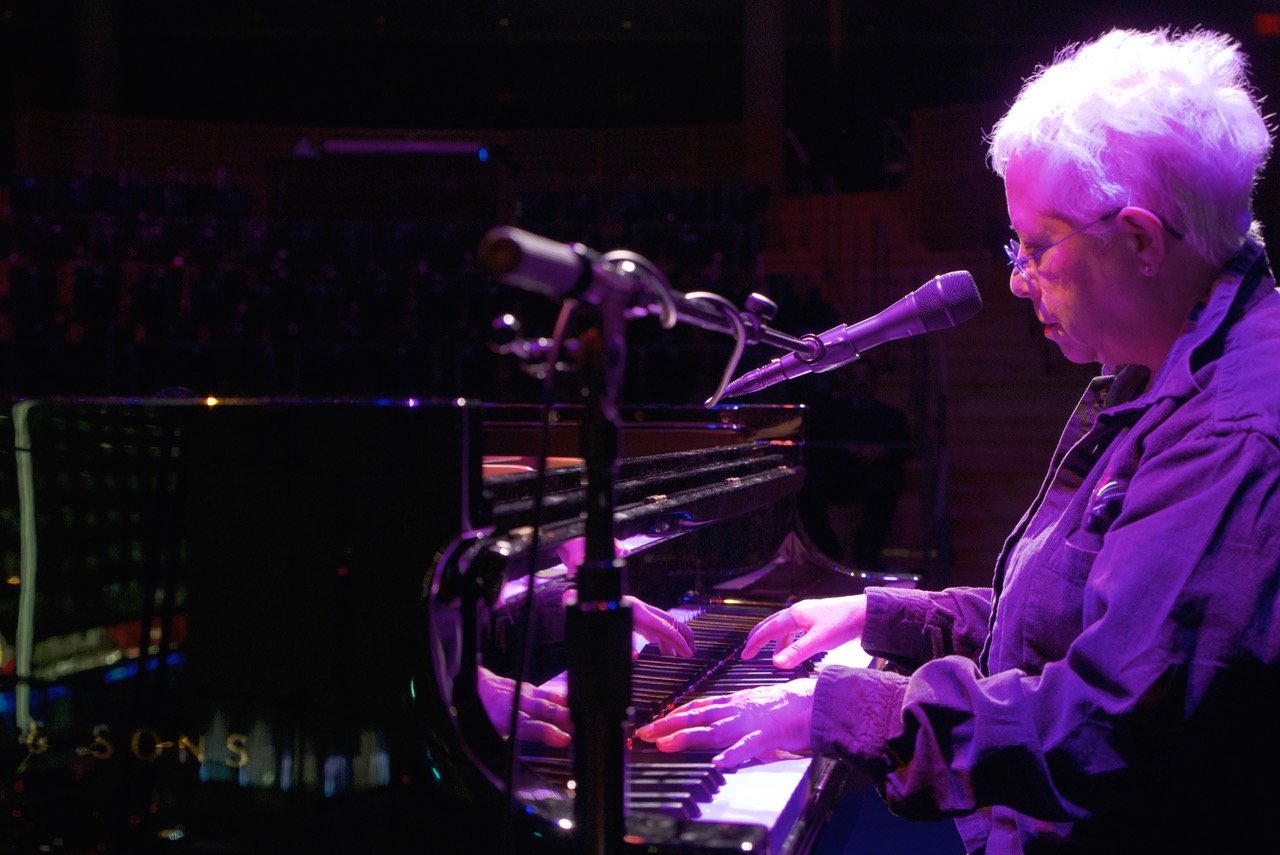
Photo by Peter Cunningham
Her own education began at just the right time, with her career manifesting at the height of the American Folk Revival. She became a prominent performer in the heralded Greenwich Village folk scene, as well as performed at the iconic Newport Folk Festival in 1967 and 1968; she was merely 16 and 17, respectively. She also formed a friendship with folk legend Joan Baez, a direct influence on Janis’ early songwriting and an eventual collaborator.
Needless to say, Janis found herself an ideal home within a timeless genre, and the genre found a stalwart new performer in her.
“Folk music tends to be at the forefront of the right side of history. It tends to be against authoritarianism and for the downtrodden — the people who are mostly ignored or forgotten.
“The bottom line for a folk musician is — if I might encapsulate it — we don't need billionaires, but billionaires need us. So why cater to them?”
A longtime fear of Janis’ is watching the importance of folk and folk-adjacent music fade into the background. It’s part of the impetus behind her upcoming residency at Saratoga’s Caffè Lena. As the longest continuously-running folk venue in the country, their devotion to the genre extends beyond just their consistent and extensive programming, to their educational efforts for the young and old alike. To further cement their dedication to folk music and its integral role in our history, they partnered with Janis to become their first ever artist in residency. That series will begin on August 7, with a four-part, weekly workshop series dubbed Janis Ian Explains the World.
This idea began three or four years ago. I was talking with [Caffè Lena’s Executive Director] Sarah Craig, and I said, ‘There is no such thing, really, as an artist residency for folk artists.’ The only place you find anything remotely like that is at song camps or places like Swannanoa Gathering. And they are not the same as a residency.
Leonard Bernstein kind of introduced me to the world. And part of the reason for that was because he felt very strongly that pop music was a valid form. Here we are, 50 or 60 years later, still fighting the perception among a lot of particularly moneyed — old money, let us say — people that the only valid musician is a classical musician. Classical musicians and now jazz artists, because of the efforts of people like the Marsalis family, are recognized as actual musicians, whereas singer-songwriters are kind of stepchildren.
After tossing around ideas, ultimately the time came to pull the trigger and set a date to try it out. Janis offered to cover her own expenses to be a guinea pig for such an event, and told Sarah to “use her unmercifully” to prove the concept.
“This is one big experiment,” she admits. “And if nobody comes, the experiment will have failed. If a lot of people come, that'll be very encouraging because it will show that there's an interest in the ‘man behind the curtain,’ as it were.”
For Caffè Lena, this experiment is an exciting addition to their programming, combining both their educational and live performance focuses into one impactful series.
“Janis exemplifies our best hopes for songs. She shows how a powerful song can change how people see the world,” says Craig. “To have her immersed in our community of young people just starting out on their musical journey is the greatest honor we can imagine.”
The plans for this residency are still being ironed out — with additions to the schedule of events being made just the day before we spoke — but interested parties can expect things like songwriting workshops, reciprocal Q&As, discussions on how to be an artist in the modern world and perhaps even how to survive as the spouse of an artist. (“I’m sure my wife would have plenty to say!” she quips.) She will also appear as a special guest for a handful of the venue’s signature programs that month, and Janis even teases a possible appearance from a very special, four-legged guest.
“I'm going to see if I can bring our recently adopted dog, Kobe, to one of the sessions, especially for the kids, to show the difference between working on instinct and working on craft, using Kobe to illustrate the difference.”

Identifying this difference is an important but oft-ignored facet of attempting to enter the music industry, which can be taxing at its best, and predatory at its worst. On top of that, over the last 20–30 years, the music business has seen seismic shifts at the hands of disruptive distribution challenges (e.g. Napster), massive record label downsizings and most recently, two-letter technological advancements, the likes of which are threatening the very fabric of creative industries. As a woman in the industry, the struggles are even more compounded.
“In the ’60s, it was harder on women in general, because we couldn't do so many things legally. For an artist, it's even more difficult because you're not taken as seriously by other musicians. You still don't see women in bands — not the way you see men in bands. I watched a teacher tell a woman student [at Berklee] that there was a ‘right way’ and a ‘pussy way’ to do things, and that was not that long ago. So, we’re still fighting that same battle and I think we will be fighting it until men start taking responsibility for teaching their sons and their friends.”
The result is a Sisyphean environment where artists continue to face not only struggles from within a volatile industry, but also external forces like politicians and CEOs, who Janis determines are threatened by someone having more cultural influence than they do.
“The bottom line is that artists are scary. Talent is very seductive. And most artists, when they reach a certain point, have a lot of power.
“I think artists are a lot like witches,” she adds. “What we do can't really be codified. It can't be taught. You can teach a certain amount of the fundamentals, but you can't teach talent. Nobody knows where it comes from, including artists. It's a runaway horse, and that's always scary to people.”
It’s an apt assessment, particularly when you look at major tastemakers like Taylor Swift, Bad Bunny, or Kendrick Lamar. The bigger and more prominent an artist becomes, the more criticism and eye-rolling they receive from people in positions of authority.
“If you are able to hit the zeitgeist so that [your] commentary is heard by millions of people, that does give you a lot of influence. Ultimately, I think artists are scary because we challenge the status quo. That's part of our job. And we are listened to. We are trusted more than politicians, because we — the majority of us anyway — don't operate by polls, or by what critics say. We operate by an internal thermometer, if you will.”
When she says this, it strikes me as not just a pitch perfect rumination, but a fabulous summation of who Janis Ian is. Take her archives at Berea College in Kentucky, for instance. For these, she listens to nothing more than her internal guiding light. As the college’s website tells us, “While many artists have received significant amounts of money for turning over their archives, The Janis Ian Archives are entirely different — [her] belief in Berea College is so strong that she has donated all materials without compensation. Her only stipulation is that records remain open to the public, not just scholars and Ph.D. candidates.” Where others ebb, Janis flows.
Within these archives is a treasure trove of items from Janis’ personal collection, like her aforementioned Martin guitar, FBI files from her childhood, and many autographed books from famous authors. (Oh yeah, she’s also a science fiction writer, but we don’t have time to get into that!) One unique item that stands out, however, is a leather tote bag purchased during her first tour of Australia in 1977. On the outside of that bag, she’d tracked every new country she visited with a silver pen, creating quite an impressive travel log.
The bag represents something else quite significant: a tangible record of how traveling the world has shaped both her view of society and her approach to art.
“I am of this firm belief that every American child should have to go overseas and live in a community that is not their own before they’re 21. It's eye-opening. Too many people assume that the world is or should be like them and their community and their family. I really do think Americans are way too insulated.
“One of the things you learn as an artist is that most of your preconceptions are just preconceptions. A lot of the things that you take as morality, for instance, are just things you've been taught are moral. Manners, you know? Don't sneeze at the table, don't blow your nose in the tablecloth, not to wear a bra or to wear a bra. It’s all cultural. So as an artist, if you're interested in working with the wider culture, then you have to keep that in mind because you're no longer creating for your own little subgroup.”
To encapsulate an illustrious 60-plus year career in just four pages is simply impossible. We didn’t even scratch the surface of this icon’s storied journey, and so perhaps that’s what makes her upcoming residency at Caffè Lena so special. It’s a rare opportunity to have unfettered access to an iconic musician and activist who has enough talent and sapience for a lifetime, as well as a willingness to share it with whomever will ask the right questions. Longtime fans will get a peek behind the scenes in an intimate setting. Local musicians at all stages of their careers will get to learn a thing or two about their craft from a true master. And a few lucky children may get to experience early on the power and longevity of folk music.
And when it comes to this next generation of artists in particular, Janis has but one hope for them:
“Bravery.”
If ever there was a human guidebook to follow in that regard, it’s safe to say Janis Ian would be it.
For more information on Janis Ian’s upcoming residency at Caffè Lena, visit www.Caffèlena.org
You can also be a part of a special event at SPAC on August 7, where Janis comes together with Marin Alsop for a discussion on the remarkable influence Leonard Bernstein had on their lives and careers.
Special thanks to our intern Ava Ferriero for assisting with the important research leading up to this piece.