INTERVIEW: A Conversation with Helmet’s Page Hamilton
08/28 @ Lark Hall, Albany
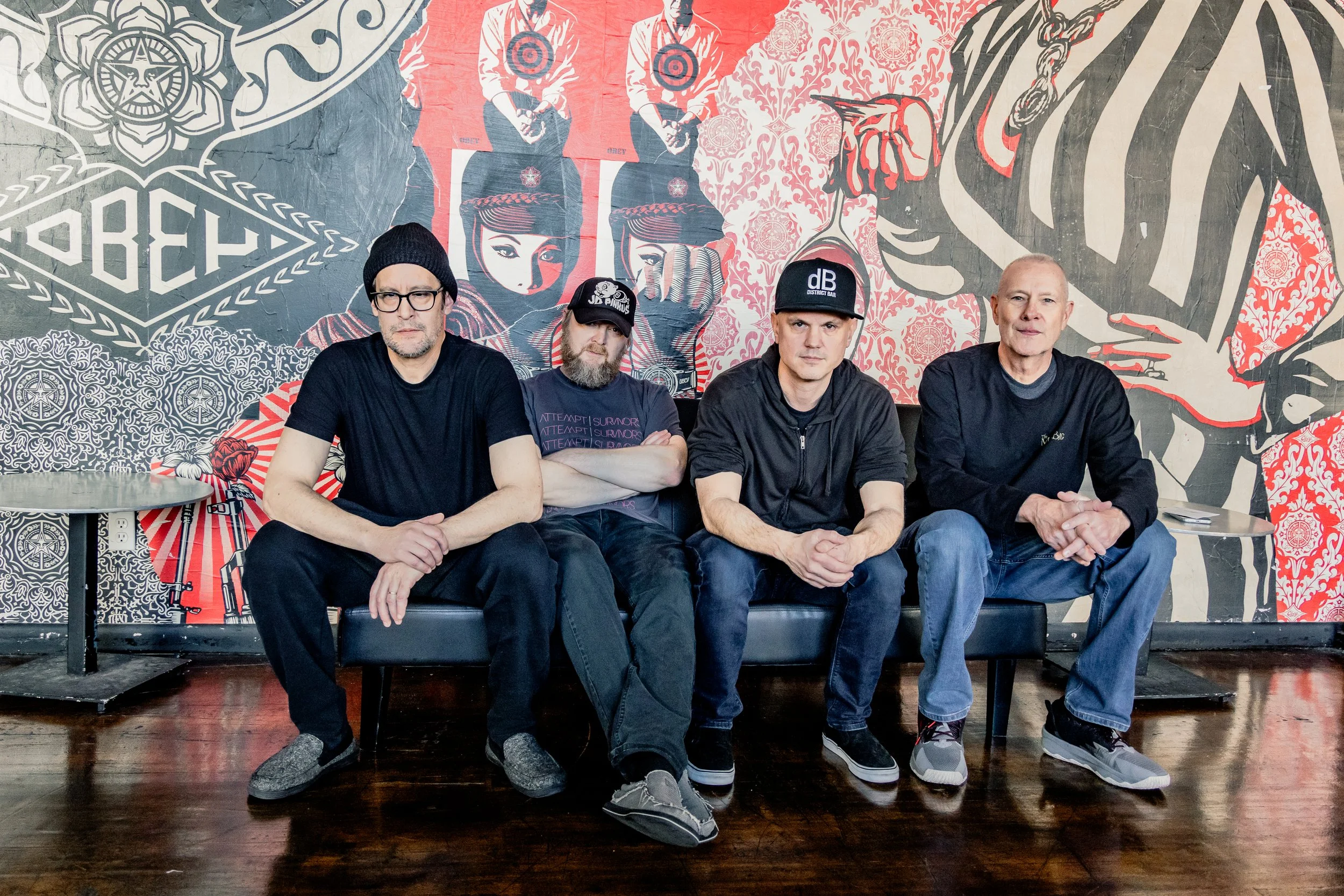
Photo by Vivianne Navarette
“I’ve been doing this for a long time, and I really appreciate every show, and every opportunity to record and put out records.”
This Friday, August 28 Helmet will return to Albany for a headlining show at Lark Hall courtesy of DIVE Presents. In the late ‘80s, Helmet’s heavy groove metal shook up the American underground. Their 1989 debut album Strap It On, with Page Hamilton’s dense and unconventional guitar work was praised by hardcore, noise-rock and metal fans and critics alike. The band followed by reaching a greater audience with Meantime, Betty, and Aftertaste before splitting up in 1998. By then, Helmet had influenced the likes of System of a Down, Tool, Deftones and many other metal and nu-metal acts.
Hamilton reformed the band in 2004 and has since recorded an additional five albums while continuing to tour internationally and inspire many more contemporary bands.
I spoke with him ahead of the show who told me that Albany has a very special place in the band’s history. While on tour in 1991, Helmet played the QE2, now the Fuze Box, and recorded their “In the Meantime” music video on a Super 8 during this show.
He also used to own a home in Bearsville, near Woodstock, NY, and spent much time in the Hudson Valley. He has longtime connections to musicians with deep ties to the area, including Gail Ann Dorsey and Reeves Gabrels who he got to know through his work touring with David Bowie in 1999, where he replaced Gabrels on The Hours tour that required him to learn approximately 30 songs in two weeks.
Hamilton remembers arriving in Albany as a young musician with his bandmates — “four idiots in a van,” as he puts it, "cruising around the country with the odometer disconnected and sweating and sleeping on people's floors.”
Helmet has now upgraded to slightly more touring accommodations, but the spirit of getting out is still there for Hamilton and the band.
“Everybody's just looking forward to playing again,” he tells me.
This “Strap it Down” tour is a co-headline with Down, but for Albany, Down will not make an appearance. Hamilton explained how close the bands were in the early 90s, but they have led separate lives and haven't played together in about 30 years.
“It's so crazy — all these years that have passed, everything you go through. When you're young and dumb and feel invincible, you know, sometimes you take some of the stuff for granted. I’ve been doing this for a long time, and I really appreciate every show, and every opportunity to record and put out records,” he says.
Helmet’s hits from the 90s still resonate with audiences today, but Hamilton also still loves playing them. The band doesn’t play the exact same set every night.
“I don't like to play the same songs consecutively. There are some songs that are in the set that people expect to hear. But I feel like we have enough songs that we can do anything, and you're gonna get the Helmet experience regardless.”
That philosophy also changes the way Hamilton experiences the band's older material. For example, he admits he doesn't get tired of playing “In the Meantime,” even after more than three decades.
“My cousin once asked me, ‘Do you ever get sick of playing “In the Meantime”?’” Hamilton recalls. “And I'm like, ‘Do you get sick of putting a suit on and going to work Monday through Friday?’. He said ‘yes,’ and I said ‘I don’t have to do that’ — ‘I get to play a song I wrote in 1991 in 50 countries around the world.’”
For him, the older songs don't exist in isolation. Newer material changes the context around them, and improvisation keeps even familiar songs alive.
“The new songs kind of oddly inject life into the older catalog. We're not gonna play ‘Birth Defect’ every night. So when we play it, it feels fresh. And, you know, from my perspective, too, I get to improvise.
“But I'm kind of a freak of nature,” he says with a laugh. “So I'm hoping that I keep doing this for a while, because I still love it.”
Hamilton also teaches guitar remotely to students all over the world, even from the back of the bus whale touring. He began giving lessons again during the pandemic after his friend Tracy Wiederman encouraged him to start teaching guitar online.
“It keeps me out of trouble,” he says jokingly.
The teaching has led Hamilton back into the academic, analytical side of music. He gives students assignments in theory, composition and transcription, sometimes revisiting concepts he hasn't worked with since college. One student is particularly interested in music theory, prompting Hamilton to work with things such as Hungarian major scales and altered dominant scales. He recently transcribed XTC's “Dear God” for students after previously working through “God Only Knows” by the Beach Boys.
“I love it,” he says. “It's been a really fun thing. I had no idea it would be this enjoyable.”
Hamilton's relationship with formal education has remained important throughout his career after receiving a masters in jazz guitar from the Manhattan School of Music and playing in avant-garde composer Glenn Branca’s guitar orchestra. In June, he returned to the University of Oregon, his undergraduate alma mater, as the 2026 Distinguished Alumnus and spoke at graduation.
Helmet isn't currently working on another album, but Hamilton has no shortage of other projects. He's working on a solo jazz record, and preparing to rerelease a compilation of music from several independent films he scored, originally released through Nile Rodgers’ label, Sumthing. He's also developing a solo album from reshaped material originally written for a film project that fell through. This project will feature several longtime friends and collaborators, including Johnny Tempesta, who has played with The Cult, White Zombie and Helmet, and Matt Flynn of Maroon 5 and Hamilton’s former band, Gandhi. Hamilton also plans to work again with Jim Kaufman, who co-produced Helmet's Left and has been involved with Hamilton's work since the Size Matters era.
The solo material will also take Hamilton in a slightly different thematic and lyrical direction.
“It's more vitriolic and political than Left,” Hamilton says. “We can no longer assume there is a shred of good faith, a single morsel of compassion, or any kind of moral standard in the GOP. They are lying, greedy sacks of shit who are fine with destroying our democracy.”
He also recently wrote a piece for the 150th anniversary of the oldest high school orchestra in America, the Christian Brothers High School orchestra in Memphis, and has been asked to write another piece for next year.
For Hamilton, teaching and learning have become part of the same creative cycle. Hamilton's approach to songwriting is similarly rooted in curiosity rather than commercial calculation.
“The first thing for me has always been to be honest,” he admits. “I am not writing for an audience.”
He cites David Foster Wallace, John Cleese and Conan O'Brien among the people whose thoughts on creativity have influenced him. Hamilton believes one of the most important responsibilities of an artist is to resist worrying about how people will respond.
“To be an artist, I've always felt that it was my obligation to not give a shit about how people are going to respond. Because, the minute you do that, you're not being driven by the musical note or by the lyric idea anymore.”
That attitude extends to his lyrics. Early on, Hamilton deliberately wanted to be the opposite of a conventional singer-songwriter. His lyrics often bury their meaning under layers of metaphor and imagery.
“People will misconstrue things that you say,” he says. He offered “In the Meantime” as an example. While the song is sometimes interpreted in very different ways, Hamilton describes it as being about spiritual enlightenment and humanity's obsession with the physical world. One of his favorite pieces of imagery in this song came from a literal vision of someone's ego becoming so large that their head inflated like a balloon. That tendency toward imagery is part of what makes Helmet's lyrics so open to interpretation.
Hamilton's philosophy of songwriting also begins before picking up the guitar. When he works with musicians who are struggling to create, he sometimes tells them to put their instruments down.
“We all have music in our heads, in our bodies, in our souls,” he said. “It's everywhere.”
For Hamilton, that music can come from the city itself such as the subway noise, motorcycles, voices, traffic and rhythms of everyday life that are all around you. Growing up in Oregon and later living in New York City gave him radically different sonic environments to absorb. The challenge isn't necessarily finding music, but learning how to listen to it when it is already there.
DIVE Presents Helmet at Lark Hall on August 28, with openers Spirit in the Room and Flatwounds. $35 ADV / $40 Door. Big band. Small room. Get tickets here!