
INTERVIEW: ERIC ANDERSEN Reflects upON HIS LAST LIVE SHOW
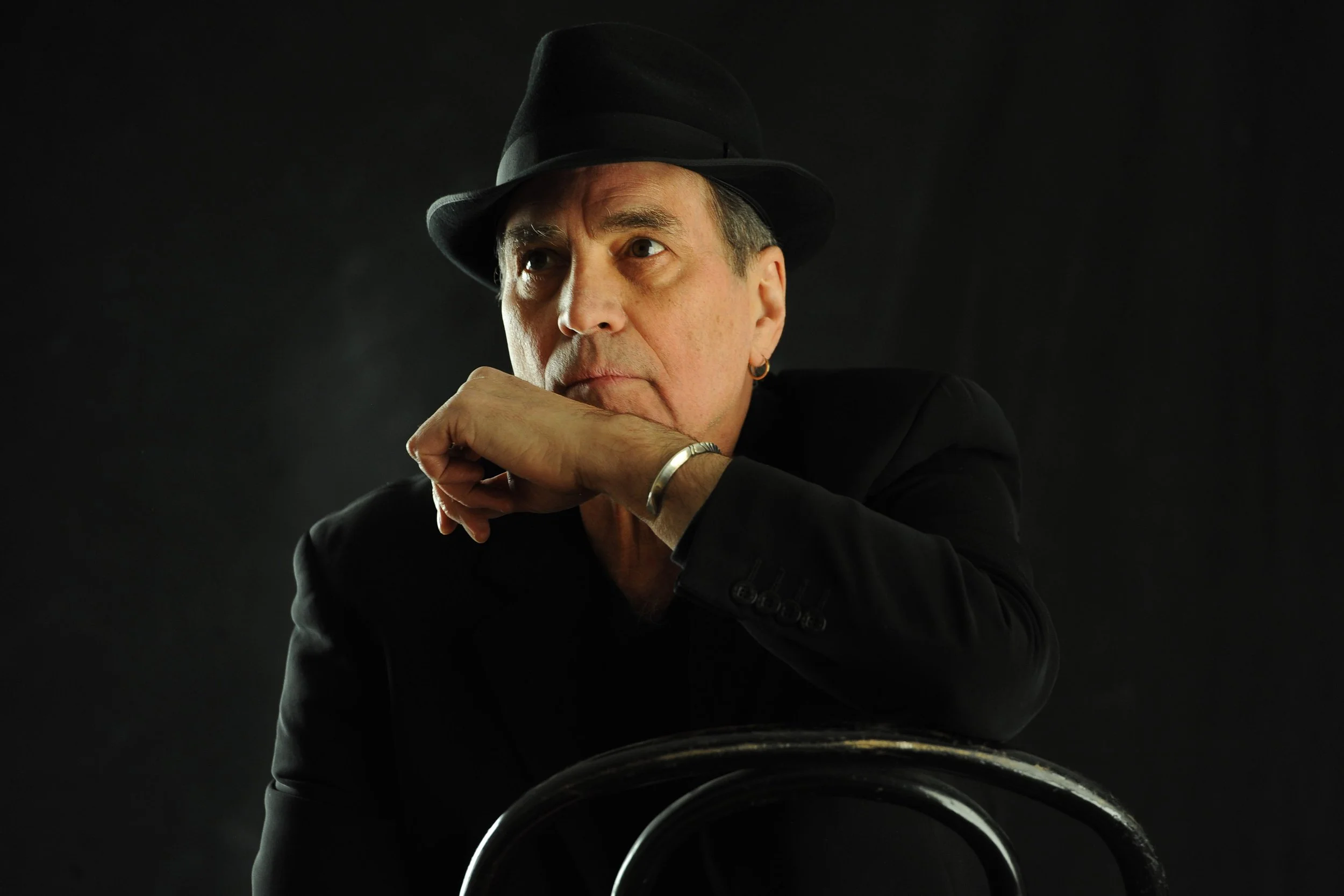
Photo by Paolo Brillo
“I think the songs are just in the air, tapping me on the shoulder, and I'm the one who has to write them.”
It was a great honor to witness what was likely the last live performance of legendary folk singer-songwriter, Eric Andersen. Fans traveled from all over the northeast to attend the three-hour set at Caffe Lena to close Andersen’s farewell tour.
Joined by his daughter Sari Andersen singing harmony, and longtime collaborator and friend Steve Addabbo on electric guitar, Andersen took the audience on a journey through his songs about love, protest and the natural world written across his 60-year career.
Backstage at Caffe Lena after the show and after Andersen signed CDs and took photos with fans, I spoke with him about protest culture, dreams and how he still follows the mysterious whispers of songs. He is extremely curious and was as interested in my opinions as I was in his which made this more of a philosophical reflection than an update on his work.
Despite the audience feeling overwhelmed with bittersweet emotion, Andersen resists any sentimentality of this being the last show and looks forward to having more time to read, write and lead a curious life.
“I know I should say something profound,” he laughs. “But I just feel the same way I do with any show. We did it, it’s over, we had a great time. I’m ready for change.
“I don't wax nostalgic or anything like that. I just go on and there's always things to be interested in, and things that capture my attention. You have to just keep going because every day, the sun rises and it’s a new day.”
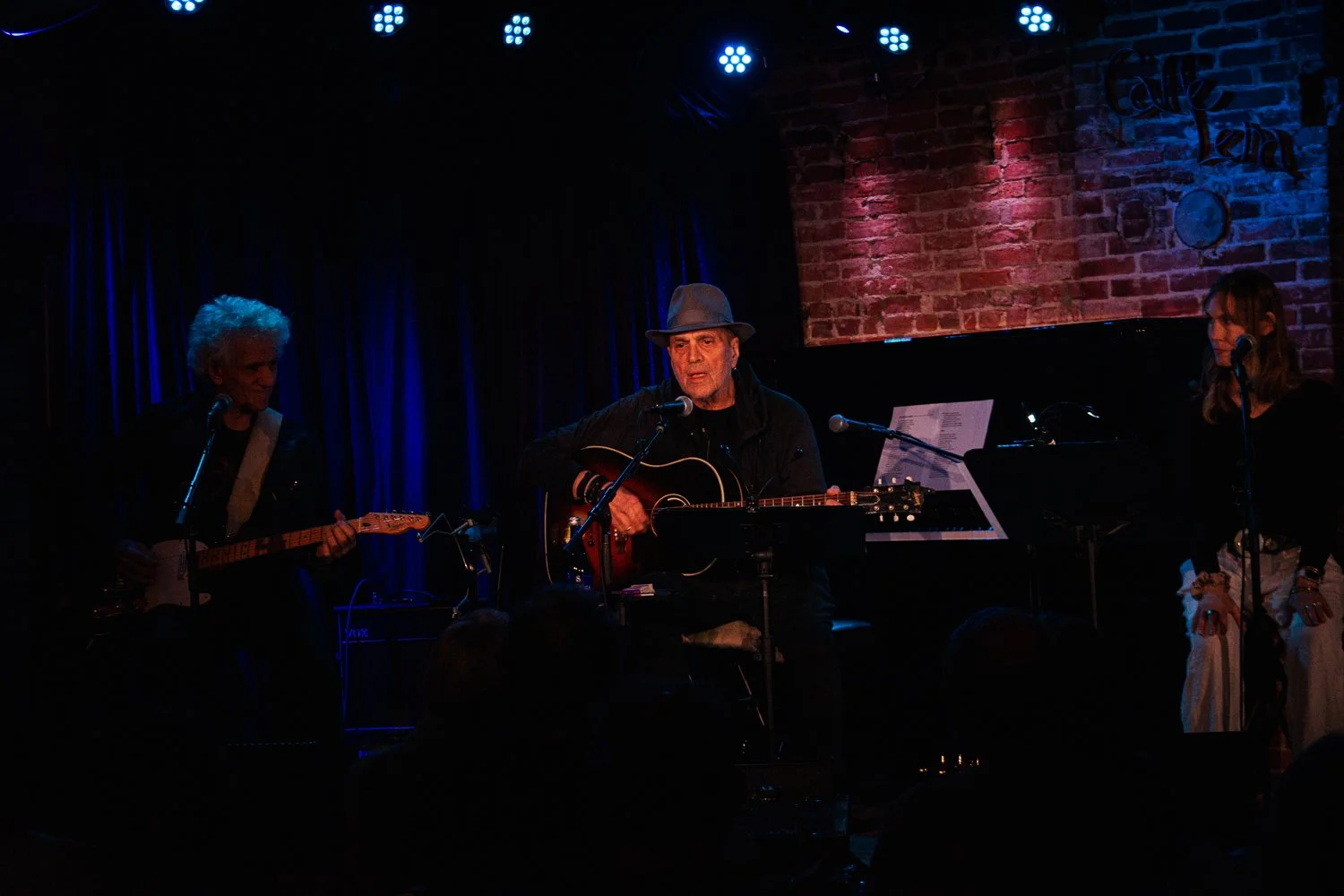
Photo by Maggie Aulman
Although touring may be done, Andersen is still inspired to write and release music. His most recent release, Stand Up and Resist, mirrors his political philosophy and concern for the disappearance of a collective protest culture that was the backdrop for his early songwriting in the ‘60s.
“I'm not a huge protest artist by any means,” he said. “But I do think resistance is important.”
Citing French philosopher and writer Albert Camus, Andersen warns of revolution, arguing revolutions often replace one ruling class with another with no structural change. He clarifies that this is not what he advocates for in his protest music, instead calling for “resistance, to push and change things — like molding clay.”
What is troubling for us both is the disappearance of protest culture.
“We're living under a dictatorship, and people just hope it’ll pass,” he says. “Things have changed, but nobody's doing anything. Nobody's reacting. It's like one big shrug.”
At the same time, Andersen still holds great hope in the power of artistry to contribute to resistance and discovery.
“Inspiarations are a rare flower,” he says. “You get an idea or a line or something, and it demands attention. The inspiration says, ‘You've got to continue with this idea and write a song.’
“Usually a line whispers its next direction. You become a victim of this whisper and then you have to play it out. You have to walk it through to its conclusion or it will not go away.”
Talking about his process, Andersen reveals, “I don’t write every day, I'm not a craftsman. It just comes when it comes and I’ve learned to listen for that and lean into it.”
Andersen suggests embracing creation in uncertainty as an exciting challenge. Songwriting is about investigating or exploring ideas, not making statements.
“Some may think that you should want to have something to say for the world [when songwriting], but I don't look at it that way,” Andersen explains. “If I looked at songwriting like that, I would never have picked up a pencil. I'm not that kind of songwriter. I stumble onto things, I see a line and it wants to write itself. I just take action to see it through. When you get a line of something that could be a song, you don't know what the hell it means, but you know it won't leave you alone. You've got to do something. The line demands it has to be written. I think the songs are just in the air, tapping me on the shoulder, and I'm the one who has to write them.”
Although neither of us could find many answers, many questions were raised in our conversation that I believe are more honest and important than any quick conclusion for the sake of a clean statement.
Andersen’s philosophy and career are further explored in The Songpoet documentary released in 2021 that explores his creative relationships, collaborations, and enduring influence on contemporary songwriting. The documentary can be streamed for free on PBS, https://www.thesongpoetfilm.com/