
INTERVIEW: Elizabeth Zunon Brings Vibrant Worlds to Life
**An abbreviated version of this article originally appeared in our April 2026 print issue**
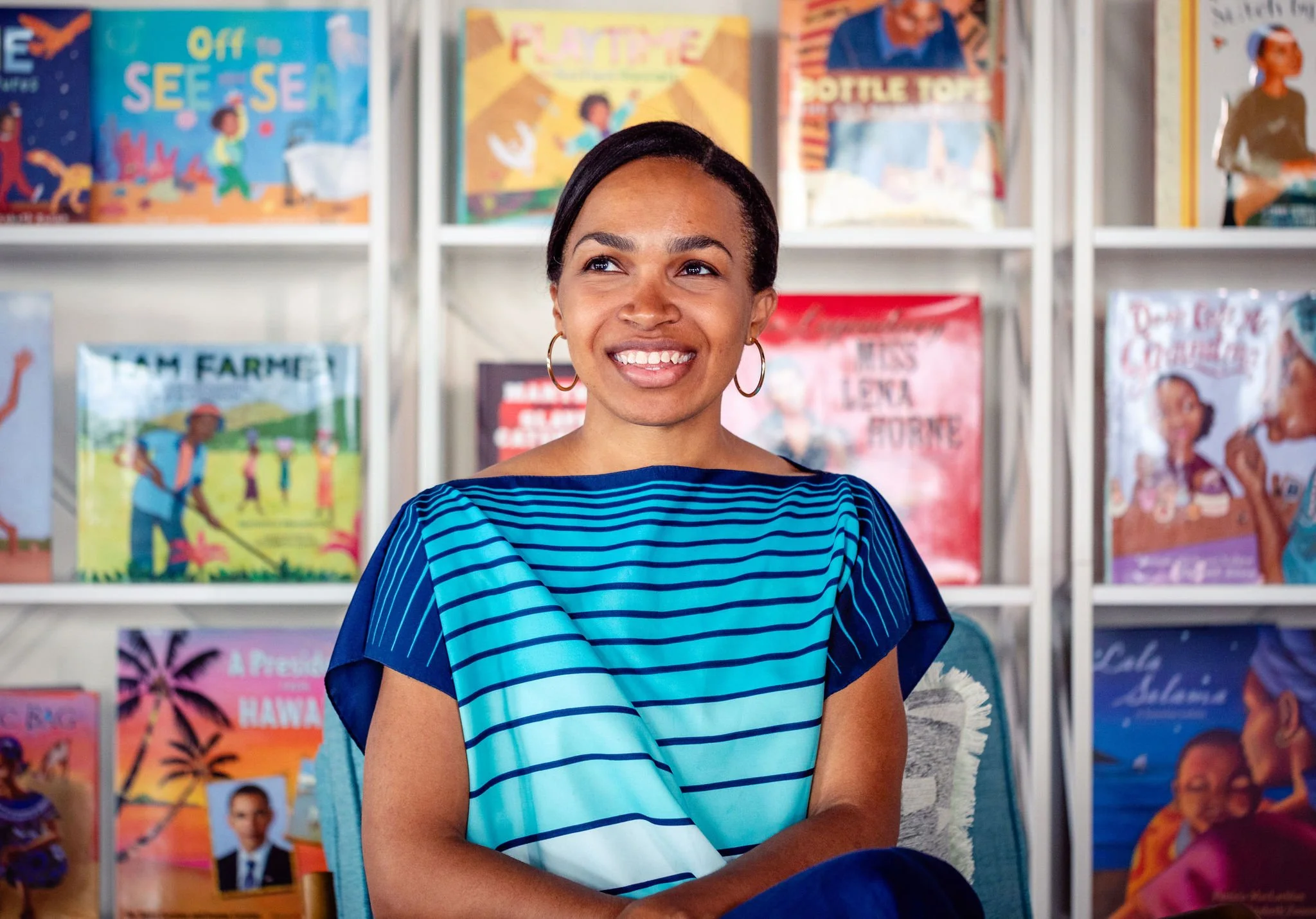
Photo by Romanello Studios
“I am still so impressed by the magnificence of what the human hand and the human mind can create.”
As adults, we may not remember the first time our favorite childhood stories were read to us. But once you cross that threshold into becoming a parent yourself, those stories hold a special place in your heart all over again.
Seeing the unique, colorful imagery of The Very Hungry Caterpillar conjures up uniquely infantile memories. Where the Wild Things Are reminds you of the fleeting carelessness of youth, when the beasts were your friends and adults were the beasts you avoided. And stories like I Love You Forever only really truly connect once you’re reading them to your own kin.
The best children’s books — dare I say, the classics — are the ones that are as enjoyable to read for adults as they are for the kids. Local author/illustrator/visual artist Elizabeth Zunon knows this as well as anyone, having written and/or illustrated more than 20 books, and having a three-year-old son to read them to. Her love of the art form was instilled in her just as young.
“The interest in children's books was always there throughout my childhood,” Zunon recalls. “We were a PBS family. We always watched Reading Rainbow, and I was so intrigued by all the different parts that make a book. ‘Written by, illustrated by, published by…’ — those words just stayed in my brain.
“When we would go to the library, my grandmother and I would find the Reading Rainbow books on the shelf. It was always exciting to see the book that I had seen on TV in grandma and grandpa's basement.”
Despite being born in Albany at St. Peters Hospital, she spent most of her youth in the Ivory Coast of Africa where her father was born and raised. She grew up in a bilingual household, speaking the native French alongside the English that her American-born mother was fluent in. She visited her mother’s family in America regularly before moving here permanently at age 12.
Her African heritage seeps into every piece of art she makes, most notably in her book Grandpa Cacao, a story about the origins of chocolate inspired by her grandfather in the Ivory Coast.
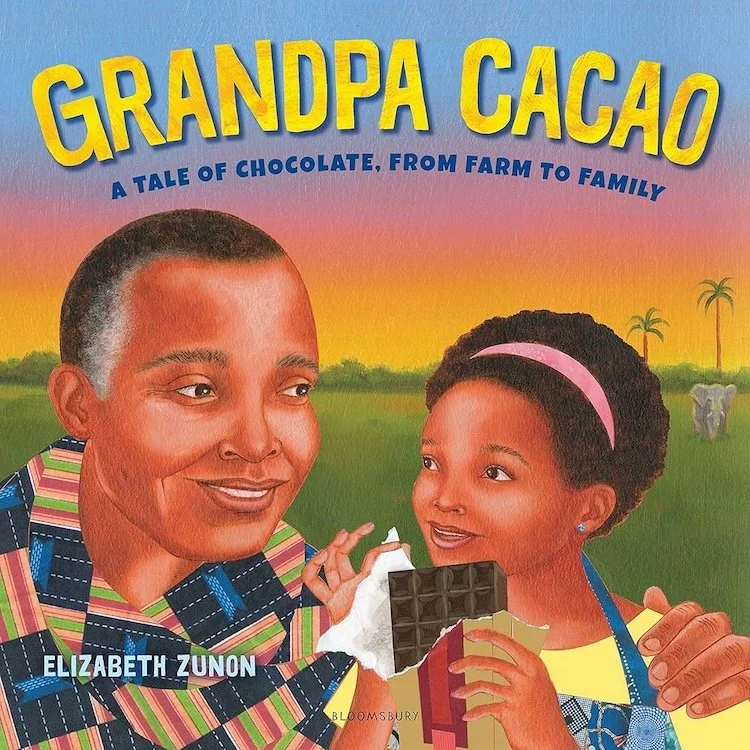
“He was a cacao farmer,” she recalls. “Little kids all love chocolate, but I don’t know if they know it comes from a fruit that only grows on a tree in particular areas near the equator. I wanted to show what life is like for the farmer who has to do this difficult work. I also wanted to show something that kids might be able to relate to, like baking a chocolate cake with their family in their house.”
She is gracious enough to regale me with nostalgia-fueled tales from her family’s life in Africa, where she lived in a high-rise apartment building with amenities not everybody has across the continent. Her father told her about her “tall and strong” grandfather who grew coffee and cacao on his farm. These stories ultimately helped tailor her illustrations of the man she had never met.
“I don't actually know what he looked like because I've never seen a photograph of him,” Zunon admits. “So I wanted to find a way to creatively depict him in the illustrations that would be different from the way I would depict the little girl and her dad who are actually baking the chocolate cake in the current day. I used silkscreen to depict the grandfather in the past and painting and collages to depict the little girl and her family in the present day.”
In a full-circle moment, she is currently looking forward to a presentation at Albany Library on April 18 that will feature a group of undergraduate students from UAlbany translating this book from English to French. It’s a project she feels honored to be a part of.
“UAlbany is the place where my parents met; they actually met at the French club. So if it wasn't for the French department at UAlbany, I wouldn't exist!”
In fact, higher education has a lot to do with Elizabeth’s trajectory as an artist. After developing an early interest in painting at Guilderland High School, she eventually attended the revered Rhode Island School of Design, to which she credits a lot of her technical knowledge.
“Attending that school, I was able to study Renaissance paintings for two weeks in Italy, and that really opened my eyes to the possibility of what human beings can do with just a tiny little paintbrush and a little bucket of paint. We were learning how to paint egg tempera paintings by mixing powdered pigments with literally egg yolks. I am still so impressed by the magnificence of what the human hand and the human mind can create.”
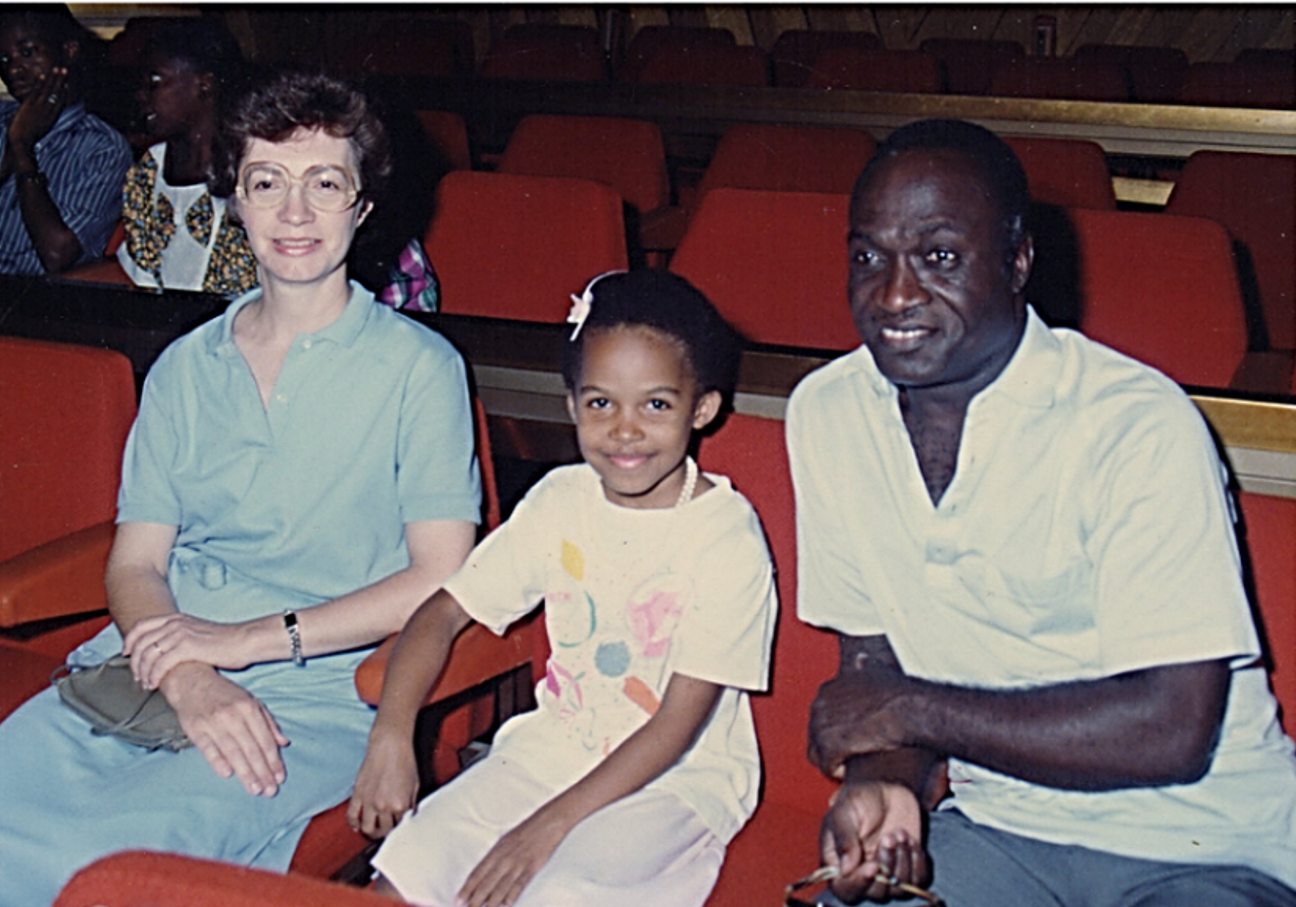
Zunon with her parents
Whether painting on canvas or on watercolor paper for a children’s book, Zunon is tapping into techniques from her education every day. As any artist will tell you, patience — while not strictly part of any curriculum — is one of those techniques. Despite recognizing this, I’m still caught off guard learning just how much time Zunon spends on her books.
“Ideally, I’ll get 9–12 months,” she says. “I start by drawing a sketch for every page of the book, and then I scan those to the editor or the art director who will send them to the author. Then, I’ll receive feedback and have a few months to paint [and collage]. After I’m finished, I’ll pack my paintings into a box and overnight them to the publisher, and then about a year after I finish my art is when the book comes out.”
In a time when so much art has shifted into a digital form, it is always refreshing to see artwork done patiently by hand. Take one look and it’s clear Zunon’s work is done with love, care, and attention to detail. Simply put, this is human art — by a human, for humans.
It’s also inherently personal — even when illustrating another author’s book, she finds a way to inject a bit of herself and her experiences into the imagery. For example, she even sometimes bases her characters on self-portraits in various positions.
“I'm used to looking at myself and so I often use myself as a model. I’ll take pictures of myself dressed up as a character and then sketch myself from the photographs. I always draw people with huge heads and long arms because I have a big head and long arms!”
Although currently in between projects, Elizabeth continues to welcome inspiration from all of her favorite places. She is always painting, and as a result, filling her soul.
“I always return to my childhood memories and the visuals that I have from living in a faraway place. I love bright colors and patterns and I love painting pictures that have high contrast and interesting color combinations. The longer I live away from my childhood home, the more I have a growing nostalgia for the things that I remember and recognize from living there.”
Our conversation left me thinking about the notion of first impressions. The importance that snap judgment can hold, as humans and artists, is undeniable. But Zunon, who takes such time and pride with her work, designs her projects to defy the idea of first impressions, or at least debate the importance of them. Her work has a living, breathing quality to it, revealing something more each time you look at it. Whether it be a reminder of a tropical climate across the ocean, or a mere memory of an ancestor’s former occupation, it’s artistry like this that reminds us why art is worth making. Preservation. Patience. Perseverance. My first impression tells me she’s got a whole lot of all three — thank goodness she’s sharing it with not only the rest of us, but our children as well.
For more information on Elizabeth Zunon’s work, visit www.lizzunon.com
