INTERVIEW: A Conversation with Mega Producer Don Was Ahead of Outlaw Fest
08/30 @ SPAC, Saratoga Springs
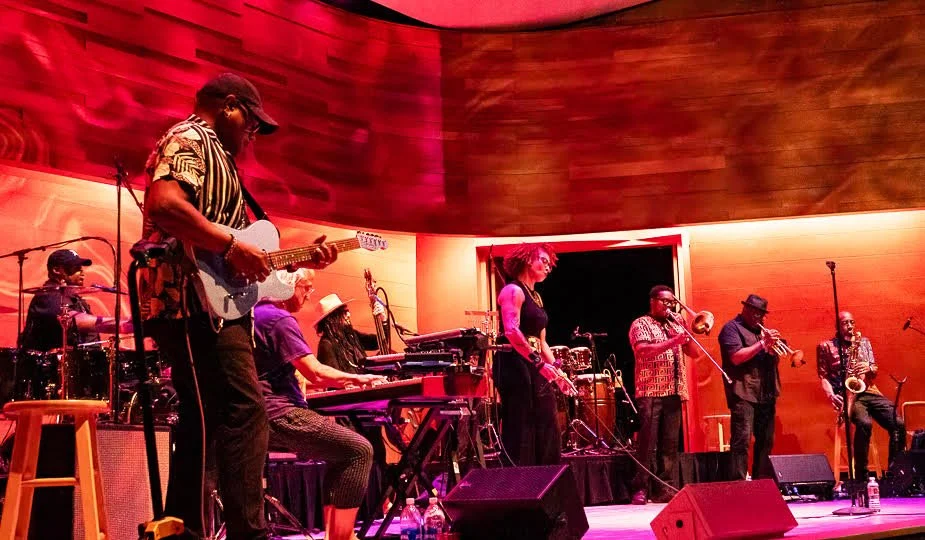
Photo provided by artist
“I believe that if the emotional content is intact, genre is rendered meaningless. Everybody's got the same basic emotions, no matter where you come from.”
The last time I saw Don Was was at the Outlaw Music Festival in 2023 when he was playing in Bob Weir and the Wolf Bros. His signature look is very recognizable — a wide-brim hat, dark sunglasses, and his double bass — but there’s far more to Was.
From co-founding the genre-bending Was (Not Was) band; producing such works as The B-52s’ “Love Shack” (1989); Bonnie Raitt’s Nick of Time (1989); Willie Nelson’s Countryman (2005); Across the Borderline (1993); four Rolling Stones’ albums, and serving as the president of Blue Note Records since 2012, Was remains one of the greatest figures in the music world today. This list is really just a sliver of the many impressive projects he has been involved with. Giving Was an introduction in just a few lines in no way provides any justice to the breadth of his work.
These days, Was is spending more time playing live with the Pan-Detroit Ensemble, a nine-piece group that draws on the jazz, blues, funk, rock, and soul traditions of his hometown. This band brings together some of Detroit’s most accomplished players, including Jeff Canady (drums), Vincent Chandler (trombone), Steffanie Christi’an (vocals) John Douglas (trumpet), Wayne Gerard (guitar), Mahindi Masai (percussion), Dave McMurray (saxophone) and Luis Resto (keyboards). The band’s debut album, Groove in the Face of Adversity, takes its title from a philosophy Was has carried with him since childhood. Stuck in the car while his mother ran errands and in a bad mood, he turned on the radio and came across Joe Henderson’s “Mood for Joe”. The music changed the young Was’ entire disposition in that moment.
“I see it as a way of dealing with hardship,” he notes. “I was producing a very famous jazz drummer named Louis Hayes on the day that Trump got elected the first time in 2016. And man, none of the musicians on the date could fucking believe it actually happened, right? So everyone came into the studio shell shocked that morning, and I thought back to the Joe Henderson lesson. I thought, ‘Man, what else can we do?’ We got the groove in the face of adversity. Let's play better than we ever have before. Let's put everything we're feeling into this music. I think it's an effective way of dealing with frustration or anger or challenge.”
This mindset fits right into the Outlaw Festival ethics.
“It’s Outlaw! The theme of it is people who don't want to be told what to do, or what music they're supposed to like. So, in that spirit, I think we belong.”
The jazz act might seem like it adds a different twist to the more country-bent festival, but Was cautions against this genre-based conclusion. What’s important is when you match the emotion and the energy level, not the style.
“I believe that if the emotional content is intact, genre is rendered meaningless,” he says. “Everybody's got the same basic emotions, no matter where you come from. Everyone loves and hates and cries and laughs and gets mad. I think if you make your music emotional, if you really put some feeling into it, everybody responds.”
For Was, the structure of the Outlaw Festival is also refreshing for touring musicians as they can spend time with each other and this lends itself to more collaboration, as evidenced by recent in-studio-post-Outlaw-touring collaborations by Willie Nelson and Bob Dylan, and Mickey Raphael and Lucinda Williams. At most other festivals, it is common for bands to miss seeing each other due to how layered the schedules are.
“I love doing this tour. When you tour with that many bands, it becomes like a little party,” he explains. “At the Outlaw Festival it's one stage and one canteen where everyone's sitting around eating dinner. You get quality time to hang out with everybody.”
In their headline shows this year, the ensemble is playing the Grateful Dead’s Blues for Allah (1975) album in full for its 50th anniversary. They won’t have time to perform the entire album, but plan to play a few songs from the album as part of their set.
“There's a lot of common ground between Willie and Grateful Dead fans, so there's a place where it all comes together.” Playing these songs is also a way to remember and honor his late band member and friend, Bob Weir.
He tells me, “[Weir] was a friend to a lot of people, including people who didn't know him personally. You knew him well from his music and from seeing him live.” He explains that when playing the Dead, “You not only have to play the music, but you have to infuse your own soul into it, and that means, you have to somewhat reinvent it to accommodate who you are; that’s the spirit of the Grateful Dead.

“So when we play these songs, we've had to Detroit-size them a little bit so that we can play them from the heart,” he adds. “Doing that allows us to have an adventure every night with it; we never play it the same twice.”
On Groove in the Face of Adversity, the band covers “I Ain’t Got Nothin’ But Time” by Hank Williams and “This is My Country” by The Impressions. Much the same way they approach the Dead, they really make these songs their own.
This record honors his hometown and all the various kinds of music that makes the sentiment of Detroit music unique. After World War II, people from all over the world moved to the city to work in the automobile factories, creating a multi-cultural, primarily working class town.
“It was a jambalaya of musical styles — a sensory wonderland. It was like some kind of festival, except it was everyday life.”
Almost everyone’s fate was tied to the same business. Was adds, “As a result, there's not a whole lot of point in trying to impress anybody by pretending that you had something going on that you didn't because everyone knew we were all in the same boat. It creates a very honest, relaxed and unpretentious population, and the music that comes out of it, reflects that.”
He cites John Lee Hooker as the quintessential example of “not just Detroit music, but of Detroit.”
“The music's so raw and real that you almost feel like it could fall apart any second, but it never does; it grooves like crazy. He's just telling you what is on his mind at that exact moment. He really is not too fussy about observing copyright. He changed the song around depending on how he was feeling, but he is incredibly expressive,” he says. “That kind of raw honesty permeates every tributary of Detroit music.”
As Blue Note Records’ president and an in-demand producer, Was splits most of his time off the road between Detroit and LA. But, he explains he is also playing live more frequently nowadays.
“It’s cut into my record producing time, but it's okay. I like playing live and getting that immediate feedback. There's something that happens when you can feel an audience respond to the things you do. You see the look on their faces, and it impacts the choice of the next notes you're going to play, so the audience becomes a member of the band. When you get that energy exchange going, it’s about the most exhilarating thing I can think of.”
I asked Was why he is drawn to the double bass over an electric bass.
“It’s real — it’s a piece of wood that vibrates against your body,” he says. “Last night, I couldn't hear myself on the first song because I wasn't in the monitor, but it didn't matter because I could feel the vibration against my body and I knew what notes I was playing. I could feel them.
“My ideal of what a bass player should be is the provider of a note inside the bass drum. I like playing with guys who do cool things with their feet and I just like sitting there with the attack of that and the rhythm of that, and providing a tonal color to it.”
Was tells me more about how he bounces off his drummer, Jeff Canaday, and how he attacks, holds, and releases the note in tune to the different elements of the drums.
“I love this guy — he's a wild drummer. He doesn't play the same thing from night to night, so if we have a good night on something, if I try to start at the point we left off the previous night, that’s the worst thing I could do because he's not going to be there. You can be sure of that. So you just have to see where it's going every night.”
Listeners will witness the unfolding of new arrangements right before them which gets back to a fundamental quality of music: to play. To have fun, to experiment, to push boundaries — the Pan-Detroit Ensemble are fighting to protect that in music.
Speaking with Was on this made me reflect on how many people analyze the composition of music when really what should be more analyzed is the experience and the emotional effects.
“When I go out and sign records after the show and meet people, I'd rather hear someone say, ‘That song made me cry’, than ‘It was so cool that you put those two elements together’,” he says. “The chemistry behind it should be invisible — you don't drink water and think about the hydrogen and the oxygen in it, you think about the feeling and the emotion in it.”
At this year’s Outlaw Fest, I’ve decided to take Was’s advice and not think too much about what the band is doing (even though it’s cool to play that game), and more about how it’s feeling. Join me, won’t you?
Don Was and the Pan-Detroit Ensemble will play the Outlaw Music Festival at SPAC on Sunday, August 30. To check out Groove in the Face of Adversity visit their Bandcamp.