INTERVIEW: Fighting the Good Fight With David Bennett Cohen
08/29 @ Colony Woodstock
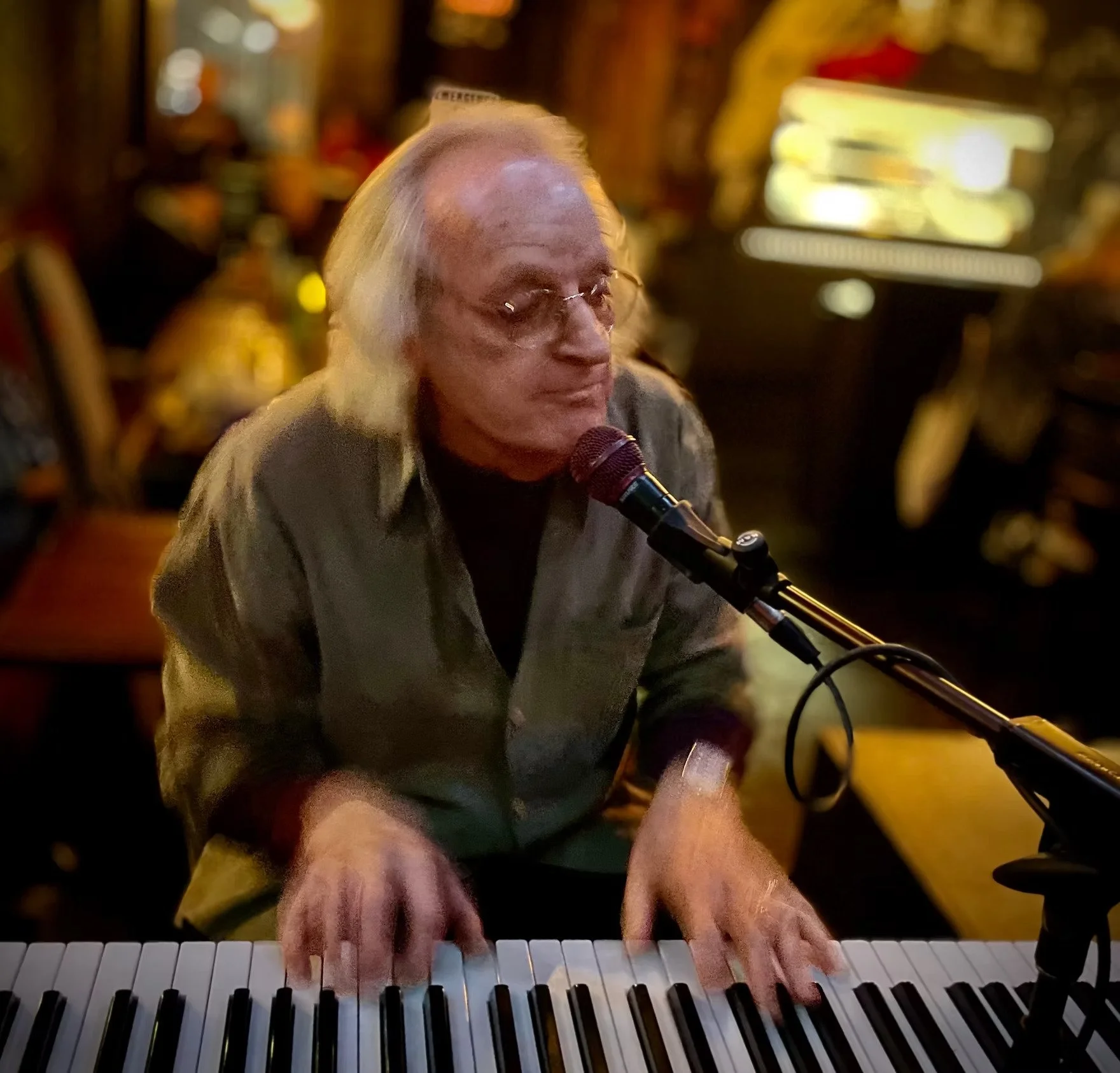
Photo provided by artist
“I think artists have a responsibility to speak out, because the truth of the matter is, we do have some influence.”
“Gimme an F…”
Country Joe MacDonald shouted to a crowd in Central Park in 1968.
“What’s that spell?”
A crowd yells back the F-word in unison, making a defining free speech statement of the 1960s anti-Vietnam War era. The band would repeat this at shows as an intro to the protest music pillar “I-Feel-Like-I’m-Fixin’-to-Die-Rag” with a famous recording of this at the Woodstock Festival in 1969.
David Bennett Cohen and Barry "The Fish" Melton, the last surviving members of Country Joe & The Fish, will join together to play Colony Woodstock on August 29, a stop on a select run of four shows in the greater NYC area. Country Joe & The Fish was a Berkeley band, but Woodstock was the counter-culture east coast epicenter and it is fitting to welcome home musicians fighting for these values in music and life.
As a founding member and keyboardist of Country Joe & The Fish, Cohen helped create some of the most experimental and political psychedelic music of the 1960s counterculture. In 1965, Cohen left his home in NYC and moved to Berkeley, California to join the music scene. He quickly connected with and played with many musicians such as Chicken Hirsch and Jerry Garcia, and founded one of the most important bands of the counterculture movement.
“I was in California during the heyday,” Cohen tells me on the phone, calling from Queens. “There was so much creativity going on in the '60s in the Bay Area. It was like a magnet pulling me. The California scene was very organic. Musicians came there individually, and they would get together, sometimes at music stores and one would say, ‘Oh, let's do this show.’ Sometimes it worked, sometimes it didn't, but it was very organic. The musicians just came together like that, and as a result, it was a real community; everybody knew everybody else.”
The Grateful Dead came to the Bay Area already as a band, but others like Quicksilver Messenger Group and the Charlatans and Country Joe formed in this way of individual musicians coming together by chance.

Both Cohen and Melton have led long careers in music after Country Joe & The Fish disbanded in 1969, and their legacy continues to inspire rock and protest musicians today. This reunion is not to be missed, but don’t expect a cover band.
“Personally, I'm not crazy about tribute bands,” he says. “Of course, we do some Country Joe & The Fish songs, like ‘Flyin’ High’ and ‘Bass Strings,’ but not like we used to play them. Barry's had his own career, and I have had my own career, so we do our own stuff too.”
He and Melton bring over 60 years of musical experience to these more bluesy arrangements that reflect their musicianship and tastes today. They will be joined by Natalie Martel and Jason Green on guitar, Tim Tindall on bass, and Don Castagna on Drums.
“I'm a blues player. I've always been a fan of the blues. So everything I play, I play the blues,” he says. “Barry was also a blues player. So, between the two of us, it's got that feel.”
Since Country Joe disbanded, Melton and Cohen have remained good friends and played occasional shows together, especially more in the last ten years. Both musicians have had roles at different sides of the stage serving as band leaders and sidemen at various times.
“It’s important for us to get together for the history of it,” he says. “We're really happy to be playing together. He's got his style, I've got my style, and together, we have a third style.
“The band had a life of its own. That's the interesting thing about bands — you have all these musicians who play those separate instruments, and then you have the band. The band is like a separate instrument. If it’s a four-piece band, there's actually a fifth piece and that's the band itself.”
He gives me an example of realizing this phenomena when playing at the Fillmore Auditorium.
“I remember, very vividly, playing the guitar and I was hearing what I was playing, but I was also hearing everything that the band was doing, including me. Plus, I was listening to what I was playing in context with the band. It was almost like I was in the audience listening, and at the same time playing,” he says. “That's the kind of moment that we look for. That's the kind of moment that's irreplaceable. It's one of those things that, when it works, it works in a very, very deep way.”
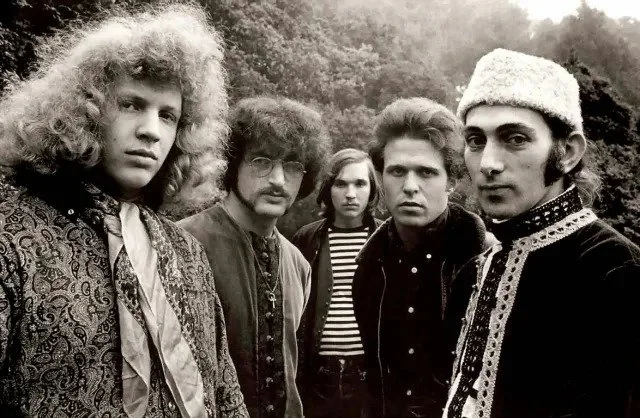
Country Joe & The Fish, provided
Cohen explains how the pages of the Country Joe & The Fish songbook still resonate with today's audiences, and maybe should be the pages musicians rip out, especially when they want to write activist music.
“There are many artists who believe that art is just art, but I think art is very political,” Cohen admits. “I think artists have a responsibility to speak out, because the truth of the matter is, we do have some influence.”
Country Joe’s music was more overtly political than other bands’ during that time in the Bay Area and they were criticized by other musicians for this element of their music.
“Even though other bands didn't sing songs like ‘Super Bird,’ or ‘Fixing to Die,’ their lifestyle was very radical,” he says of the long hair, pot-smoking, vagabond hippie living of ‘60s musicians.
When you can get a crowd of half a million people to shout the F-word in unison, I think that’s a wake up call that musicians have influence.
“There's an influence, and a responsibility. I think we have the responsibility, in today's environment especially, to speak out because somehow we have to fight the good fight,” he says.
Cohen left the band in 1969 before they went to Woodstock, but recorded their albums Electric Music for the Mind and Body, I-Feel-Like-I'm-Fixin'-to-Die, and Together. A master of blues, boogie-woogie and New Orleans R&B piano, and an accomplished guitar player,
Cohen has played and/or recorded with The Blues Project, Mick Taylor, Happy and Artie Traum, Eric Anderson, Tim Hardin, Jimi Hendrix, Johnny Winter, Buddy Miles, John Cippolina, Huey Lewis, Michael Bloomfield, Bob Weir, Johnnie Johnson, Debbie Davies, Byther Smith, Bobby Kyle, Rocky Lawrence, Johnny B. Gayden, Sandra Feva and many others.
He lived in Woodstock from 1971 to 1975, where he played with The Blues Project in NYC and made instructional tapes with Happy Traum.
“Woodstock was just great! It was a really nice scene back then — the music and clubs were fabulous.”
Currently, he lives in NYC and is still an active musician and piano and guitar instructor. He plays every Monday night at the Red Lion in Greenwich Village at the oldest blues jam in NYC, led by Big Ed Sullivan.
“I've been teaching since I started playing,” he says, telling me how he would often get requests by other musicians and audience members for lessons or to reveal his techniques. “It evolved very naturally.”
Not all musicians are both great players and great teachers, but Cohen has a skill for breaking each step down and showing others how to do it. Teaching has become an essential part of his approach and conceptualization of musicianship.
“[Teaching] is how the music continues. Nothing comes from nothing. It's always something that we're basing our music on. No matter how original something might be, it comes from somewhere else,” he says. “There’s only one exception, and that's Professor Longhair — of course, he learned to play from other people, but when he started playing, he really was the beginning of that rumba-gumbo-rock-and-roll-New-Orleans sound. Everybody learned from him — a real starting point. “
He continues to create new music consistently, and recently released two solo albums, Bittersweet and Seems Like A Good Time for the Blues. “I'm always writing music. Why would I retire? What would I do? Take up a hobby, like music?” he laughs.
He tells me the positives, the negatives and everything that comes in a life well lived inspires him to keep it up.
“My Buddhist practice inspires me,” he says. “I'm inspired by fighting against Trump, I think we're all inspired by that. I'm inspired by politics. I'm inspired by my beautiful wife. I’m inspired by life.”
David Bennett Cohen and Barry “The Fish” Melton will play Colony Woodstock on August 29. Get tickets here!