
INTERVIEW: Che Yeun Discusses New Novel Ahead of The Book House Appearance
04/25, 3:00 PM @ The Book House, Stuyvesant Plaza, Albany
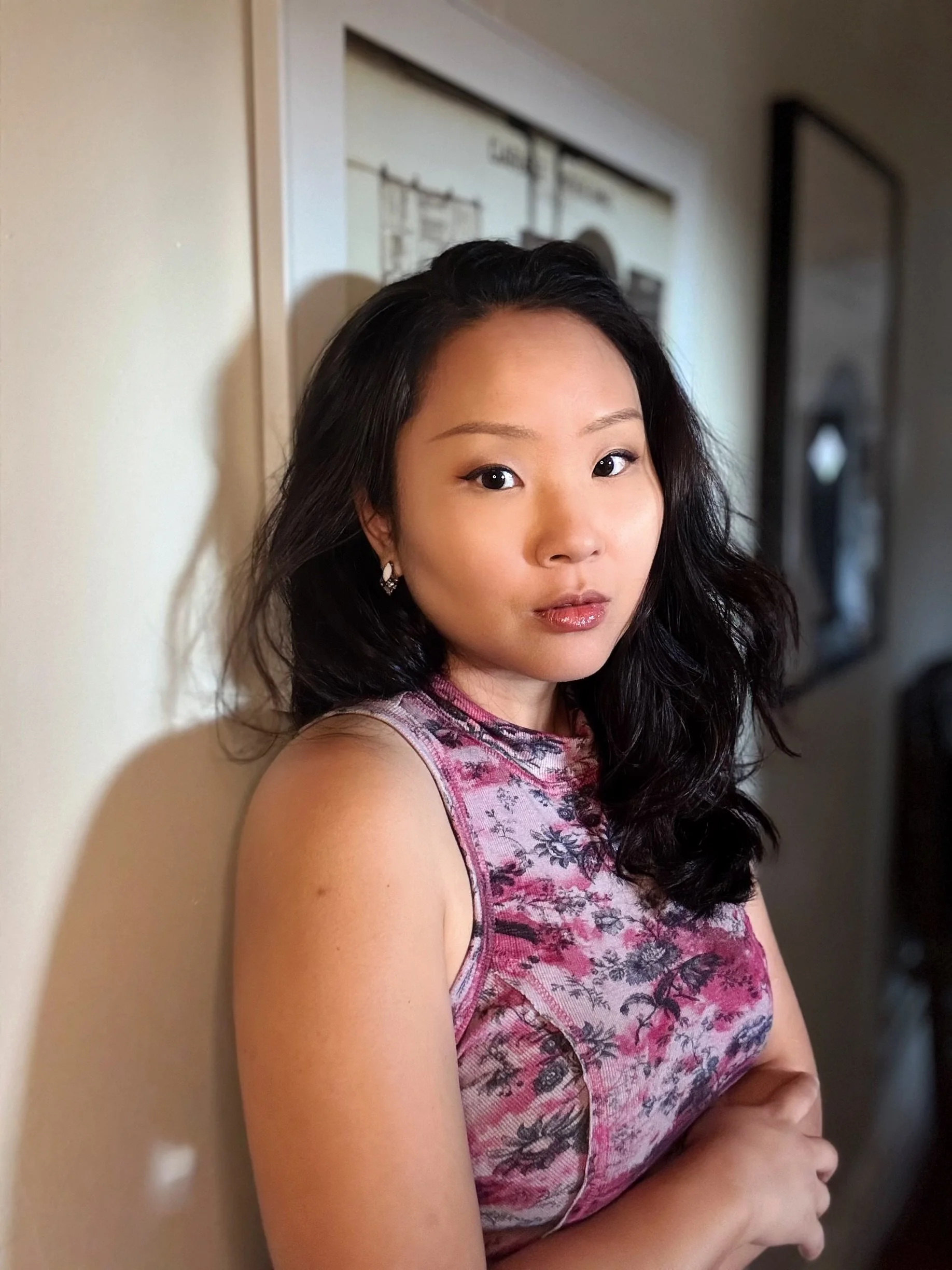
"I've never been interested in things like, ‘What's the richest neighborhood, what's the most glamorous neighborhood?' or ‘Where's the seed of power?’ I've always been interested in, ‘Where do you keep your secrets? Where do you throw all the shit that you don't want anyone to ever look at?’
This Saturday, April 25, The Book House of Stuyvesant Plaza will be celebrating Independent Bookstore Day. Attendees can anticipate multiple giveaways, face painting, and the opportunity to meet multiple authors. Author Che Yeun will appear for a reading of her debut novel Tailbone from 3 - 4:30 p.m. Tailbone follows an unnamed narrator who flees from home months before her graduation, and amidst a period of great financial crisis in Seoul, stumbles into the world of sex work.
Tailbone is a fascinating novel that handles this sensitive topic with considerable tact, using sex work as a segue into other criticisms Yeun has of contemporary society everywhere. Ahead of her Book House appearance, Yeun shared how this world of hustling has always — even as a kid — interested her, the personal story that birthed the idea for Tailbone, why she prefers stories that reject an easy ending, and much more.
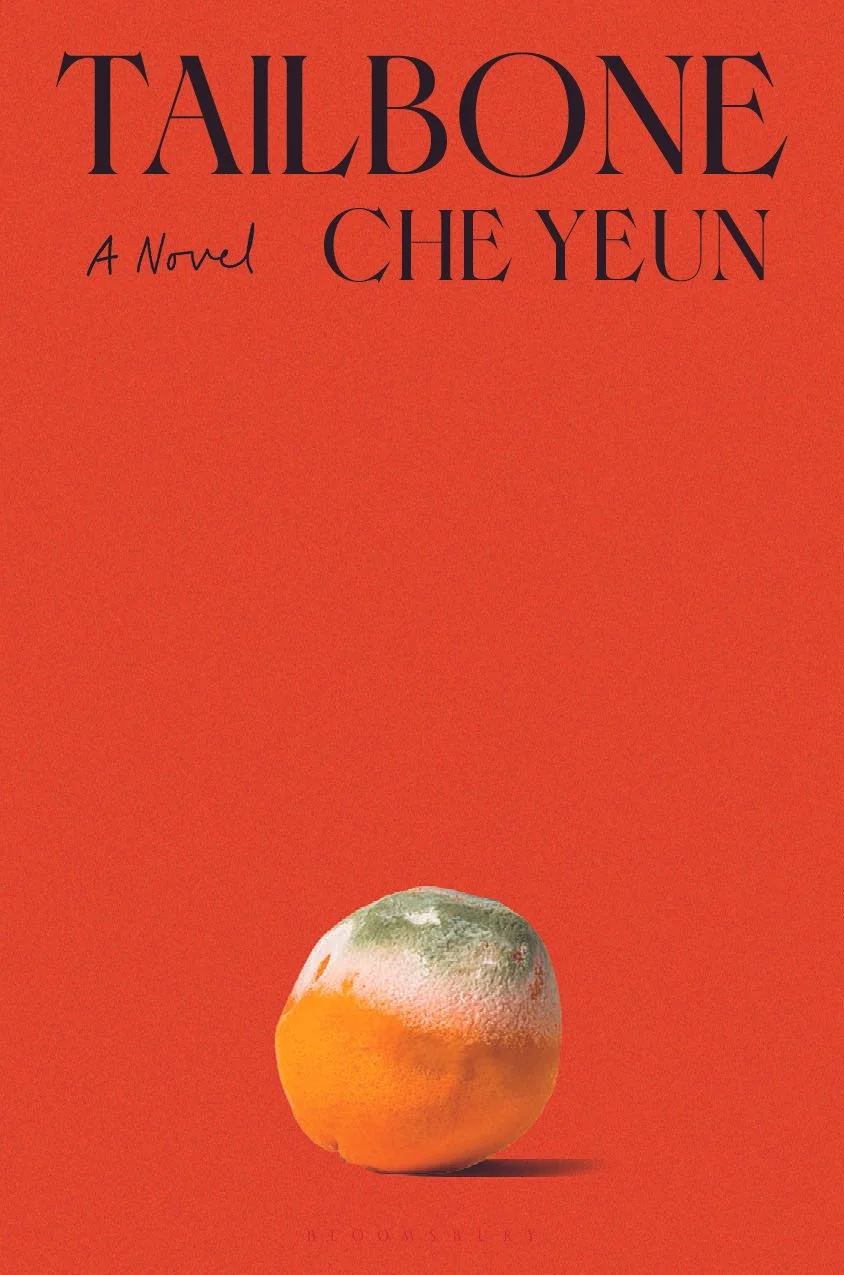
Maurice Burbridge: The first thing I wanted to get into was the cover for the book. I was reading this and many of my coworkers commented on the cover and asked me about it. So I’d just love it if you could walk me through the process of designing this cover.
Che Yeun: We all hope that no one judges us by the cover, but in reality books do get judged very harshly by their cover. I'd heard through word of mouth that authors, especially debut authors, really have no say in the packaging of your work. So, I had been bracing myself for the worst. Then the editor I was working with at the time, Amber Oliver, emailed me and was like, "Hey, so have you thought about the cover?” And I was like, "What, anyone cares?" I had suggested a lot of things and then I threw in the oranges. I think that clicked with the design team.
Within a couple of weeks, they sent over three options that were variations of orange on the cover. And one of them was this one. I was walking at the time and when I saw this third cover, I just stopped dead in my tracks because I knew this was the one. Having that cover to guide that final round of edits was really helpful. It was very inspiring and it gave me something to run towards.
MB: This book has some really serious themes but there are also some recurring moments of simplicity or humor. So, I'd love to know what came about with the oranges — what came to you randomly to include it?
CY: Just based on my own childhood in Korea, the oranges became something I missed a lot once I left. I didn't know that the oranges in America would taste different, because they all look the same. I didn't know I would miss Korean clementines so much.
You want to pay homage to all the things that make a place mean something special to you. And for me, clementines are this object that I've had in my life since I could remember.
Your family always has stories they like to tell about you. For my family it was always my love for clementines and how my whole body would start to turn orange cause I was eating so many of them, and that's in the book too. I just wanted to make sure I captured all of it; all the warts, all the ugliness, but also all the beauty, and let the reader sit with the whole spectrum.
MB: This story is mostly linear, but there are brief pauses every now and then back into the narrator's childhood. I'd love to hear more about including those memories throughout the book, and going back and forth.
CY: This was something that stuck with me from when I was learning writing formally as an MFA student. I would have professors grumbling about students who rely too much on the past or time jumps to create tension. They really wanted a story that was just beginning, middle, end, with no complicated timelines. I set that up as a challenge for myself.
Then of course I promptly had to go back into the past anyway. I wanted to challenge myself to write a story that's beginning, middle, and end. We start in the summer of 2008, we go through the winter, we get the hints of spring towards the end and that's it. We get that one suggestion of a year in the life of this girl. But of course, we're always being informed by our past even as we're fully in the present.
That became a natural mirror for me to work with. We have our girl, who's 17 in 2008 trying to run away from her family, her past, forge a new identity for herself and yet … everything she's running away from is going to catch up with her. Both internally, the emotional growth that she's running away from, but also literally. In 2008, as the world around her was going through this tremendous crisis, she is now forced to reckon with the earlier crisis from '97 that that was the source of so much of her family's pain.
When I realized my story was going to be about a teenage runaway it wasn't hard to put myself in her shoes. I always fantasized about running away as a teenager. I did run away for six hours one time. The one thing I could offer that story as an older adult is no matter how fast we run, how far we run, who we are will always catch up to us.
MB: The story at its core is this runaway teen who stumbled across this home for women and fell into the whole world of sex work and prostitution. This could have arguably been set in so many different backdrops, even just keeping it exclusive to Korea, but you made this decision to have it within these backdrops of really immense financial struggle, particularly like the late ‘90s moment. What was behind the decision?
CY: In 2008, I remember going out clubbing [in Asia] as a young adult and seeing all the finance bros just doing the most ridiculous stuff with their money. I always thought these young women who are hustling actually are far more interesting and have probably way more insight into the money that makes the world go around.
In 2020… I remember seeing news reports of the police busting these underground prostitution rings. They were physically forced into bunkers and warehouses so that they couldn't be caught for violating COVID restrictions.
Since I was a kid, I knew there was this world of womanhood that I'm not supposed to know about, right? If I'm going to be a proper girl and a proper woman, I'm not supposed to know about it. I'm not supposed to touch it. I'm not supposed to even be curious about it. Yet, that world is happening all around us all the time. If we start looking for it, we see it everywhere. And we see how important and central a role it plays in mainstream society too.
MB: This book really deals with sex work so intimately, I was almost dreading some sort of impending brutally graphic rape scene, and it never really came. I'd love to hear more about how you approached this really sensitive theme with tact and if there was any difficulty in that.
CY: There was a lot of difficulty because I didn't want to do this like a tourist but I didn't want to do this like tragedy porn either. In fact I didn't want to write the story for that reason for a very long time.
When I was growing up, my best friend was a girl who no one else talked to. We were the two kids that no one talked to so we became friends with each other because we had no one else. The reason why no one talked to her was because the rumor was that her mother was a sex worker who had abandoned her with her grandmother while she was off running around chasing men. We were in fourth grade and this was already an established fact about her even though no one knew her. We became inseparable and when I left Korea, having to leave this friend was the most heartbreaking thing I'd ever had to do.
As an adult trying to track her down again, it's been impossible because she has a very common name, so it's like looking for Jane Smith on Facebook. But I always thought if I ever am in a position of power as a grown up to help someone like her, then I would do it. And when I became a writer, that goal naturally fused with my writing and when I started writing this story, I started writing it for her.
MB: I imagine this is a question a lot of readers might have after finishing, even just starting, Tailbone. The narrator is unnamed for the entire duration of the novel and now knowing the origins, I have to ask the intentionality behind the decision to keep the narrator unnamed.
CY: I don't know if you follow those blogs and accounts where people can write in secrets on a postcard or you can DM the account runner like some deep secret of yours and it's anonymized. I think that's how humans are. We're much more comfortable telling the truth of ourselves when we have the protection of anonymity. I liked to imagine a character who would anonymize herself in order to find more courage to tell the truth.
MB: You alluded to earlier that you're a writer who doesn't do much planning when it comes to plotting out every specific story beat. I found the ending particularly shocking. I'd love to talk a little bit more about how during the writing process you came to the ending.
CY: I've always felt more kinship with short stories than with novels, because short stories are more daring with their structure and their plot; they don't give readers easy answers. When it came to writing this novel, I didn't want to change my love of that daring punch of an ending. I wanted to see if I could pull that off with a novel as well. I'm sure it's a mixed bag, but I've come to terms with it.
I'm never going to be the novelist who has a clear plot where this happens and that happens and a big cast of characters. This is just the writer I am; big or small, long or short. Dwelling in the beauty and the horror of everyday life and resisting that big or easy ending and trying to find a different ending, for better or worse.
MB: I read that you rebelled against learning some aspects of Korean history or Korean culture. Could you describe your journey in embracing your own Korean lineage and what echoes of that might appear in Tailbone?
CY: I think a lot of Koreans who move away for a long time feel this way, but every time I go back, I feel like I'm not Korean enough. This was a fear I'd had since I was a little kid that somehow it was a failure on my part that I could never fully feel my Koreanness the way real Koreans felt it.
The more I talked to friends, I realized so many people feel this way about the place they call home. Maybe every person I know has very complicated feelings about home. So many of us live in this in-between place. Between feeling like a cultural identity is too much of who we are and also not enough of who we are and struggling with that. Once I allowed myself to see that this is a very universal experience, I was then able to give myself the permission to write about it as well.
MB: I feel that the representation of Korea and also sex work, both of them felt very sincere and very well researched.
CY: I like the way you've created those two categories, so I'm going to stick with those. For the sex work portion of it, I read a lot of memoirs written by former sex workers and a lot of those were contemporary, but some were also very historical, even dating back to the Korean War. I tried to read as much as I could to hear their own perspective and voice. There are also a lot of YouTube channels today where people who have been in that world talk about their past experiences and share stories — the nitty-gritty details that some of us are lucky to never have to experience.
For the setting and history, this was all just stuff I absorbed growing up. That neighborhood is based on a neighborhood I lived in very recently. All the elders wanted me to know what this neighborhood used to be like, how it's changed, how it hasn't changed. They really wanted someone to care and to know and listen. I was more than happy to do that. And as I lived there, I realized, there is something actually remarkable about a neighborhood like this: it's hidden and it's tucked away. It's where all the secrets are kept.
I've never been interested in things like, ‘What's the richest neighborhood, what's the most glamorous neighborhood?' or ‘Where's the seed of power?’ I've always been interested in, ‘Where do you keep your secrets? Where do you throw all the shit that you don't want anyone to ever look at?’
MB: This unnamed protagonist that we have, she is just like many other characters in this novel: very flawed in many ways. I'd love to hear more of your intentionality with having such a flawed narrator, but also someone who still evokes a lot of sympathy.
CY: I think there's a lot of literature that is told by a protagonist who is very passive for better or worse. If we think of Nick in The Great Gatsby for example — that was a novel I turned to a lot as I was writing this. [Nick] is never unwelcome because he's so meek and gentle.
I would occasionally meet people who would tell me I'm too quiet and that I need to speak up more, but for the most part I always felt like it was a superpower of mine. That I could just blend into the background and people would forget I'm there and then I could see and hear things that maybe they wouldn't have shared with someone more present. So, just thinking about the nuts and bolts of constructing a novel. How can we have this girl somehow be in every room and not get kicked out?
In terms of her being flawed, I didn't want to write a novel where the resolution is that our protagonist redeemed herself. I didn't want an easy moral redemption arc, where she suddenly realizes the error of her ways and becomes a better person. I think that was why it took so long for me to finish this book because that was the question I had to keep working through. When you set up a story that resists easy endings, then what ending can you give your characters and your readers?
Looking back, I think what I was trying to do was to give her an ending where she finally feels life. She is fully living her life now. She's not waiting for real life to happen anymore. She is now going to just decide who she is for herself. And we can agree or disagree with her choice, but I wanted her to choose.
I wouldn't want anyone to read the story of my life and think, "Oh, she needs to be redeemed." Or, “she needs shit to work out.” I would like someone to read the story of my life and think, “She really tried. She was living.”
MB: Especially hearing you explain it now, the ending is really fitting. I think particularly considering how the novel has these really accurate representations of the nuance of some darker aspects of society. It's not just simply saying that thievery or prostitution is wrong, but showing why people might put themselves in these situations where they do things morally unacceptable but in certain cases necessary.
CY: I didn't start out intending to write about sex work, but I always knew if we really look at sex work, it's a doorway into bigger revelations about why our societies are the way they are. I'm so grateful to hear you say that you sensed this, that I wasn't writing about sex work just to be a tourist about it or to be flashy and provocative with it.
I wanted it to be the entry way into thinking about intimacy and transaction and getting ahead in society and ambition and greed and desperation and loneliness. All of these very universal things we all feel that are happening around us all the time, and not just when there's sex work happening.
MB: What do you hope most readers take from “Tailbone” and its story?
CY: Since I always have to be extra and overdo things, I'm going to give you two things, not one thing.
The first is that even though this is a story set in Seoul, I wrote it for everyone everywhere. Every major city in the world has economic strife, profound inequality, kids who feel lost in the bigness of their town, war in some shape or form. I set it in Seoul because that's what I felt comfortable writing, but I wrote this as a way to reach out to readers and teenagers and adults everywhere who are still healing from the teenagers they used to be.
Second of all: it does get dark, it does get bleak. But I didn't do that to bring anyone down. I did that to maybe give any reader out there who needs it, the permission to stop pretending for a bit that life is great. Even in the space of just holding the book and reading it and living in this world, you're allowed to stop pretending. I will protect you while you stop pretending. This story will hold you while you stop pretending. And in doing so, in living in the darkness for a while, my hope is that we will examine it.
We won't run from why humans hurt each other so deeply, we'll actually sit with it and stare at it even if it's painful. Maybe if we can stand to examine what it is that makes us hurt each other then maybe we can heal from that together as well.
MB: Is there anything I didn't touch on that you’d love to share about Tailbone or the process of making it?
CY: Actually, in terms of the references or other artworks that inspired this book, I do want to mention a poem by a Korean poet, Lee Woon-Jin, who writes about tailbones in her poem.
That Mongolian tradition discussed in the book of how dogs are buried with their tails next to them, I learned about it in her poem. She reflects on that to reflect on humanity, and I had read that poem years and years ago and it just haunted me. It stayed with me and was a huge source of inspiration as well.
Tailbone is available to purchase — as a digital audiobook or physical hardcover — from The Book House. It is also currently available to borrow through the Upper Hudson Library System.